
 Log in
2024 Harvest Notes: Heat, Timing, and Hard Decisions
Ojai Mountain’s 2024 harvest was shaped by extreme heat, late-season weather swings, and difficult picking decisions that tested the estate’s ability to protect fruit quality. This article explains how the team managed those challenges, why some grapes were harvested early while others stayed on the vine, and what the conditions mean for concentration, acidity, structure, and overall wine quality.

A late-summer heatwave shaped Ojai Mountain's 2024 harvest, pushing temperatures past 100°F and forcing early picks. Grenache Blanc came in first on Labor Day, followed by Tempranillo and Syrah, harvested ahead of schedule to beat the heat. Grenache and Mourvèdre stayed on the vine through the spike and were brought in during early October, just before a second heatwave hit. Two consecutive wet years gave the vines the reserves to handle the stress, and solar-powered cooler boxes helped preserve fruit purity through a demanding season.
2024 by the numbers
| Harvest window | Early September – early October |
|---|---|
| Vineyard size | 4.34 acres |
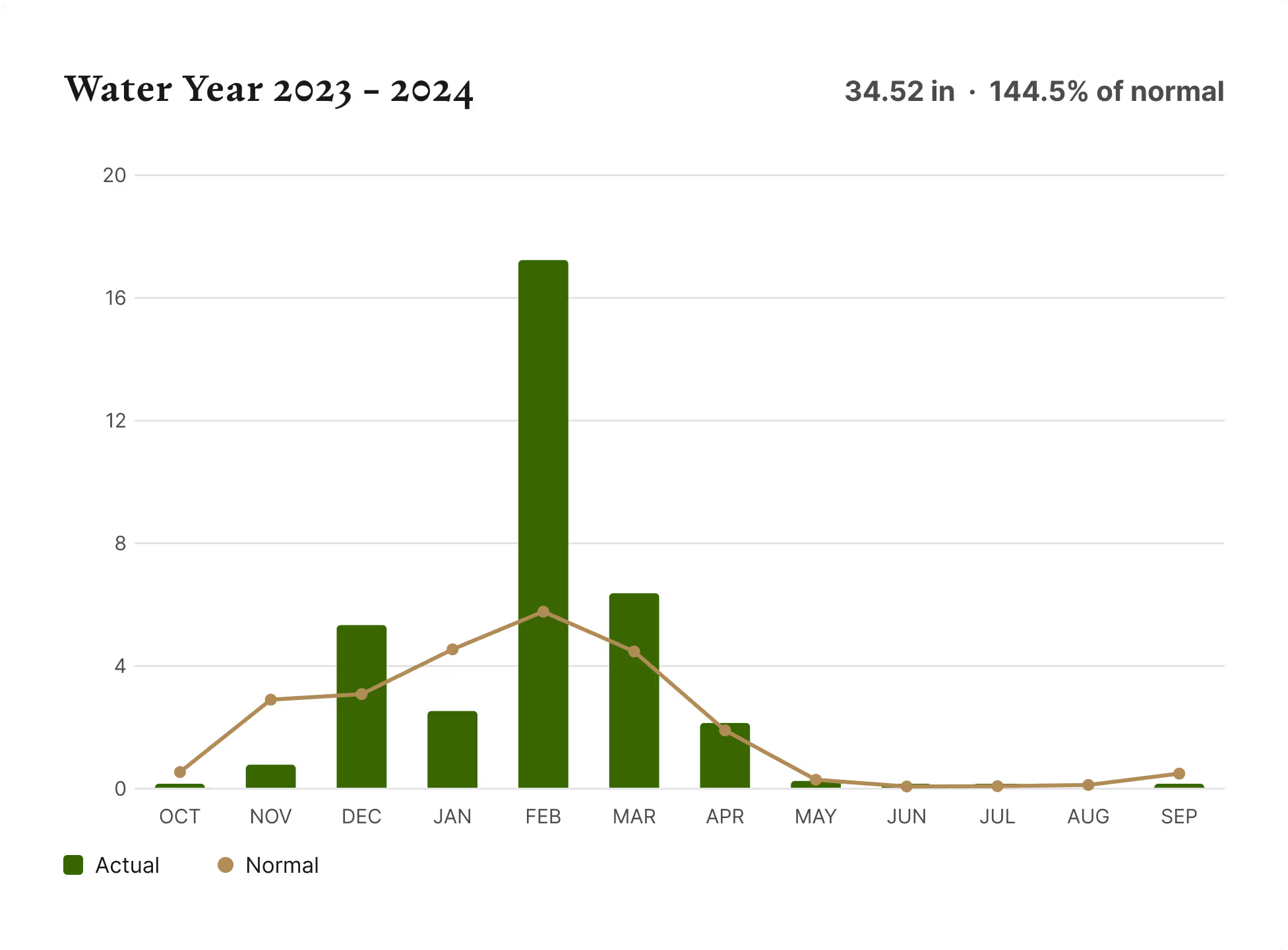
| Rainfall (2023–2024 water year) | 34.52 in · 144.5% of normal |
| Production | 656 cases |
Early Harvest & Strategic Picking Decisions
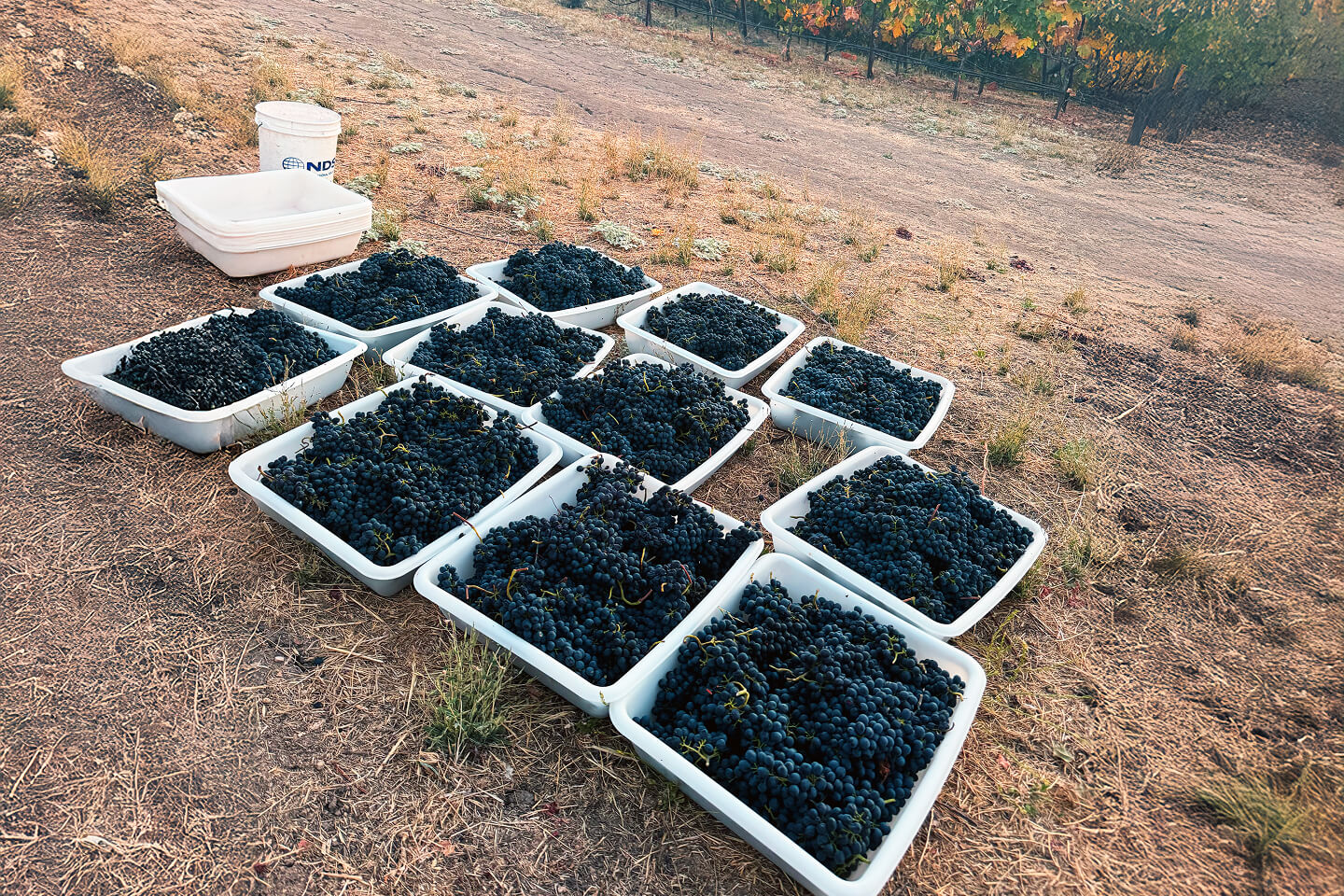
Harvest began early this year, driven by a late-summer heatwave that accelerated ripening. Grenache Blanc came in first, on Labor Day, as it's always the earliest variety to ripen, followed by Tempranillo and Syrah. The vineyard's ocean-moderated climate usually allows for extended hang time, but with temperatures soaring past 100°F, the team made the call to harvest Syrah earlier than planned.
By September 9, Picpoul and Roussanne were picked as well, as the heat pushed sugar levels up rapidly. Grenache and Mourvèdre, meanwhile, were left on the vine despite the heat stress, a deliberate gamble. As leaves began to drop and concern grew that the vines might shut down, the team irrigated strategically to support them. Fresh growth soon followed, a sign the fruit would keep ripening. Both varieties were ultimately harvested in early October, just ahead of a second heatwave.
Navigating a Volatile Growing Season
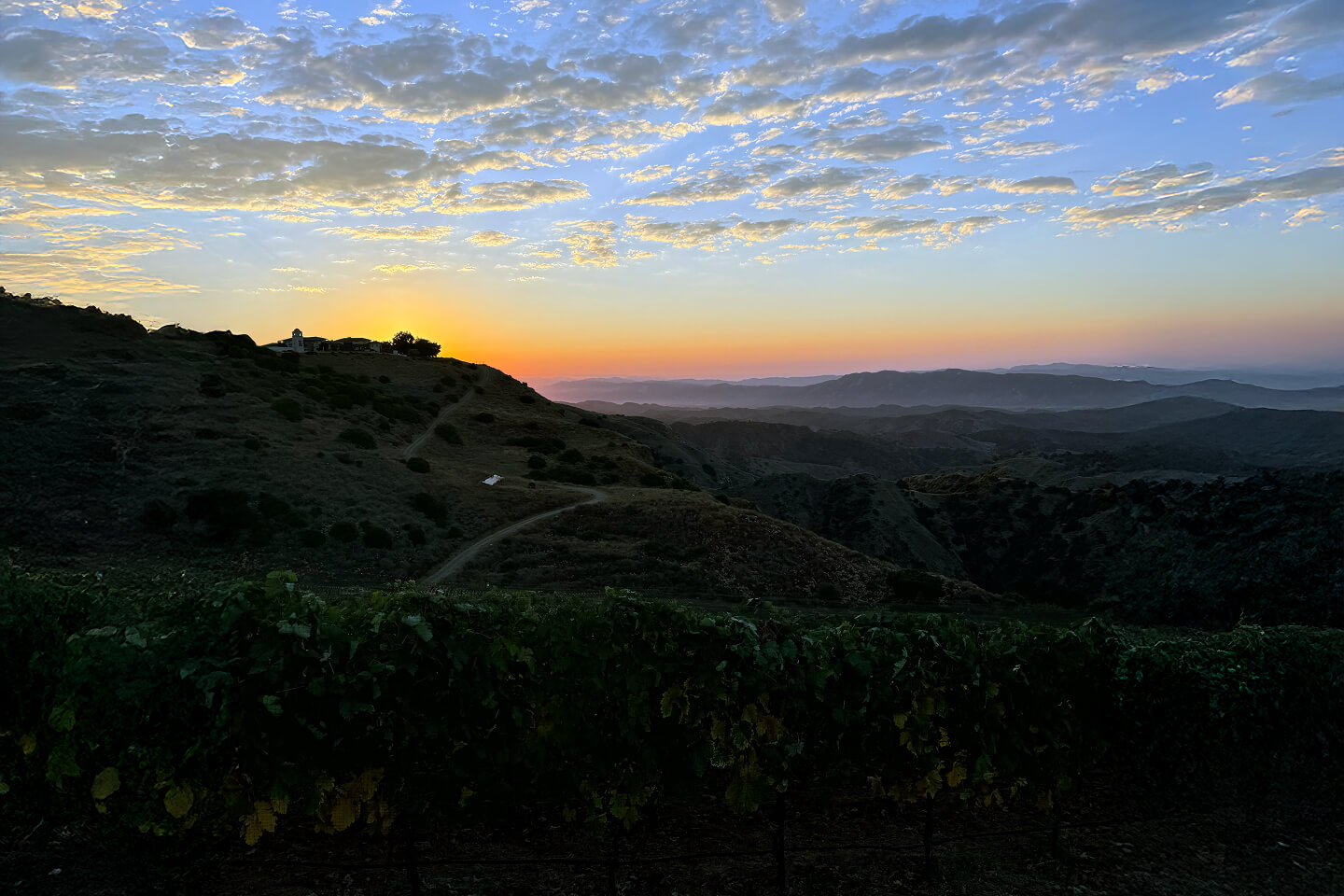
2024's weather was highly variable: a cool, late spring gave way to a hot, dry summer that culminated in a heatwave testing both fruit and crew. Managing heat during harvest required a delicate balance. For white grapes, excess heat risks bitterness, early oxidation, and reduced juice yield. For reds, rapid sugar accumulation can outpace tannin and phenolic maturity, producing green flavors and lighter color. Heat stress also lowers YAN and malic acid levels, both of which affect fermentation and overall balance.
To manage these risks, the team used sustainable cooling techniques, including solar-powered cooler boxes and smaller picking trays, to prevent premature fermentation and preserve fruit purity and structure.
Two Wet Years Built Resilience
The exceptional rainfall of the two prior seasons, 53.35 inches in 2022–2023 and 34.52 inches in 2023–2024, well above the estate's historical average of roughly 24 inches, gave the vines the reserves needed to withstand 2024's heat. The resulting dense canopy offered natural protection against sunburn and dehydration. That same lush growth raised concerns about mildew pressure, but the vineyard's strong winds and amphitheater-shaped terrain kept disease pressure low without synthetic intervention.
Cluster Size, Yield & Initial Impressions
Syrah clusters came in smaller than usual, with a high skin-to-juice ratio that enhanced color, complexity, and tannin structure. Tempranillo, recovering from a total loss the prior year, delivered a bumper crop. Overall yields ran slightly below average, but the balance of concentration and acidity across the vintage was promising.
Labor and the Cost of a Compressed Window
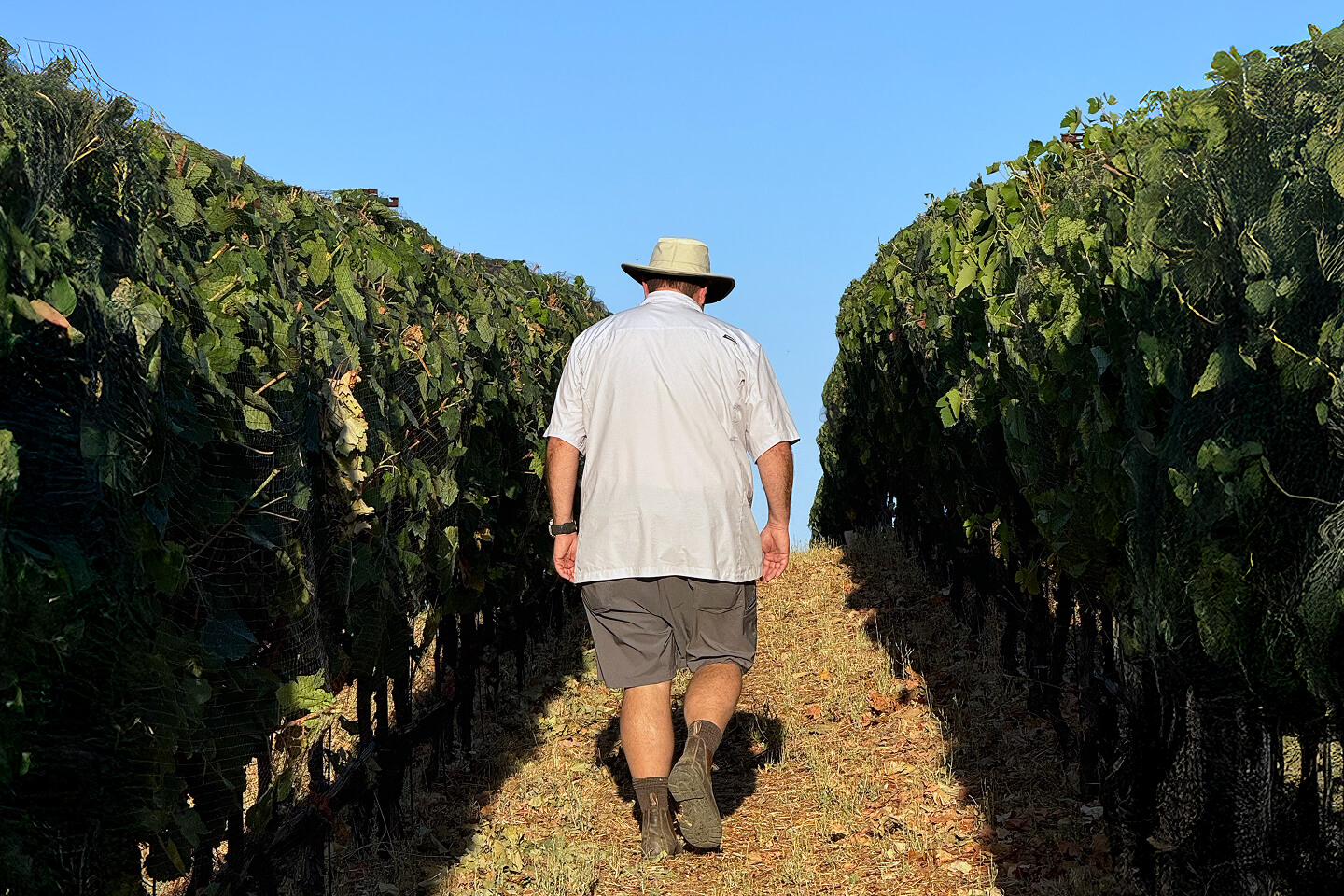
The combination of a compressed harvest window and extreme heat made 2024 especially demanding. Night temperatures held at 93°F during the heatwave, requiring the crew to work creatively to protect fruit integrity, picking into small trays and transferring fruit immediately to cooler boxes to prevent premature fermentation. It was labor-intensive and left little room for rest.
Sustainability and Regenerative Practices
Several regenerative practices paid off this year. Cover crops helped retain soil moisture and support biodiversity. The estate's bee boxes supported vineyard pollination and produced a batch of honey planned for Wine Club members. Solar-powered cooler boxes reduced reliance on generators, a step forward in the estate's move toward fully sustainable operations.

The Wines
Looking Ahead
2024 brought real challenges, but the depth, richness, and concentration coming through in early cellar work suggest a vintage that will stand out. Every year in the vineyard is a lesson in adaptability, and this harvest reinforced the value of patience and the estate's continued investment in sustainable practice.
Frequently Asked Questions
Harvest ran from early September through early October 2024, shaped by two separate late-summer heatwaves. Grenache Blanc was picked first on Labor Day, with Tempranillo and Syrah harvested early to beat rising temperatures, while Grenache and Mourvèdre were left on the vine and harvested in early October, just ahead of a second heat spike.
Heat dictated the pace. Syrah and Tempranillo were harvested earlier than planned once temperatures passed 100°F, since further hang time risked pushing sugars ahead of tannin and phenolic maturity. Grenache and Mourvèdre, more heat-tolerant at this stage, were left on the vine deliberately, with strategic irrigation supporting the vines through the stress, and were brought in during early October before a second heatwave arrived.
The exceptional rainfall of 2022–2023 (53.35 inches) and 2023–2024 (34.52 inches), both well above the historical average of roughly 24 inches, built up reserves that helped the vines withstand 2024's heat stress. The resulting dense canopy also provided natural protection against sunburn and dehydration.
Sustainable cooling methods, including solar-powered cooler boxes and smaller picking trays, prevented premature fermentation and helped preserve fruit purity and structure, along with strategic irrigation to support vines during the most stressful stretches.
Syrah clusters were smaller than usual, boosting color and tannin structure through a higher skin-to-juice ratio. Tempranillo rebounded strongly after a total crop loss the year before. Overall yields ran slightly below average, but the fruit's concentration and acidity balance were promising.
Vinous scored it 92 points, praising its "linearity and focus." Wine Advocate also gave 92 points, citing "elastic tension and invigorating acidity." Wine Enthusiast named it a Cellar Selection at 91 points, and Wine Spectator scored it 92, praising its mouthwatering, mineral finish.
Yes. 2024 marks Ojai Mountain's first standalone Tempranillo bottling. The variety had previously only appeared as a blending component in the Estate Red; a strong 2024 crop, rebounding from a total loss the prior year, gave the estate enough fruit to bottle it on its own for the first time.
Share this post
Recent Posts
View All Posts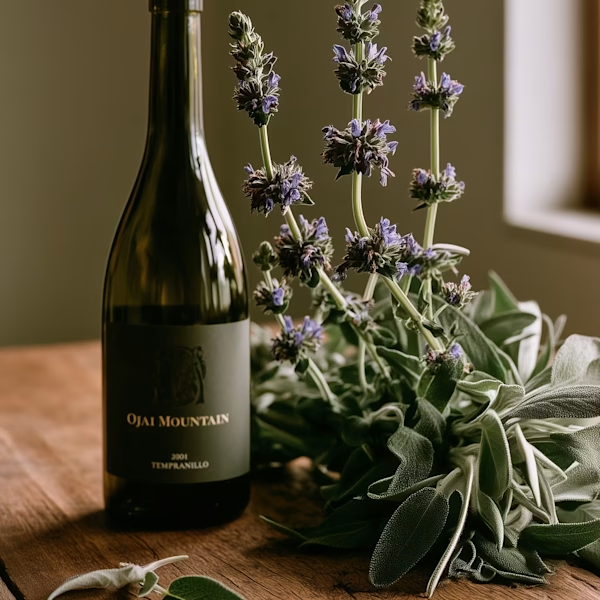
Lesia Artymovych • 20 Sept 2026
The Scent of the Mountain: Chaparral, Syrah, and Ojai Terroir
Ojai Mountain’s wines can carry aromas that recall the chaparral surrounding the vineyard: sage, dried herbs, pepper, and wildflowers. Science does no...

Lesia Artymovych • 16 Sept 2026
The Ojai Pink Moment: Why the Topa Topa Mountains Glow
Ojai’s Pink Moment is the brief coral, rose, and violet glow that appears on the Topa Topa Mountains around sunset. Warm, low-angle light creates the ...
Lesia Artymovych • 14 Sept 2026
A Guide to Wine and Cheese Pairing at Ojai Mountain
Match intensity to intensity: pair fresh, delicate cheeses with Ojai Mountain's bright Estate Whites, and bold, aged cheeses with its Syrahs and reds....