Winemaking

Minimal Intervention, Maximum Expression.

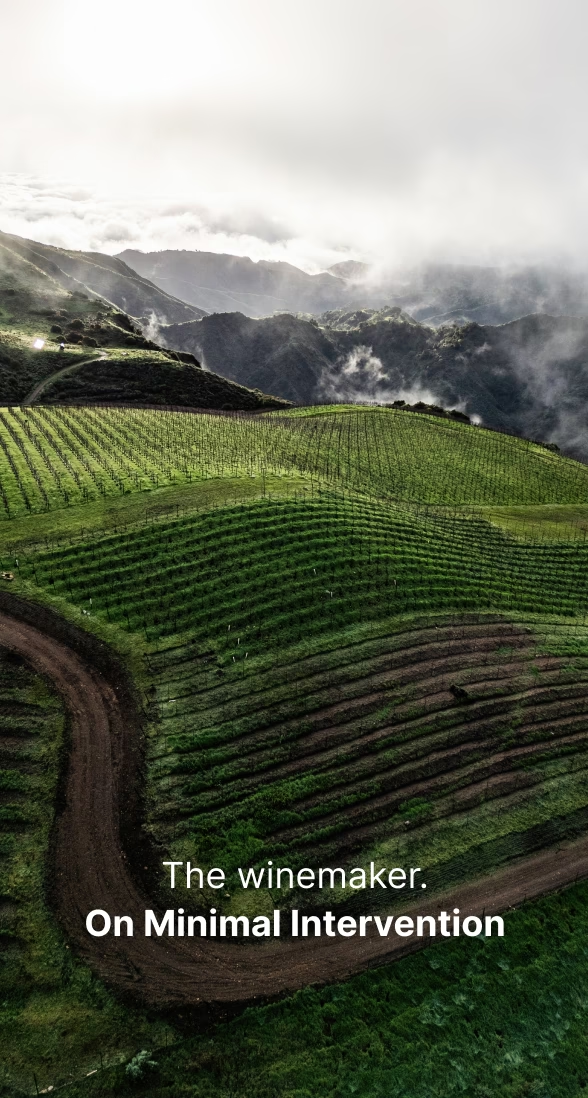
Minimalist winemaking isn't a trend or a tagline. It's a discipline — rooted in the belief that an exceptional wine begins in the vineyard, not the cellar. The vineyard gives the wine its character. The cellar's role is restraint.

The Better
the Fruit, the Less You Do

At Ojai Mountain, winemaking begins with a simple conviction: the better the fruit, the less you should do to it. Our winemaker Erich Bradley has spent more than 25 years learning when to act and, more importantly, when not to. The result is a small collection of estate wines that taste exactly like where they came from.

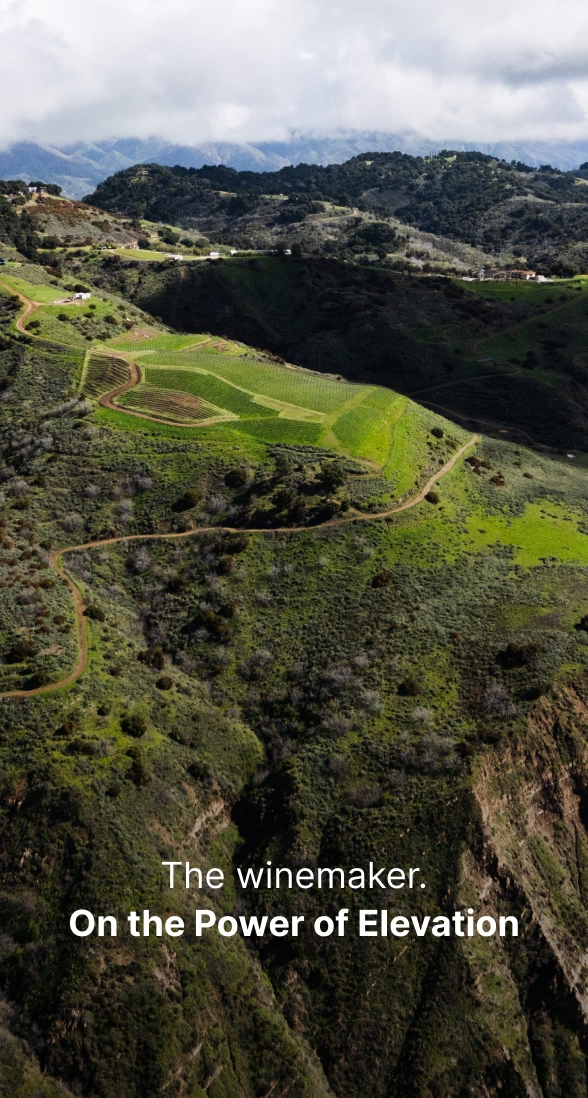
All wines at Ojai Mountain are made exclusively from estate-grown fruit organically farmed at 2,800 feet in California's Upper Ojai Valley — the highest point of any coastal vineyard in California. The vineyard sits above the marine fog line, where strong Pacific influence and large diurnal temperature swings allow the grapes to ripen slowly while preserving natural acidity and freshness. The estate is planted primarily to Rhône varieties — including Syrah, Grenache, Mourvèdre, Roussanne, and Picpoul — which have shown a remarkable ability to translate the site's elevation, winds, and fractured shale soils into wines with structure, energy, and distinct varietal character.

“I’m a minimalist when it comes to intervening in the winery. Much of my energy gets devoted to making sure the fruit, when it comes in, doesn’t need help. It is magnificent in its own right... I’m not trying to save damaged fruit. I’m trying to polish exceptional fruit.”
Erich BradleyWinemaker
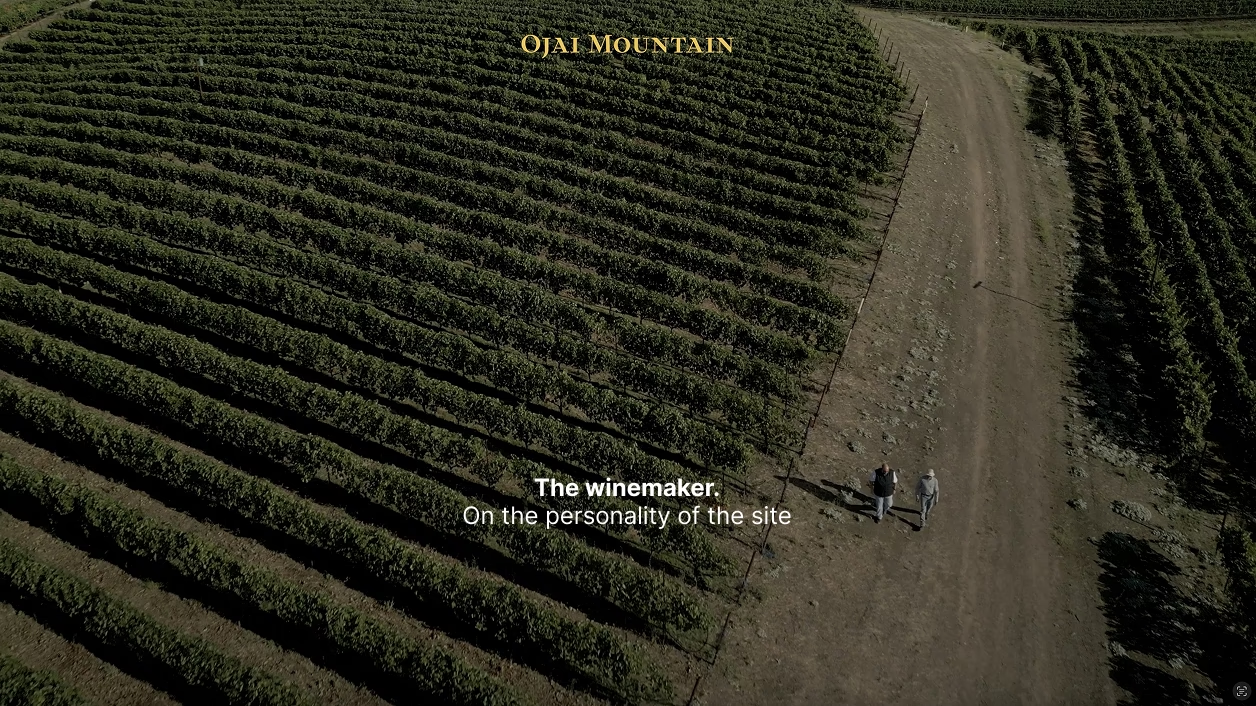
Winemaker Erich Bradley on the personality of the site

The Winemaker

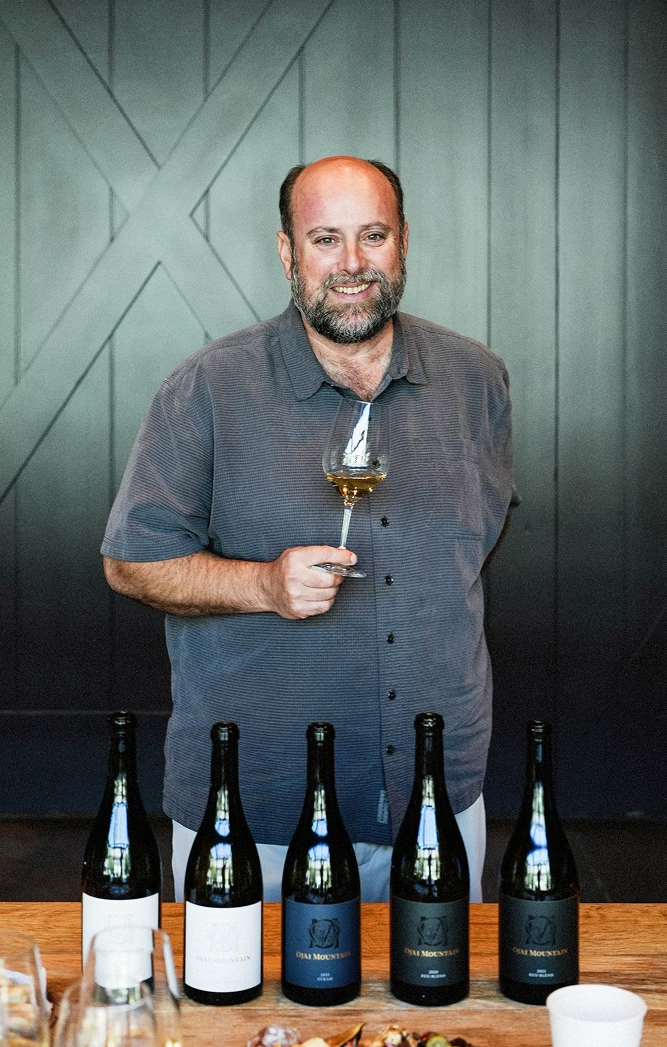
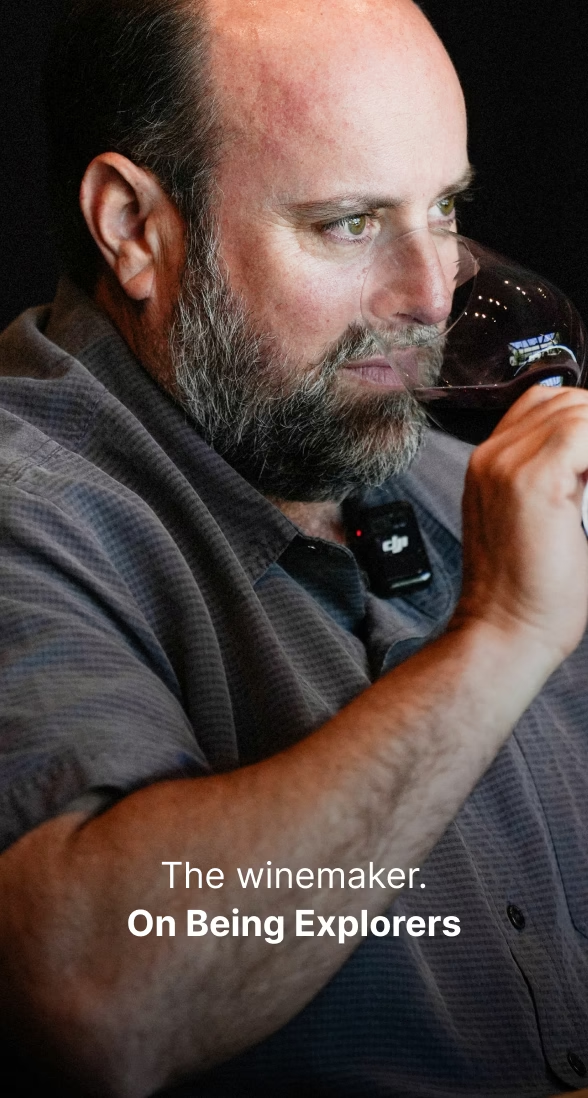
Erich Bradley

Erich Bradley is the co-founder of Sojourn Cellars and has worked with cool-climate vineyards across Sonoma and California for more than two decades. In that time, he has developed a clear and consistent point of view: wine made from exceptional estate fruit should be shaped by the vineyard, not the winery.

At Ojai Mountain, Erich has found a site that rewards that philosophy. The elevation, the diurnal shift, the Pacific winds, the slate-rich soils — every element of this vineyard produces grapes with natural structure, concentration, and freshness that most winemakers spend their careers trying to manufacture. His role is to protect those qualities from harvest through bottling.

Erich works in small lots, monitors every stage of production personally, and makes decisions based on what each vintage is telling him rather than a fixed formula. That patience and attention to detail has earned Ojai Mountain recognition in the Slow Wine Guide, a publication that specifically honors producers committed to quality, sustainability, and minimal intervention.

“As I get older, I find myself chasing tension in wine. Not weight. Not volume. Tension”
Erich BradleyWinemaker
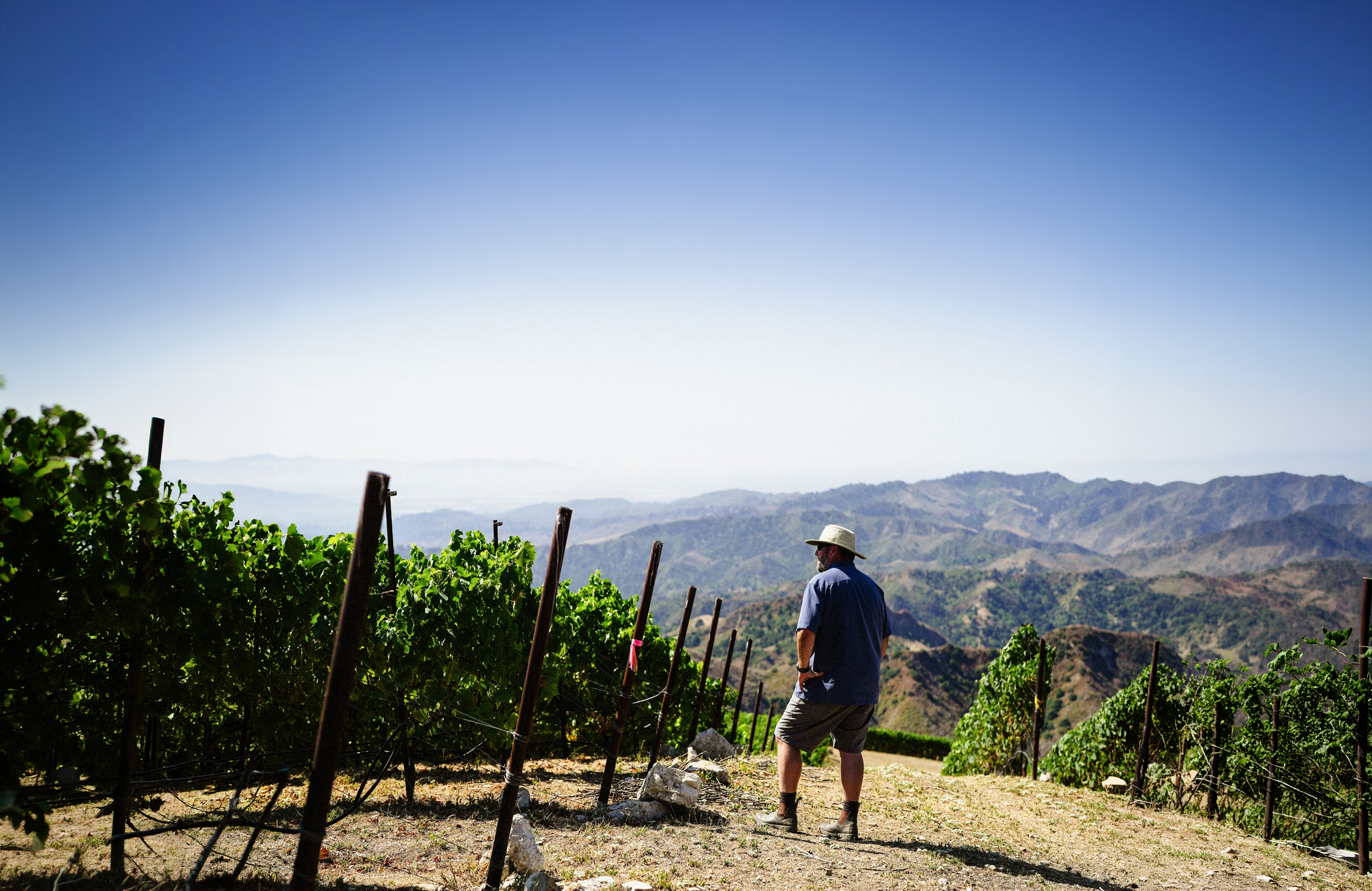
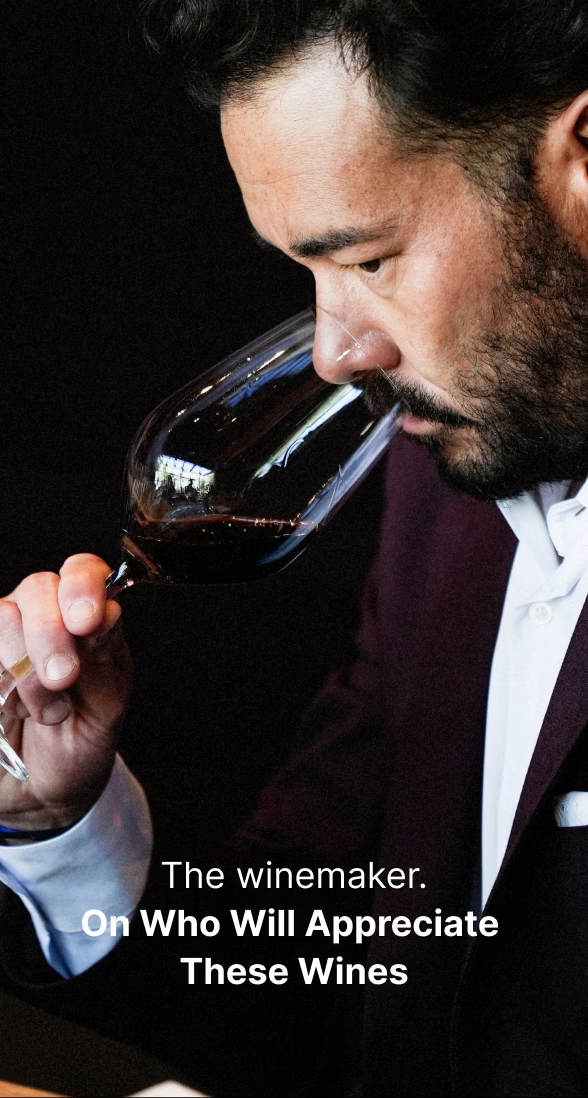
Winemaker Erich Bradley at Ojai Mountain Estate

Photo by Quoc Ngo.

Hear from Erich

Winemaker Erich Bradley on the site, the
farming, and why elevation changes everything.

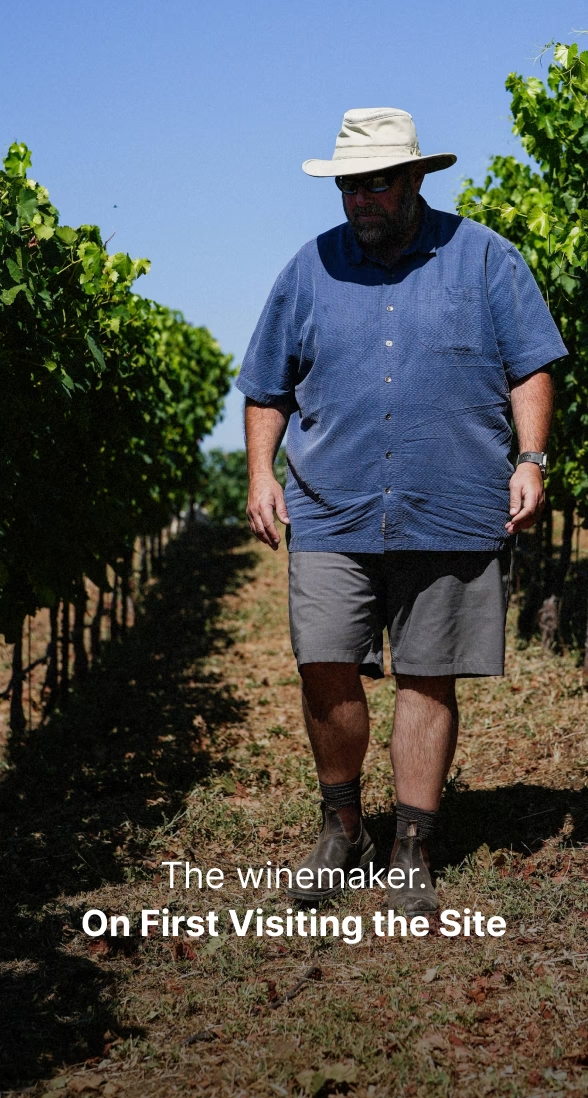
Erich Bradley — on first visiting the site
“There's a visceral reaction that I have had to a few properties where you just feel something that first time that you set foot on them. And this was one of those places.”
Erich Bradley — on the power of elevation
“As soon as they said 2,800 feet, I was like, 'Okay, how about next week?' Nobody says 2,800 feet almost every weekend.”
Erich Bradley — on being explorers
“There's nothing else within sight of this vineyard, there never has been — so we're explorers. That's the mentality.”
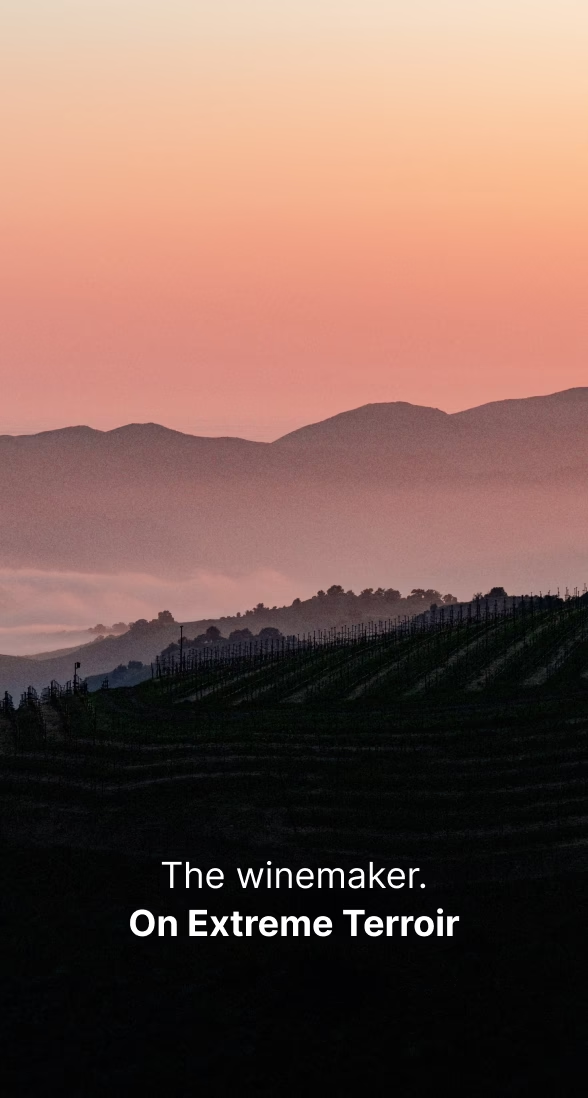
Erich Bradley — on extreme terroir
“We're trying to express that this is coming from really rugged terrain and a very severe site. There are not a lot of grapes being grown for wine production at that elevation anywhere in the world.”
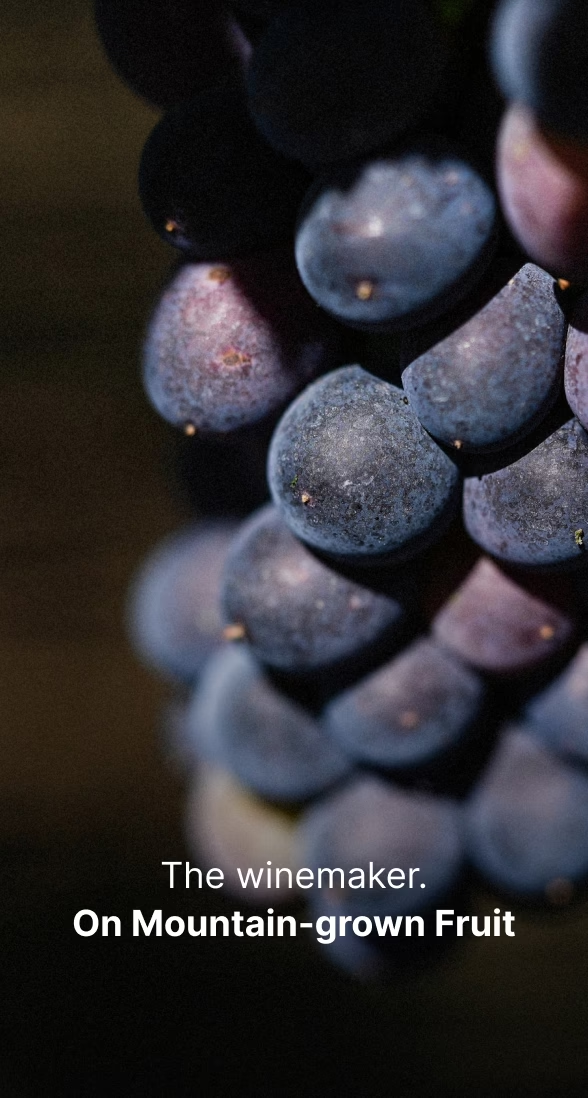
Erich Bradley — on mountain-grown fruit
“When you taste valley floor-grown fruit next to mountain-grown fruit, the difference is stark. Just more flavor, more of everything.”
Erich Bradley — on native fermentation
“I'm not trying to save damaged fruit. I'm trying to polish exceptional fruit.”
Erich Bradley — on oak and restraint
“If the wine isn't pleasurable, if it's only intellectually stimulating, I haven't done my job.”
Erich Bradley — on the harvest
“They've tasted hundreds of Syrahs or more and they've never tasted Syrahs that can hit the notes that we can hit.”
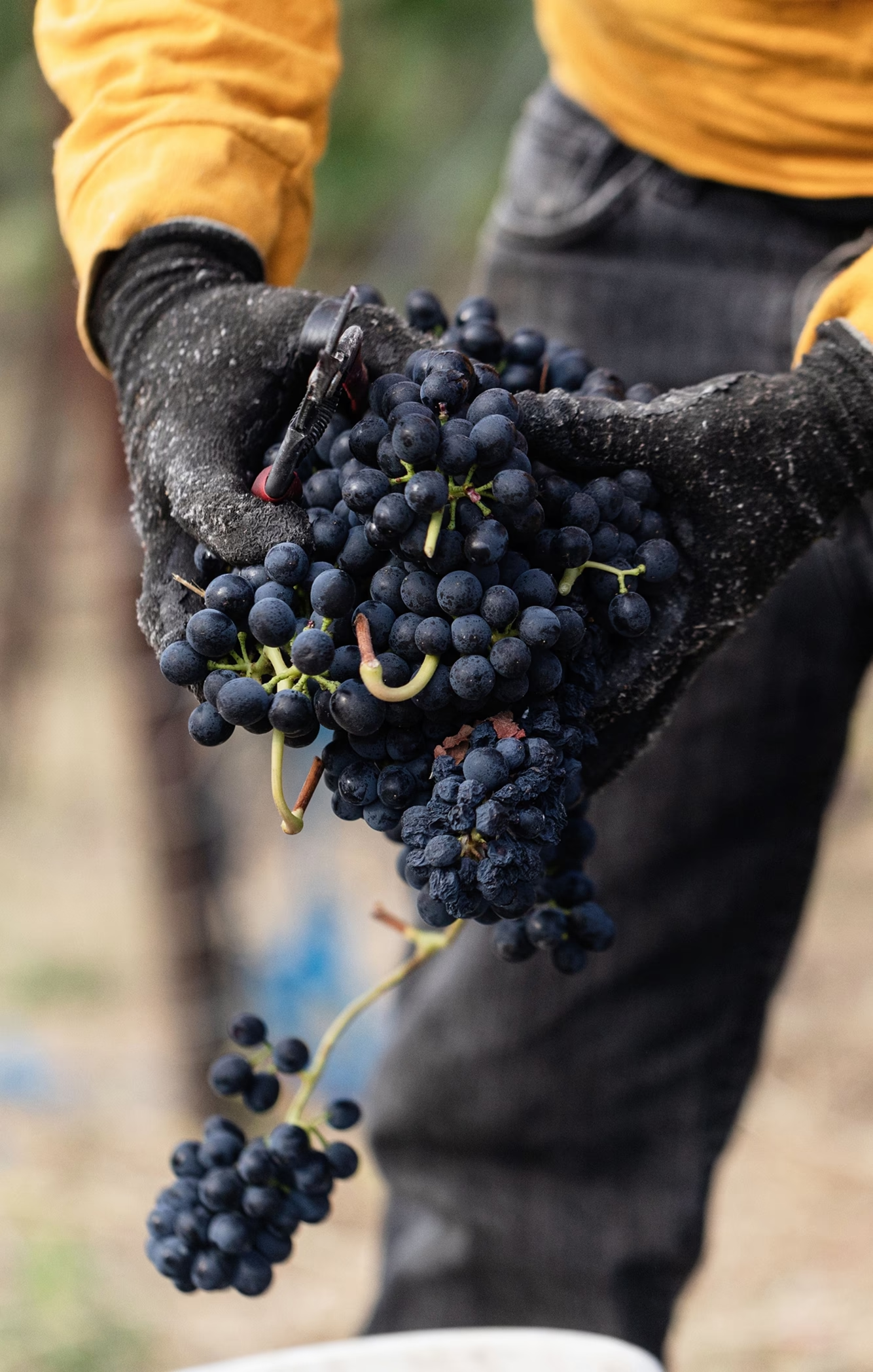
Hands harvesting grapes at Ojai Mountain Estate

Photo by Quoc Ngo.

The Philosophy

Why We Work
This Way

Minimal intervention winemaking is not a trend or a marketing position. It is a response to the quality of the fruit we grow.

The Case for Restraint

When grapes are farmed organically at high altitude with careful canopy management and low yields, they arrive at the winery already carrying everything a great wine needs: natural acidity, ripe tannins, aromatic complexity, and structural integrity. The question is not how to build those qualities in the cellar. The question is how to avoid losing them.

Commercial yeast strains are efficient and predictable, but they tend to flatten the aromatic profile of a wine and push it toward a recognizable house style. Fining agents clarify a wine but strip texture and mouthfeel in the process. Filtration on reds removes sediment but also removes the very compounds that give a wine its depth and longevity. Heavy new oak masks the fruit rather than framing it.

Erich's approach eliminates all those interventions if possible. What you get instead is a wine that carries the fingerprint of this specific vineyard, this specific vintage, and nothing else.

Key principles

  • Vineyard health over cellar correction
  • Native fermentation with close monitoring
  • Minimal additives — sulfur only, used sparingly
  • Vintage variation as a feature, not a flaw
  • Wines built for the table, with food compatibility

Everything Erich does in the cellar is a response to what happens on the hillside first. The farming is where these wines begin.

The Process

From Harvest to Bottle

Harvest & Sorting

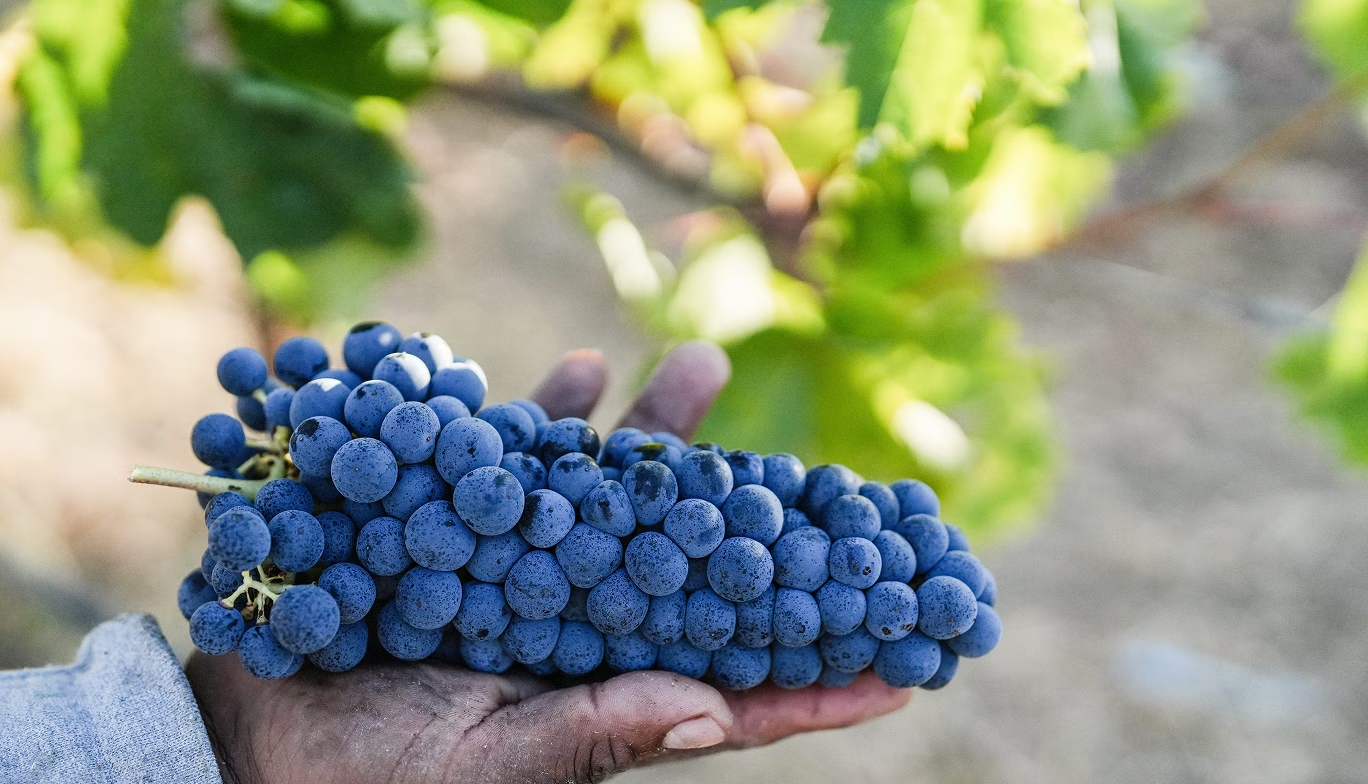
Hand-picked, block by block

Harvest at Ojai Mountain is done by hand, block by block, timed to each section of the vineyard individually. At 2,800 feet, ripening is uneven by design — and picking decisions reflect that.

Hand-picked harvest at Ojai Mountain
Photo by Quoc Ngo.

Our terrain calls for 100% old-fashioned manual labor. Grapes are hand-picked in small trays, with harvest timing determined by Erich's assessment of each block individually. At 2,800 feet, ripening progresses differently across the vineyard depending on aspect, wind exposure, and soil depth. Picking decisions are made block by block rather than all at once. Harvests are typically done at night when daytime temperatures exceed 90 °F.

Because of the vineyard's elevation and steady Pacific influence, sugars tend to rise slowly while acidity remains naturally high. That allows us to harvest with precision and focus on balance rather than chasing ripeness alone.

White Varieties

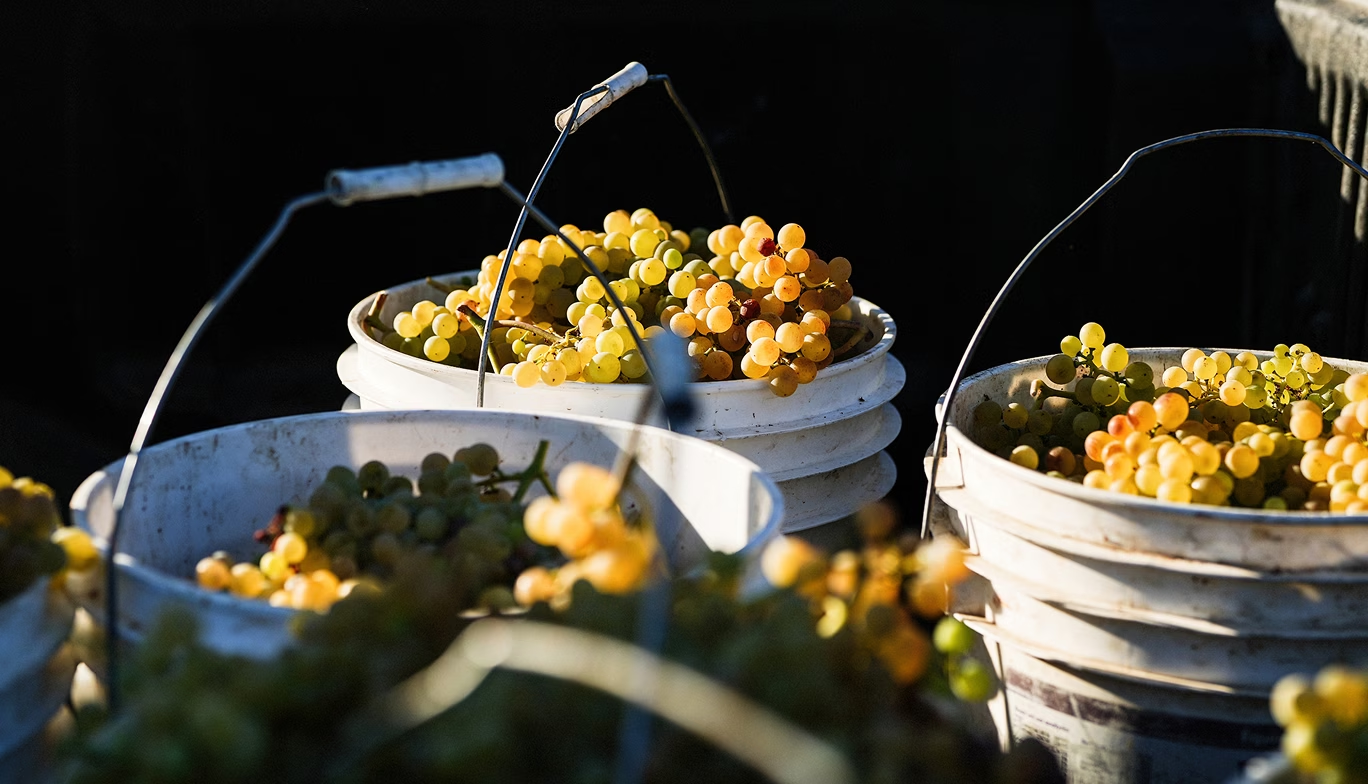
For the white varieties, acidity is often the key indicator. We closely monitor pH and typically aim to harvest when it reaches roughly 3.1 to 3.2, preserving freshness, structure, and natural energy in the wine. In most vintages, this corresponds to approximately 21 to 22.5 Brix.

Brix is a measurement of sugar in grape juice and one of the primary tools winemakers use to track ripeness before harvest. It also helps predict potential alcohol levels in the finished wine. Higher Brix generally means higher potential alcohol.

Red Varieties

For the reds, the focus shifts toward tannin character and phenolic development rather than maximum ripeness. We are not looking for overly soft or heavy tannins. Instead, the goal is structure, tension, and clarity. One important vineyard indicator is how readily color and tannin extract from the skins when berries are crushed. Our reds are typically harvested between 22 and 23.5 Brix, depending on the variety and vintage.

At the Winery

At the winery, fruit is carefully sorted before processing. All red varieties are fully destemmed prior to fermentation. To date, we have not used whole-cluster fermentation, though this is not a philosophical position. Destemming allows us to work with clean, ripe fruit and gives us precise control over tannin structure and extraction from the outset, which has been especially important during the earlier years of understanding the vineyard site.
Elegance Before Extraction

100% Free-Run Juice

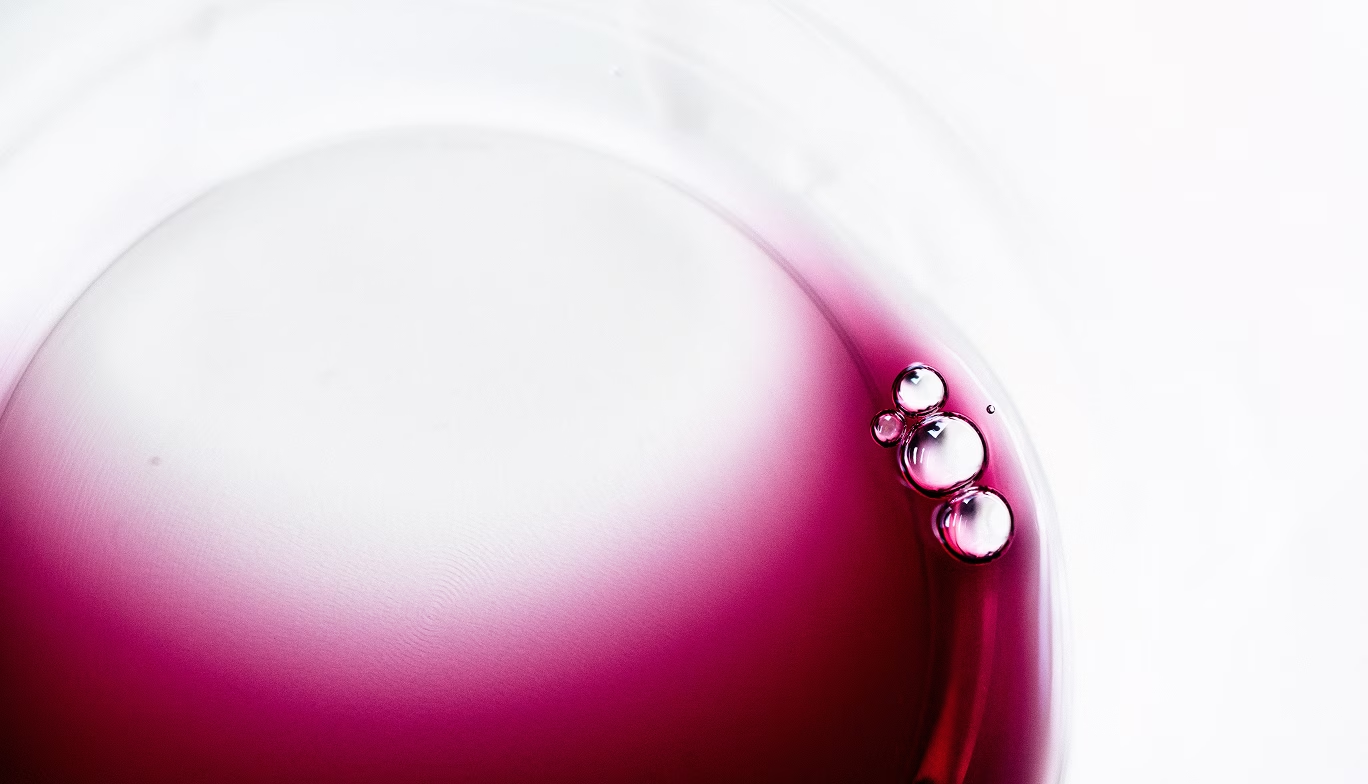
Every Ojai Mountain wine is made exclusively from free-run juice — the wine that flows naturally from the grape solids before any pressing takes place.

Free-run juice at Ojai Mountain
Photo by Quoc Ngo.

The mechanics differ slightly between red and white winemaking, but the principle is the same. For our whites, free-run juice drains from the press under the weight of the grapes alone, before mechanical pressure is applied. For our reds, it drains from the fermenter after fermentation is complete, released by gravity as the wine separates from the skins. In both cases, what emerges first — without force — is considered the most elegant and expressive fraction of the harvest.

The analogy most people reach for is extra-virgin olive oil: the first cold press, before heat or pressure extracts the remaining oil from the paste. Drip sake works the same way. In each case, the first liquid released naturally carries the clearest expression of the source material.

What pressing adds — and why we don't need it

Free-run typically accounts for roughly 70% of a wine's total potential volume. The remaining 30% is locked within the skins and seeds, recoverable only through mechanical pressing. That press fraction yields additional wine, but it also extracts more tannins, phenolics, and coarser compounds from the grape solids. Used judiciously, press wine can add structure. Used without restraint, it introduces bitterness, heavier aromatics, and textures that work against finesse.

Many serious producers keep the two fractions separate throughout the winemaking process, evaluating each before deciding whether any press wine earns its place in the final blend. At Ojai Mountain, we make that decision earlier: we bottle only the free-run. The reasoning is rooted in the vineyard itself. At elevation, with thin soils, strong winds, and a short growing season, our vines produce small, thick-skinned berries with a naturally high skin-to-juice ratio. Concentration, structure, and tannin are already present in abundance. Pressing would not refine the wine — it would add weight where precision already exists.

Choosing to bottle only the free-run fraction means sacrificing roughly 30% of potential production. What remains is wine with finer texture, greater aromatic clarity, and a more transparent connection to the mountain where it was grown.

Fermentation

Native yeasts

Fermentation starts with native yeasts rather than commercial strains. The process is less predictable, but it produces wines that reflect this vineyard in this vintage rather than a consistent house style.

Native yeast fermentation at Ojai Mountain
Photo by Quoc Ngo.

Red Wine Fermentation

Fermentation is initiated by the native yeasts naturally present on the grape skins and in the winery environment rather than by adding commercial yeast strains at the outset. Native fermentations are slower and less predictable than inoculated fermentations, but they tend to produce wines with greater aromatic complexity and a more faithful expression of the vineyard site.

At the same time, minimal intervention does not mean refusing to act when stability is at risk. A “stuck fermentation” occurs when yeast stops converting sugar into alcohol before fermentation is complete, leaving residual sugar that can create microbial instability, unwanted refermentation, or spoilage in bottle. Erich monitors every fermentation closely, and if a native fermentation appears at risk of stopping prematurely, commercial yeast may be introduced to safely finish the process. The goal is always to preserve both site expression and the long-term integrity of the wine. Sulfur use remains limited throughout.

White Wine Fermentation

Our white wines are made with a focus on preserving freshness, natural acidity, and site expression. After primary fermentation, we add a small amount of sulfur dioxide to prevent malolactic fermentation, a secondary bacterial conversion that softens acidity and can create richer, buttery characteristics. By blocking this process, we retain the bright citrus, mineral tension, and energetic structure that define our high-elevation vineyard. The result is a style that feels precise and lifted, with clarity, texture, and a strong sense of place shaped by cool mountain nights, ocean influence, and restrained winemaking.

At the Winery

At the winery, fruit is carefully sorted before processing. All red varieties are fully destemmed prior to fermentation. To date, we have not used whole-cluster fermentation, though this is not a philosophical position. Destemming allows us to work with clean, ripe fruit and gives us precise control over tannin structure and extraction from the outset, which has been especially important during the earlier years of understanding the vineyard site.
Aging

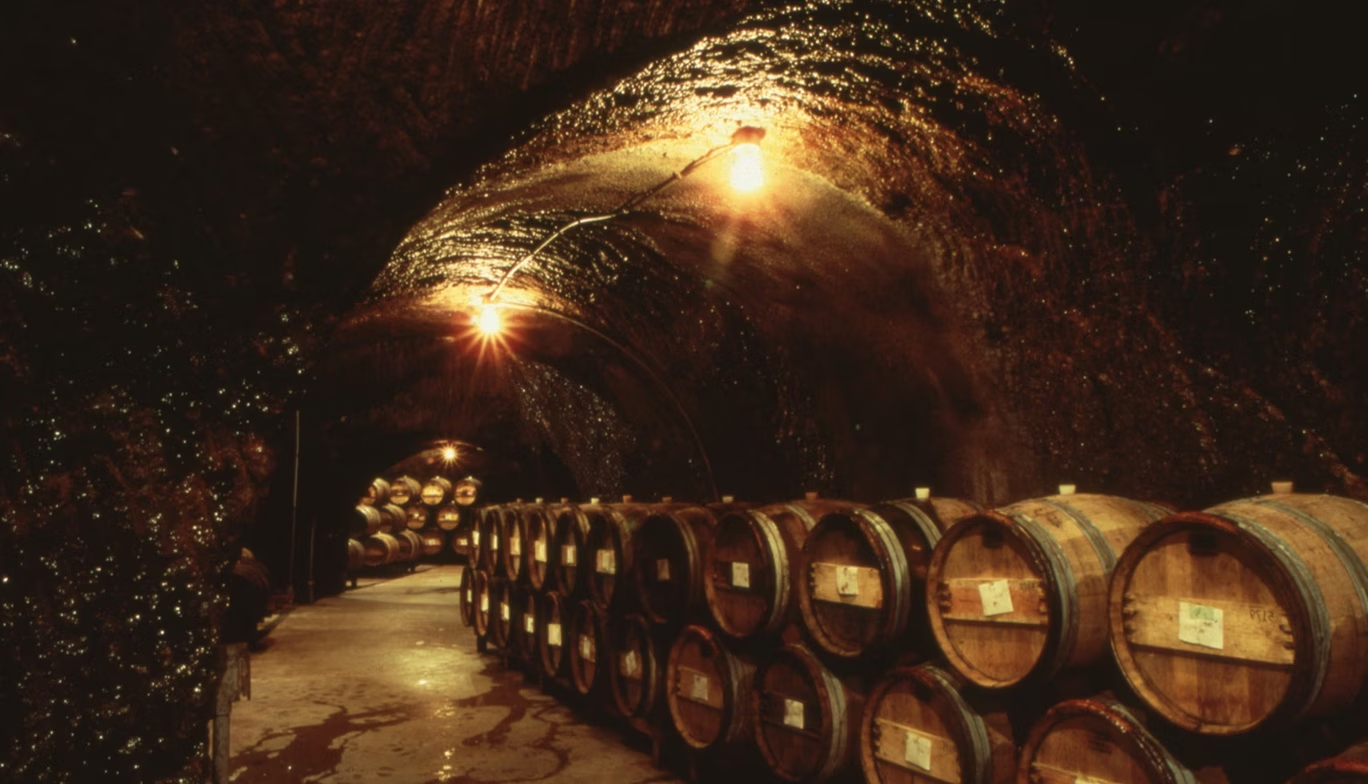
Neutral French oak, 18–24 months

Red wines spend 18 to 24 months in neutral French oak before bottling. The barrels contribute no flavor — only slow, gradual oxygen exposure that allows the wine to integrate on its own terms.

Neutral French oak barrels for aging
Photo by Repris Wines.

Once fermentation is complete, our red wines move into neutral French oak barrels, where they age for 18 to 24 months before bottling. Neutral oak plays a specific role here: it allows the wine to breathe and integrate slowly over time without contributing oak flavor, vanilla, or toast. The goal is a wine that feels polished and complete without tasting like the barrel it aged in.

The extended aging period is not arbitrary. At this elevation, our reds have the structure and acidity to develop in barrel without losing freshness. The extra time allows tannins to soften, flavors to deepen, and the wine to find its balance on its own terms.

“Erich Bradley makes the wines, aging the whites for 8-10 months and the reds for 18-22 months in neutral French oak. The results are stunningly singular out of the gate.”
Billy NorrisVinous Wine Critic

Bottling

Reds unfiltered, whites filtered

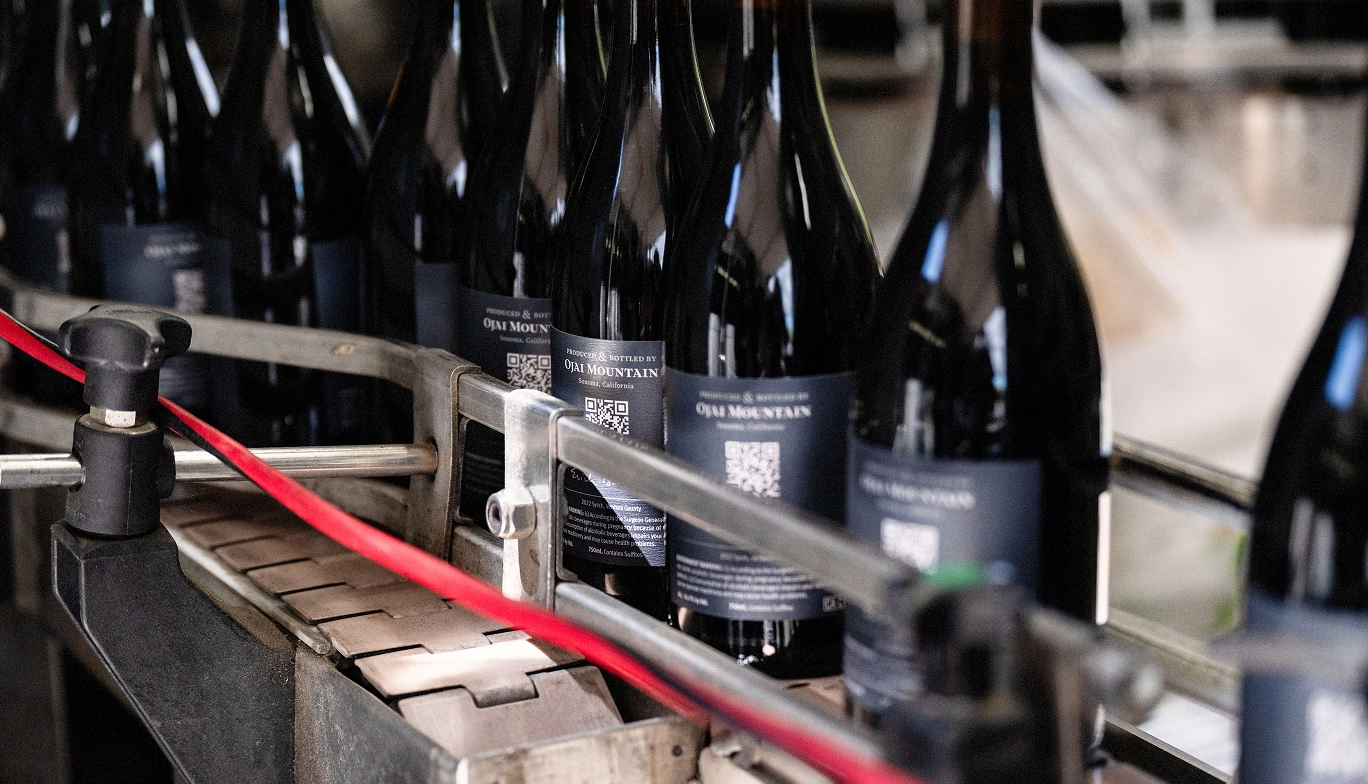
Reds are bottled without fining or filtration. Whites are filtered for stability. The approach differs by variety, but the reasoning is the same: intervene only where the chemistry of the wine actually requires it.

Red and white wine bottling at Ojai Mountain
Photo by Quoc Ngo.

Reds — Unfiltered and Unfined

Our red wines are bottled without fining or filtration. Fining agents — such as egg white, bentonite, or isinglass — are commonly used to clarify wine and remove certain proteins or tannins. Filtration removes particles and can extend shelf life. We skip both.

The reason is rooted in red wine chemistry. Red wines contain substantial tannin and phenolic material from skins and seeds. These compounds naturally bind with proteins and other suspended particles over time, forming sediment that settles in bottle. Reds also have structural buffering against microbial instability that whites lack. Because of that, a lightly cloudy or sedimented red is widely accepted — especially in minimal-intervention wines — and poses no risk to the wine's integrity.

By skipping fining and filtration, we preserve the texture, weight, and complexity-building compounds that give our reds their depth and aging potential. Our wines may show natural sediment over time. That is not a flaw. It is evidence that nothing has been taken out.

Whites — Filtered for Stability, Not for Style

Our white wines are filtered before bottling, but this choice reflects the chemistry of white wine itself, not a departure from our minimal-intervention approach. White wines contain far fewer tannins and phenolic compounds than reds. Without those natural stabilizers, proteins remain suspended more easily, making whites prone to visible haze, protein instability, and microbial spoilage in bottle — even when the wine is technically sound.

A gentle filtration removes unstable particles and microbes while preserving the aromatics and texture that define our high-elevation whites. For wines made without malolactic fermentation and with minimal sulfur, this filtration supports long-term stability and allows the wine to evolve cleanly over a decade or more.

The result is a white wine that tastes exactly like Ojai Mountain — precise, mineral, energetic — without the risk of instability that would undermine that expression over time.

In the Glass

What You're Tasting

Every decision Erich makes in the winery — native yeast, neutral oak, no fining, no filtration — is designed to deliver one thing: a wine that tastes exactly like Ojai Mountain.

In practice, that means wines with genuine texture rather than manufactured smoothness. It means a freshness that comes from the vineyard's natural acidity, not from acidification. It means tannins that are present and purposeful rather than stripped or softened into submission. And it means a finish that lingers because the wine has something real to say.

These are not easy wines to make. They require patience, confidence, and a willingness to let go of control at the moments when most winemakers would intervene. That is what 25 years of experience makes possible.

“We're trying to express that this is coming from really rugged terrain and a very severe site elevation almost up to 3,000 feet at the top of the vineyard. That's an unusual situation. There are not a lot of grapes that are being grown for wine production at that elevation anywhere in the world.”
Erich BradleyWinemaker
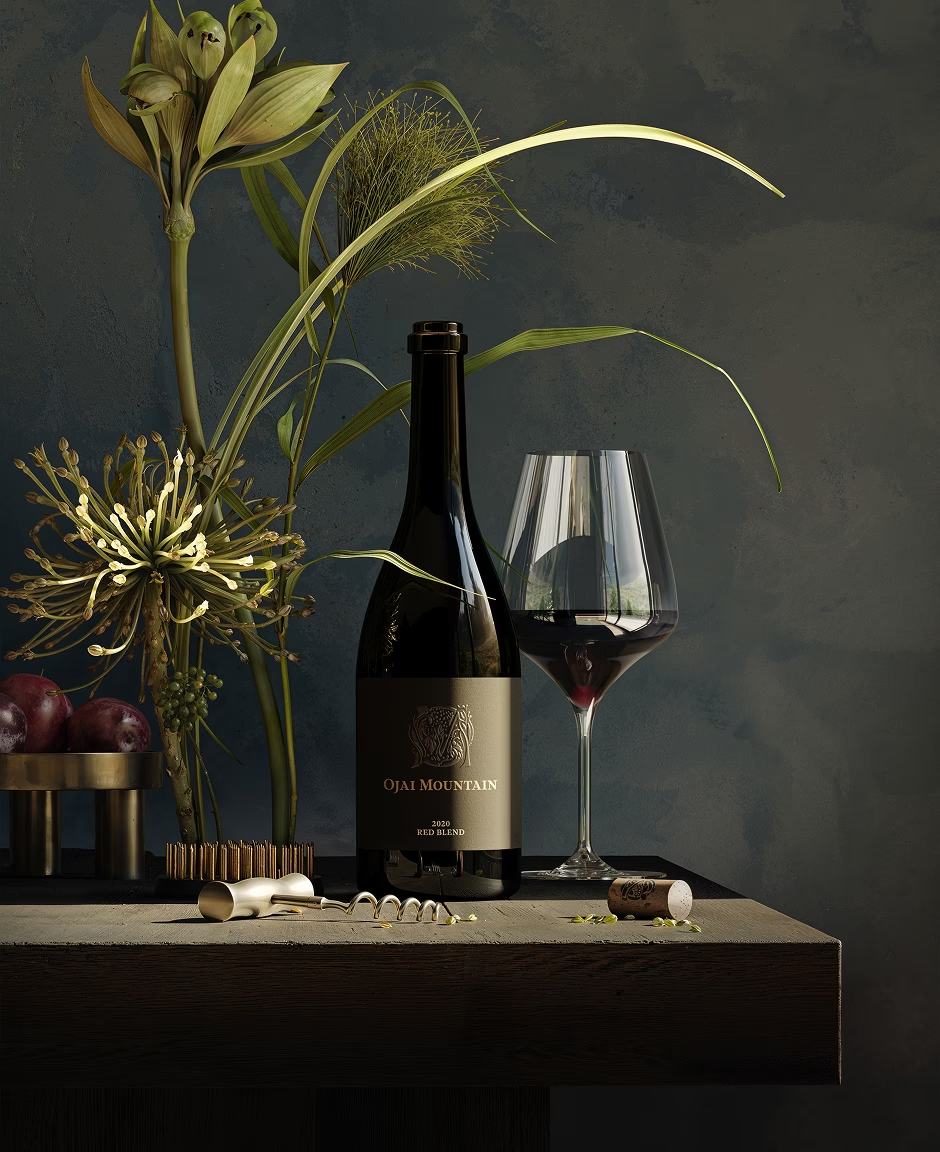
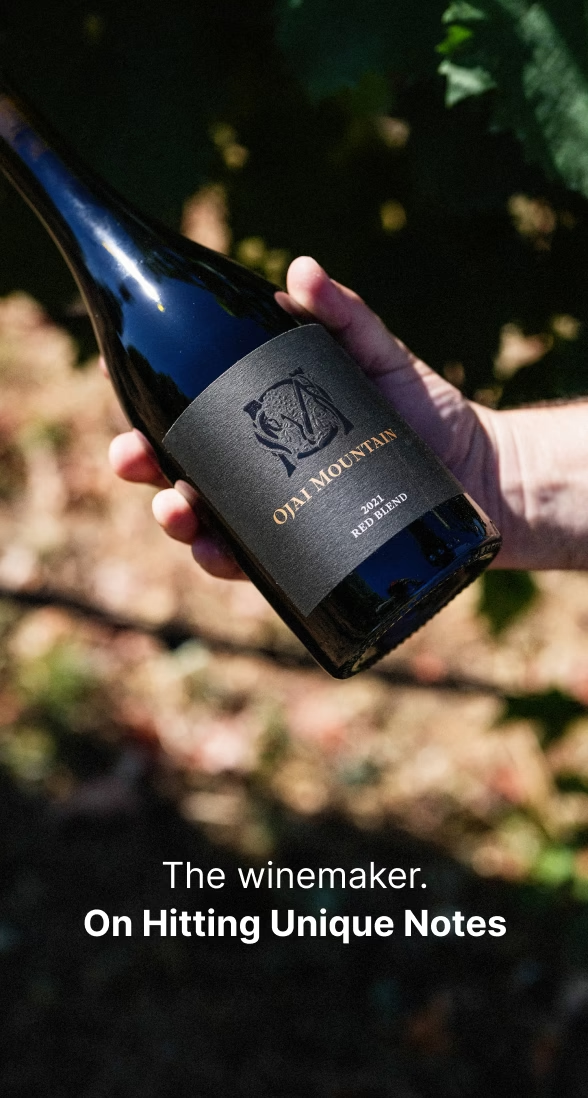
Estate Red Blend bottle

Tense & Savory

Estate Red Blend

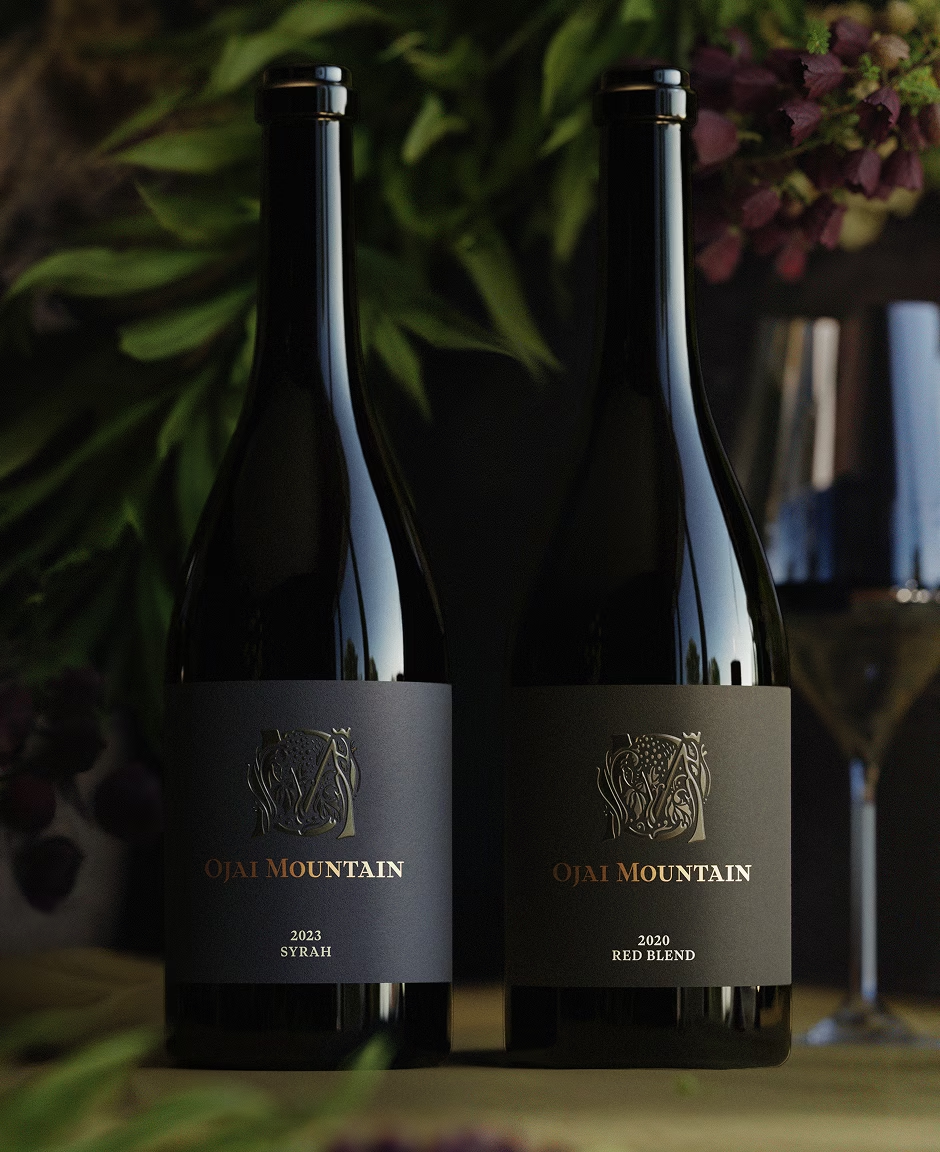
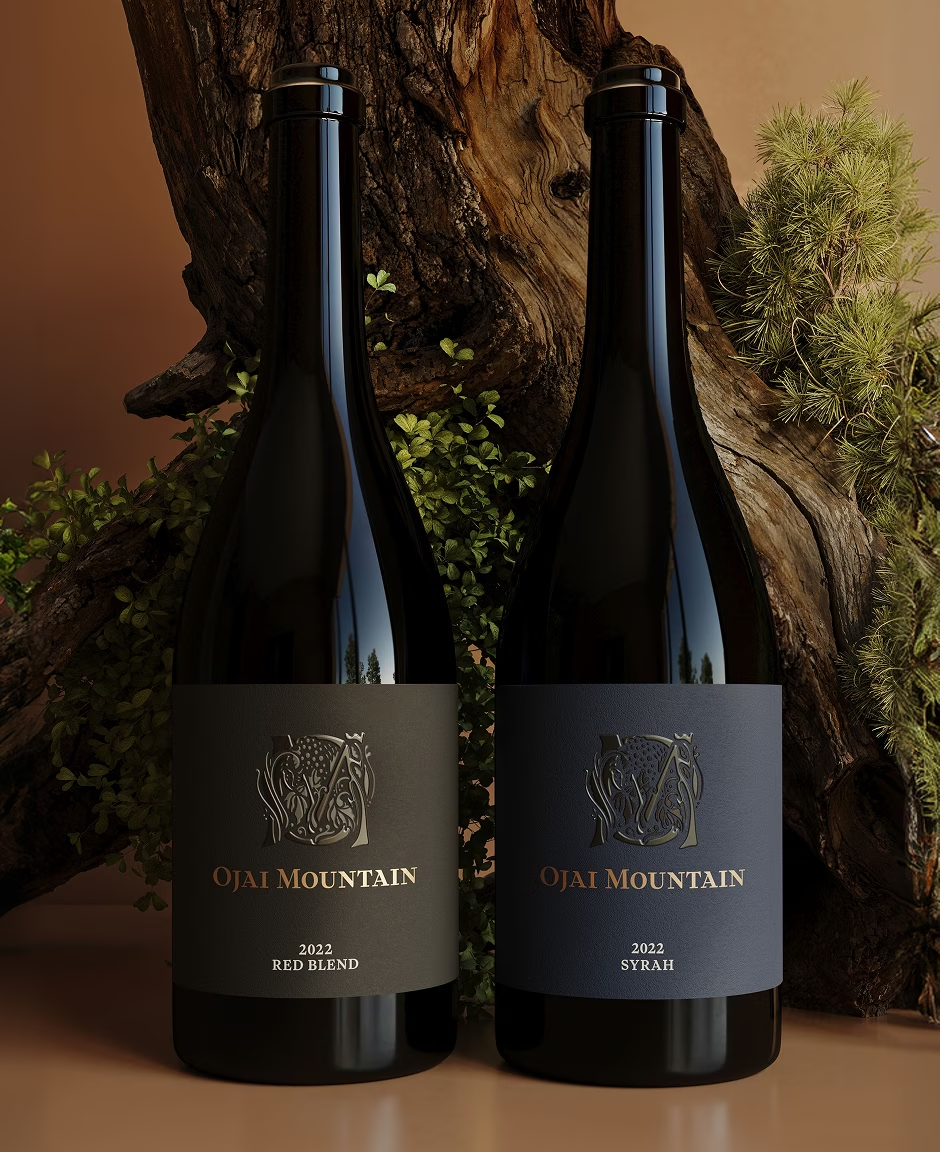
Our flagship GSM blend brings together the best lots from across the estate, blending Rhône varieties that complement each other's strengths. The result reflects the full character of the vineyard: concentration from the high-altitude fruit, freshness from the diurnal shift, and a structure built for the cellar.

Grenache often provides lift and perfume, Syrah contributes depth and savory structure, while Mourvèdre adds tannin, spice, and earthy complexity. Aged 18–24 months in neutral French oak, unfined and unfiltered. Composition changes from vintage to vintage based on the growing season and the character of each block.

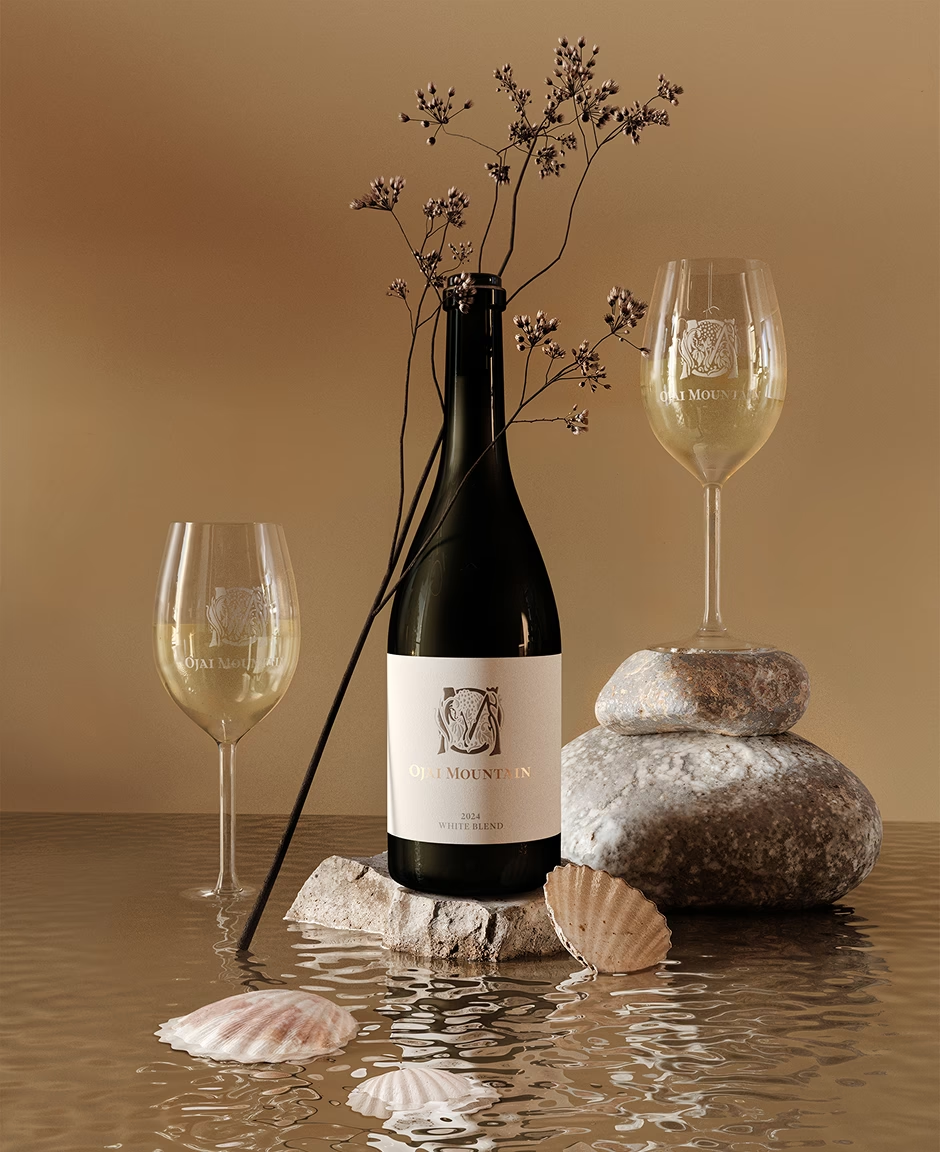
Estate White Blend bottle

Precise & Mineral

Estate White Blend

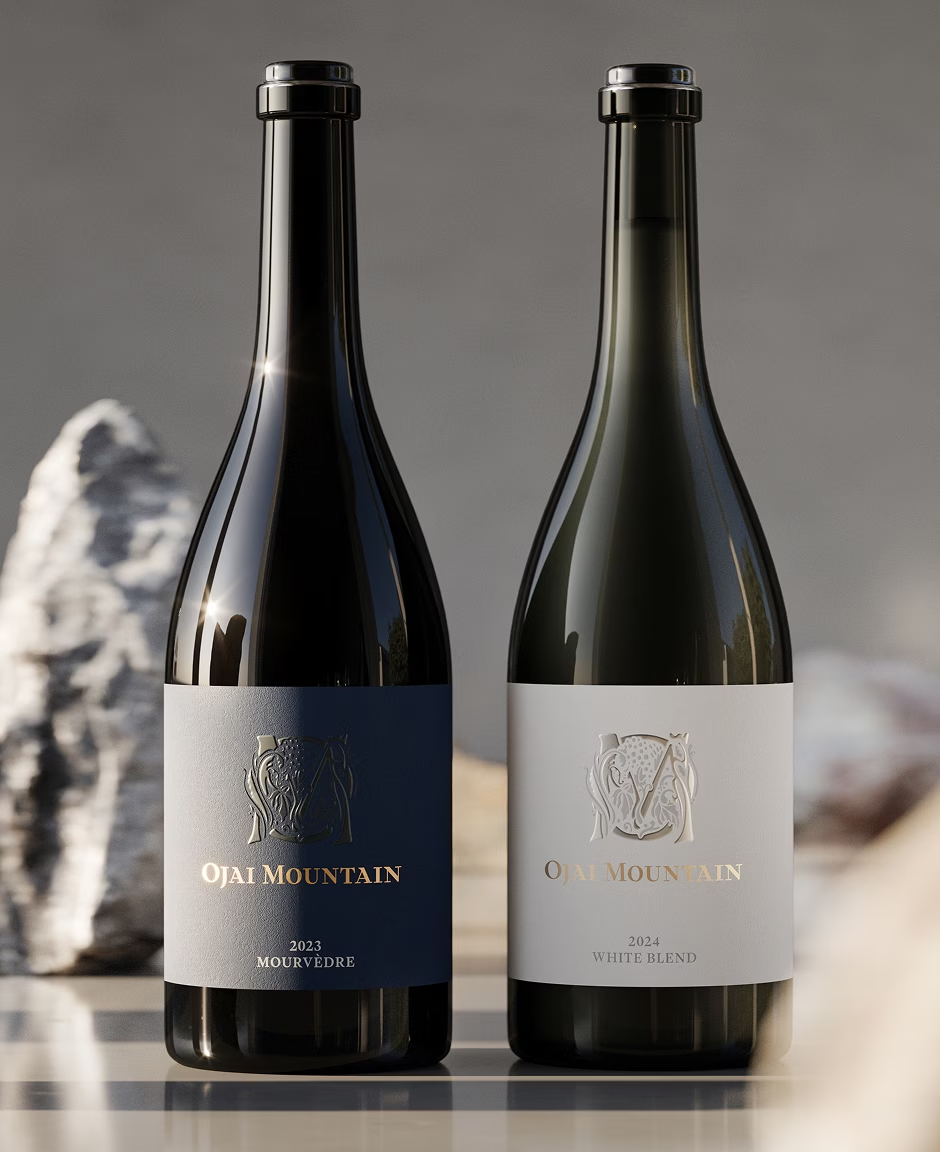
Our Rhône-style white blend is crafted with the same restraint applied to our reds. Native yeast fermentation preserves the aromatic complexity of Grenache Blanc, Roussanne, and Picpoul. Fermented and aged exclusively in neutral oak, the blend balances citrus, orchard fruit, and saline energy with a long, focused finish designed to pair naturally with food.

While many California whites are made for early consumption, the natural acidity and structure of our mountain fruit allow these wines to evolve gracefully for 10–15 years in bottle.

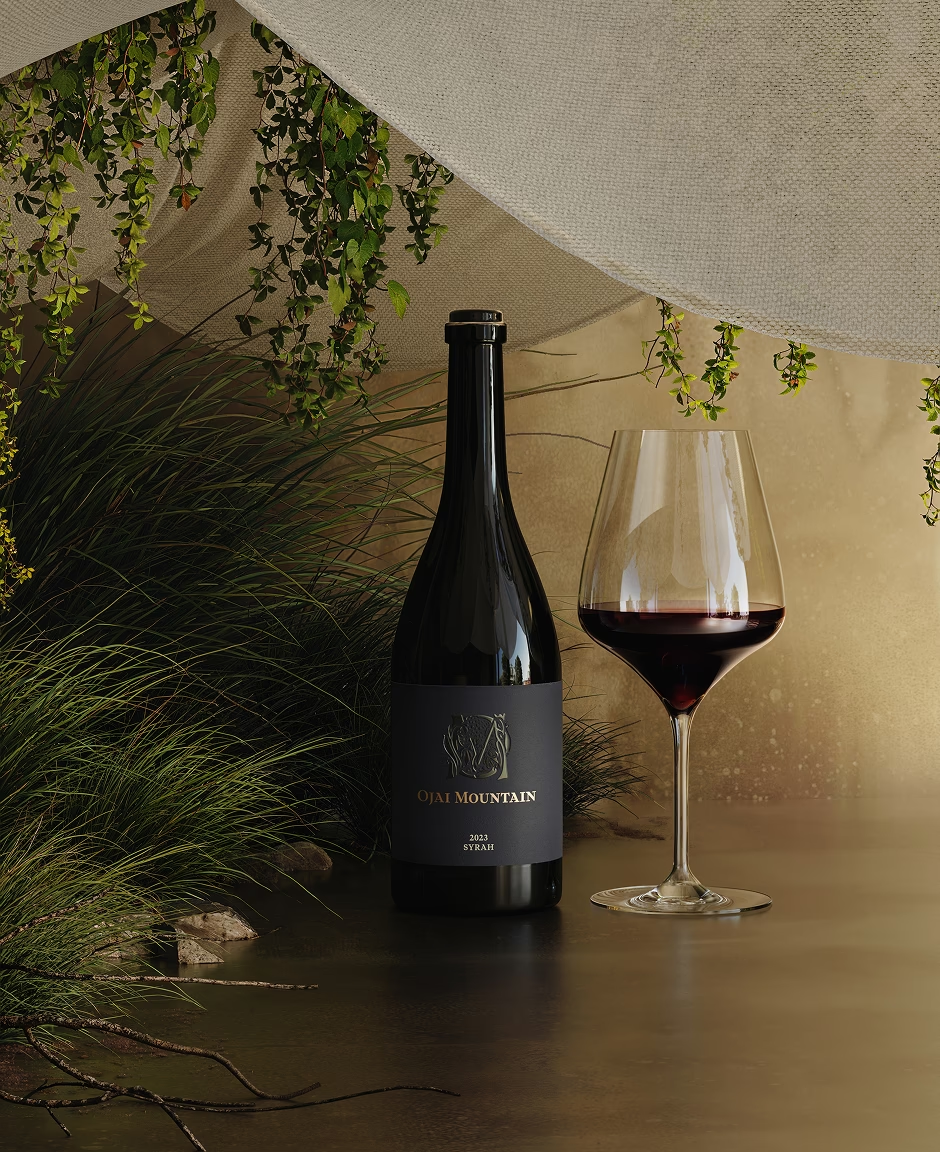
Single varietal red wines

Lifted & Brooding

Single Varietal Reds

Our single-varietal reds each reveal a different side of the mountain. Syrah brings structure, dark fruit, pepper, and mineral tension shaped by the vineyard's cool nights and elevation. Mourvèdre leans savory and earthy, with firm tannins, wild herbs, and a slower, more powerful expression that rewards time in bottle.

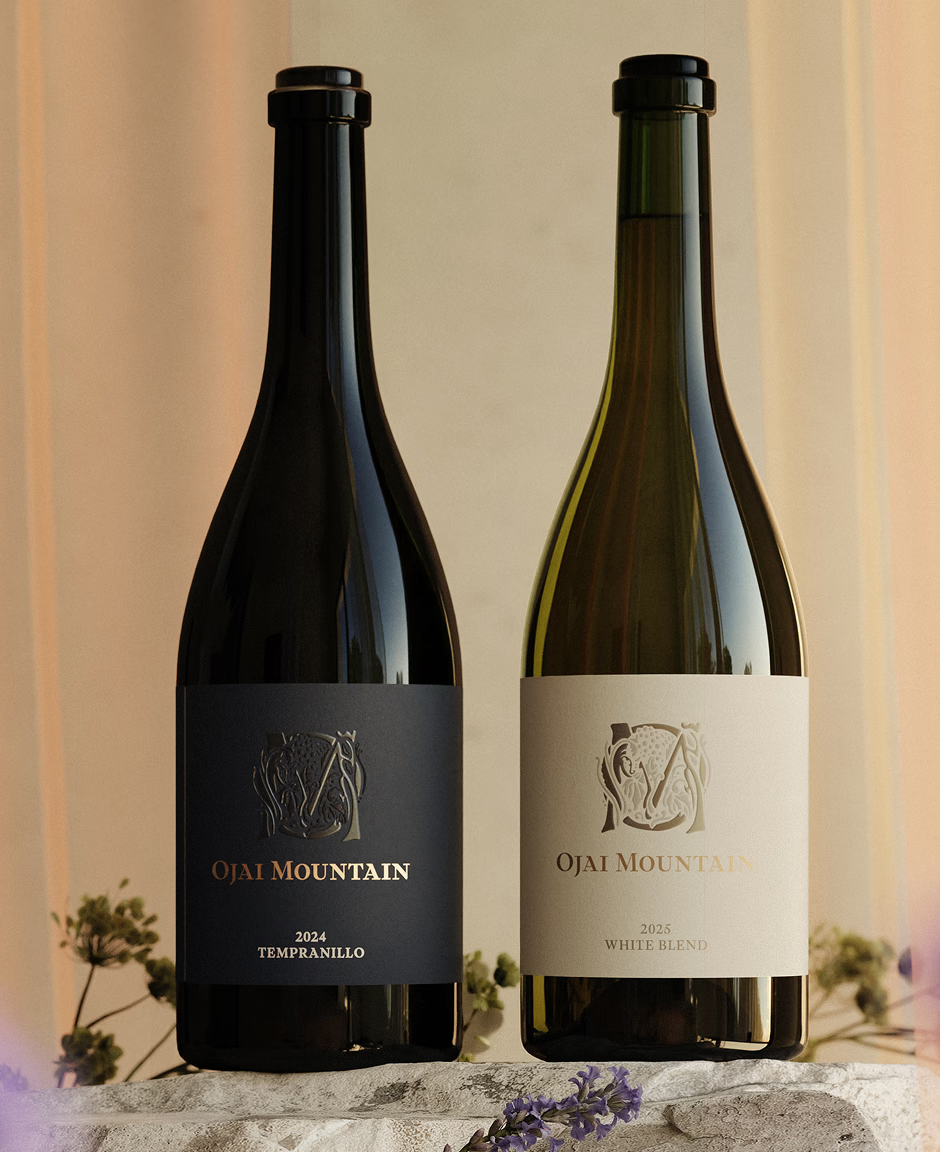
Tempranillo shows a different profile altogether, combining mountain freshness with red fruit, dried spice, and natural acidity that keeps the wine energetic and restrained. Produced in limited quantities, these wines allow each variety to speak more directly through the site and vintage.

Minimal Intervention vs. Natural Winemaking

We're Not Natural.
Here's Why That's a Good Thing.

A Philosophy of Restraint

Minimal Intervention

The goal is to express the vineyard with as little manipulation as possible while still protecting balance and stability. Practices often include native yeast fermentations, neutral oak, minimal sulfur, and little or no fining or filtration. Producers may still intervene when needed by the vintage.

“How far can we go without intervening at all?”

A Stricter Movement

Natural Winemaking

Stronger expectations: organic or biodynamic farming, native yeast only, very low or no sulfur, no additives or acid adjustments, and minimal filtration. Greater variability and instability are often accepted as part of the style.

“What is the least we need to do to preserve the wine faithfully?”

At Ojai Mountain we practice minimal intervention, which allows our unique terroir to shine while focusing on stability and creating pleasurable wines that can be aged and enjoyed over decades.

The Release Arc

Wines are released each spring and fall. Each release pairs wines ready to drink now with wines built to age. Once they're gone, they're gone — library bottles are available to wine club members only.

Your Questions, Answered

From vineyard visits to our winemaking philosophy—find answers to the most common questions about Ojai Mountain.

It means we work hard in the vineyard so we don't have to correct things in the cellar. Winemaker Erich Bradley ferments with native yeasts, uses no additives beyond minimal sulfur at bottling, and ages in neutral French oak barriques to preserve rather than flavor the wine. The wines are unfined and unfiltered. No added acid, sugar, enzymes, or color. As Erich puts it: "I'm not trying to save damaged fruit. I'm trying to polish exceptional fruit." → Our winemaking

Cool-climate winemaking means producing wine where temperatures are naturally moderate enough to preserve acidity and produce wines with freshness, lift, and aging ability. Most of Southern California is warm-climate wine country. Ojai Mountain is an exception: at 2,800 feet, 10 miles from the Pacific, the vineyard experiences conditions closer to coastal Northern California than the warm valleys below. The wines are structured, food-friendly, and built to evolve over a decade rather than drink immediately. → Our terroir

Native yeasts — the wild yeasts that live on the grape skins and in the cellar — ferment more slowly and produce wines that genuinely reflect their place. Commercial yeasts are reliable but can homogenize flavor across different vineyards and vintages. Native yeasts carry more risk and require closer monitoring, but for Erich Bradley, that variability is the point: every vintage is its own thing.

Oak is used for texture, not flavor. We age in neutral French oak barriques — barrels used for several previous vintages that no longer contribute oak character. The larger barrique format means less wine is in contact with the wood. The estate's philosophy is direct on this: no new oak means there's nowhere to hide imperfections — the quality of the fruit has to stand on its own.

Because we don't try to prevent it. Vintage variation is a direct result of not intervening to manufacture consistency. A cooler year like 2023 produces leaner, more structured wines; a warmer year gives more generous fruit. We think of variation as the mountain's way of telling you what happened that year. It's not a flaw — it's the point. → Read about our vintages

Brix (°Bx) measures the sugar content of grapes at harvest. It's the primary tool winemakers use to gauge ripeness — and it directly predicts potential alcohol: roughly, potential ABV ≈ °Brix × 0.55–0.60. So 22° Brix yields approximately 12.1–13.2% alcohol; 24° Brix yields approximately 13.2–14.4%.

But Brix alone doesn't tell the full story. What matters is what the sugar level means for that site. At 2,800 feet on Sulphur Mountain, 23° Brix behaves very differently than 23° Brix in Paso Robles or the Central Valley. The elevation means cooler nights, slower phenolic development, higher retained acidity, and lower pH at the same sugar reading. Our 23° Brix is closer in character to classic Northern Rhône harvest chemistry than to Central Coast valley ripeness.

Ojai Mountain harvest windows by variety:

  • Syrah: 22–23.5° Brix → fresh red fruit, pepper, florals, tension rather than weight
  • Grenache: 23–24.5° Brix → cherry, garrigue, balanced structure
  • Mourvèdre: 23.5–25° Brix → tannin maturity with lift; needs more hang time
  • Grenache Blanc: 22–23.5° Brix → stone fruit, saline, bright acidity
  • Roussanne: 23–24.5° Brix → texture and weight with retained freshness
  • Picpoul: 20–22° Brix → harvested early to preserve the razor acidity the variety is known for

These windows are designed to preserve the structure, mineral line, and wind-shaped freshness that define the site expression. For each variety, the decision to pick is made by tasting and by chemistry — not by hitting a number. → Our winemaking

Fining removes compounds from wine using agents like egg white or bentonite; filtering passes wine through a membrane to clarify it. Both can strip texture, aroma, and depth. We skip both steps to preserve the full character of what the vineyard grew. Our wines may occasionally show a slight haze or sediment — a sign nothing was taken away.

Yes. The 2021 Estate Syrah received 95 points from Vinous (Billy Norris) and 93 from Jeb Dunnuck — built to evolve over the next decade or more. The 2020 Estate Red was named a Wine Enthusiast Top 100 Cellar Selection in its first vintage. In general, give reds at least 3–5 years from vintage. Our wines have the acidity, tannin structure, and freshness to reward patience. → Shop current releases

Have Questions?

Our AI assistant in the bottom right corner can help you instantly with questions about our wines, booking tastings, or planning your visit.
Can't find what you need?

Text us at: +1 (805) 214-4339 or drop us a line at: info@ojaimountainestate.com