
 Log in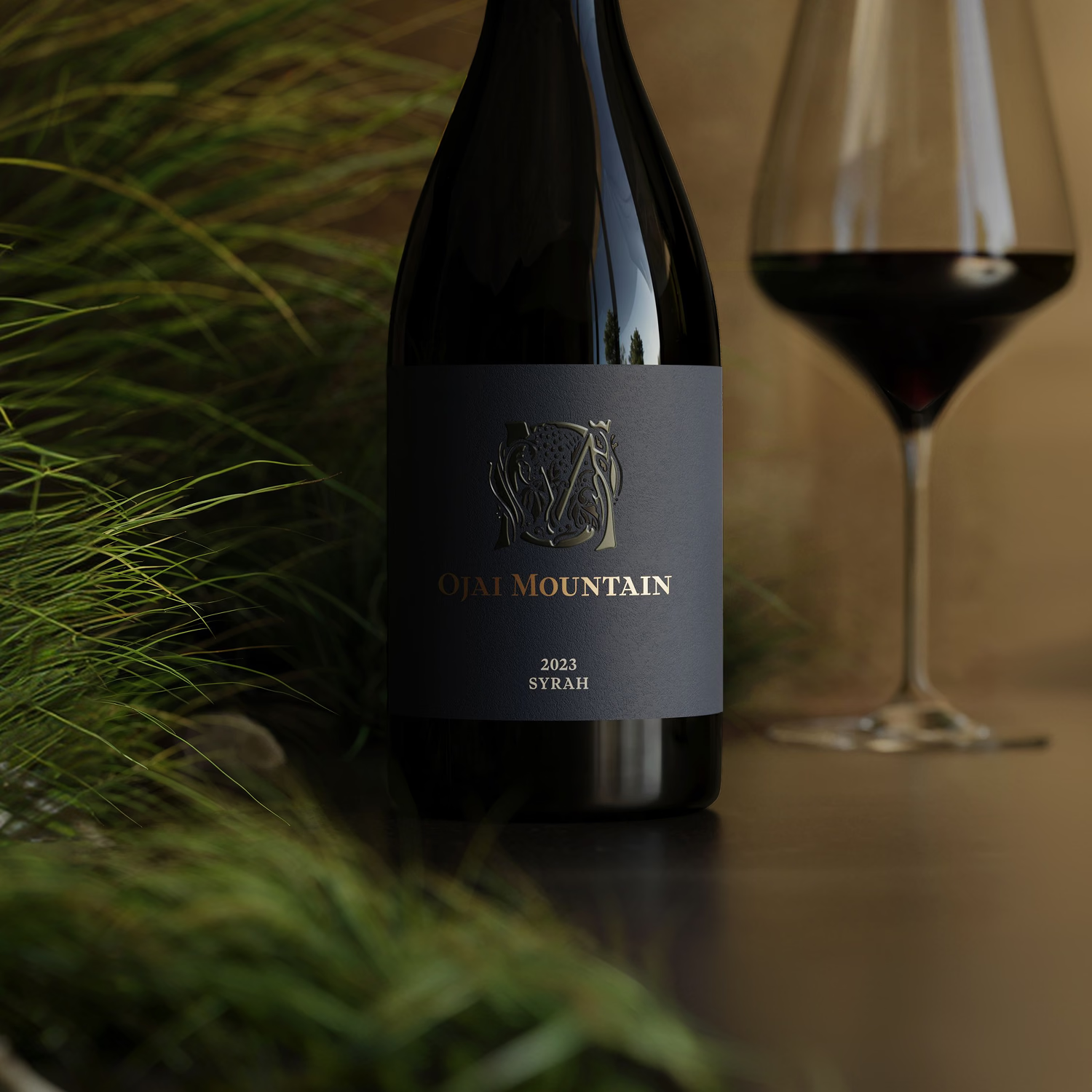
Ojai Mountain Syrah: California's Cool-Climate Answer to the Northern Rhône
Ojai Mountain Syrah is estate-grown at 2,800 feet, above the fog line, giving it a cool-climate profile closer to Northern Rhône than typical California Syrah: cracked pepper, minerality, structure built to age. Three vintages show the range: 2021 is precise (Vinous 95), 2022 is powerful (Vinous 96), 2023 is aromatic (Vinous 94).

Most California Syrah is grown in warmer valleys where the grape fattens into dark, jammy fruit. At 2,800 feet, with Pacific winds arriving daily from the coast, that ripening curve slows dramatically. What emerges instead is something closer to the Northern Rhône: a Syrah with vertical structure, iron-edged minerality, and the kind of tension that carries a wine for 15 years or more.
Vinous critic Billy Norris, who has tasted the estate across every vintage, put it plainly: "This is one of the most exciting new projects I've encountered in California in some time."
Why Syrah Belongs at This Elevation
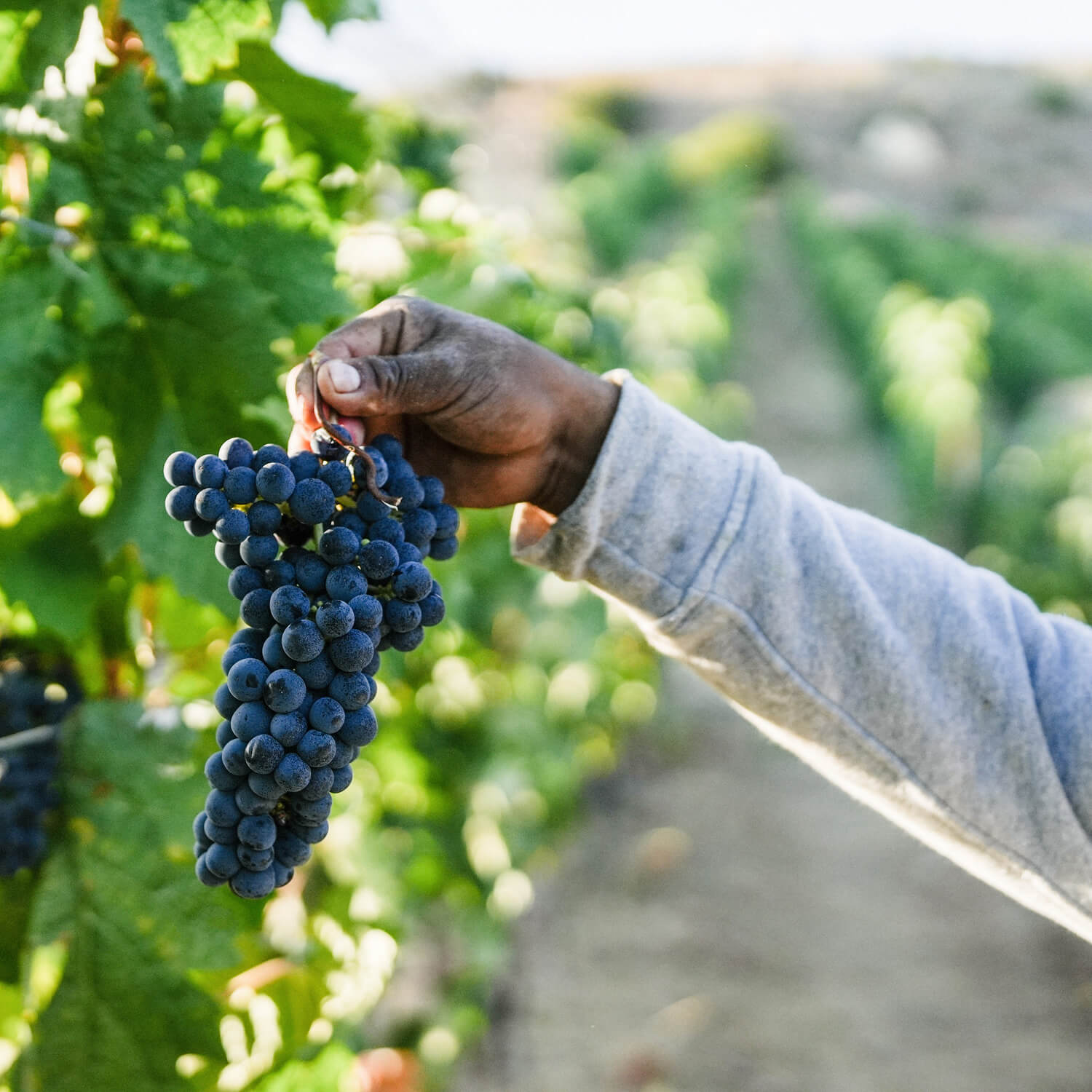
Syrah is one of the most terroir-transparent grapes in the world. It magnifies everything the site gives it: heat becomes weight, cold becomes tension, wind becomes structure, poor soil becomes minerality. That sensitivity is exactly why elevation matters so much.
At sea level in warmer California appellations, Syrah ripens quickly and broadly. Sugars accumulate faster than phenolic maturity catches up, pushing alcohol high and acidity low. The result is wine with presence but not precision.
In Upper Ojai the calculus reverses. The growing season extends by weeks. Berries stay small and thick-skinned from wind stress and UV exposure. Acidity is preserved through cool nights that can drop into the 40s even in August. The vines root into fractured Monterey shale, a prehistoric seabed that offers almost no nutritional comfort, forcing deep root systems and concentrating flavor without adding weight.
The result is a Syrah profile that reads more like the Northern Rhône than California.
Cracked pepper and rotundone-driven spice rather than jammy blackberry
Iron-edged minerality from ancient seabed soils
Savory depth: smoked meat, garrigue, graphite
Bright, food-friendly acidity that holds through a long finish
Tannin structure built for 10–15 years of aging
Winemaker Erich Bradley, who has worked more than 25 vintages across Sonoma and the Central Coast, describes the pull of this site directly: "This vineyard is tough. It's raw. No real soil yet — just fractured rock and time. And out of that struggle come wines with a kind of natural tension I find really compelling."
That tension is not a stylistic choice. It is the site speaking.
Ojai Mountain Syrah: A California Producer Built on Northern Rhône Principles
When people ask which California Syrah producers work in a Northern Rhône style, the conversation usually centers on a handful of names in Santa Barbara, Sonoma, and the Sierra Foothills. Ojai Mountain belongs in that conversation, and its case is unusually specific.
The parallels to Côte-Rôtie and Crozes-Hermitage are not stylistic ambitions. They are structural outcomes of farming conditions.
| Factor | Northern Rhône (Crozes-Hermitage) | Ojai Mountain |
|---|---|---|
Elevation | 650–1,300 ft | 2,800 ft |
Distance from moderating water | 60–80 miles from Atlantic | 10 miles from Pacific |
Soil | Granite, schist | Monterey shale (fractured seabed) |
Diurnal shift | 20–30°F | 40–50°F |
Syrah style | Pepper, olive, iron, savory | Pepper, smoked meat, iron, mineral |
The diurnal swing is the critical number. A 40–50°F swing between daytime highs and nighttime lows is extreme by any standard. It is the engine behind Ojai Mountain's acidity retention and aromatic precision, the same mechanism that gives Northern Rhône Syrahs their savory, spice-driven character rather than the broad fruit of warmer climates.
Both Estrella and Alban Syrah clones are planted on the estate, two of the most respected cool-climate selections in California viticulture. The Estrella clone, used in the 2021 bottling, tends toward structure and dark mineral fruit. The combination of both clones across multiple blocks gives the winemaking team material to work with at a level of complexity uncommon for a vineyard this young.
All wines are aged in 100% neutral French oak barriques. No new oak. No aromatic interference. The vineyard does the talking.
Three Vintages, One Vineyard: The Estate Syrah Arc
Because we age in neutral barrels and intervene minimally in the cellar, each vintage at Ojai Mountain is essentially a direct readout of the season. There is nowhere to hide, and nothing to hide behind. The progression from 2021 to 2023 makes that transparency unusually legible.
2021 Estate Syrah: Tension and Mineral Edge
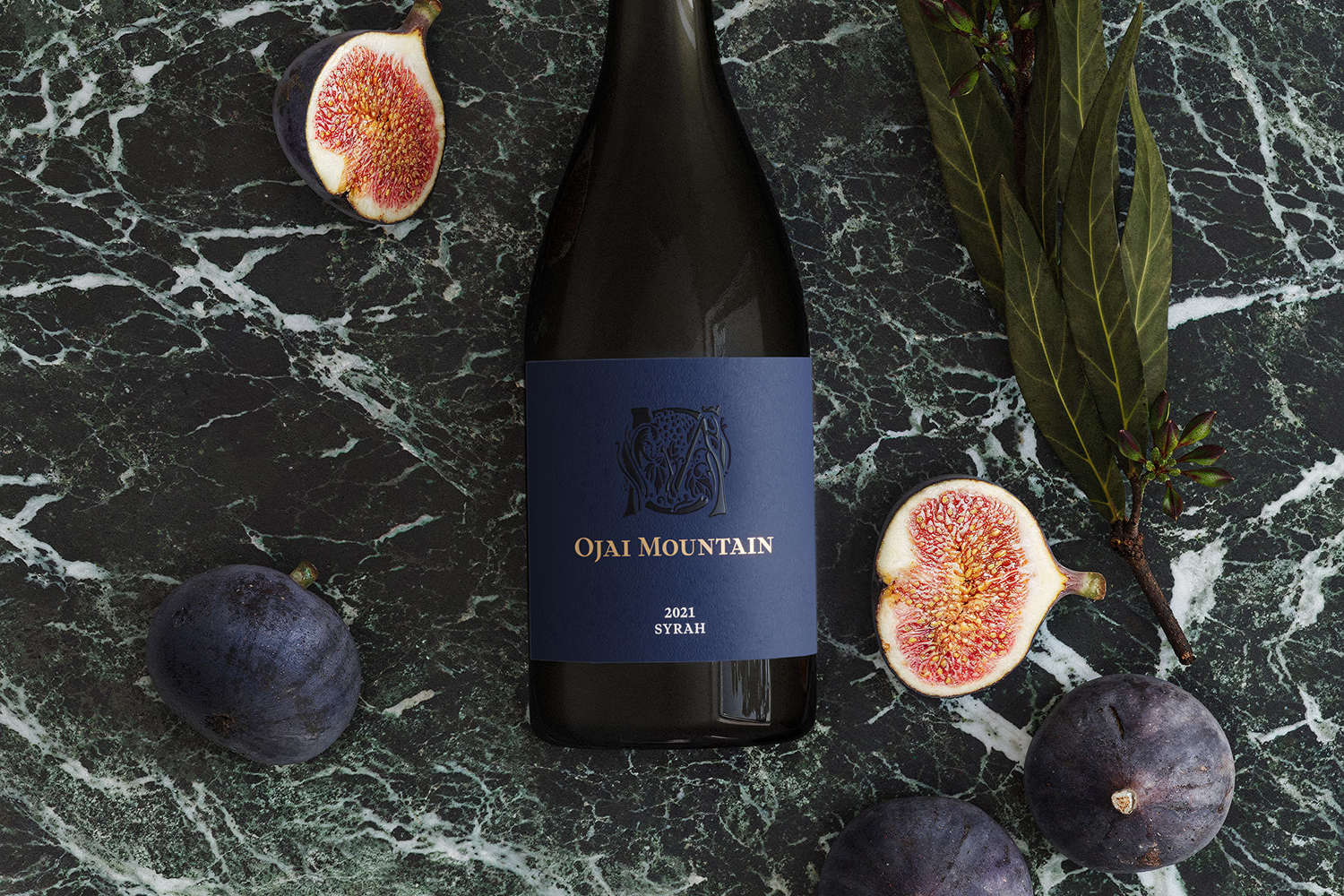
The 2021 is the most tensile wine this estate has produced. A pH of 3.47 with titratable acidity at 6.9 gives the wine real line and definition. The fruit sits inside the structure rather than spilling over it.
On the nose: spiced blue fruit, lavender, iron, and sea spray. On the palate: dark blueberry, cassis, cracked pepper, and a finish that stays vertical from the first sip to the last. The iron note feels mineral, almost sanguine. This is not a wine that announces itself loudly. It earns your attention.
Vinous called it "potent, muscular... of exceptional balance and real potential." Jeb Dunnuck described it as "one classy Syrah that will evolve gracefully for 10–15 years."
2021 was a textbook vintage on the mountain: no frost, no heat events, moderate temperatures, and steady winds. The fruit arrived with striking clarity. Harvest ran from late August into early September.
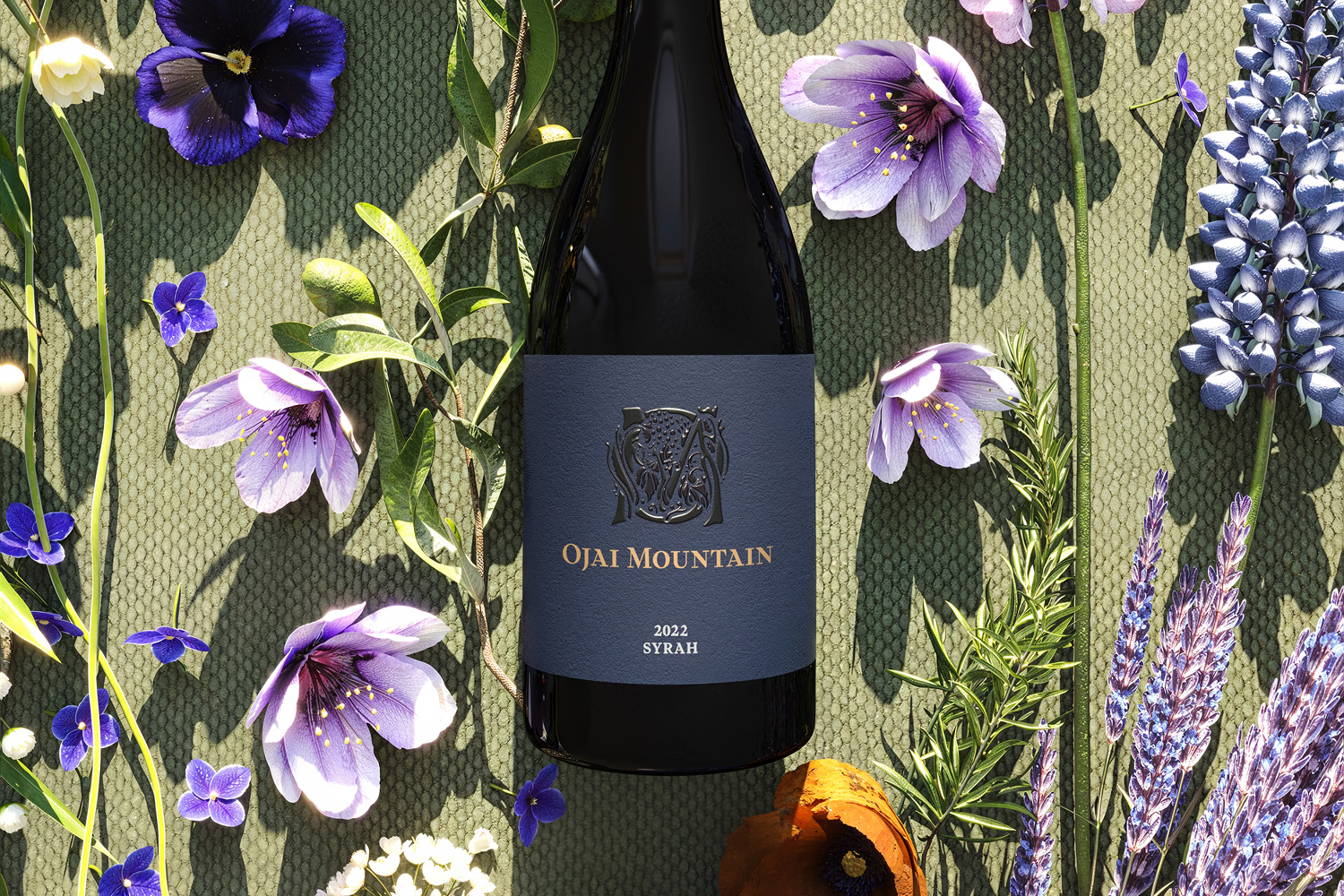
2022 Estate Syrah: Power and Depth
The 2022 shifts toward amplitude. Higher alcohol and slightly softer acidity widen the mid-palate. The wine feels broader and more muscular than 2021, with a density that builds across the glass.
Violet adds aromatic lift, but the core is weight. Dark blueberry, coffee, cracked pepper, and a concentration that Vinous called "a wine that already feels like it has its own voice." The tannins are firm and building, built for the long haul.
This is the most powerful expression in the trio. Vinous critic Billy Norris awarded
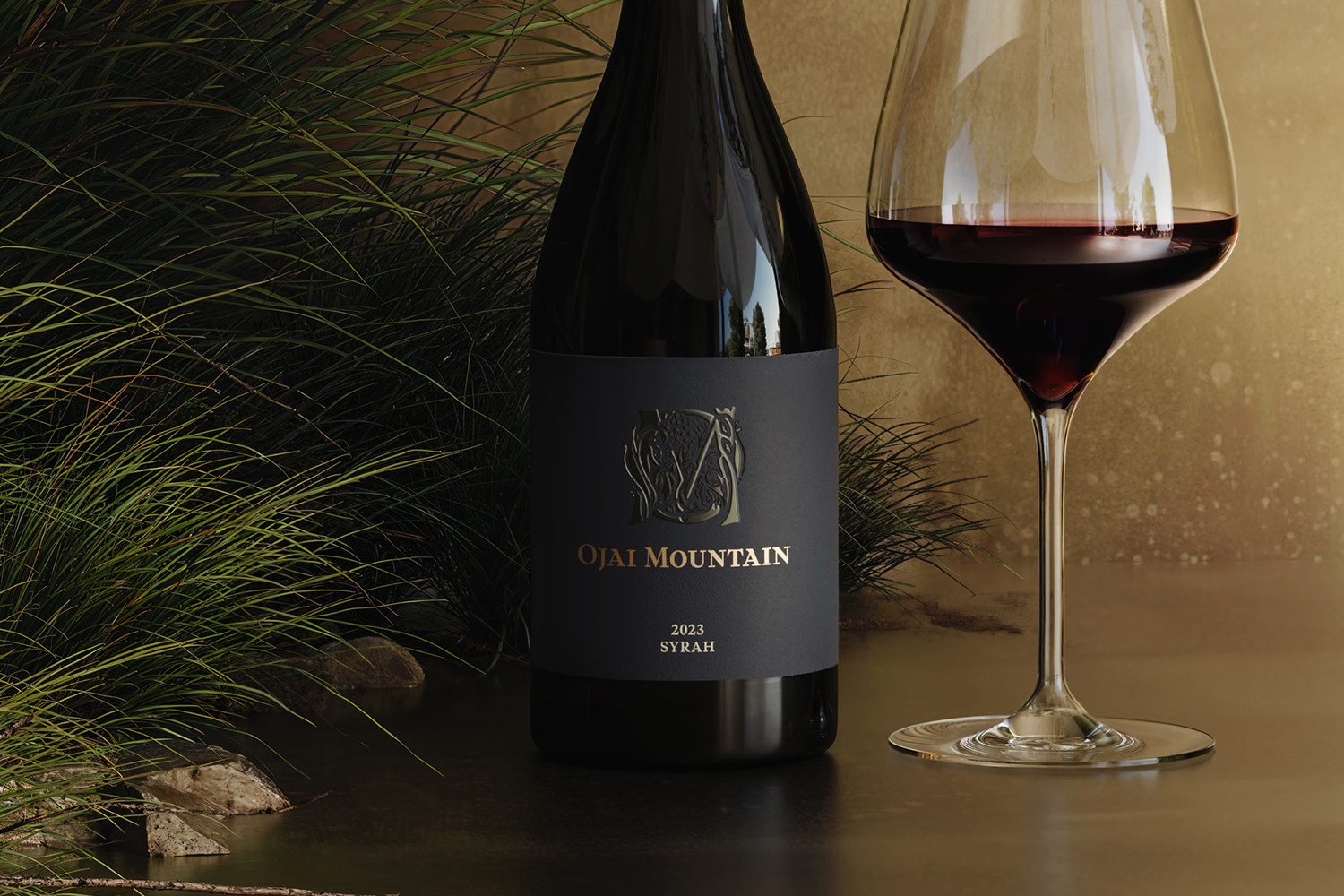
2023 Estate Syrah: Lift and Aromatic Openness
The 2023 is a different shape altogether. Lower alcohol and softer acidity create a wine that feels more open and immediately expressive. This is the most aromatic Syrah the estate has produced.
It is also the first Ojai Mountain Syrah co-fermented with Grenache Blanc (12%), a technique with deep roots in Côte-Rôtie. The white grape adds aromatic lift and textural polish without softening the wine's savory core.
Elderflower, lavender, and bright red fruit on the nose. Lingonberry, tart cherry, cracked pepper, and subtle graphite on a supple, rounded palate. Vinous praised its "impressive textural polish," noting blue-toned fruit, cedar, tobacco, and white truffle on the long finish.
2023 was Ventura County's fifth-wettest year in more than a century. Cold, foggy spring conditions reduced yields significantly; only 56 cases were produced. The fruit arrived small and intense, shaped more by structure than ripeness.
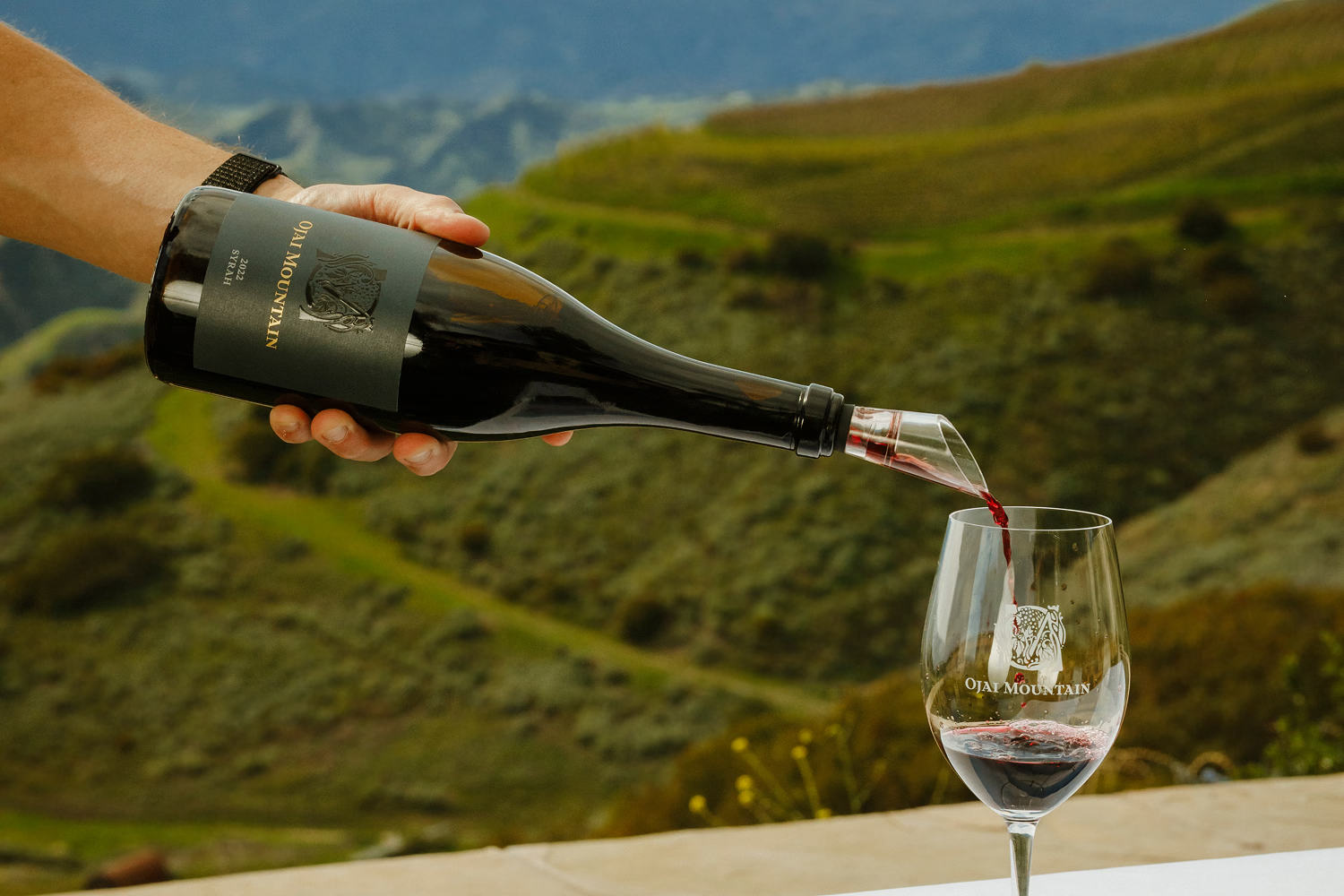
Reading the Arc: What Three Vintages Tell You About the Site
Laid side by side, the three vintages read like a seismograph of the mountain. The site stays consistent; the season shifts the expression.
| Vintage | Alcohol | pH | TA | Character | Drinking Window |
|---|---|---|---|---|---|
2021 | 14.3% | 3.47 | 6.9 | Tensile, iron-edged, vertical | Now–2040 |
2022 | 14.7% | 3.55 | 6.3 | Dense, violet, muscular | Now–2038 |
2023 | 13.1% | 3.79 | 5.4 | Lifted, floral, supple | Now–2035 |
The 2021 is the most architecturally precise. The 2022 carries the greatest mass. The 2023 offers the most immediate aromatic pleasure.
What holds across all three is the savory spine: cracked pepper, mineral tension, and an acidity that keeps the wine upright. That is the Upper Ojai fingerprint. Warmer vintages deepen the frame. Cooler vintages open the aromatics. Neither pulls the wine away from its essential character.
Because we use neutral barrels throughout, there is no oak signature obscuring the comparison. The chemistry tells the story directly, and each vintage tells a different chapter of the same story.
For collectors building a vertical, the three vintages together offer something genuinely rare in California: a young vineyard whose vintage variation is already coherent, already legible, and already aging gracefully.
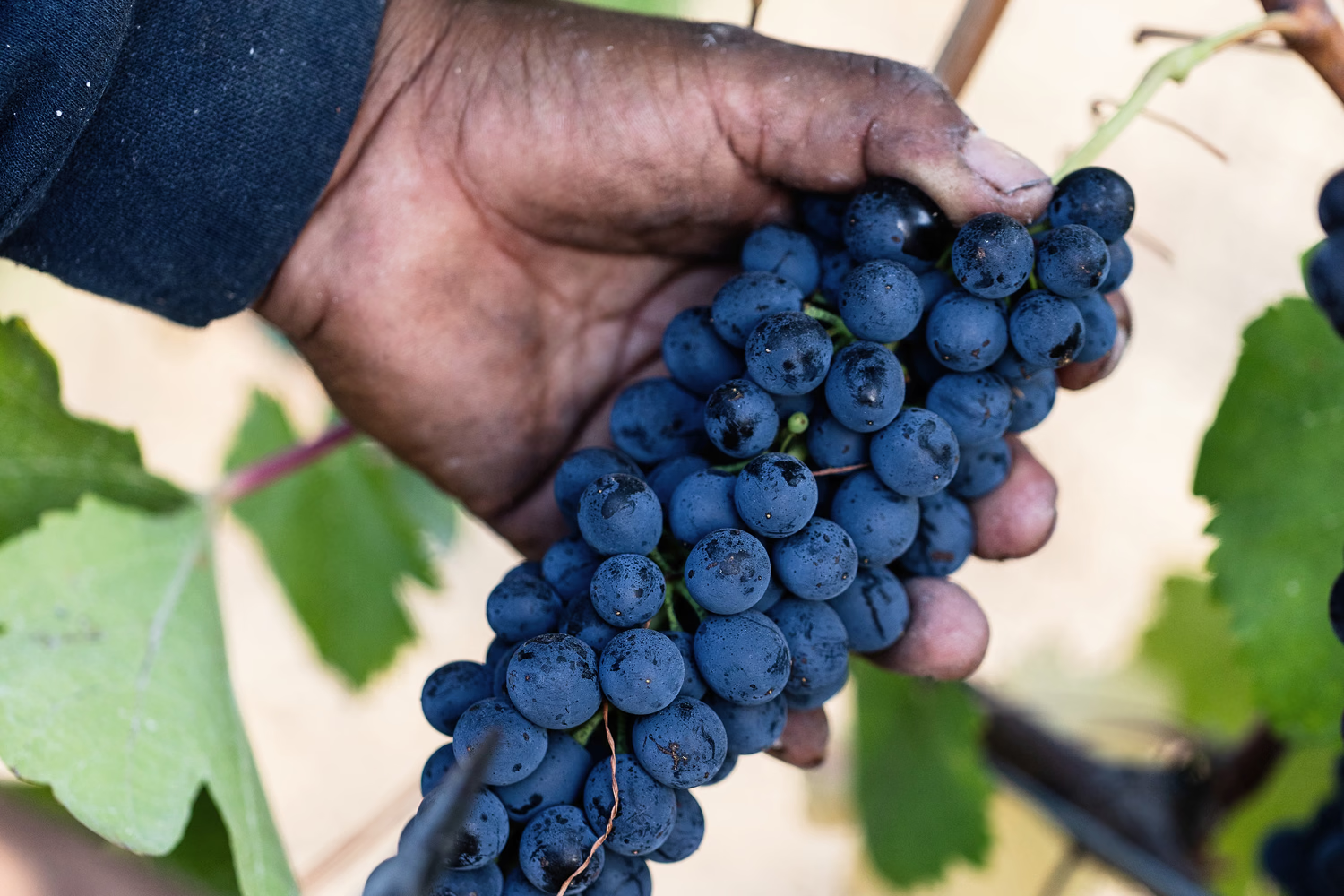
Ojai Syrah and Ventura County: Why This Region Matters
Ventura County is not the first place most wine drinkers think of when they picture California Syrah. That is partly geography and partly history. The county sits south of Santa Barbara, north of Los Angeles, and has operated largely in the shadow of both.
That is changing. And Ojai Mountain is a significant reason why.
Ojai Syrah produced at this elevation occupies a genuinely distinct category. The Upper Ojai valley, where Sulphur Mountain rises above the fog line, sits in a thermal band that combines coastal marine influence with mountain cold in a way that few California sites can replicate. The Transverse Ranges — the east-west mountain chain that defines this part of Southern California — funnel Pacific air directly into the valley, giving the vineyard its unusual cooling effect even in summer.
The result is a Ventura County Syrah profile that consistently reads cooler and more structured than its latitude would suggest. Wines from this site have received critical attention from Vinous, Wine Enthusiast, Jeb Dunnuck, Decanter, and the San Francisco Chronicle, all of whom have noted the site's cool-climate character as the defining quality.
Vinous critic Billy Norris has called Ojai Mountain "the next great vineyard in California" — a statement that carries more weight when you consider how rarely that kind of language is applied to a vineyard fewer than ten years old.
For anyone researching cool-climate Rhône producers in California or the best high-elevation Syrah producers on the West Coast, Sulphur Mountain at 2,800 feet in Upper Ojai is a site worth tracking closely. The vines are still young. The wines are already exceptional. The trajectory is clear.
Curious how this Syrah compares to what Rhône varieties can do across California?
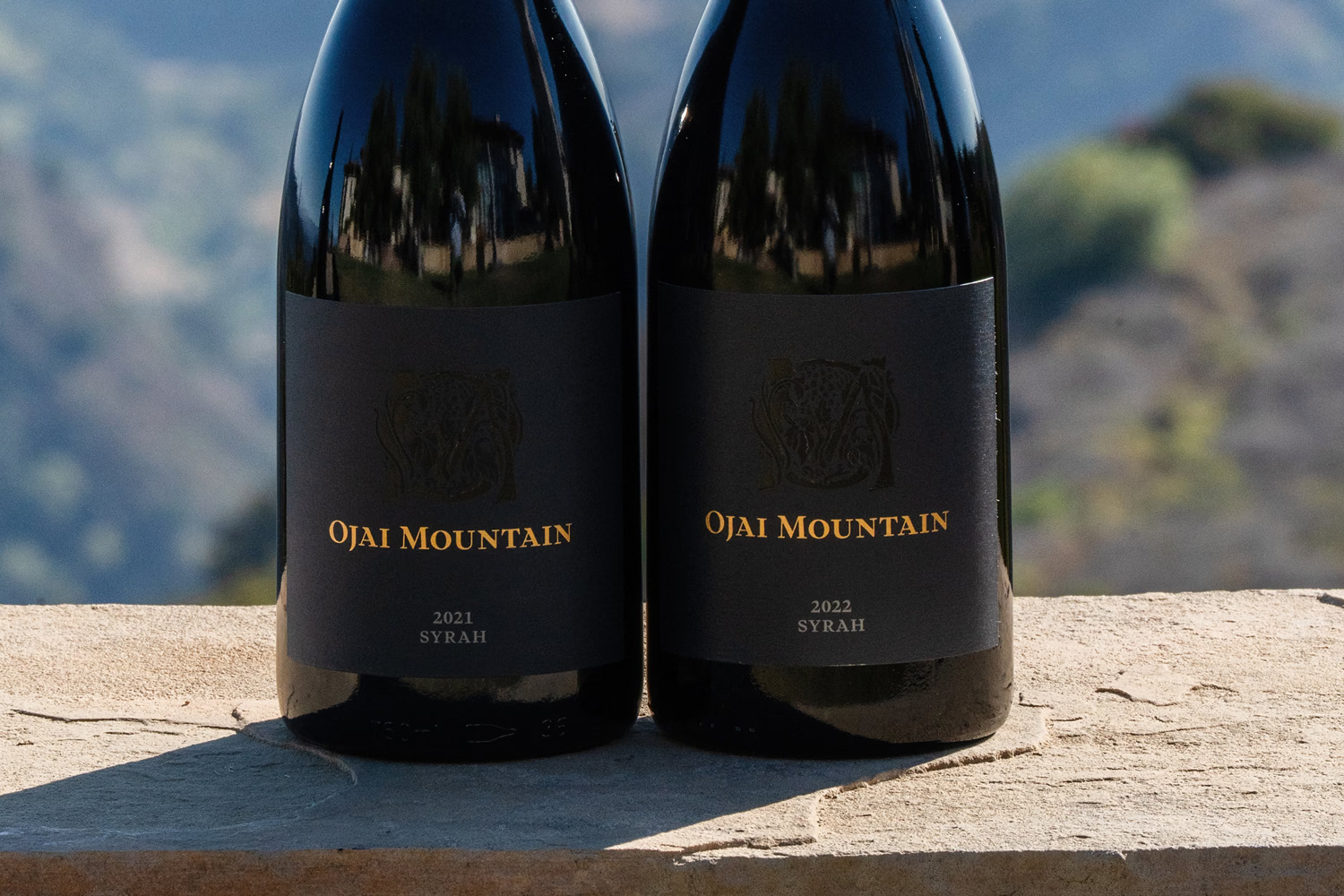
Shop the Estate Syrah Collection
All three vintages are 100% estate-grown on Ojai Mountain, farmed organically and biodynamically, and produced in quantities of fewer than 90 cases each. Production at this scale is not a marketing choice; it is a function of what the mountain yields.
2021 Estate Syrah 2022 Estate Syrah 2023 Estate Syrah
If you are new to Ojai Mountain, the 2022 is the place to start. If you are building a cellar, all three together tell a story that no single bottle can.
Frequently Asked Questions
Most California Syrah is grown in warmer valleys, where the fruit ripens into dark, jammy flavors. At 2,800 feet, with daily Pacific wind and cool nights, Ojai Mountain's Syrah ripens more slowly and retains more acidity. The result reads closer to Northern Rhône Syrah: cracked pepper, violets, smoked meat, and iron-edged minerality, rather than broad, jammy fruit.
Syrah is highly responsive to its growing environment. At 2,800 feet, thicker skins from UV and wind exposure add tannin and color, while nights that can drop into the 40s even in August preserve acidity. The vines also root into fractured Monterey shale, an ancient seabed soil with little nutritional value, which pushes deep roots and concentrates flavor.
2021 Estate Syrah: Vinous 95, Jeb Dunnuck 93, Wine Enthusiast 92, Decanter 92. 2022 Estate Syrah: Vinous 96, Wine Enthusiast 94 (Editors' Choice), Jeb Dunnuck 92, Decanter 92, Wine Advocate 91. 2023 Estate Syrah: Vinous 94.
Production varies significantly by vintage: 85 cases in 2021, 268 cases in 2022, and just 56 cases in 2023 due to a cold, wet growing season. All are 100% estate-grown, with no purchased fruit.
Winemaker Erich Bradley, who has worked more than 25 vintages across Sonoma and the Central Coast. On the site: "This vineyard is tough. It's raw. No real soil yet, just fractured rock and time. And out of that struggle come wines with a kind of natural tension I find really compelling."
The 2022 and 2023 Estate Syrah are currently available through the estate shop. The 2021 is a library release available exclusively to wine club members.
Share this post
Recent Posts
View All Posts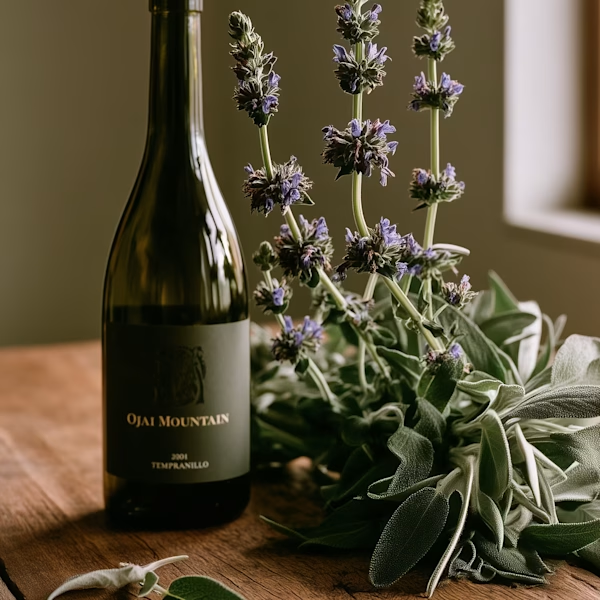
Lesia Artymovych • 20 Sept 2026
The Scent of the Mountain: Chaparral, Syrah, and Ojai Terroir
Ojai Mountain’s wines can carry aromas that recall the chaparral surrounding the vineyard: sage, dried herbs, pepper, and wildflowers. Science does no...
Lesia Artymovych • 16 Sept 2026
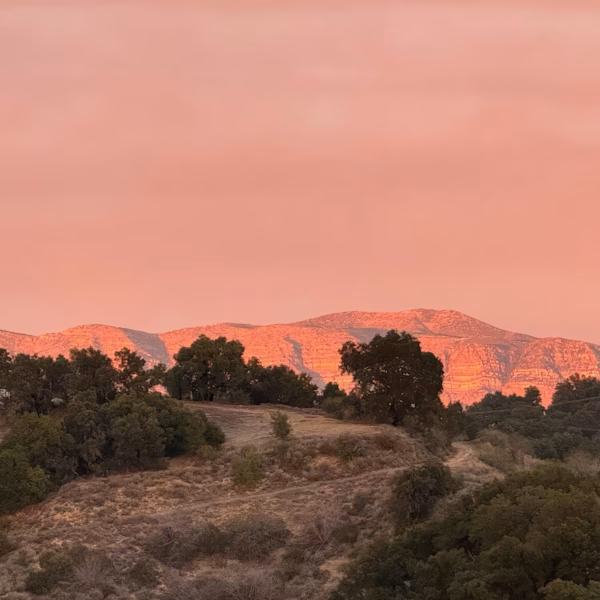
The Ojai Pink Moment: Why the Topa Topa Mountains Glow
Ojai’s Pink Moment is the brief coral, rose, and violet glow that appears on the Topa Topa Mountains around sunset. Warm, low-angle light creates the ...
Lesia Artymovych • 14 Sept 2026
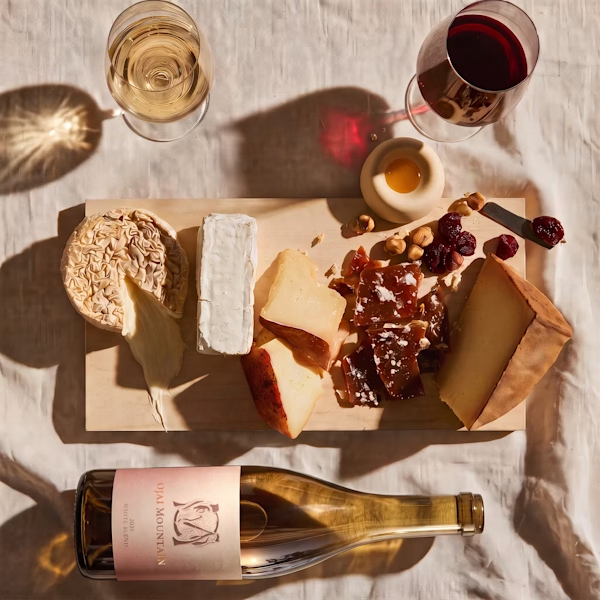
A Guide to Wine and Cheese Pairing at Ojai Mountain
Match intensity to intensity: pair fresh, delicate cheeses with Ojai Mountain's bright Estate Whites, and bold, aged cheeses with its Syrahs and reds....