
 Log in
What Is Veraison? Grape Ripening at High Elevation
Veraison is when grapes stop growing and start ripening: berries soften, sugar climbs, acid falls, red varieties color up. It's uneven and runs two to four weeks. At Ojai Mountain's 2,800 feet, cold nights slow the process, stretching that window and preserving both concentration and freshness.

Veraison is the moment in the vineyard year when grapes stop growing and start ripening. It is not harvest. It is not the finish line. It is, more accurately, the starting gun for everything that determines what ends up in your glass.
The word comes from the French
At Ojai Mountain, veraison carries particular weight. Our vineyard sits at 2,800 feet above sea level, exposed to marine winds off the Pacific and wide day-to-night temperature swings. That environment slows ripening considerably, and veraison here is the beginning of a long, careful march toward harvest, one that helps explain the freshness, structure, and tension that define our wines.
Three things to know before reading further:
Veraison is a stage, not a single day. It can unfold over two to four weeks across a vineyard.
Not all berries ripen at the same time, even on the same vine.
At high elevation, the ripening window after veraison is extended, which shapes style as much as variety does.
What Happens During Veraison in the Vineyard?
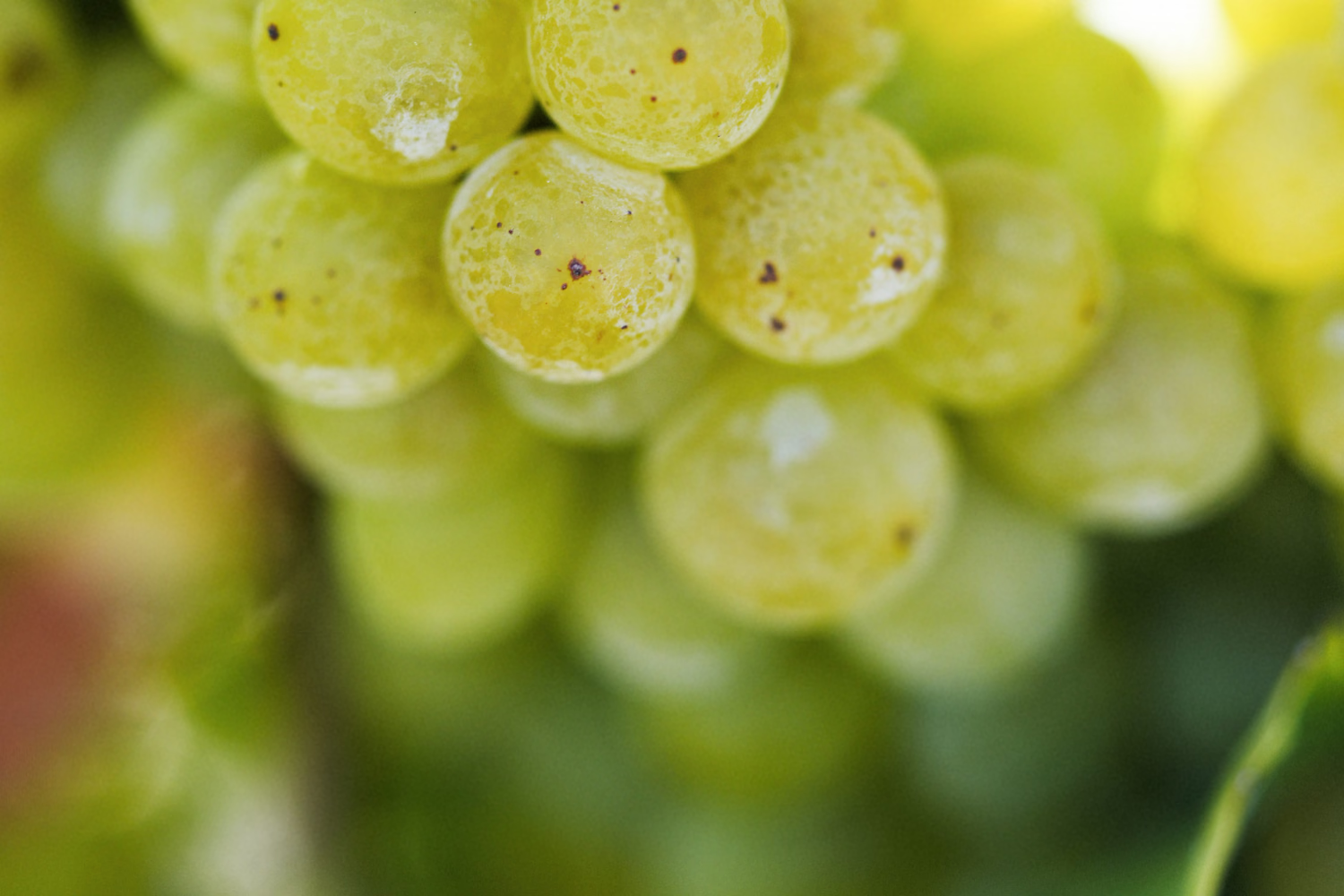
Before veraison, a grapevine is focused almost entirely on growth. Berries are small, hard, and loaded with malic acid, the same sharp acid found in green apples. They contain almost no sugar. If you tasted one at this stage, it would be astringent and sour, with nothing resembling the fruit in a finished wine.
Veraison changes that in three distinct, measurable ways:
Berries soften and swell. The cell walls of the grape berry begin to loosen. Berries take on water, increase in volume, and lose the firmness that characterized them through spring and early summer. This is the moment the berry transitions from a defensive, growth-oriented structure to one designed for seed dispersal.Sugar accumulates rapidly. Glucose and fructose begin moving into the berry from the vine's photosynthetic activity. Brix, the standard measure of sugar content in grape juice, climbs steadily from near zero toward the 20-26 range typical of harvest-ready fruit. The rate of accumulation depends heavily on temperature, sunlight, and vine stress.Acidity shifts. Malic acid, which dominated the pre-veraison berry, begins to break down through a process called respiration. Tartaric acid, which is more heat-stable and less sharp, becomes the dominant acid. The total acidity of the berry drops, but what remains is more balanced and structurally important for the finished wine.
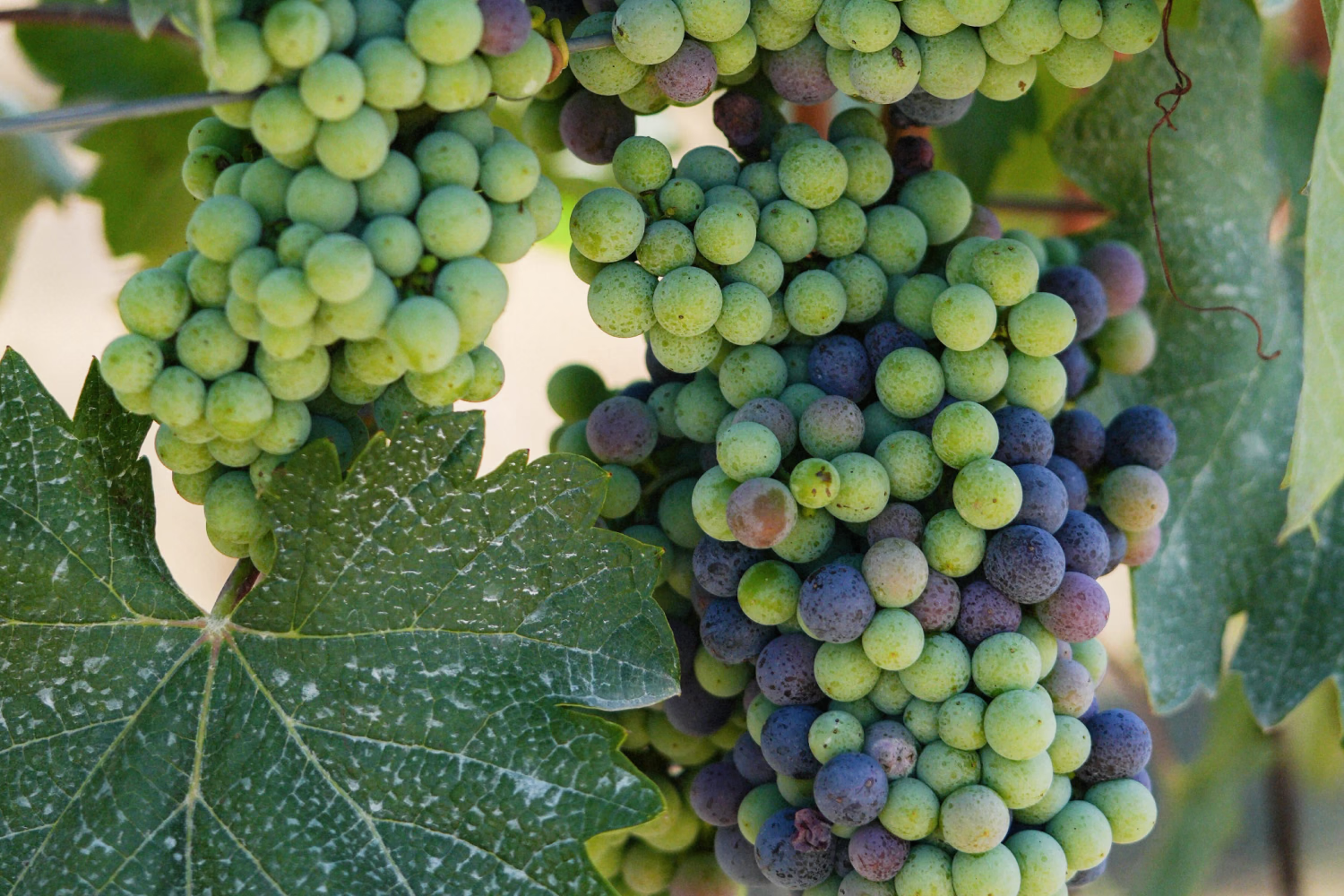
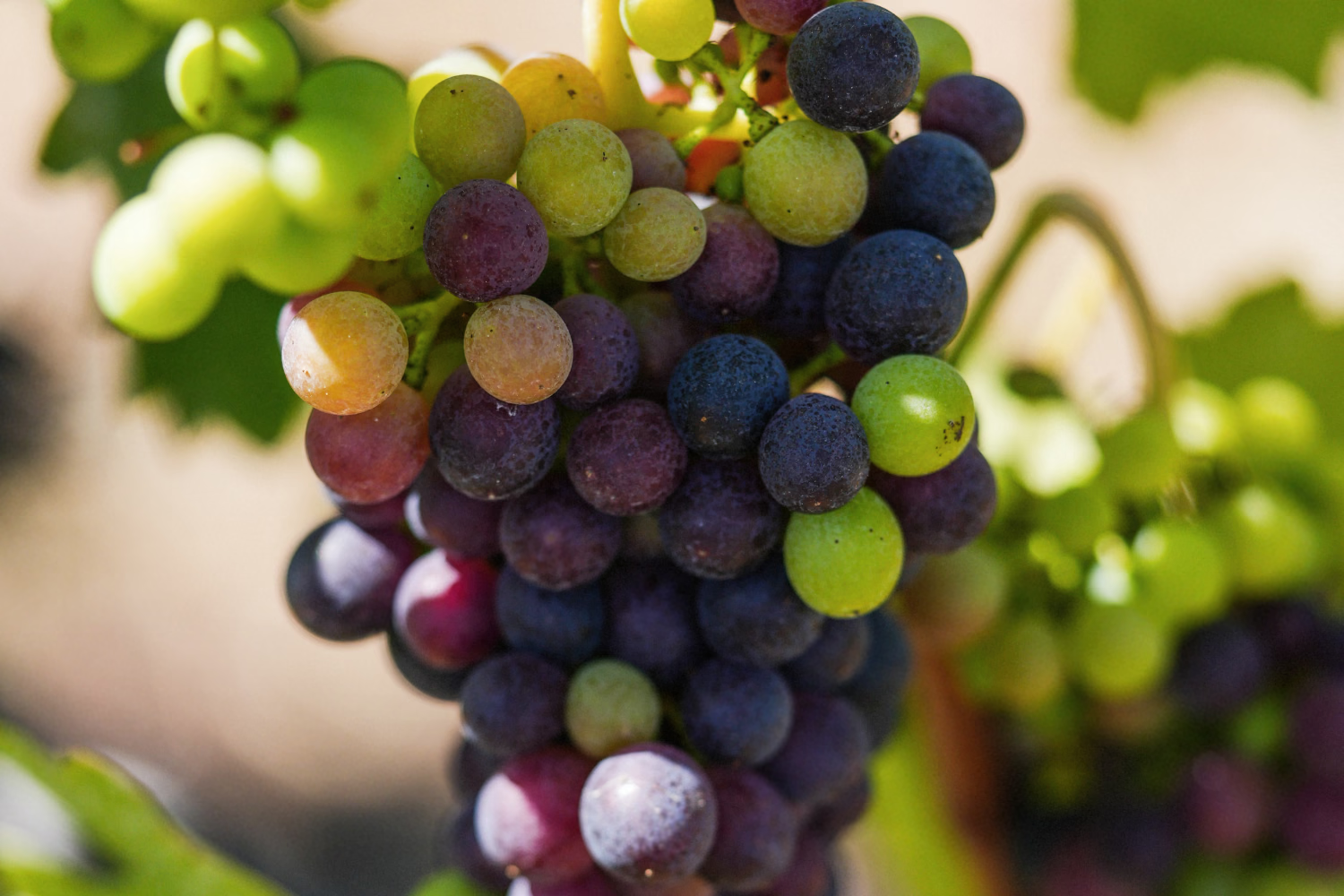
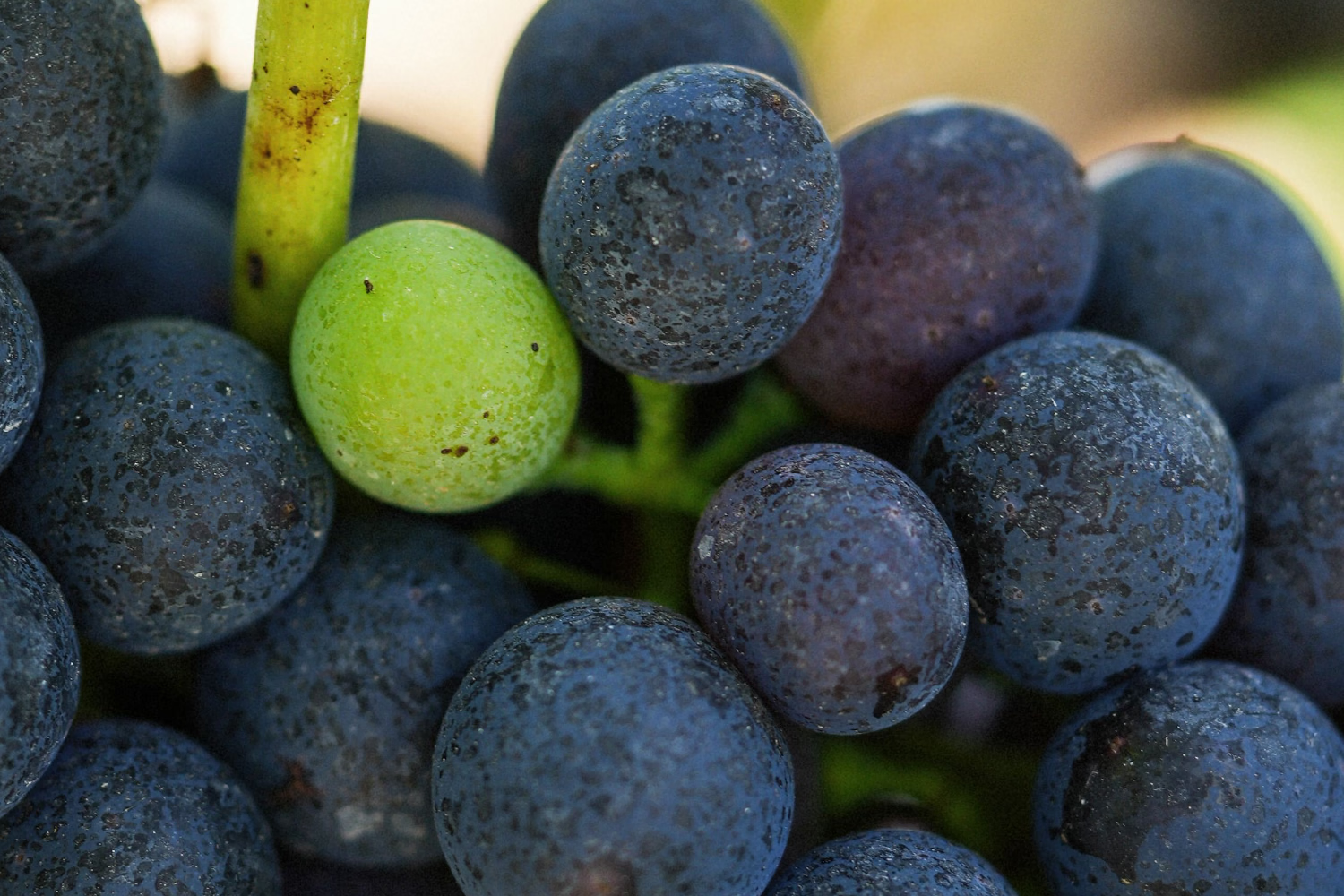
For red varieties, a fourth change is visible to the naked eye: anthocyanins, the pigment compounds responsible for color, begin accumulating in the berry skin. The transition from green to purple, red, or near-black happens gradually over the veraison window, not all at once.
How Fast Do Sugars Accumulate?
Before veraison, berries contain almost no sugar, typically around 3-6 °Brix. Once veraison begins, accumulation is surprisingly fast.
| Harvest Brix | Estimated Alcohol |
|---|---|
22 °Brix | ~12.5% |
24 °Brix | ~13.5% |
26 °Brix | ~14.5% |
Here is how sugar typically builds after veraison:
| Stage | Brix |
|---|---|
Veraison begins | ~5 °Brix |
1 week after veraison | 8-10 °Brix |
2 weeks after veraison | 14-16 °Brix |
3 weeks after veraison | 18-20 °Brix |
Harvest (depending on style) | 23-26 °Brix |
Daily increases typically average 0.2 to 0.5 °Brix, though a stretch of warm weather can push accumulation faster. At Ojai Mountain, cooler nights slow that rate, giving the post-veraison window more time to develop complexity before sugar climbs too high.
Why Veraison Matters More Than a Color Change
The color shift is the most visible signal, but it is the least consequential part of what veraison actually does. What matters is that veraison begins the balance-building period, the stretch of weeks between color change and harvest where the winemaker's decisions start to matter and the vineyard's character starts to assert itself.
During this window, three things compete for dominance: sugar accumulation, acid retention, and phenolic development (tannins, color compounds, and aromatic precursors). How those three forces resolve is what separates a wine with tension and structure from one that is heavy, flat, or one-dimensional.
| Before Veraison | After Veraison | |
|---|---|---|
Berry texture | Hard, firm | Soft, swelling |
Sugar (Brix) | Near zero | Climbing toward 20-26+ |
Dominant acid | Malic (sharp, green apple) | Tartaric (stable, structured) |
Color (reds) | Green | Deepening red, purple, or near-black |
Tannin development | Minimal | Building in skins and seeds |
Aromatic compounds | Largely absent | Developing rapidly |
Sugar Ripe Is Not the Same as Phenolically Ripe
This is where harvest decisions become genuinely difficult, and it is one of the concepts that separates serious viticulture from industrial grape growing.
Phenolic ripeness refers to the maturity of tannins, color compounds, and flavor precursors in the berry's skins and seeds, not just the sugar in its pulp. A grape can reach 26 °Brix while its seeds are still green, its skins still firm, and its flavors still herbal. By the numbers, it looks harvest-ready. In the glass, it would produce harsh, astringent wine.
The harvest dilemma plays out like this: wait for phenolic ripeness and sugar climbs further, pushing potential alcohol higher. Harvest early for freshness and the tannins may be underripe. There is no clean solution, only judgment calls informed by tasting berries, checking seed color, and reading the weather forecast.
Signs winemakers look for when assessing phenolic ripeness:
Seeds turning brown rather than remaining green
Skins that separate easily from the pulp
Tannins that feel soft and coating rather than harsh and grippy
Ripe fruit aromas replacing herbal or vegetal notes
Deeper, more stable color in red varieties
At Ojai Mountain, the extended post-veraison window at 2,800 feet helps resolve this tension. Cooler nights slow sugar accumulation, giving phenolics more time to develop without the fruit tipping into overripeness. That alignment between sugar and phenolic maturity is one reason the wines carry both concentration and freshness rather than trading one for the other.
What Veraison Looks Like at Ojai Mountain
At sea level, veraison can arrive quickly and move fast. Warm, stable summer temperatures push sugar accumulation at pace, and the post-veraison window can compress. At Ojai Mountain, the process moves differently.
“This vineyard is tough. It's raw. No real soil yet, just fractured rock and time. And out of that struggle come wines with a kind of natural tension I find really compelling.”
That tension starts here, during veraison, on a ridge where conditions are rarely comfortable for the vine.
When visitors walk the vineyard during veraison, they often notice clusters that are only partially colored, some berries deep red or gold, others still green on the same bunch. That unevenness is not a flaw. It is the mountain doing its work. Different blocks at slightly different elevations and aspects move through veraison at different times, and that variability is one reason we ferment blocks separately, capturing each microclimate's distinct character rather than averaging it out.
How This Stage Shapes the Wines We Grow
Veraison does not affect all varieties equally, and the differences in timing are more pronounced than most people realize. Even growing side by side on the same mountain, our six Rhône varieties move through veraison at their own pace, and that timing shapes everything from harvest scheduling to the style in the finished wine.
White Varieties
| Variety | Veraison Timing | Duration | Notes |
|---|---|---|---|
Grenache Blanc | Early | Fairly quick | Colors and ripens evenly; retains bright acidity well into harvest |
Picpoul | Early to mid | Moderate | Naturally high acidity; holds freshness reliably through the ripening window |
Roussanne | Mid to late | Long | One of the slowest white Rhône varieties; develops unevenly and rewards patience |
Red Varieties
| Variety | Veraison Timing | Duration | Notes |
|---|---|---|---|
Syrah | Mid | Moderate | Colors uniformly; reaches phenolic ripeness relatively predictably |
Grenache Noir | Mid | Longer | Veraison can be uneven due to variable berry size and cluster architecture; requires careful monitoring |
Mourvèdre | Late | Longest | Almost always last to begin and finish veraison; benefits from long hang time |
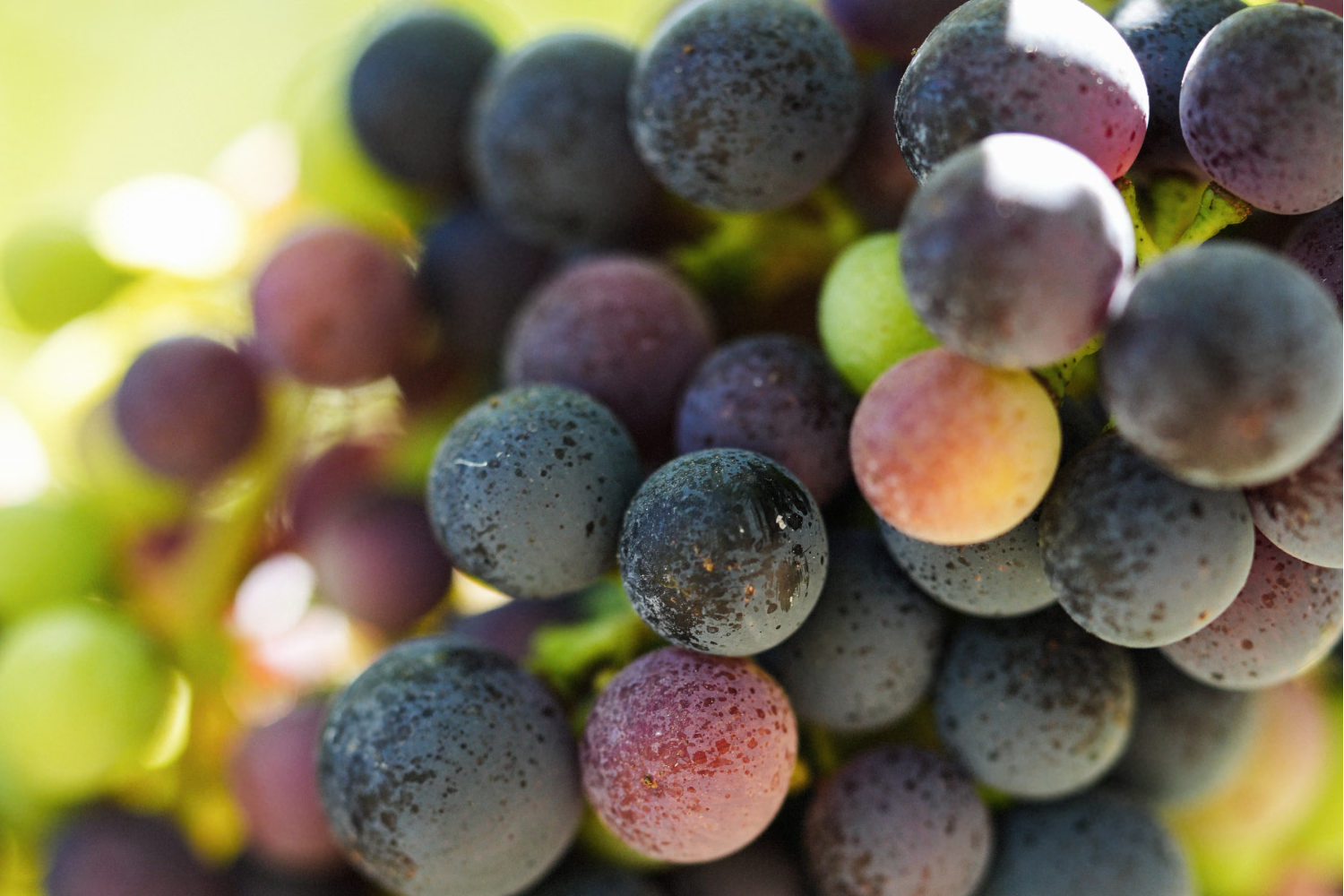
Red Varieties at Elevation
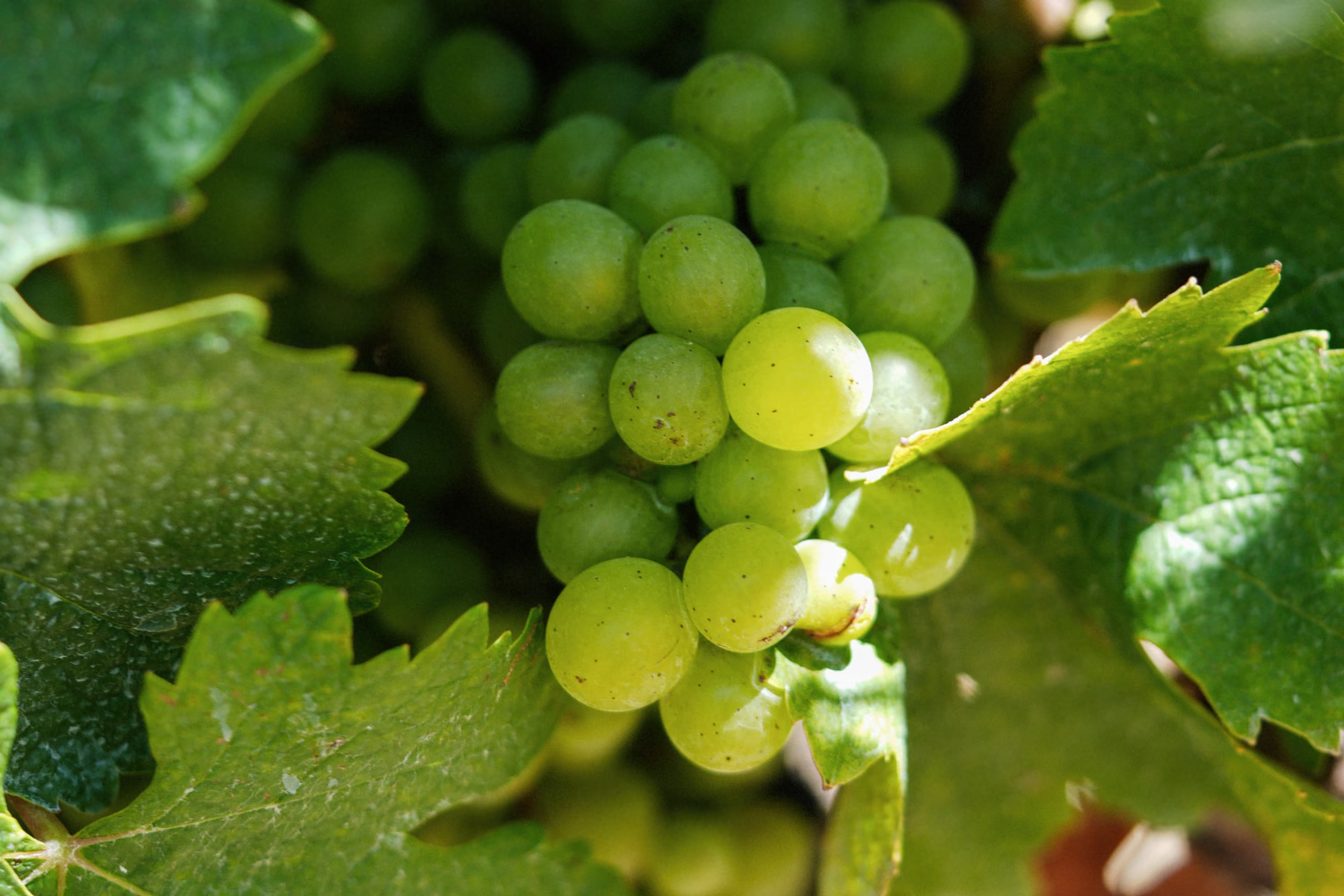
White Varieties at Elevation
The through-line across all six varieties is the same: a long, cool post-veraison window, shaped by altitude and marine influence, that allows each grape to develop complexity without sacrificing the freshness and tension that define the Ojai Mountain style.
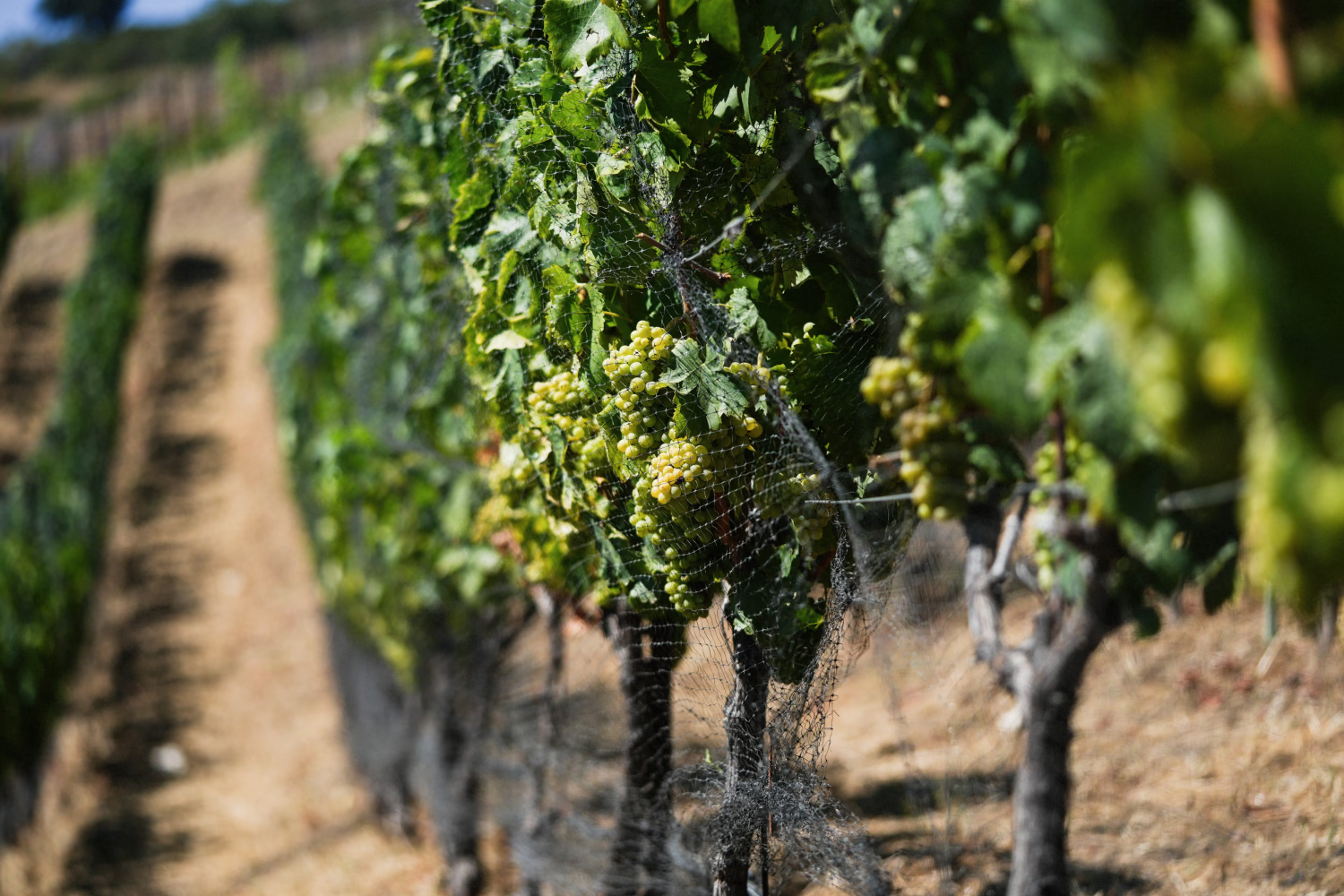
What Guests Might Notice During Veraison
Visiting the vineyard during veraison does not require any technical knowledge to be worthwhile. The visual transformation happening across the blocks is striking on its own terms.
A few things you might observe, and what they mean:
Clusters with mixed colors. Some berries are already deep red or golden, while others on the same bunch are still green. This is normal and expected. Veraison moves through a vineyard unevenly, block by block and vine by vine.Softer, heavier fruit. Berries that have passed through veraison feel noticeably different from those still in the pre-veraison stage. The softening is the first physical sign that ripening has begun.A quieter vineyard. The intense vegetative energy of spring and early summer has settled. Canopy growth slows. The vine's focus has shifted inward, toward the fruit.Uneven ripening across blocks. At Ojai Mountain, different blocks at slightly different elevations and aspects will move through veraison at different times. That variability is one reason we ferment blocks separately, so we can capture each microclimate's distinct character rather than averaging it out.
You do not need to understand the biochemistry to appreciate what you are seeing. A vineyard in veraison is a vineyard in transition, and that shift, from growth to ripening, is one of the more honest and unscripted moments in the farming year.
A Small Stage With a Big Role in the Glass
Veraison is easy to overlook. It is not harvest. It is not the dramatic moment the wine is made. But it is the hinge point on which everything else turns. The balance of sugar, acid, tannin, and aroma that defines a finished wine begins to take shape in the weeks immediately after veraison, and the conditions under which that happens determine style as much as variety or winemaking technique.
At Ojai Mountain, those conditions are specific: high elevation, fractured shale, cold nights, and ocean wind. They make veraison arrive later, move slower, and resolve into a longer, cooler ripening window than most California vineyards experience. That is not a constraint we work around. It is the reason the wines taste the way they do.
Frequently Asked Questions
In the Northern Hemisphere, veraison usually begins in mid to late summer. At Ojai Mountain it typically starts in July and carries into August, which is later than most California vineyards because of the elevation and the marine influence off the Pacific.
Two to four weeks across a whole vineyard. An individual cluster moves through faster, but blocks at different elevations and aspects begin at different times, so the vineyard as a whole stays in veraison for several weeks.
Usually 30 to 70 days, depending on variety and season. At Ojai Mountain, Picpoul comes in around early September and Mourvèdre and Tempranillo often hang until mid to late October, so the gap between the first and last pick can be six weeks or more.
Because veraison is not synchronised. Berries ripen at their own pace even within one bunch, and the effect is stronger at elevation where wind exposure and soil depth vary sharply across short distances. It is normal, and it is the reason picking decisions here are made block by block rather than all at once.
Yes, it is just harder to see. White varieties shift from opaque green to a translucent gold, and the berry softens the same way a red one does. The chemistry underneath is identical: sugar rises, malic acid falls, tartaric acid takes over.
Veraison is the start of ripening, not a separate process. Before it, the vine is building the berry. After it, the vine is filling the berry. Ripening continues from veraison all the way to harvest.
You can, but they are not pleasant. A berry at the start of veraison holds around 5 °Brix and is still dominated by malic acid, so it tastes sour and astringent. Most of the sugar arrives in the weeks that follow.
Sugar ripeness is what a refractometer measures in the pulp. Phenolic ripeness is the maturity of tannins, color, and flavor compounds in the skins and seeds. They do not arrive together. A grape can be sugar-ripe with green seeds and herbal flavors, which is why harvest decisions rely on tasting berries rather than numbers alone.
Cold nights slow sugar accumulation while phenolic development continues. That stretches the window between veraison and harvest, so tannins, color, and aromatics have more time to mature before potential alcohol climbs too high. It is the main reason mountain fruit can carry concentration and freshness together.
Yes. July and August are when the color change is most visible across the blocks. Visits are private and booked in advance, with 48 hours’ notice for online booking.
Share this post
Recent Posts
View All Posts
Lesia Artymovych • 20 Sept 2026
The Scent of the Mountain: Chaparral, Syrah, and Ojai Terroir
Ojai Mountain’s wines can carry aromas that recall the chaparral surrounding the vineyard: sage, dried herbs, pepper, and wildflowers. Science does no...
Lesia Artymovych • 16 Sept 2026
The Ojai Pink Moment: Why the Topa Topa Mountains Glow
Ojai’s Pink Moment is the brief coral, rose, and violet glow that appears on the Topa Topa Mountains around sunset. Warm, low-angle light creates the ...
Lesia Artymovych • 14 Sept 2026
A Guide to Wine and Cheese Pairing at Ojai Mountain
Match intensity to intensity: pair fresh, delicate cheeses with Ojai Mountain's bright Estate Whites, and bold, aged cheeses with its Syrahs and reds....