
 Log in
We Sacrifice 30% of Our Wine. On Purpose.
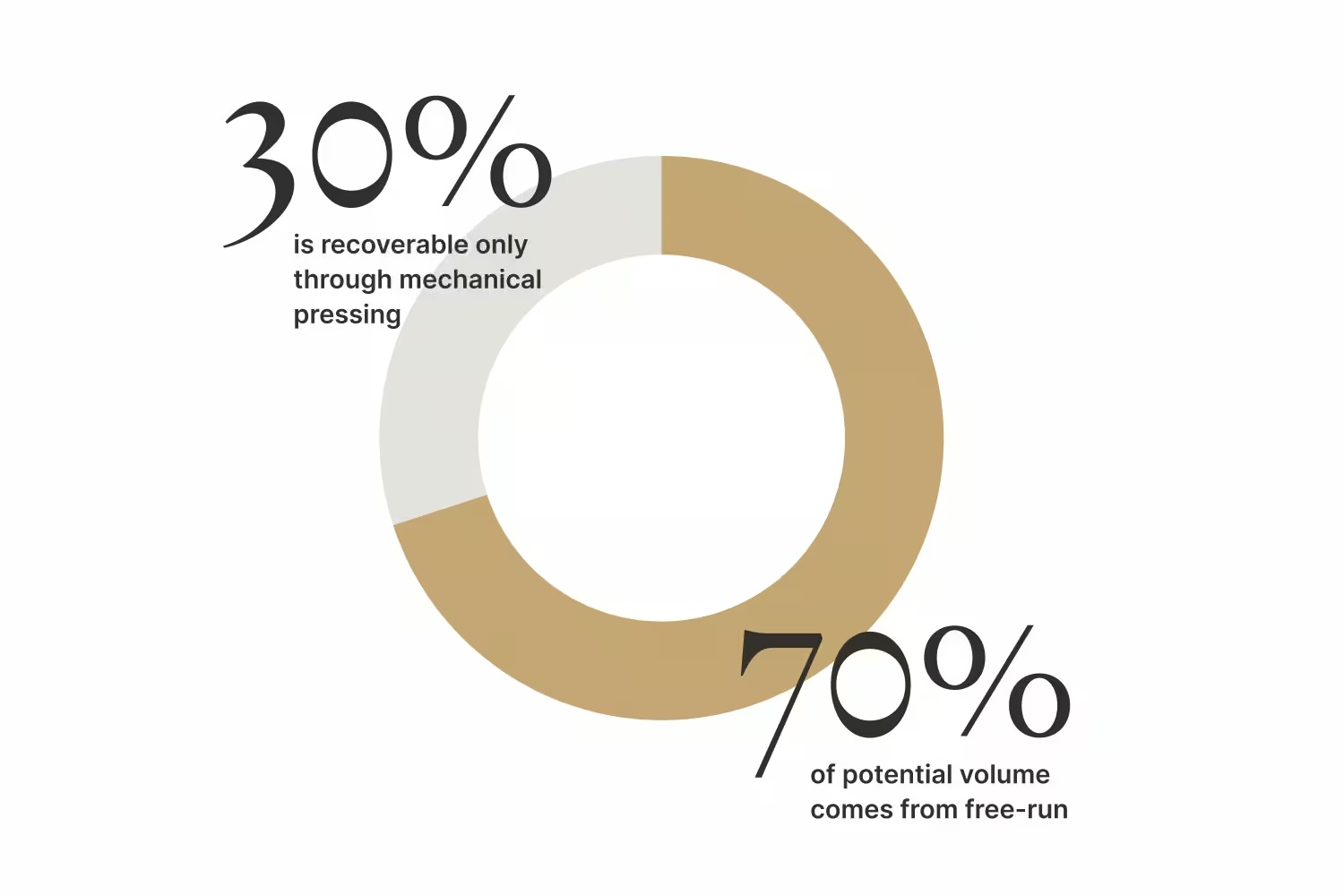
Every bottle of Ojai Mountain wine begins with a choice most producers don't make. We could extract more. The technology exists, the economics favor it, and nobody on the label would ever know. But we leave 30% of our potential volume behind — deliberately, every vintage — because the wine that flows freely from the grape is not the same as the wine that has to be forced out of it.

This is the story of free-run juice, and why it is the only juice we bottle.
What Free-Run Juice Actually Is
When grapes arrive at the winery, they go first through a crusher-destemmer, which removes the berries from their stems and gently breaks the skins. The juice that flows out at this stage — released by the crushing process and by the weight of the fruit stacked on itself — before any mechanical press is applied, is free-run juice. According to
That is free-run juice. The first liquid released, before any pressing takes place.
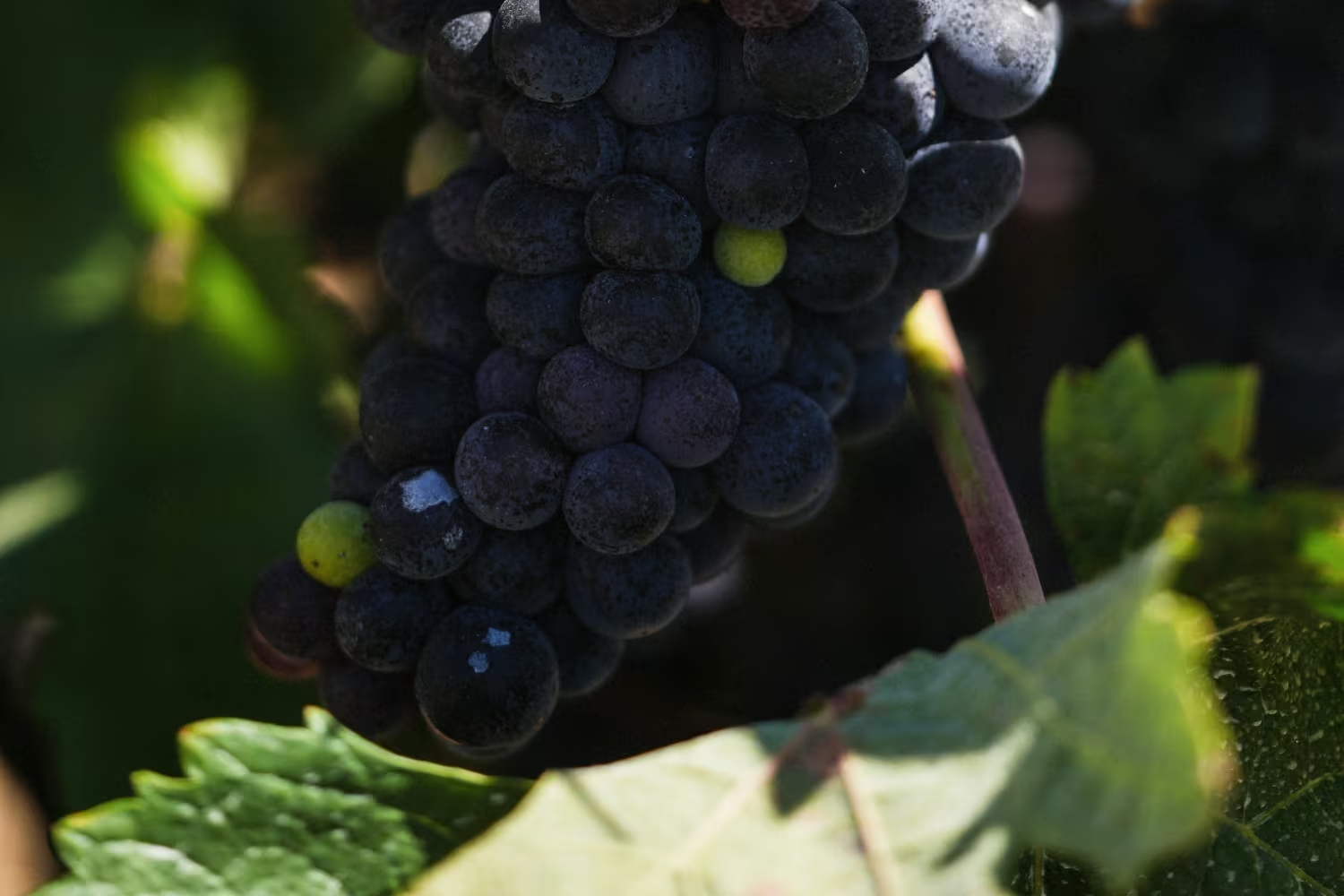
It is the clearest, most aromatic fraction of the grape. Because it never passes through a press, it carries none of the harsher phenolics, seed tannins, or coarse compounds that get extracted when the grape solids are put under mechanical pressure. The result is a juice with finer texture, greater aromatic lift, and a purity of flavor that pressed juice simply cannot replicate.
The numbers behind the decision:
| Fraction | Source | Volume | Character |
|---|---|---|---|
Free-run juice | Gravity, no pressure | ~70% of potential | Fine texture, aromatic clarity, elegant tannin |
Press fraction | Mechanical pressing | ~30% of potential | Higher yield, harsher phenolics, coarser compounds |
That 30% press fraction is not worthless. Many serious producers keep both fractions separate and decide whether to blend them later. Some press wine is used in their final bottlings. We do not blend it in. We bottle only the free-run.
The press fraction adds volume. It does not always add quality.
Three Crafts, One Principle
The logic of free-run juice is not unique to wine. Across three distinct craft traditions, the same truth holds: the first liquid released without force is the finest expression of the source material.
Drip Coffee: Gravity Over Pressure
Consider how drip coffee works. Hot water is poured over grounds and allowed to flow through by gravity alone, at its own pace, without pressure. The result is a clean, aromatic cup with bright, nuanced flavor. Paper filters catch the oils and solids; what passes through is clarity.
Espresso takes the opposite approach. Water is forced through finely packed grounds at 9 to 10 atmospheres of pressure in under 30 seconds. The result is concentrated and intense, but also more bitter, more acidic, and more prone to imbalance. The pressure extracts compounds that gravity never would have reached.
Neither method is wrong. But they produce fundamentally different things. Drip coffee is what the bean gives freely. Espresso is what you take by force.
Shizuku Sake: The Drop That Falls on Its Own
In Japanese sake brewing, the highest-grade producers use a method called
This is the most expensive, most labor-intensive pressing method in sake production,
The sake that requires force to extract — the final pressing — is heavier, more bitter, and of lower quality. It gets blended into less expensive bottlings.
Extra-Virgin Olive Oil: The Cold-Press Standard
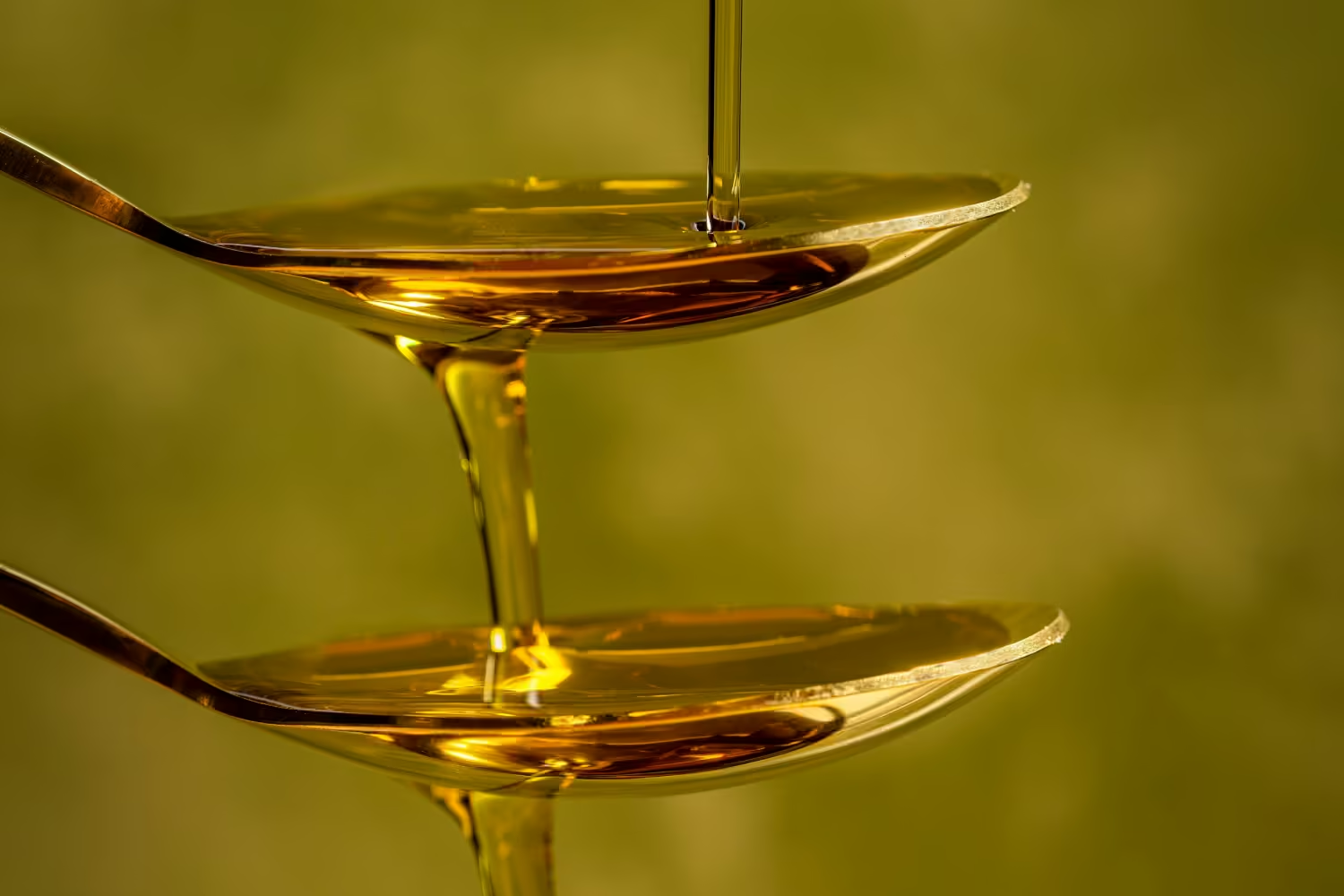
The same principle governs olive oil. Extra-virgin designation requires cold pressing: no heat, no chemical solvents, just the oil that flows freely from the olive. The first press, under minimal pressure, captures the most delicate polyphenols, the clearest flavor, the truest expression of the fruit.
Subsequent pressings, using heat and greater mechanical force, yield more oil — but oil of lower grade, stripped of the qualities that make extra-virgin worth the price.
Why Some Producers Blend Press Juice Back In
In the Rhône Valley and Châteauneuf-du-Pape — the spiritual home of the Grenache, Syrah, and Mourvèdre we grow on Sulphur Mountain — press blending is standard practice and a mark of serious winemaking. After fermentation, which in Châteauneuf-du-Pape can run 15 to 25 days to extract maximum color and tannic structure, the free-run wine is drained and the remaining skins are pressed. The resulting press wine is richer in color, higher in tannins, and denser in phenolic compounds. Kept separate, it is evaluated alongside the free-run. Then, depending on what the wine needs, a portion is blended back in.
The logic is sound. Press wine adds body, mid-palate weight, and structural complexity that free-run juice alone can sometimes lack. In practice, according to
It is a legitimate, time-honored winemaking tool. And it is one we do not use.
Why We Don't
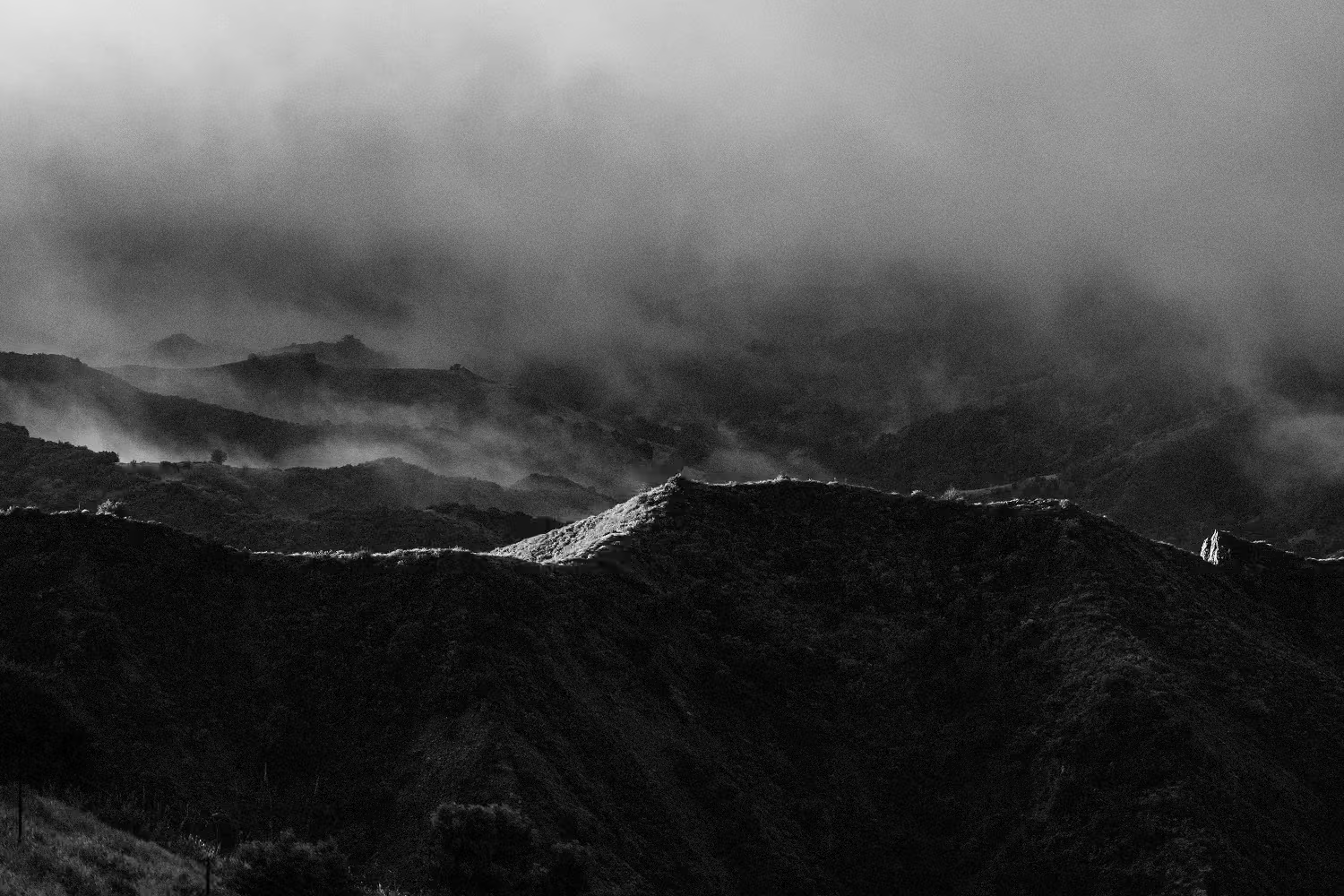
We simply do not need it. Our vines grow at 2,800 feet on Sulphur Mountain, in thin, fractured Monterey shale with almost no topsoil. The growing season is short. The winds are constant. The diurnal temperature swings reach 40 to 50 degrees between day and night. Under these conditions, the vine cannot be generous. It produces small clusters, small berries, and thick skins — and those thick skins do the work that pressing would otherwise provide.
Small berries mean a high skin-to-juice ratio. That ratio is everything in winemaking. The skin is where tannin, color, and phenolic complexity live. When you have more skin relative to juice, you have more of those qualities per drop, before any mechanical intervention.
The savory, peppery character that defines our reds — the grip, the structure, the mineral edge — comes directly from the site. The free-run juice already carries:
Concentration built by competition for scarce resources in poor soilStructure from thick skins developed against wind and UV exposure at elevationTannin present in abundance from the high skin-to-juice ratioAcidity preserved by cold nights and the marine influence from ten miles away
For the same reason, we have not pursued whole-cluster fermentation techniques for our reds — a method many producers use to introduce more savory complexity and spice. The mountain delivers that naturally. Adding more would push the wines past balance.
What This Means in the Glass
Open any bottle and you will feel it before you name it — a fineness in the texture, a clarity in the aroma that pressed wines rarely achieve.
The texture is the first thing most people notice. There is a fineness to it, a silkiness that pressed wines rarely achieve. That comes directly from the absence of coarse phenolic compounds that mechanical pressing introduces from the grape seeds and skins.
The aromatics are the second thing. Because free-run juice is never subjected to the oxidative stress of pressing, the volatile aromatic compounds remain intact and vivid. What you smell in the glass is a more direct representation of the grape, the site, and the vintage than you would get from a blended fraction.
“I'm a minimalist when it comes to intervening in the winery. Much of my energy gets devoted to making sure we're in a situation where the fruit when it's harvested and comes into the winery doesn't need help. It is magnificent in its own right.”
That philosophy starts on the mountain, not in the winery. Free-run juice only makes sense when the fruit is worth bottling without intervention.
If you want to experience what free-run juice from a 2,800-foot mountain actually tastes like, our wines are available at
Frequently Asked Questions
Free-run juice is the first liquid released from the grapes after they pass through the crusher-destemmer, before any mechanical press is applied. It flows out under the weight of the fruit alone. Because it never goes through a press, it carries none of the harsher seed tannins or coarse phenolics that pressing extracts, which gives it finer texture and clearer aromatics.
No. We bottle only the free-run juice. After the free-run drains off, the remaining skins can be pressed for more volume, but we leave that press fraction behind rather than blending it into our wines.
About 30 percent of the potential volume. That is the press fraction, the wine we could extract with mechanical pressure but choose not to bottle. We accept the lower yield because the free-run juice is the clearest expression of the fruit.
Free-run juice is released by gravity, before pressing. Press juice is forced from the skins and seeds under mechanical pressure. Press juice adds volume, color, and tannin, but it also carries coarser phenolics. Free-run juice keeps a finer texture and more vivid aromatics because it avoids that extraction.
In the Rhône Valley and Châteauneuf-du-Pape, blending a measured portion of press wine back in is standard practice, because it adds body and structure that free-run juice can sometimes lack. It is a legitimate tool. We do not need it. Our site already builds that structure into the free-run juice, so adding press wine would push the wines past balance.
Our vines grow at 2,800 feet on Sulphur Mountain in thin, fractured Monterey shale, with constant wind and 40 to 50 degree swings between day and night. Those conditions produce small berries with thick skins and a high skin-to-juice ratio. The skin is where tannin, color, and structure live, so the free-run juice already carries the concentration and grip that pressing would otherwise provide.
The first thing most people notice is texture, a fineness and silkiness that comes from the absence of coarse phenolic compounds. The second is the aromatics. Because the juice never goes through the oxidative stress of pressing, the aromas stay intact and vivid, giving a more direct read of the grape, the site, and the vintage.
Not for our reds. Whole-cluster fermentation is one way to add savory, spicy complexity, but our site delivers that character naturally through thick skins and slow ripening at elevation. Adding more would push the wines past balance.
Share this post
Recent Posts
View All Posts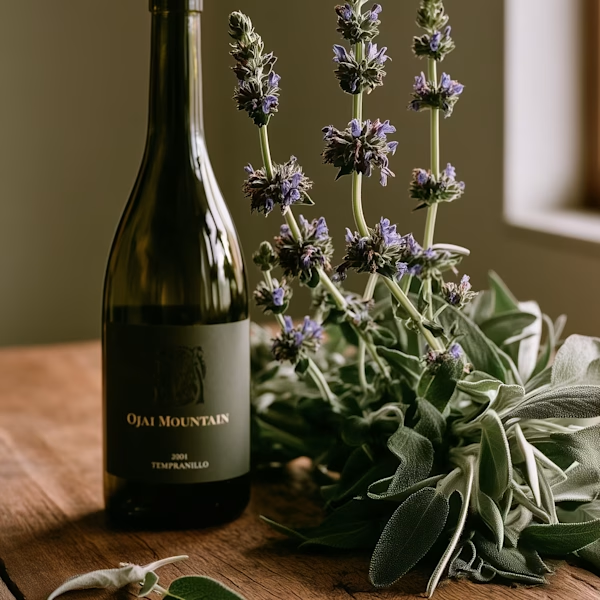
Lesia Artymovych • 20 Sept 2026
The Scent of the Mountain: Chaparral, Syrah, and Ojai Terroir
Ojai Mountain’s wines can carry aromas that recall the chaparral surrounding the vineyard: sage, dried herbs, pepper, and wildflowers. Science does no...
Lesia Artymovych • 16 Sept 2026
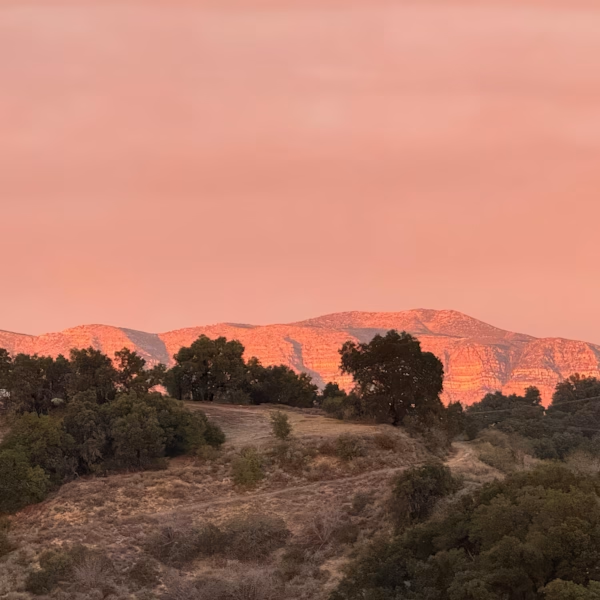
The Ojai Pink Moment: Why the Topa Topa Mountains Glow
Ojai’s Pink Moment is the brief coral, rose, and violet glow that appears on the Topa Topa Mountains around sunset. Warm, low-angle light creates the ...
Lesia Artymovych • 14 Sept 2026
A Guide to Wine and Cheese Pairing at Ojai Mountain
Match intensity to intensity: pair fresh, delicate cheeses with Ojai Mountain's bright Estate Whites, and bold, aged cheeses with its Syrahs and reds....