
 Log in
The Ojai Pink Moment: Why the Topa Topa Mountains Glow
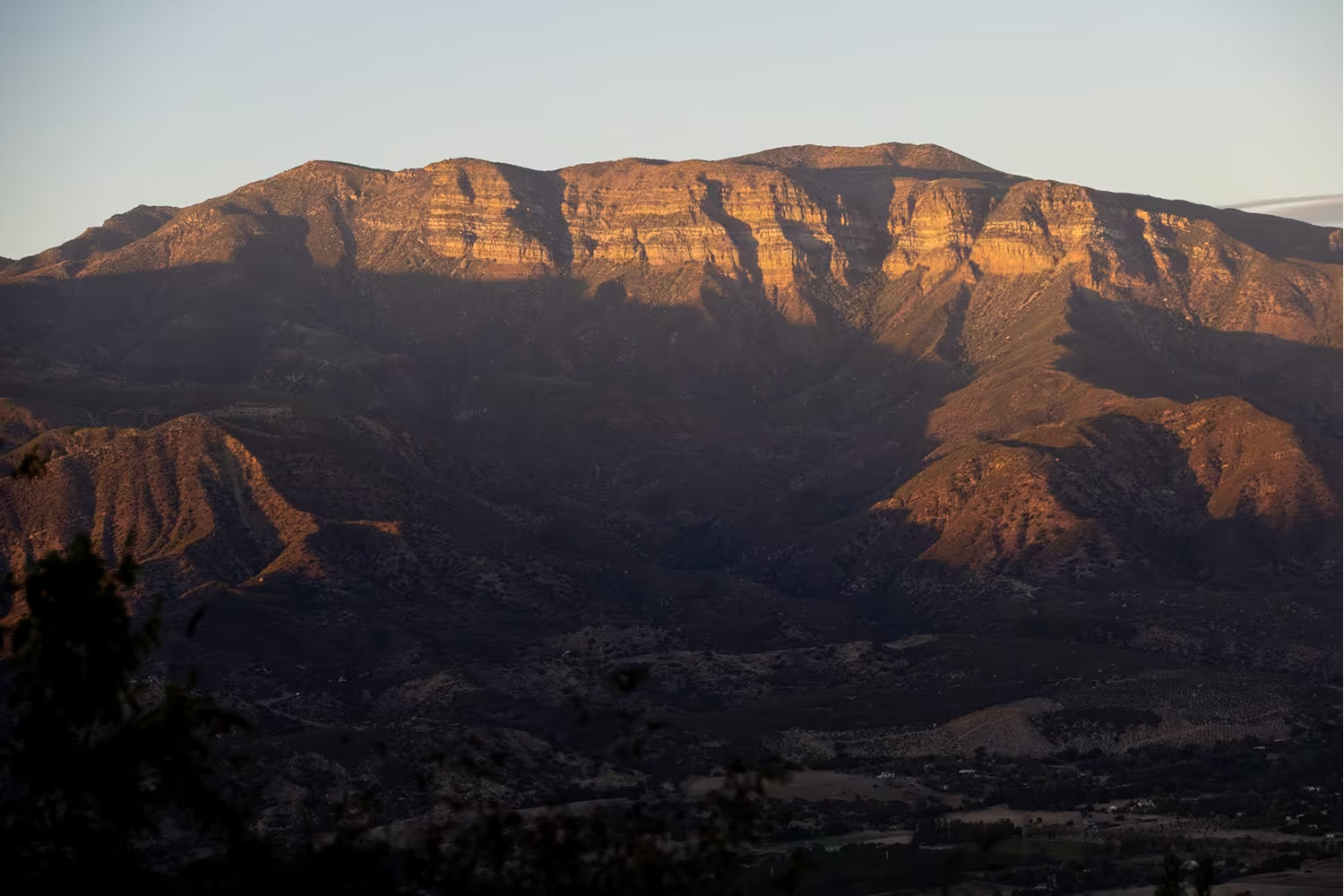
Ojai’s Pink Moment is the brief coral, rose, and violet glow that appears on the Topa Topa Mountains around sunset. Warm, low-angle light creates the color, while weather and season determine its intensity. Arrive before sunset with a clear view of the mountains—and keep watching as the valley darkens.

The western sky is often the first place people look at sunset. In Ojai, however, some of the evening’s most memorable color can appear in the opposite direction—across the Topa Topa Mountains.
For a few minutes, the mountains may shift from their daytime grey and tan into coral, rose, or violet. The color can be subtle or vivid, and no two evenings look exactly alike. Locally, this fleeting display is known as the
It is not a second sunset. It is another expression of the same sunset: warm evening light reaching the mountains while the valley below begins to fall into shadow.
What Is the Ojai Pink Moment?
The Pink Moment is the local name for the warm glow that appears on the Topa Topas around sunset when atmospheric and weather conditions align.
It is often described as alpenglow, a broad term used for reddish or pink illumination on mountains near sunrise or sunset. The precise optical process can vary with the sun’s position, clouds, haze, and the way light is scattered through the atmosphere. The simplest explanation is also the most useful: as the sun gets lower, its light takes a longer path through the air, and the remaining light appears warmer.
That warm light reaches the mountains while much of the valley is already becoming shaded. The contrast makes the color feel even more intense—as though the mountain itself is glowing.
Why Does the Mountain Turn Pink?
Sunlight contains the full visible spectrum. During the middle of the day, it travels through a relatively short section of the atmosphere. Near sunset, it must pass through considerably more air before reaching the landscape and our eyes.
Shorter blue wavelengths scatter more readily than longer red and orange wavelengths. With the sun low on the horizon, more blue light is scattered away from the direct path, leaving warmer colors to dominate. The UCAR Center for Science Education offers a clear explanation of this process and why sunsets become red, orange, and pink.
Quartz and feldspar may contribute to the rock’s natural color and reflective character, while atmospheric scattering produces the warm sunset light illuminating it.
The appearance of the Pink Moment also depends on local conditions:
Cloud cover: Thick western clouds can block the light, while broken or high clouds may add color to the sky.
Haze and smoke: Particles in the atmosphere can soften, deepen, or obscure the glow.
Moisture: Humidity and marine air can change how the light is scattered.
Season: The sun’s position and the length of twilight shift throughout the year.
Viewing angle: Color appears strongest when the mountain face is visible without obstructions.
Because these variables change from day to day, the Pink Moment should be treated as a natural possibility rather than a scheduled performance.
Why Ojai Is a Memorable Place to See It
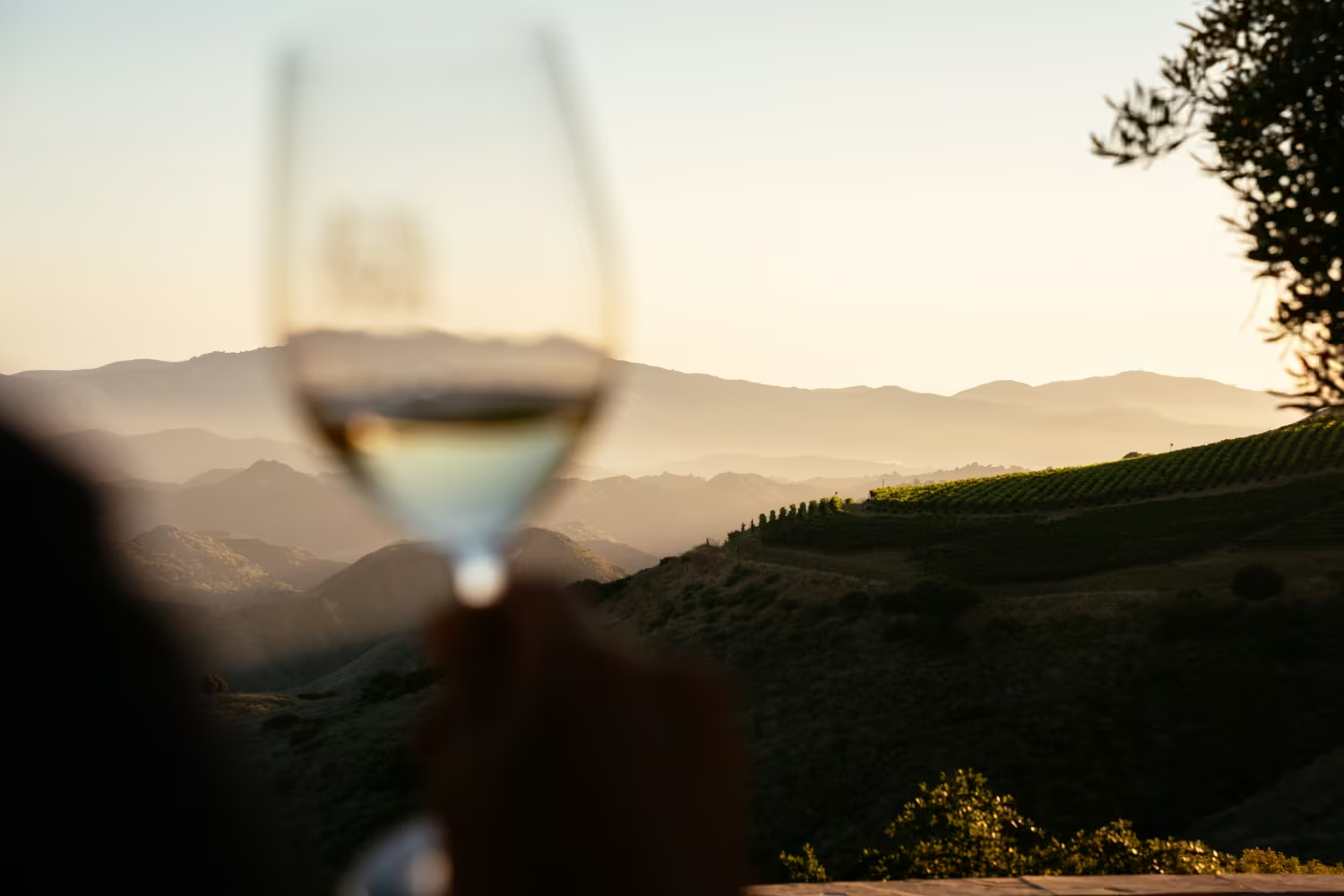
Ojai is framed by mountains, and the Topa Topas form one of the valley’s defining visual landmarks. As evening arrives, the valley floor and lower slopes can darken before the higher rock faces lose the last warm light. That separation between a shaded foreground and illuminated mountain backdrop creates the striking contrast associated with the Pink Moment.
Ojai’s east–west valley orientation also gives the region unusual sunset sightlines. The setting sun, surrounding ridges, coastal air, and prominent mountain face come together to create a distinctive evening view.
This does not mean that Ojai is the only place where mountains glow near sunset, or that the effect occurs every day. What makes the Pink Moment special is the combination of the landscape, the visibility of the Topa Topas from around the valley, and the local ritual of stopping to watch the color change.
When to Look for the Pink Moment
Locals often describe the Pink Moment as a frequent part of clear-weather evenings in Ojai, but its visibility varies with cloud cover, haze, smoke, and seasonal light. Treat it as a possibility rather than a guarantee.
Planning to watch tonight? Check the local sunset time and current cloud, smoke, and haze conditions before heading out.
There is no single year-round clock time. Sunset changes with the season, and the most vivid color may appear shortly before or after the published sunset time depending on conditions.
A simple viewing plan works best:
Check the sunset time for Ojai that day.
Choose a place with a clear view of the Topa Topas.
Arrive 15 to 20 minutes before sunset.
Watch the mountains as well as the western sky.
Stay for several minutes after the sun disappears from view.
The strongest color is often brief. On some evenings it builds gradually; on others it appears and fades within minutes. Clouds or haze may prevent it entirely.
Where to See It
Many locations around Ojai offer views of the Topa Topas. The best choice is a safe, legal place with an open sightline toward the mountains.
How to Choose a Viewing Spot
From much of Ojai, look generally east or northeast toward the Topa Topas, but use the mountain face itself—not a fixed compass direction—as your guide. Arrive before sunset, park only where permitted, and avoid stopping on narrow roads or entering private driveways. Conditions can change quickly, so stay for several minutes as the valley darkens.
Public streets, parks, trails, hotels, and outdoor gathering places may provide a view, but access conditions and opening hours change. An elevated location can reveal more of the surrounding landscape, while the valley floor offers the classic experience of watching the mountains brighten above a darkening foreground.
The View from Ojai Mountain
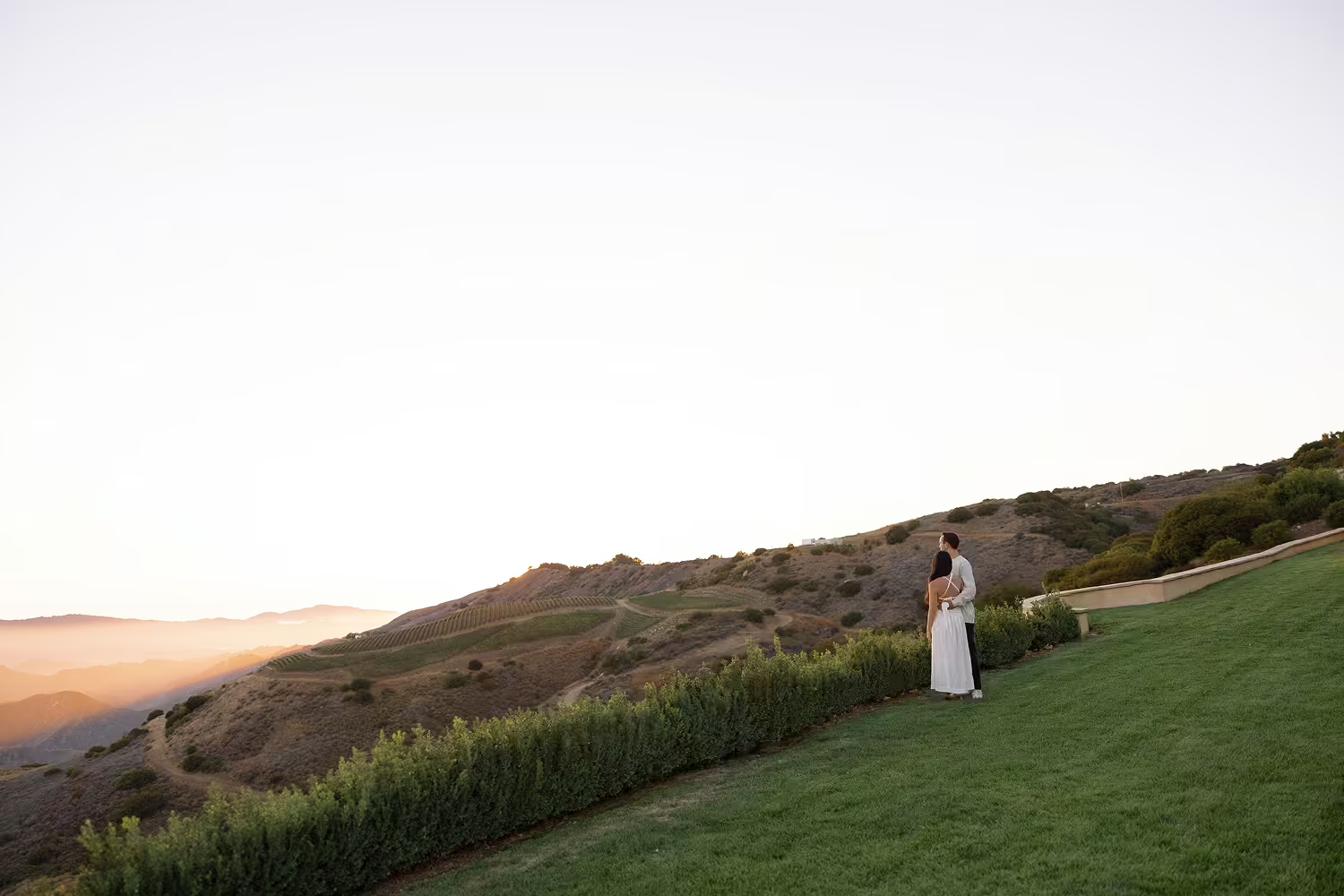
Ojai Mountain sits at approximately 2,800 feet on Sulphur Mountain. From the estate, clear conditions can open broad views across Ventura County, toward the coastline and Channel Islands, and back toward the mountain landscape surrounding Ojai.
That elevation makes the transition from day to evening especially visible. The western sky changes first; then attention moves across the landscape toward the Topa Topas. It is one sunset experienced in two directions—not two separate sunsets.
Guests visiting Ojai Mountain for a private tasting may see the Pink Moment when timing and weather align. Tastings are offered by appointment, and sunset views cannot be guaranteed. When late-day reservations are available, they can be a memorable way to experience the estate as the valley’s light changes.
The setting also connects naturally to the wines. The same elevated site that opens these long views shapes the vineyard through wind, sun exposure, cool nights, and fractured Monterey shale soils. The landscape is not merely a backdrop; it is part of how the estate is farmed and how the wines develop.
A Moment Worth Waiting For
The Pink Moment does not need exaggerated statistics or a complicated scientific explanation to be remarkable. Its appeal is its brevity.
The valley quiets. The temperature begins to fall. The mountains hold the last warm color, then return to shadow.
Some evenings produce a vivid band of rose. Others offer only a soft blush. Occasionally, the clouds win and there is no glow at all. That unpredictability is part of the experience: you arrive, look toward the mountains, and give the landscape your attention for a few minutes.
If the color appears, it feels less like watching a spectacle and more like noticing the exact moment when day becomes evening.
Continue Exploring
Frequently Asked Questions
The Pink Moment is the brief coral, pink, or violet glow that can appear on the Topa Topa Mountains around sunset. It results from warm, low-angle evening light interacting with the atmosphere and illuminating the mountain backdrop.
No. There is only one sunset. The phrase describes how the same evening light creates two views: the setting sun and changing sky to the west, followed by warm color on the mountains in another direction.
It is commonly described as alpenglow because it is a reddish glow on a mountain around sunset. Atmospheric conditions and the sun’s precise position affect whether the illumination is direct, reflected, or primarily scattered, so “alpenglow” is a useful general description rather than a complete technical explanation.
The time changes throughout the year. Check Ojai’s sunset time, arrive 15 to 20 minutes early, and continue watching for several minutes afterward.
The most vivid phase may last only a few minutes. The broader transition from daylight through pink and violet tones can last longer, depending on the season and atmospheric conditions.
No. Clouds, fog, smoke, haze, and the sun’s seasonal angle all influence visibility. Clear sightlines improve the chances, but the effect is never guaranteed.
Find a clear view of the Topa Topa Mountains rather than watching only the western horizon. The ideal direction depends on the viewer’s exact location in the valley, so the mountains themselves are the best guide.
The estate has broad elevated views, and the Pink Moment may be visible when timing and weather align. Tastings are by appointment, and a reservation does not guarantee sunset or Pink Moment conditions.
Yes. Arrive early, keep the composition steady, and avoid overexposing the mountain face. Because the color changes quickly, take a few photographs and leave time to experience it without a screen.
Share this post
Recent Posts
View All Posts
Lesia Artymovych • 20 Sept 2026
The Scent of the Mountain: Chaparral, Syrah, and Ojai Terroir
Ojai Mountain’s wines can carry aromas that recall the chaparral surrounding the vineyard: sage, dried herbs, pepper, and wildflowers. Science does no...
Lesia Artymovych • 14 Sept 2026
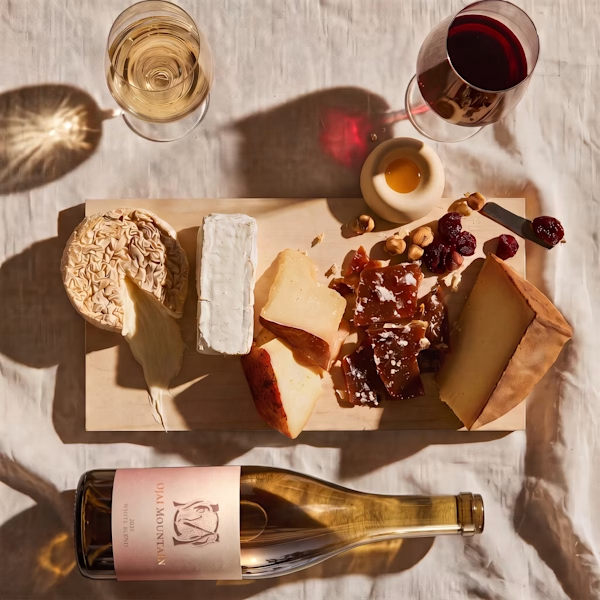
A Guide to Wine and Cheese Pairing at Ojai Mountain
Match intensity to intensity: pair fresh, delicate cheeses with Ojai Mountain's bright Estate Whites, and bold, aged cheeses with its Syrahs and reds....
Lesia Artymovych • 8 Sept 2026
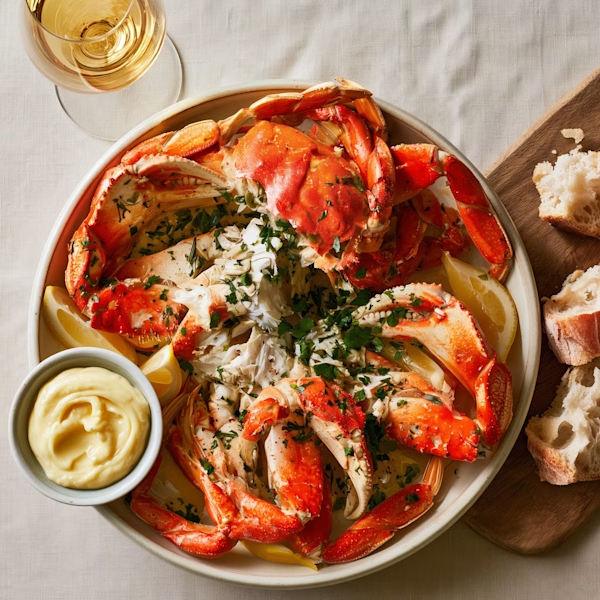
Dungeness Crab with Lemon Aioli and Herbs — 2021 Estate White Blend
Sweet, briny Dungeness crab meets a bright Meyer lemon aioli in an elegant but low-stress dish that can be prepared mostly ahead. Ojai Mountain’s 2021...