
 Log in
What Happens When You Farm at Extreme Altitude?
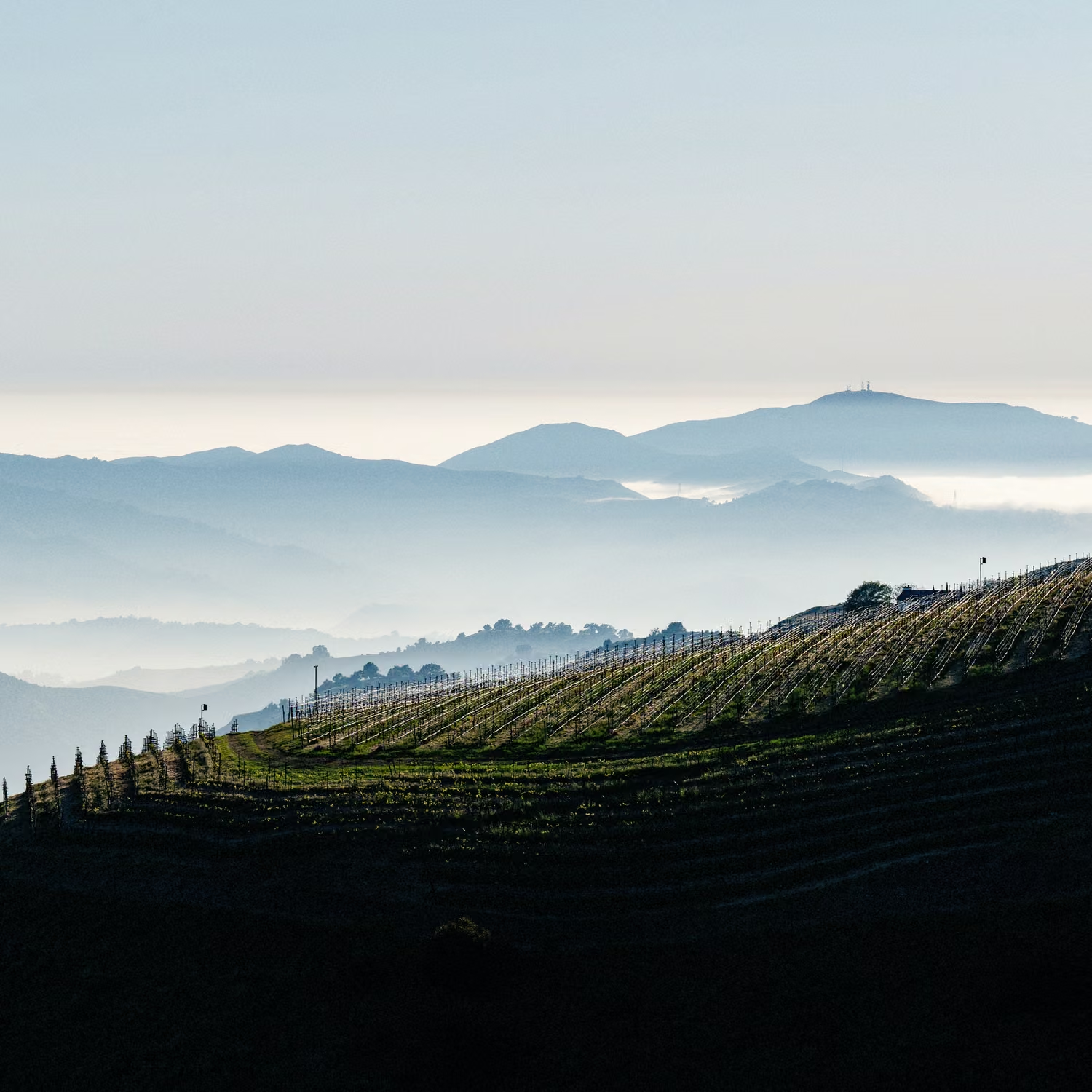
At 2,800 feet on Sulphur Mountain, almost everything about growing grapes changes: the light, the nightly temperature drop, the shale underfoot and the amount of work each vine needs. Here is what extreme elevation does to the fruit at Ojai Mountain, why it shapes the wines in the glass, and why farming this way costs what it does.

Ojai Mountain sits at 2,800 feet on Sulphur Mountain, about 10 miles from the Pacific Ocean. Most wine regions in this part of California operate well below 1,500 feet (our guide to California's high-elevation wine regions puts that in context). That difference in height is not a footnote. It shapes the light the vines grow in, the temperatures they live through each night, the soil their roots search, and the way the team has to farm.
The first vines went in on fractured Monterey shale in 2018, and the first vintage followed in 2020. Here are the forces that define farming at this elevation, and what they mean for the wine.
Stronger light, thicker skins
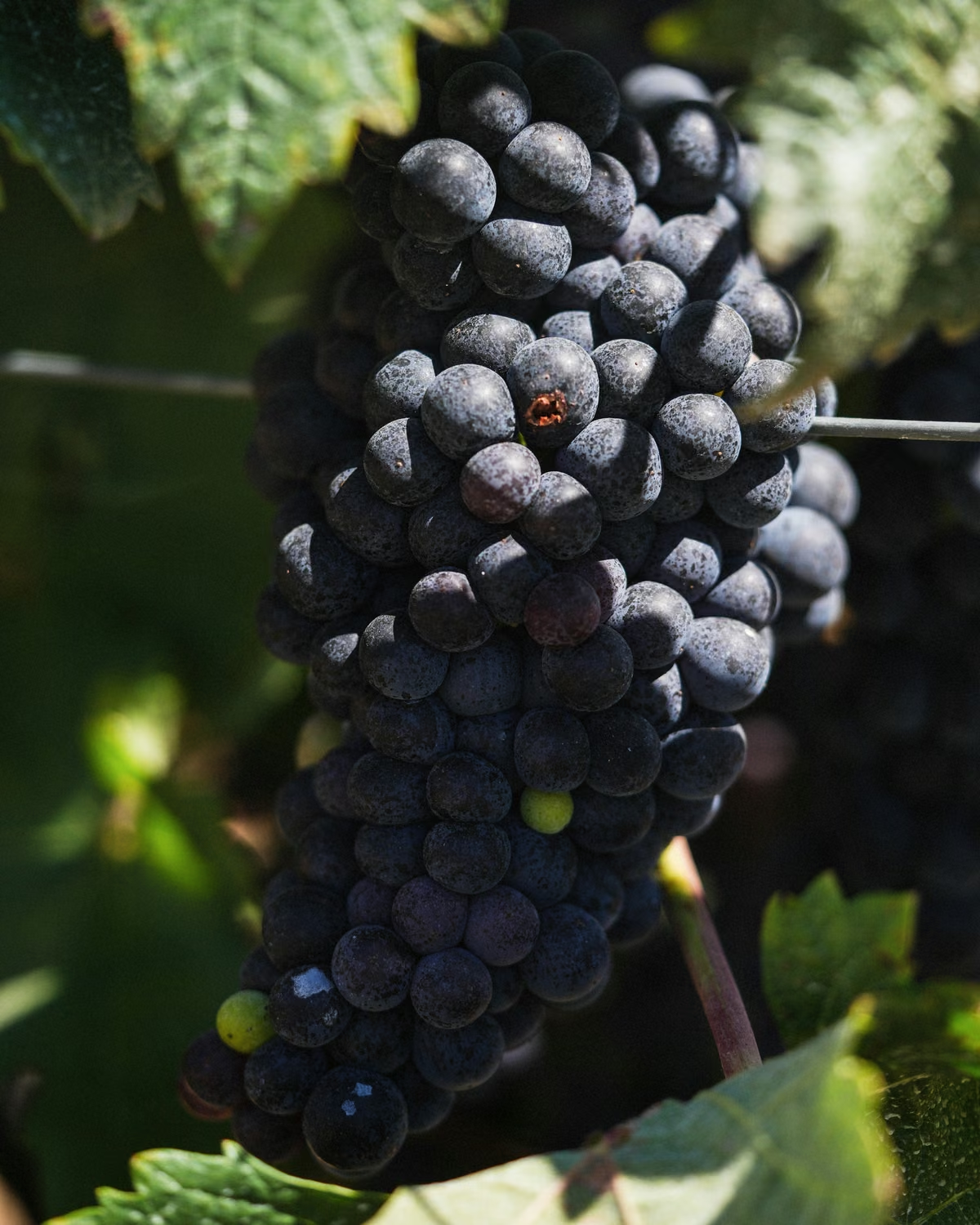
Sunlight is more intense at elevation, and the vineyard is exposed to steady ocean winds. Grape skins respond to both by growing thicker. Berries also stay smaller, so each one carries a higher ratio of skin to juice.
For red wine, that matters because so much of its character lives in the skin:
Tannin, which gives a wine its structure and capacity to age
Color, drawn from pigments in the skin
Flavor compounds, concentrated into a smaller berry
This structure is built in the vineyard, before the fruit reaches the cellar. No winemaking technique adds it back later. You can taste it in a wine like our 2021 Estate Syrah, which Jeb Dunnuck expects to evolve gracefully for 10–15 years.
Warm days, cold nights
At 2,800 feet, the temperature can swing 40–50°F between the warmest part of the day and the coldest part of the night. Warm afternoons build sugar and flavor. When the sun drops, cool marine air moves up and over the ridge, and the night slows ripening down again. We go deeper into the science in how diurnal shift shapes wine.
That daily rhythm helps the grapes hold on to their natural acidity. Acidity is what makes a wine feel fresh rather than flat, what lets it work at the table, and part of what allows it to age.
In warmer regions, winemakers often add tartaric acid to adjust a wine's balance. At Ojai Mountain, the cellar adds no acid, sugar, enzymes or color (more on our minimal-intervention approach). The acidity in the glass is the acidity the mountain left in the grape. It also keeps alcohol moderate: the wines typically land between 13 and 14 percent.
Shale, stress and small crops
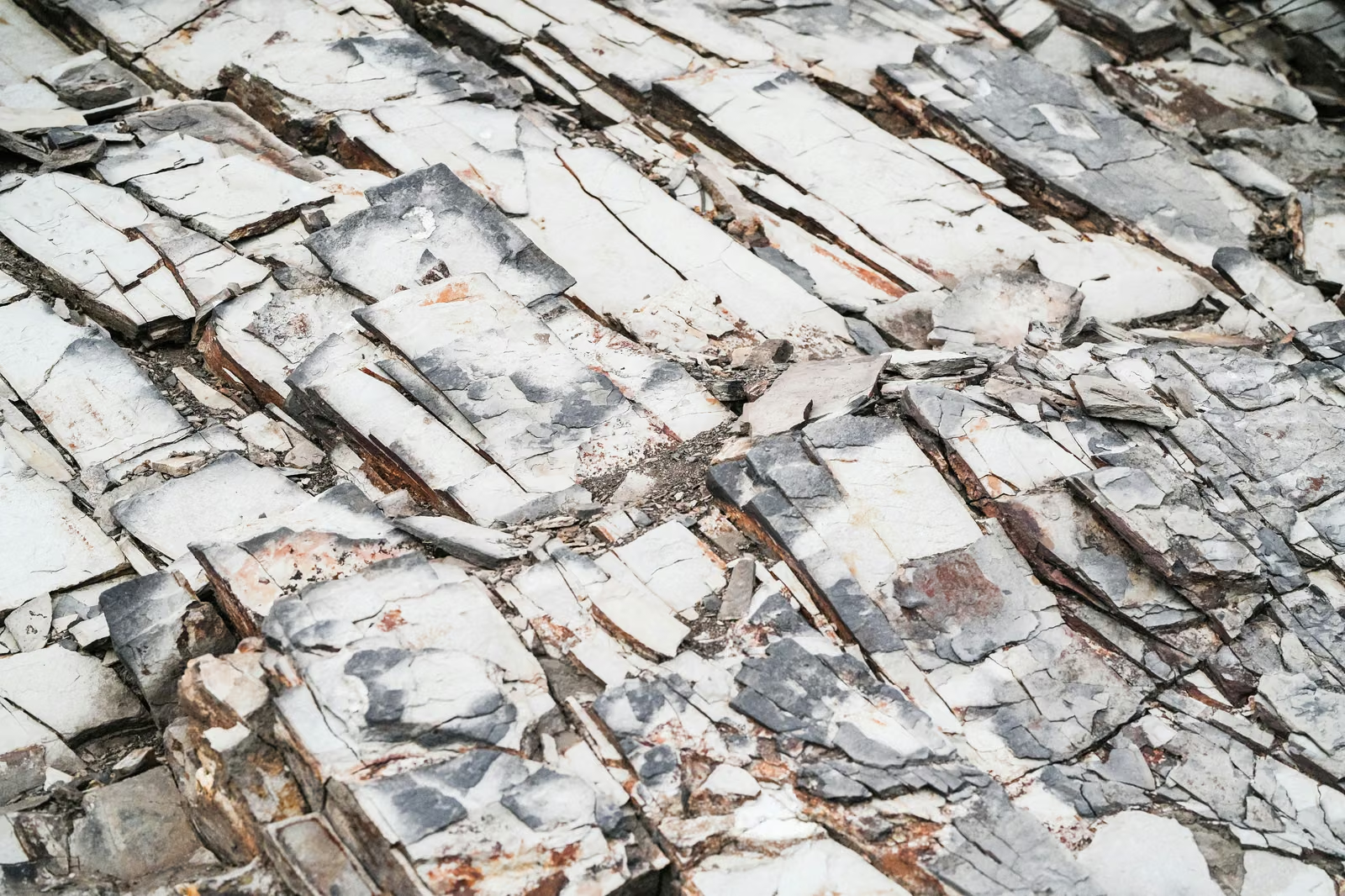
Beneath the vines is ancient Monterey shale, fractured prehistoric seabed with almost no topsoil. Roots have to push deep into the rock to find water and nutrients. The shale drains quickly, and the vines grow with restraint.
The vineyard is also planted densely, at approximately 1,800 vines per acre on 4-by-6-foot spacing. Each vine has about 24 square feet to itself and competes with its neighbors for what the shale can give. The result is less fruit per vine, with smaller, more concentrated clusters.
Low yield is not a side effect to be managed away. It is the trade the site asks for. You cannot irrigate or fertilize your way to this kind of concentration without losing what makes it distinctive.
Steep blocks, separate lots
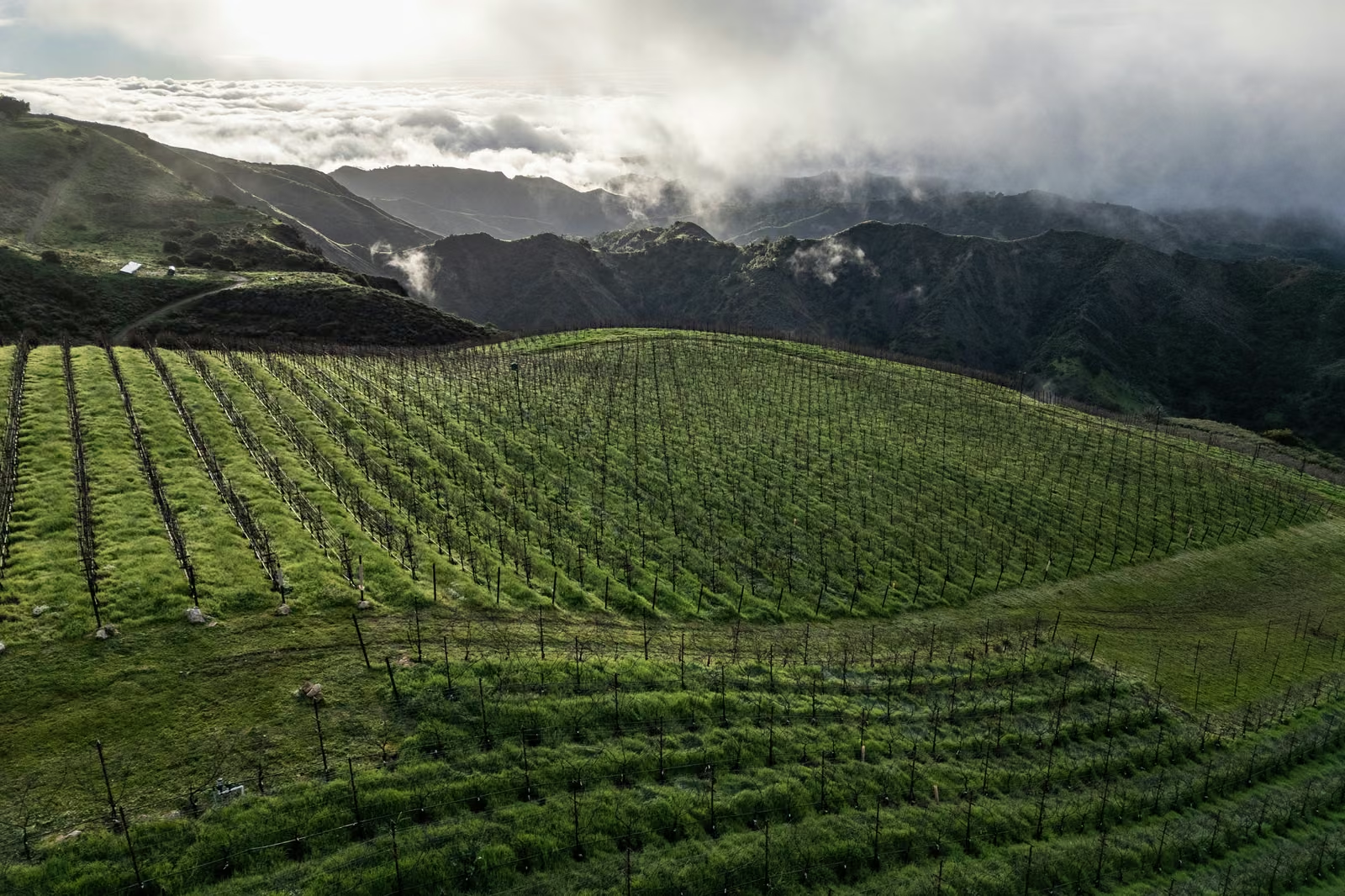
The mountain does not ripen evenly. Aspect, elevation and wind exposure change from block to block. A block catching more afternoon sun moves faster; one more exposed to the ocean wind ripens differently.
Rather than combining everything at harvest, the team ferments blocks separately. Each lot comes into the cellar with its own character, and the blending decisions come later, once those differences are clear. Small production makes that attention possible.
“When you taste valley floor grown fruit next to mountain grown fruit, the difference is stark. You can tell—low crop, smaller berries. It ends up having more of a punch. And not in an alcoholic way. Just more flavor, more of everything.”
Read more about Erich Bradley's winemaking philosophy.
Why mountain farming costs what it does
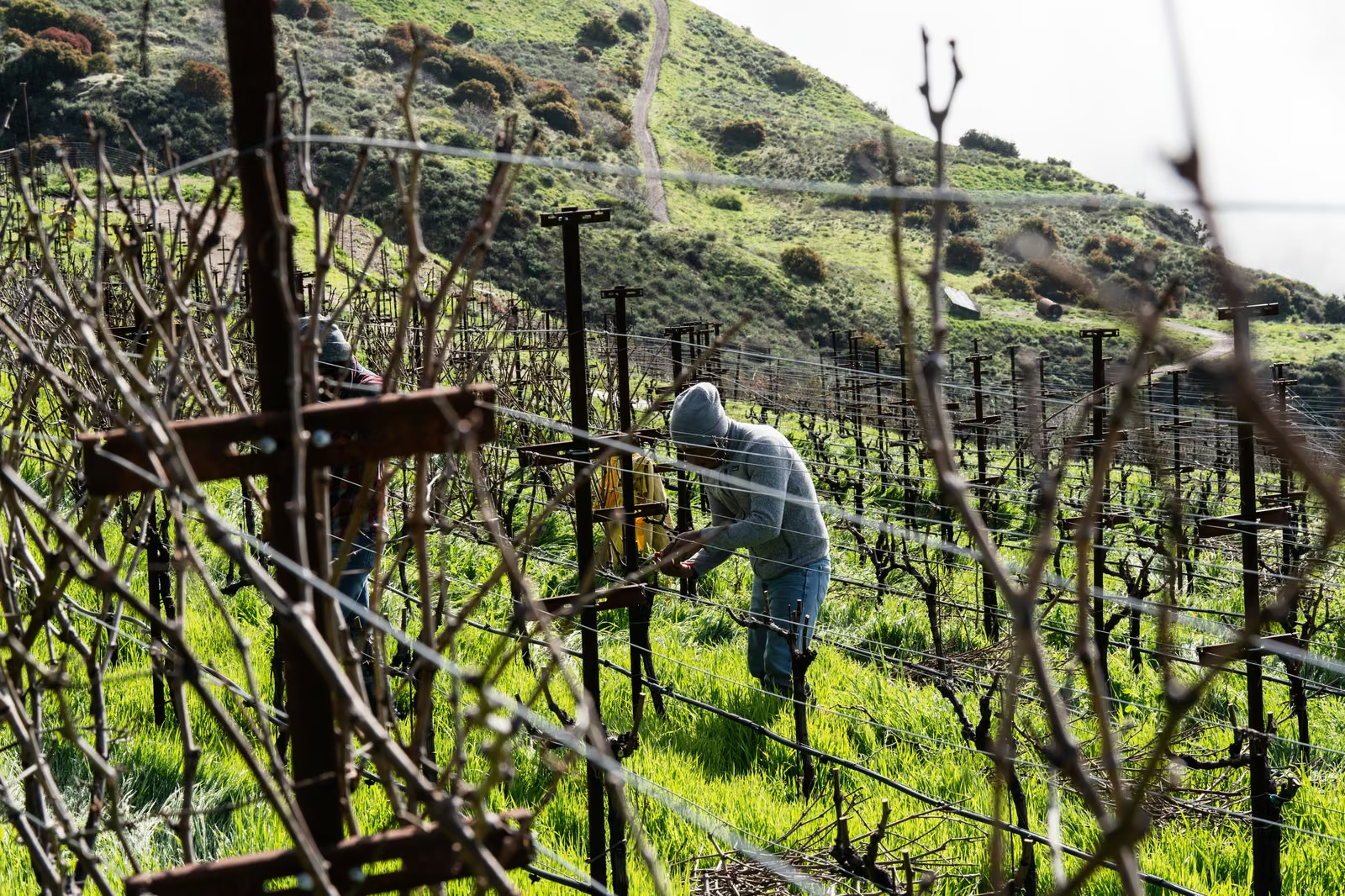
People sometimes ask why a small mountain estate's wines cost more than many California bottles. The answer is in the farming.
Everything is done by hand. Tractors cannot work tight rows on steep terrain, so pruning, canopy work and harvest are manual. At harvest, the team moves through the rows with buckets.Yields are low by design. Shale soils and dense planting mean each vine produces a small crop.The fruit travels carefully. Grapes are handpicked at night to preserve freshness and taken to Erich Bradley's cellar in Sonoma in refrigerated trucks.Organic farming takes more work. The vineyard has been farmed without synthetic fertilizers, herbicides or pesticides since before the first vine was planted, relying on cover crops, compost and a partnership with the Ojai Raptor Center instead.The scale is small. With 5.64 acres under vine, Ojai Mountain makes around 500 cases a year across all its wines, and every bottle is 100% estate fruit.
None of these choices is the cheapest way to make wine. Together, they are the only way to make wine that tastes like this site. The goal is also long term: vines farmed for health over decades rather than replanted on a short cycle.
What 2,800 feet tastes like
Thicker skins, preserved acidity, stressed vines and block-by-block differences work together every season. The wines that result are structured and fresh at the same time, with mineral character from the shale, moderate alcohol and a savory edge that makes them natural partners for food.
Critics have noticed. The 2022 Estate Syrah earned 96 points from Billy Norris at Vinous, and the 2023 Estate Mourvèdre earned 95 points and a Cellar Selection from Wine Enthusiast. But the clearest way to understand altitude is to taste it, ideally standing in the vineyard where it happens.
Read more about our viticulture, explore current estate wines, or plan a vineyard visit.
Frequently Asked Questions
The vineyard sits at 2,800 feet on Sulphur Mountain in Upper Ojai, about 10 miles from the Pacific Ocean and above the valley's marine fog layer. Most wine regions in the area operate well below 1,500 feet, which makes it one of the highest-elevation active vineyards in Southern California.
Stronger UV exposure at elevation, along with steady ocean winds, encourages grapes to develop thicker skins and smaller berries. Because more of a red wine's tannin, color and flavor lives in the skin, a higher skin-to-juice ratio gives the finished wine more structure and concentration.
No. The 40–50°F swing between day and night at 2,800 feet helps the grapes hold their natural acidity, so the cellar team does not add acid, sugar, enzymes or color. The acidity in the glass comes from the fruit on the vine.
Steep, tightly planted rows mean the work is done by hand: tractors cannot move through them, so pruning, canopy work and harvest are all manual. Shale soils and dense planting keep yields low, and organic farming adds labor and cost. At Ojai Mountain, those conditions add up to around 500 cases a year across all wines.
Share this post
Recent Posts
View All Posts
Lesia Artymovych • 9 Nov 2026
The Ojai Wine Weekend: A Complete Guide for LA Travelers
Ojai is 90 minutes from Los Angeles and rewards more than a day trip. This guide explains why the region's wines taste the way they do, how a private ...
Lesia Artymovych • 3 Nov 2026
Reading the Rain: Six Seasons on Sulphur Mountain
Six completed rainfall seasons in Upper Ojai show how much can change between one harvest and the next. From approximately 6.5 inches in 2020–2021 to ...
Lesia Artymovych • 3 Nov 2026
Five Vintages, One Mountain: The Estate White Vertical
Five Ojai Mountain Estate White vintages—2020, 2021, 2022, 2024 and 2025—show how one vineyard can express itself differently from year to year. Chang...