
 Log in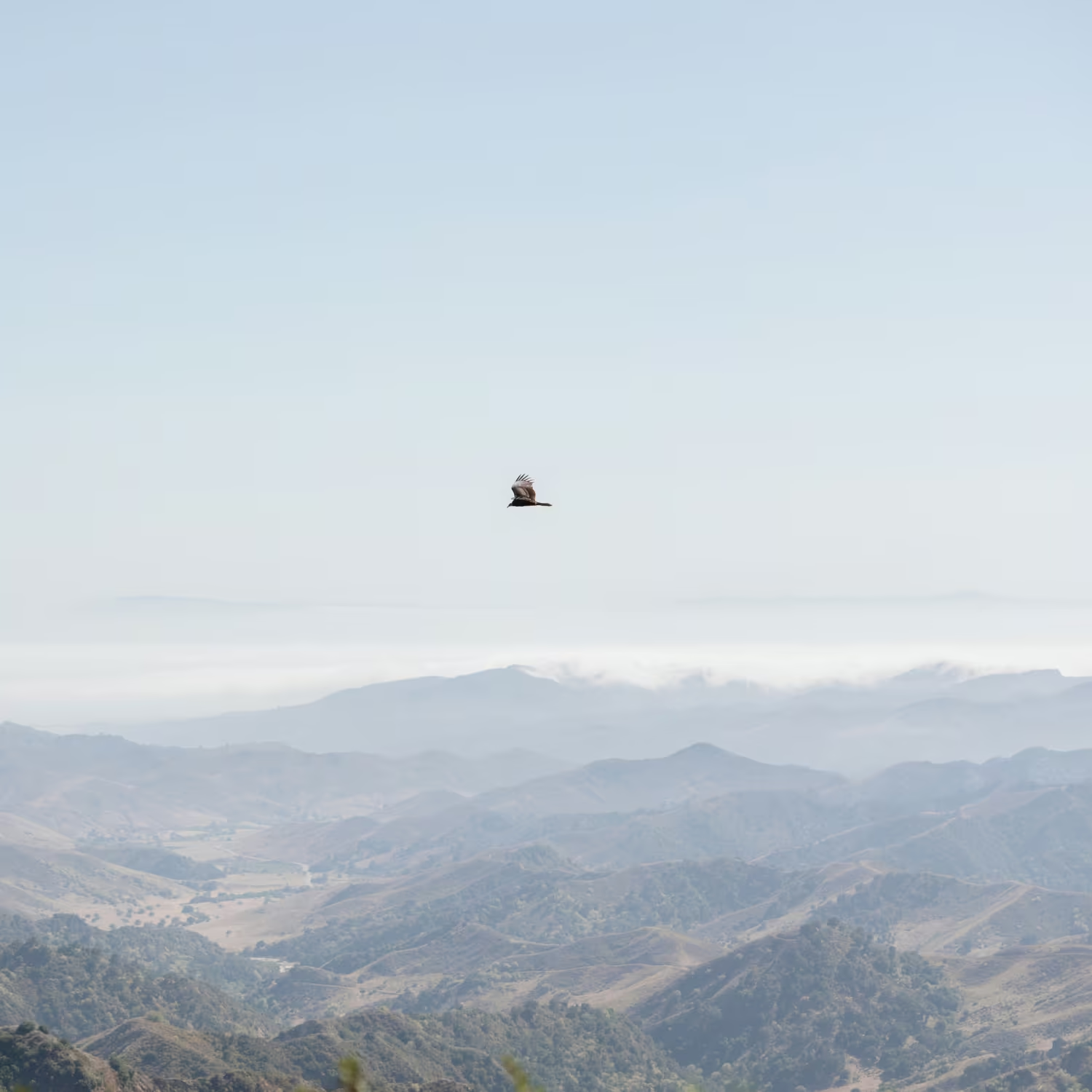
The Birds We Hired to Replace Pesticides
At Ojai Mountain, raptors are part of the vineyard team. Barn owls, kestrels, red-tailed hawks, and great horned owls naturally control rodents and insects, protecting the vines without synthetic pesticides. Nest boxes, hunting perches, and healthy habitat encourage these birds to stay—creating a vineyard ecosystem that works with nature, not against it.

The first vines went into the ground at Ojai Mountain in 2018. From the first day forward, we made a commitment: no synthetic pesticides. Not ever.
That decision sounds clean and principled. In practice, it raises an immediate and very practical question. Rodents tunnel beneath vine rows and chew through root systems. Gophers collapse terraced blocks. Insects colonize leaf canopies. Conventional farming addresses all of this with rodenticides and broad-spectrum pesticides — products that are effective, but that also alter soil biology, suppress surrounding wildlife populations, and subtly reshape the character of the land over years of use.
We wanted no part of that trade-off. So we had to find a different answer.
At 2,800 feet, our 335-acre property sits well above the valley floor, in a zone where open ridgelines meet dense chaparral and the Pacific wind moves through constantly. It is, by any ecological measure, exceptional raptor habitat. We decided to expand and encourage it.
Why Raptors Work
A healthy raptor population is one of the clearest indicators of a functioning ecosystem. These are apex predators. When they move in, the prey populations below them self-regulate. It is not a gentle or particularly romantic process — it is predation, running on instinct and hunger. But the result, from a viticulture standpoint, is remarkably clean.
Raptors do not leave chemical residue in the soil. They do not suppress beneficial insect populations along with harmful ones. They do not accumulate in the water table. They hunt what threatens the vineyard, they eat it, and they keep hunting.
There is also a chain-reaction problem with rodenticides that rarely gets discussed. A poisoned mouse does not simply disappear. It gets eaten by an owl, a hawk, a coyote, a fox. The poison accumulates up the food chain, killing the very predators that would otherwise control the rodent population naturally. Regenerative vineyards across California are moving away from chemical rodent control partly for this reason: the cure undermines itself.
The key word is resident. Transient birds of prey offer occasional benefit. A population that nests on the property, raises young here, and returns season after season provides something categorically different: continuous, year-round biological pressure on the pest species that would otherwise go unchecked.
That is what we set out to build.
Meet the Crew
Four species have established themselves as the primary hunters on the property. Each fills a distinct ecological role, and together they provide something close to around-the-clock coverage.
American Kestrel — The Day Shift, Vine Rows
The American Kestrel is North America's smallest falcon, and arguably its most precise. Kestrels hunt insects with a focus that larger raptors cannot match, hovering in place above a target before dropping with exact accuracy. Along our vine rows, they are the first line of defense against the insect pressure that builds through the growing season: grasshoppers, beetles, large moths, and vineyard pest insects all fall within their range.
What makes kestrels particularly valuable is that they operate as a dual-threat hunter. A resident pair reduces both insect and rodent pressure simultaneously, which is a combination no chemical program can replicate without collateral damage to the surrounding ecology. They are also highly adaptable to human infrastructure, taking readily to nest boxes, which makes them among the easiest raptors to encourage onto agricultural land. We have positioned boxes between blocks specifically to give them stable nesting sites within their natural hunting range.
Red-tailed Hawk — The Day Shift, Open Terrain
Where the kestrel works the vine rows, the Red-tailed Hawk patrols the open slopes and terrain between blocks. These are large, powerful birds with exceptional eyesight and a hunting range that covers significant ground. Their primary targets on our property are gophers and small rodents — exactly the animals most likely to compromise root systems and irrigation infrastructure.
Red-tails are also territorial. A resident pair will actively defend their range against competing predators, which means their presence has a stabilizing effect on the broader raptor ecology of the property.
Research has documented what ecologists call the "landscape of fear": when hawks regularly patrol an area, rodents spend significantly more time underground and less time feeding above the soil surface. The predator does not need to make a kill to reduce vineyard damage. Its visible presence alone alters the behavior of the animals below it. Perch poles installed every few acres give hawks elevated vantage points, and studies have found birds use them dozens of times per day during peak rodent activity.
Barn Owl — The Night Shift
The Barn Owl is the most specialized hunter on the property, and in many ways the most impressive. They take over at dusk and work through the night, hunting by sound rather than sight — capable of locating and striking prey in conditions of complete darkness using hearing alone. Their facial disc functions as a parabolic reflector, channeling sound to their asymmetrically positioned ears with extraordinary precision.
From a vineyard standpoint, this matters because rodent activity peaks after dark. The gophers and mice that kestrels and hawks miss during daylight hours do not get a reprieve. The night shift is already waiting.
Great Horned Owl — The Apex of the Night
If the Barn Owl is the vineyard's rodent specialist, the Great Horned Owl is the mountain's top predator. Known informally as "the tiger of the sky," it is among the most powerful raptors in North America — capable of taking prey that no other owl on this property can handle: rabbits, jackrabbits, ground squirrels, skunks, young raccoons, and occasionally other birds of prey. Almost every other owl species in California treats the Great Horned Owl as a threat. Red-tailed Hawks and ravens will mob a perched Great Horned Owl because it poses a real danger to their nests.
In a vineyard context, this dominance is an asset. Great Horned Owls extend pest pressure to larger animals that Barn Owls cannot manage, and they patrol from tall oaks, rocky outcrops, and ridge perches rather than flying low over vine rows. That spatial separation is why the two species coexist more than they compete: Barn Owls hunt the open agricultural ground between blocks; Great Horned Owls work the surrounding hillsides, canyons, and woodland edges.
There is one important dynamic to acknowledge honestly. Great Horned Owls are one of the few natural predators of Barn Owls — they will occasionally take an adult or prey on juveniles. This is why nest box placement matters: Barn Owl boxes positioned away from dense tree cover and large perch trees reduce the likelihood of Great Horned Owl interference. On a 335-acre mountain property with mature oaks, open vineyard blocks, and rocky terrain, there is enough spatial diversity for both species to establish without direct conflict. Their presence together is, by most ecological measures, a sign that the food web beneath them is intact.
| Species | Active Hours | Primary Prey | Hunting Zone |
|---|---|---|---|
American Kestrel | Daytime | Insects, small rodents | Vine rows |
Red-tailed Hawk | Daytime | Gophers, ground squirrels | Open slopes between blocks |
Barn Owl | Dusk through dawn | Voles, mice, pocket gophers, rats | Open vineyard ground |
Great Horned Owl | Dusk through dawn | Rabbits, large rodents, skunks | Hillsides, canyons, woodland edges |
Building the Infrastructure
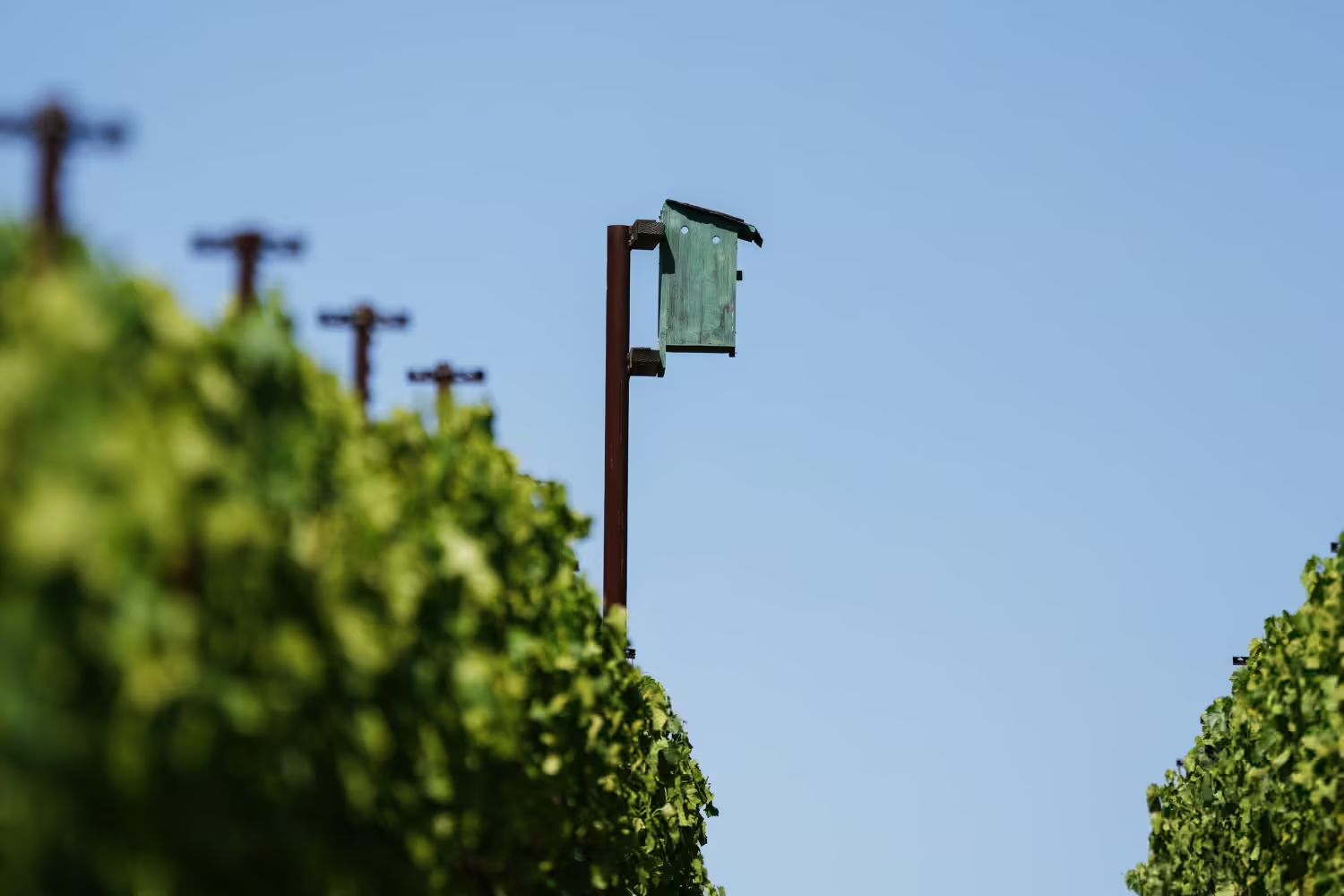
Raptors do not simply appear because the habitat is suitable. They need specific conditions to nest, raise young, and establish territory. We have built for those conditions deliberately, placing nesting boxes at intervals between vineyard blocks and installing hunting perches on the open slopes where Red-tailed Hawks can survey the terrain.
The placement is deliberate, and so is the restraint. More birds is not automatically better. Raptors partition space, and crowding the property with nest boxes does not produce a denser workforce — it produces territorial conflict and abandoned sites.
| Species | Spatial behavior | Approximate territory | What this means in practice |
|---|---|---|---|
Barn Owl | Home range, less strictly territorial | ~165 acres per pair (CA data); hunting concentrated near nest | Multiple boxes can work if prey is sufficient and habitat is right |
American Kestrel | Breeding territory with limited overlap | Roughly 25 to 275+ acres depending on habitat | Good candidate for nest boxes, but not every box will support a separate breeding pair |
Red-tailed Hawk | Strongly territorial, actively defended | ~74 to 198 acres of defended territory; broader ranging beyond that | Perch placement matters more than trying to increase nesting density |
Great Horned Owl | Strongly territorial, year-round | ~300 to 1,000+ acres depending on habitat and prey density | Presence stabilizes the broader predator ecology; nest box programs not applicable — they use existing trees and structures |
The goal is not maximum raptor density. It is stable occupancy: the right number of birds, in the right locations, hunting the right ground. A Barn Owl pair hunting 165 acres continuously outperforms three pairs competing over the same space. A Red-tailed Hawk that has claimed a territory and returns season after season is worth more than a rotating cast of transient birds with no investment in the land.
Applied to our 335 acres, the research suggests the property can comfortably support the following:
| Species | Realistic breeding pairs on 335 acres | Basis |
|---|---|---|
Barn Owl | 10-15 pairs | Least territorial; 1 pair per 10-20 acres in CA vineyard data |
American Kestrel | 2-4 pairs | Mixed mountain/vineyard habitat; 25-275 acres per pair |
Red-tailed Hawk | 2-3 pairs | 74-198 acres defended territory in CA studies |
Great Horned Owl | 1-2 pairs | Most spatially demanding; 160-1,000+ acres per pair |
Those are ceilings, not targets. A property with 15 Barn Owl pairs requires prey populations large enough to sustain them — and prey populations are not infinite. Push occupancy past what the land can feed, and pairs abandon sites or fail to raise young.
The positioning is intentional. A nest box placed too close to human activity will be avoided. Too far from the vine rows, and the kestrel's hunting range does not cover the ground we need covered. Getting this right requires understanding each species' behavior and working with people who know these birds well.
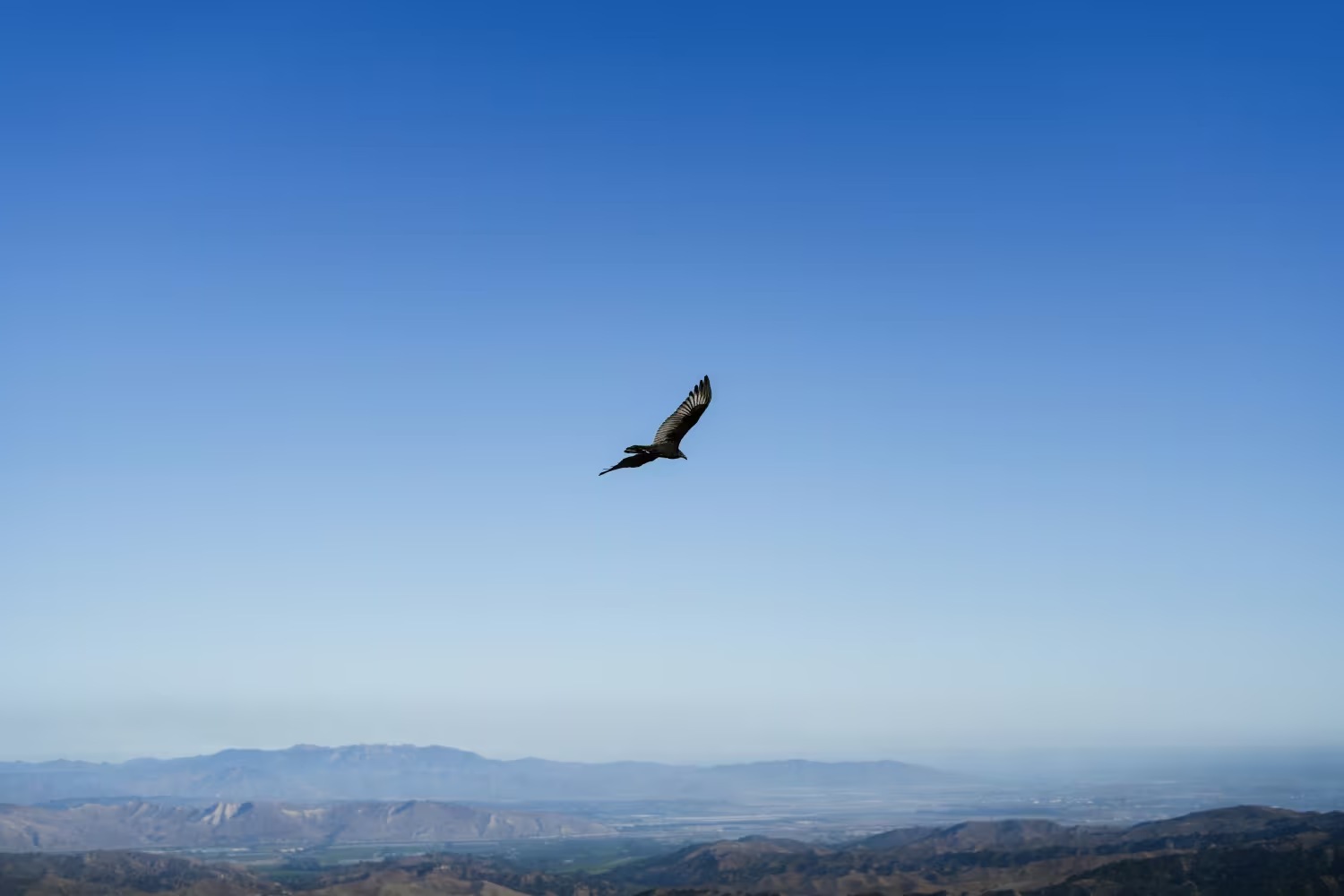
The Ojai Raptor Center
That is where our partnership with the Ojai Raptor Center becomes essential. The Center rehabilitates injured birds of prey and releases them into appropriate wild habitat. Our mountain, with its elevation, open terrain, and established nest infrastructure, offers ideal release conditions for several of the species they work with.
The relationship is genuinely mutual. They need high-quality habitat for birds that are ready to return to the wild. We need resident raptors with the behavioral patterns and territorial instincts that come from being properly established, not simply dropped into a location. Birds released through a rehabilitation program are assessed, conditioned, and matched to habitat. That is a different proposition from hoping a wild bird happens to find your nest box.
It is also a reminder that this kind of farming does not happen in isolation. The mountain is part of a broader ecosystem, and the work of caring for it connects outward to the wider community of people and organizations who take land stewardship seriously.
What the Birds Tell Us
There is a principle in ecology that apex predators are a reliable indicator of ecosystem health. Their presence means the food chain beneath them is intact: enough insects, enough small mammals, enough undisturbed habitat to sustain a hunting population at the top. Where apex predators disappear, it is almost always because something lower in the chain has collapsed first.
By that measure, a mountain with resident kestrels, nesting barn owls, great horned owls and territorial Red-tailed Hawks is a mountain that is functioning. The birds are not decorative. They are diagnostic.
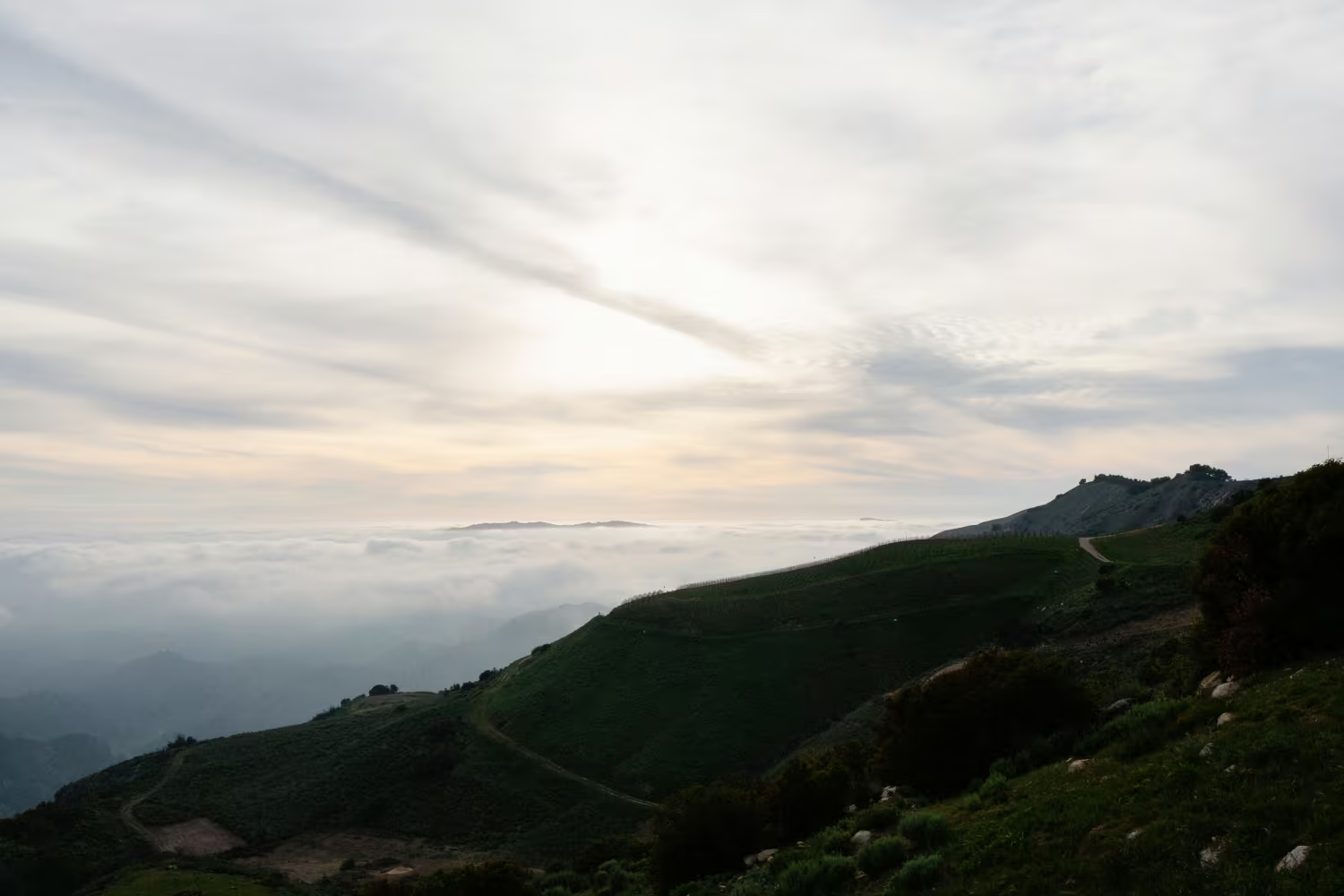
What Guests See From the Ridge
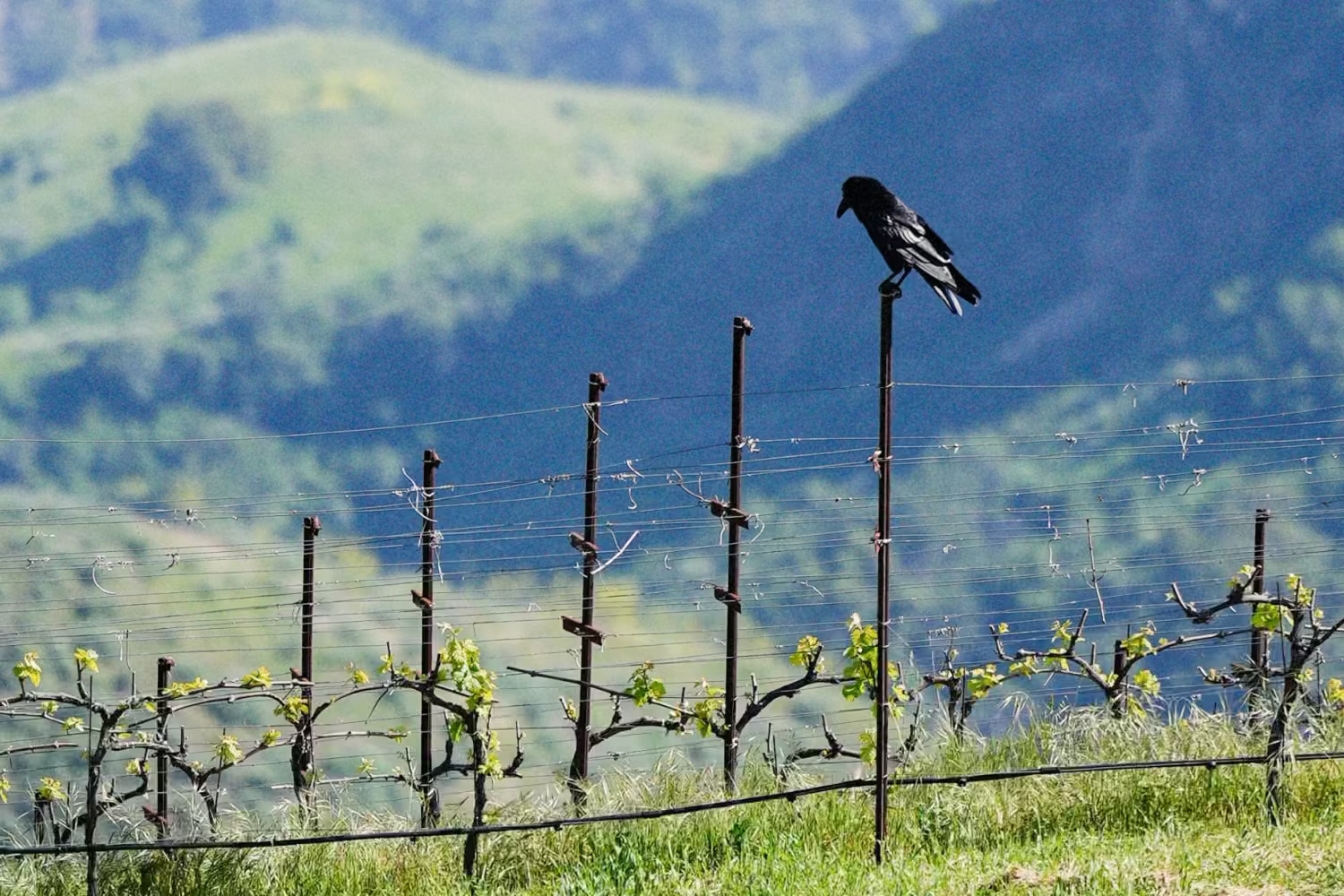
The four species we have built infrastructure for are not the only raptors that use this mountain. Guests visiting the estate regularly observe Red-tailed Hawks circling on thermals above Sulphur Mountain and American Kestrels perched on vineyard posts, scanning the rows below. Around dusk, Barn Owls emerge from their nest boxes to begin the night shift.
Less predictably, Golden Eagles soar over the ridge. With wingspans of six and a half to seven and a half feet, they are powerful hunters — athletic, purposeful fliers that take rabbits, jackrabbits, ground squirrels, and snakes. Their presence here is a function of the mountain's elevation and the open terrain that our regenerative approach preserves.
On rare days, guests see something rarer still.
California Condors
The Sespe Wilderness and Hopper Mountain area, just north of Ojai, supports one of the strongest condor populations in California. Sulphur Mountain sits within that range, and condors are occasionally spotted soaring above the ridge — sometimes during a tasting.
A few facts worth knowing before you look up:
By the 1980s, only 22 California Condors remained in the wild. Every living condor today descends from those birds, after one of the most successful captive breeding and reintroduction programs in conservation history.
With a wingspan of 9 to 9.5 feet, they are the largest flying birds in North America — nearly twice the size of a turkey vulture, and noticeably larger than a golden eagle.
They are scavengers, not hunters, feeding on carrion and playing an important role in keeping ecosystems free of disease.
Condors can soar for hours without flapping, using thermals rising from mountain slopes. Sulphur Mountain produces excellent thermals. When you see a bird circling overhead with almost no wing movement, it is worth a second look.
A condor may travel more than 100 miles in a single day. They can live 60 years or more.
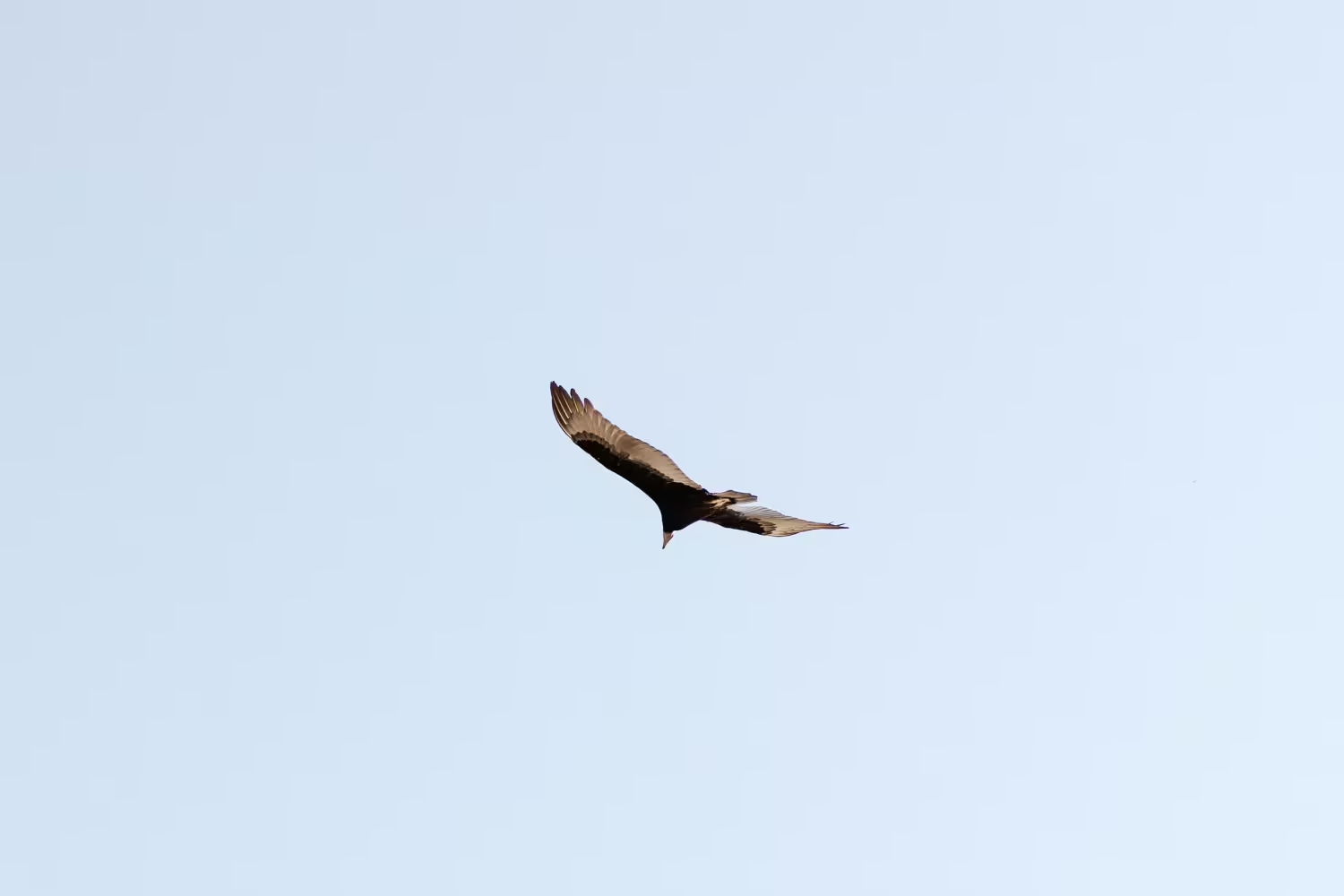
The most common confusion is between a condor and a turkey vulture, since both soar with minimal effort. The simplest field marks:
California Condor Almost impossibly large. Bright white triangular patches clearly visible under each wing. Steady, unwavering glide with no rocking. Other birds nearby look small by comparison.
Turkey Vulture Rocks gently side to side while soaring. Wings held in a shallow V. Underside appears gray, not white. Noticeably smaller.
Golden Eagle Feathered head. Flaps more frequently. More athletic, purposeful flight. Substantially smaller than a condor.
A useful shorthand: if you think you are looking at a turkey vulture, but it seems absurdly large, you are probably looking at a California Condor.
A sighting is not guaranteed. But many guests who spend a few minutes scanning the ridgeline before the tasting begins come away with something they did not expect: a close look at one of the rarest animals on earth, circling on the same thermals that cool our vineyard every afternoon.
This is, ultimately, what regenerative farming is trying to achieve: not just the absence of harmful inputs, but the presence of a system that can manage itself. Pesticides solve a problem by eliminating it. A functioning raptor population solves the same problem by making the mountain inhospitable to it in the first place, season after season, without any intervention from us at all.
We did not bring them here so much as make it worth their while to stay. The rest, they handle themselves.
Frequently Asked Questions
Raptors reduce vineyard pests by hunting rodents, insects, and other small animals that damage vines and irrigation systems. Barn owls, hawks, and kestrels create a natural pest-control system that works day and night without synthetic chemicals or soil disruption.
Barn owls are highly effective because they hunt at night, when rodent activity is highest. A breeding pair can remove thousands of rodents in a season, which helps protect vine roots, irrigation lines, and soil structure without using poison.
American Kestrels hunt during the day and target both insects and small rodents. That makes them especially valuable in vineyards because they reduce multiple pest pressures at once, including grasshoppers, beetles, moths, mice, and similar threats.
Great Horned Owls and Barn Owls overlap somewhat, but they play different ecological roles. Great Horned Owls are broader, more powerful predators that help control larger prey like rabbits and ground squirrels, while Barn Owls specialize in open-ground rodent control. The main risk is that Great Horned Owls occasionally prey on Barn Owls, which is why nest box placement away from dense tree cover matters.
Coverage varies significantly by species. Barn Owls are the least territorial and can support one breeding pair per 10-20 acres. American Kestrels need roughly 25-275 acres per pair depending on habitat. Red-tailed Hawks defend 74-198 acres of territory in California studies. Great Horned Owls are the most spatially demanding, requiring 160-1,000+ acres per pair.
The honest answer is: indirectly, yes — but not in the way most people expect. Organic farming does not add flavor. What it does is remove the things that suppress it. Synthetic pesticides and herbicides affect soil microbiology, and healthy soil biology is one of the primary drivers of minerality, complexity, and the site-specific character that serious collectors call terroir. At Ojai Mountain, no synthetic inputs have touched the land since the first vine went in the ground in 2018. The soils are ancient Monterey shale — fractured, mineral-rich, and biologically active. That activity shows up in the wines as tension, acidity, and a distinctly savory mineral character that winemaker Erich Bradley describes as the vineyard expressing itself rather than being managed into a style. The connection between farming and flavor is not romantic shorthand. It is soil science.
The numbers are specific enough to answer that. A single Barn Owl breeding pair can remove 2,000 to 4,000 rodents in one season — a volume no scheduled spray program matches without also disrupting soil biology and poisoning the predators above it in the food chain. Red-tailed Hawks suppress rodent feeding even when they are not actively hunting, because prey animals spend significantly more time underground when a hawk is visible on the ridge. Kestrels reduce both insect and rodent pressure simultaneously, which no chemical program can replicate without collateral damage. The infrastructure — nest boxes, perch poles, habitat corridors — is measurable and permanent. The results compound over time in a way that a spray schedule does not.
Ojai Mountain sits near the Sespe Wilderness and Hopper Mountain condor recovery area, which supports one of California's strongest condor populations. Sulphur Mountain produces excellent thermals that condors use for soaring. Condors are scavengers rather than hunters, but their presence signals a healthy, intact mountain ecosystem.
Share this post
Recent Posts
View All Posts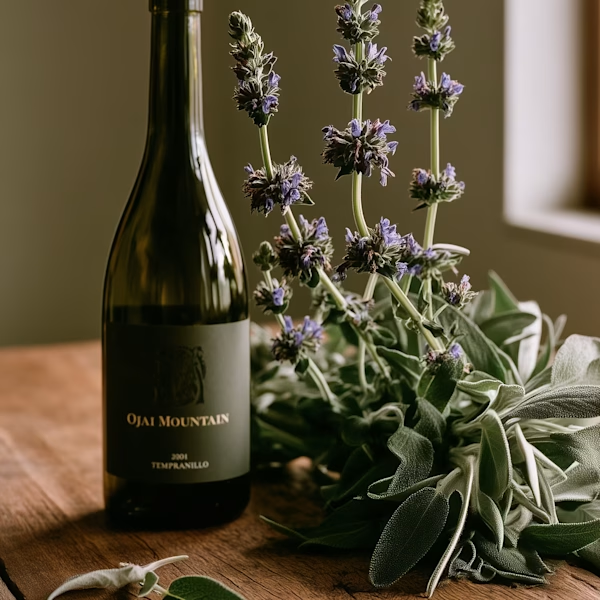
Lesia Artymovych • 20 Sept 2026
The Scent of the Mountain: Chaparral, Syrah, and Ojai Terroir
Ojai Mountain’s wines can carry aromas that recall the chaparral surrounding the vineyard: sage, dried herbs, pepper, and wildflowers. Science does no...
Lesia Artymovych • 16 Sept 2026
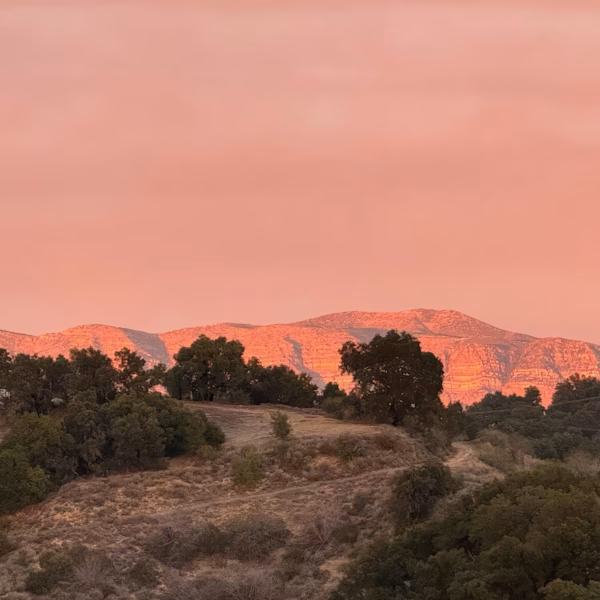
The Ojai Pink Moment: Why the Topa Topa Mountains Glow
Ojai’s Pink Moment is the brief coral, rose, and violet glow that appears on the Topa Topa Mountains around sunset. Warm, low-angle light creates the ...
Lesia Artymovych • 14 Sept 2026
A Guide to Wine and Cheese Pairing at Ojai Mountain
Match intensity to intensity: pair fresh, delicate cheeses with Ojai Mountain's bright Estate Whites, and bold, aged cheeses with its Syrahs and reds....