
 Log in
Minimal Intervention vs. Natural Wine: Where We Draw the Line and Why
Minimal-intervention and natural wines share the same goal: letting the vineyard speak with as little manipulation as possible. The difference is where the winemaker draws the line. At Ojai Mountain, we intervene only when necessary—using a modest amount of sulfur at bottling to protect stability and aging potential while preserving the character of the mountain.

We don't make natural wine. That's not a criticism of natural wine — it's a distinction we think is worth explaining clearly, because the two approaches are often conflated, and the difference matters.
Minimal intervention winemaking and natural wine share a great deal. Both start from a belief that wine should taste like somewhere real. Both push back against industrial production, heavy manipulation, and the kind of winemaking that irons out everything interesting about a site. If you care about honest farming, native yeast, and keeping cellar additions to a minimum, you'll find common ground with producers on both sides of this line.
But they are not the same thing. The divergence is real, and it comes down to one question: how much risk is the winemaker willing to accept in the name of non-intervention?
This piece explains where the two philosophies overlap, where they part ways, and why Ojai Mountain chooses the path it does. The short answer: we want these wines to be pleasurable on release and capable of aging for a decade or more. That goal shapes every decision we make in the cellar.
What Minimal Intervention and Natural Wine Share
Both approaches begin in the same place: a conviction that wine should reflect the land it came from, not the additions a winemaker reached for to fix or smooth it.
That shared starting point is not superficial. It shapes the entire arc of how grapes are grown and how wine is made. In practice, most producers working in either tradition hold a similar set of values.
| Shared Value | How We Practice It at Ojai Mountain |
|---|---|
Organic farming | No synthetic pesticides, herbicides, or fertilizers — ever |
Regenerative practices | Cover crops, composting, soil health as a long-term priority |
Native yeast fermentation | Fermentation starts naturally, without inoculation |
Minimal cellar additions | No added acid, no added sugar, no fining agents |
Terroir as the point | Neutral French oak, so site character leads — not oak |
Biodiversity as a value | Managed bee boxes, birds of prey for pest control, wildlife corridors |
Neither philosophy is inherently industrial or formulaic. Both reject the idea that wine is a product to be engineered toward a predictable style. Both ask the same foundational question: what does this place want to say, and how little do we need to do to let it speak?
The difference between them is not one of sincerity or farming commitment. As Decanter notes, natural wine is often treated as "a more extreme, less standardized subset of minimal intervention winemaking." The roots are shared. The thresholds are different.
Where the Two Approaches Diverge
Both philosophies value restraint. The divergence is not about whether to intervene, but about where to draw the line when the wine is vulnerable.
Natural wine, at its most principled, holds that the winemaker should step back even when a vintage is difficult, even when fermentation is unpredictable, even when the wine is at risk. The philosophy accepts a degree of instability as part of the deal. That is not recklessness — it is a deliberate commitment to non-intervention as an absolute value.
Minimal intervention takes the same starting position but allows the winemaker to act when the wine genuinely needs protection. The goal is still to do as little as possible. But "as little as possible" is not the same as "nothing at all."
Three trade-offs define where the two philosophies part ways:
Purity vs. protection. Natural wine prioritizes keeping the wine free of any addition, including protective ones. Minimal intervention accepts that a small, targeted addition can preserve what the vineyard produced rather than alter it.
Instability vs. stability. Natural wine accepts that some bottles will evolve unpredictably, or not survive long cellaring. Minimal intervention monitors closely and steps in to prevent preventable failure.
Ideology vs. pragmatism. Natural wine holds a philosophical line. Minimal intervention holds the same values but treats them as a guide rather than a rule with no exceptions.
Neither position is wrong. They reflect different answers to the question of what faithfulness to a wine actually requires.
Side by Side: Minimal Intervention vs. Natural Wine
These are directional differences, not universal laws. Individual producers vary. But across the two approaches, the distinctions tend to look like this.
| Minimal Intervention | Natural Wine | |
|---|---|---|
Yeast | Native yeast to start; commercial yeast may be used to prevent fermentation failure | Native yeast only, no exceptions |
Sulfites | Modest protective dose at bottling | Little or no added sulfur |
Winemaker role | Intervene as little as possible; act when the wine needs protection | See how far it is possible to go without intervening at all |
Tolerance for instability | Monitored and prevented where possible | Accepted as part of the philosophy |
Fining / filtration | Often avoided; reds typically unfined and unfiltered | Typically avoided entirely |
Farming standard | Organic or regenerative; no synthetic chemicals | Organic or biodynamic; no synthetic chemicals |
The farming column is worth noting: on that dimension, the two approaches are largely indistinguishable. The meaningful divergence happens in the cellar, not the vineyard.
The Honest Dividing Line: Sulfites, Stability, and Ageability
If there is a single technical question that separates minimal intervention from natural wine, it is sulfites.
Sulfur dioxide (SO2) is a naturally occurring compound that acts as both an antioxidant and antimicrobial agent in wine. It has been used in winemaking for centuries. Its job is simple: protect the wine from oxidation and bacterial spoilage, particularly during bottling and in the bottle over time.
Sulfite Levels in Context
Natural wines typically contain less than 30 mg/L total SO2
Many conventional commercial wines fall between 60 and 130 mg/L
The legal maximum for dry red wines is 150 mg/L (EU) and 350 mg/L (US)
Ojai Mountain uses a modest protective dose at bottling — well below conventional levels, but enough to do its job
Natural winemakers who use little or no sulfur are making a genuine philosophical commitment. Wine Folly describes natural wine as being "defined by practice and charters, not by a single statute," and the commitment to near-zero sulfites is one of the clearest markers of that practice. It is also, honestly, a real risk. Without sulfites, wine is more vulnerable to oxidation and microbial instability. Some bottles will evolve in unexpected directions. That is part of what natural wine producers accept.
We make a different choice. We add a modest, protective dose of sulfur at bottling. Not to alter the wine's character, not to mask anything, not to extend shelf life artificially — but to protect the wine we spent three years farming and making from preventable damage after it leaves our cellar.
Why Sulfites Matter for Aging
We want these wines to be drinkable on release and still rewarding a decade later. Our Syrahs, in particular, are built for long cellaring. That kind of ageability requires stability, and stability requires a small measure of protection. Refusing to provide it would not make the wine more authentic. It would make it more fragile.
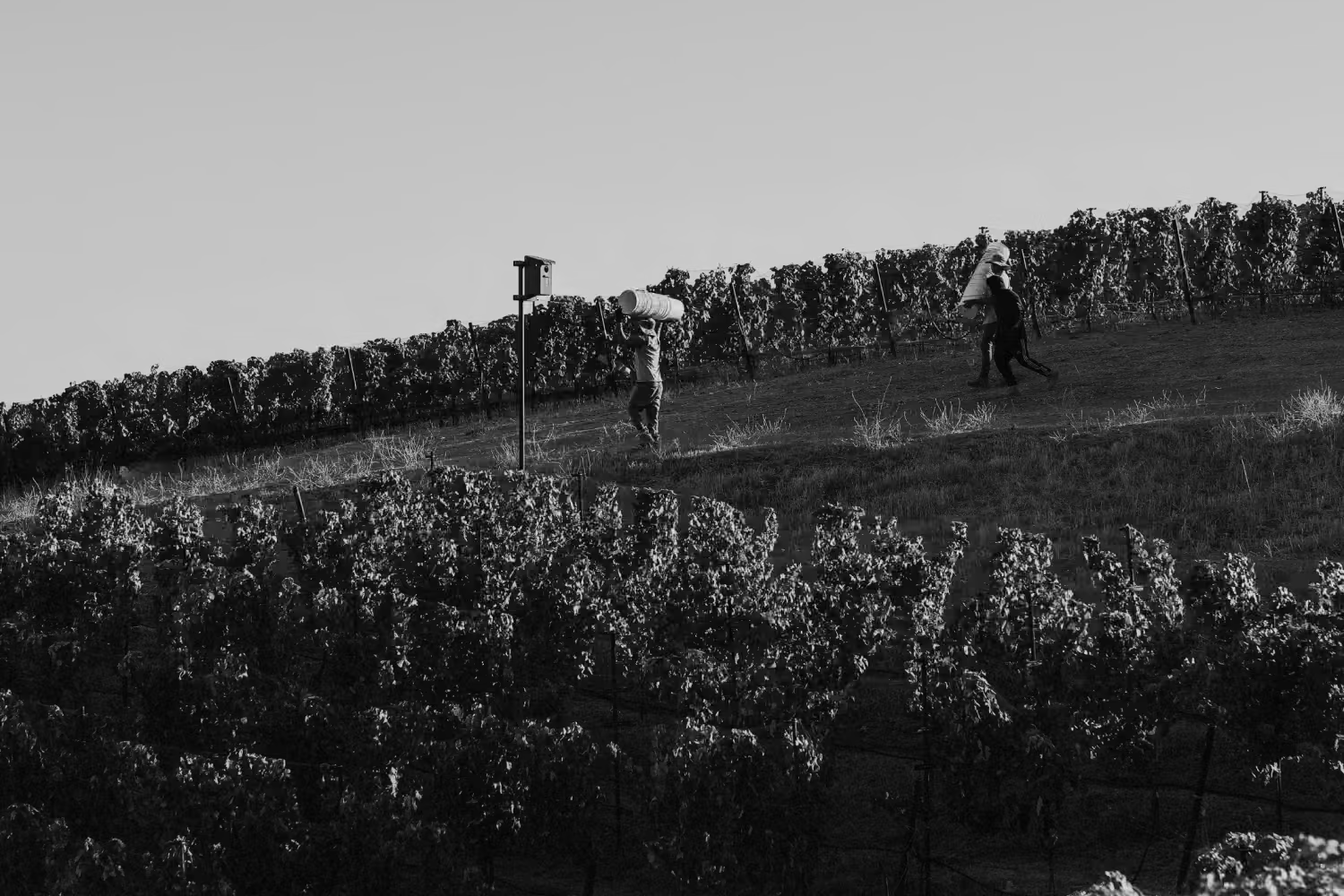
In the Vineyard, the Commitment Is Absolute
The line we draw in the cellar does not reflect any softness in the vineyard. In the vineyard, our approach is as uncompromising as any natural producer's.
Certified organic farming. No synthetic pesticides, herbicides, or fertilizers. Ever.
Regenerative practices. Native cover crops that build living soil and become organic matter. Composting throughout the growing season.
Biodiversity as a priority. Managed bee boxes to support pollination. A partnership with the
to deploy kestrels, owls, and hawks for natural pest control. Wildlife corridors preserved across the property.
Minimal irrigation. The vineyard relies on natural rainfall and drought-tolerant Rhône varietals suited to the site.
No shortcuts on site selection. Virgin land, first planted in 2018, on ancient Monterey shale at 2,800 feet. The terroir does the work because we chose the right place and let it develop on its own terms.
This is worth stating plainly because sustainability language has become so common in wine marketing that it can feel decorative. These are not claims. They are practices — specific, verifiable, and central to everything we make.
As Forbes noted in 2026, regenerative, organic, and biodynamic farming is moving from niche commitment to standard practice among serious producers. We were farming this way from the first vine we planted.
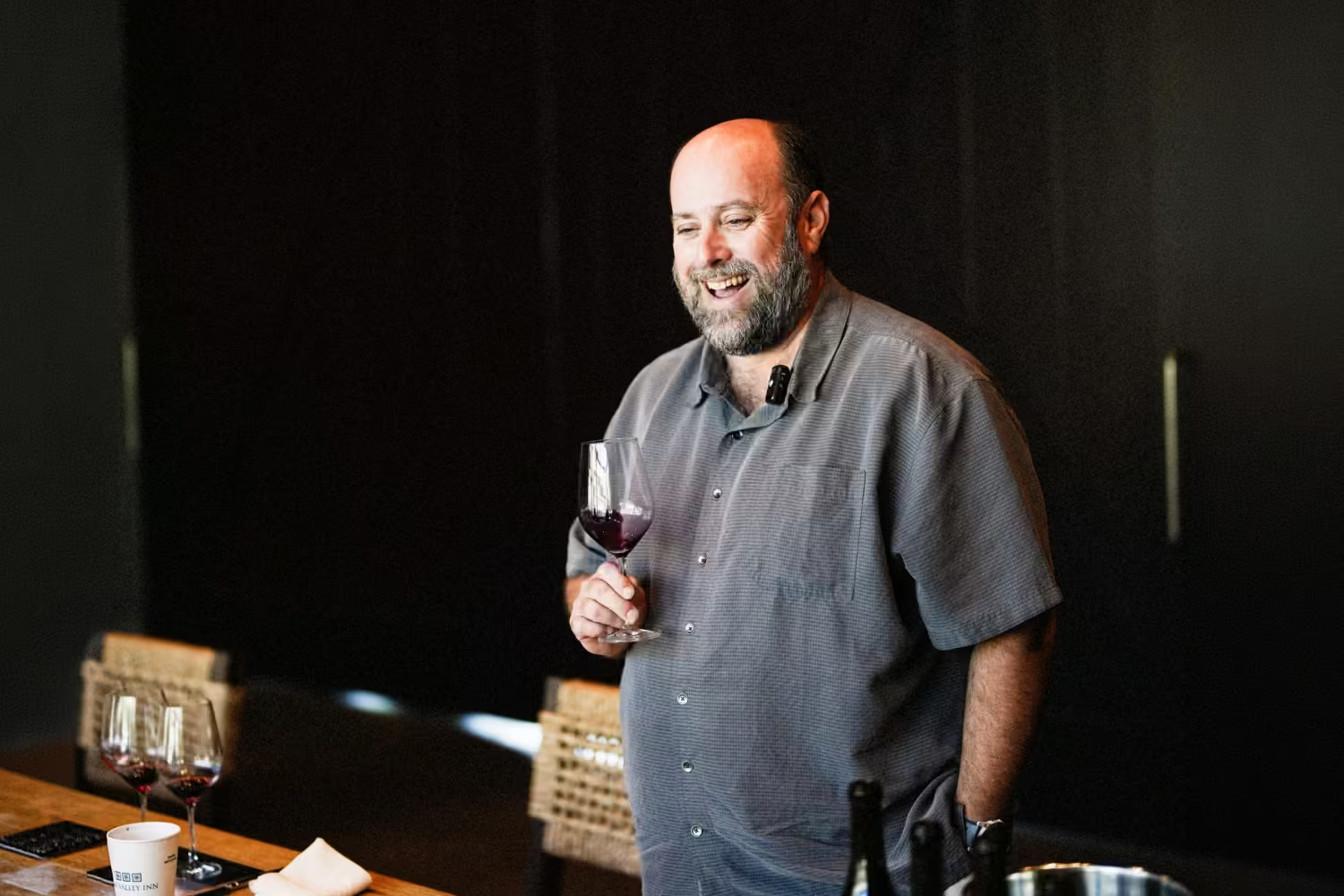
In the Cellar, We Intervene as Little as Needed
Our cellar philosophy follows from the vineyard: do as little as possible, and make every decision in service of the wine rather than in service of a style.
In practice, that means:
Native yeast fermentation. We rely on the wild yeasts present in the vineyard and cellar to start fermentation. This is slower and less predictable than inoculation, but it produces more complex, site-specific results.
Neutral French oak. Larger format barrels with no new oak influence. The wine ages in wood without picking up oak flavor. The site character leads; the barrel does not.
No fining. We don't use fining agents to clarify or stabilize the wine. What you taste is what the vineyard and vintage produced.
No added acid or sugar. We do not correct the wine's chemistry after the fact. The acidity and ripeness in the glass reflect what the mountain gave us that year.
Reds bottled without filtration. Our red wines go into bottle unfiltered, preserving texture, depth, and the full range of compounds that contribute to aging.
Modest sulfur at bottling. A protective dose — not to alter the wine, but to preserve it.
Erich Bradley, our winemaker, has said it directly: "I'm a minimalist when it comes to intervening in the winery. Much of my energy gets devoted to making sure we're in a situation where the fruit when it's harvested and comes into the winery doesn't need help."
That is the goal. The sulfur at bottling is the one place where we ensure the fruit's journey from mountain to cellar to glass is completed faithfully.
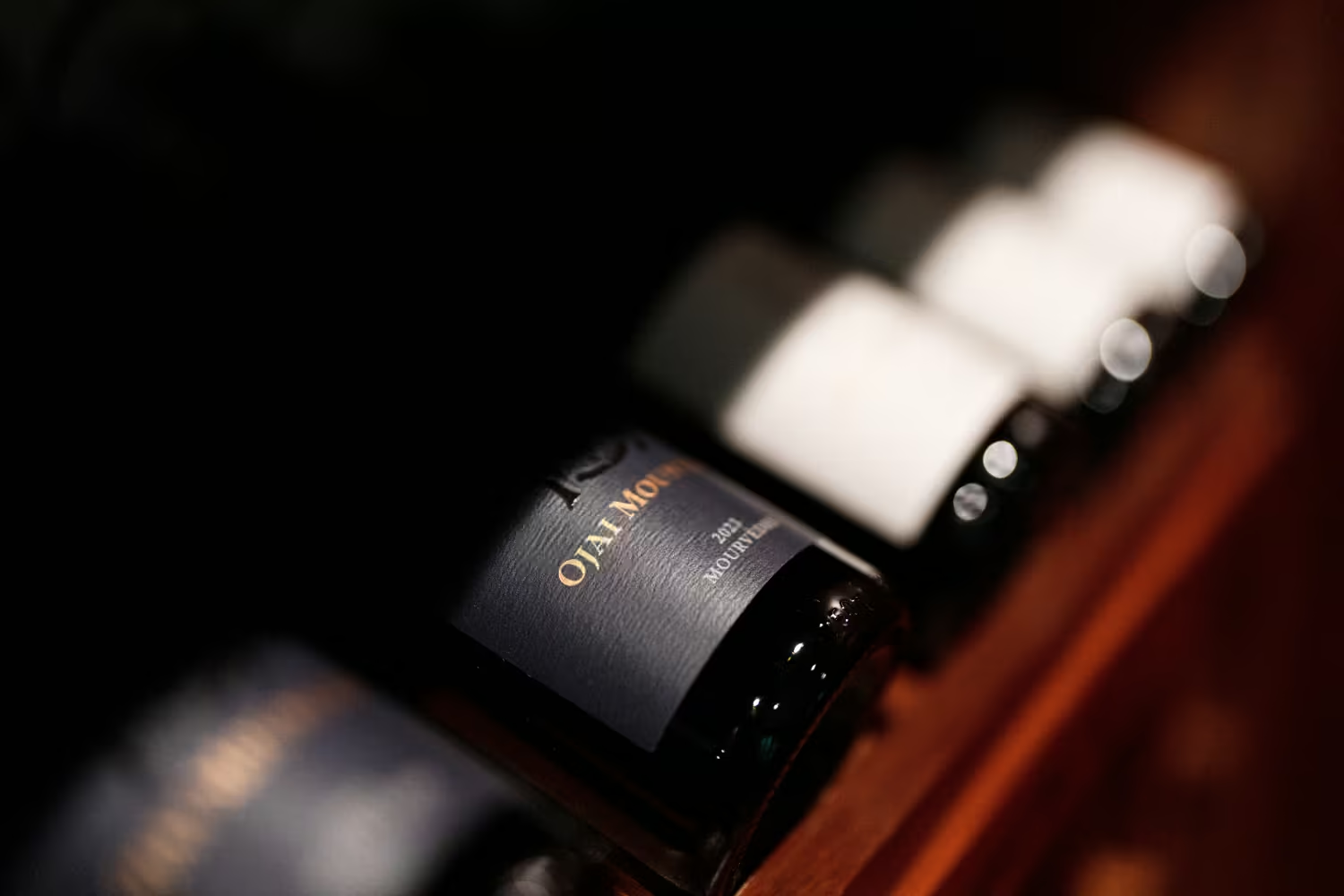
Why This Distinction Matters to Us
We have enormous respect for natural wine and the producers who make it. The commitment to zero intervention is genuine, and the best natural wines are remarkable things.
But our goal is different. We are not trying to see how far we can go without intervening. We are trying to make wines that faithfully express this mountain — wines that are pleasurable now and still rewarding in ten or fifteen years. That goal requires a small measure of protection, applied carefully and with intention.
Minimal intervention, for us, is not a compromise of principle. It is the expression of one. The principle is: preserve what the vineyard gave us. Sometimes that means stepping back. Sometimes it means stepping in just enough to make sure the wine survives the journey intact.
Three Things to Remember
The farming at Ojai Mountain is as serious and uncompromising as any natural producer's.
The cellar work is minimal by design — with one deliberate exception.
That exception exists in service of the wine, not in spite of it.
Frequently Asked Questions
Minimal intervention wine is made with as little manipulation as practical in the vineyard and cellar. Producers commonly favor responsible farming, native yeast, few additions, neutral aging vessels, and little or no fining or filtration. Unlike natural wine, minimal intervention is a flexible philosophy rather than a fixed rulebook: a winemaker may step in when necessary to protect quality, stability, or ageability.
Not exactly. Natural wine is generally considered a more restrictive form of low-intervention winemaking, although there is no universally accepted legal definition in the United States. Natural producers usually rely on organic or biodynamic fruit, native yeast, very few additives, and little or no added sulfur. Minimal intervention producers share many of those values but may use a small, targeted intervention when the wine needs protection. Decanter’s guide to minimal-intervention wine and Food & Wine’s natural wine explainer provide helpful additional context.
Yes. Sulfites form naturally during fermentation, so virtually all wine contains some. The meaningful distinction is whether additional sulfur is used and how much. Many natural winemakers add none or only a small amount, often near bottling, while minimal intervention winemakers may use a modest protective dose to reduce oxidation and microbial spoilage. Vox’s explanation of sulfites in natural wine explores the distinction in more detail.
Not necessarily. “Organic” describes a regulated farming standard, while “minimal intervention” describes a broader winemaking philosophy. Many minimal intervention producers farm organically or regeneratively, but the phrase itself is not a certification. At Ojai Mountain, the vineyard commitment is clear: no synthetic pesticides, herbicides, or fertilizers.
Cloudiness or sediment can result when a wine is bottled without fining or filtration. These processes normally remove suspended yeast, grape solids, and other particles. Skipping them can preserve texture and character, but appearance alone does not determine whether a wine is natural—or whether it is well made. Food & Wine’s natural wine guide explains why some bottles retain cloudiness or sediment.
Yes. Minimal intervention does not mean fragile or short-lived. Careful farming, balanced fruit, sound fermentation, and a restrained protective dose of sulfur can produce wines with excellent aging potential. Ojai Mountain chooses this approach specifically to preserve the vineyard’s character while helping its wines remain stable and rewarding for a decade or more.
There is no strong evidence that natural wine is inherently healthier or reliably prevents headaches. It may contain fewer additives or less added sulfur, but alcohol remains the principal health consideration. Individual reactions vary, and “natural” should not be treated as a health claim. Food & Wine’s overview of natural wine also addresses this common misconception.
We use a modest protective dose to limit oxidation and microbial spoilage after the wine leaves the cellar. The purpose is not to change its flavor or impose a style. It is to preserve what the vineyard produced so the wine can be enjoyed on release and continue developing in bottle.
Share this post
Recent Posts
View All Posts
Lesia Artymovych • 20 Sept 2026
The Scent of the Mountain: Chaparral, Syrah, and Ojai Terroir
Ojai Mountain’s wines can carry aromas that recall the chaparral surrounding the vineyard: sage, dried herbs, pepper, and wildflowers. Science does no...
Lesia Artymovych • 16 Sept 2026
The Ojai Pink Moment: Why the Topa Topa Mountains Glow
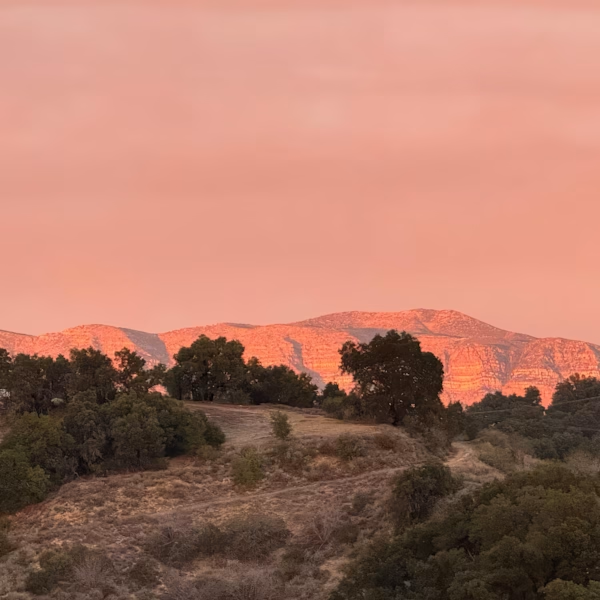
Ojai’s Pink Moment is the brief coral, rose, and violet glow that appears on the Topa Topa Mountains around sunset. Warm, low-angle light creates the ...
Lesia Artymovych • 14 Sept 2026
A Guide to Wine and Cheese Pairing at Ojai Mountain
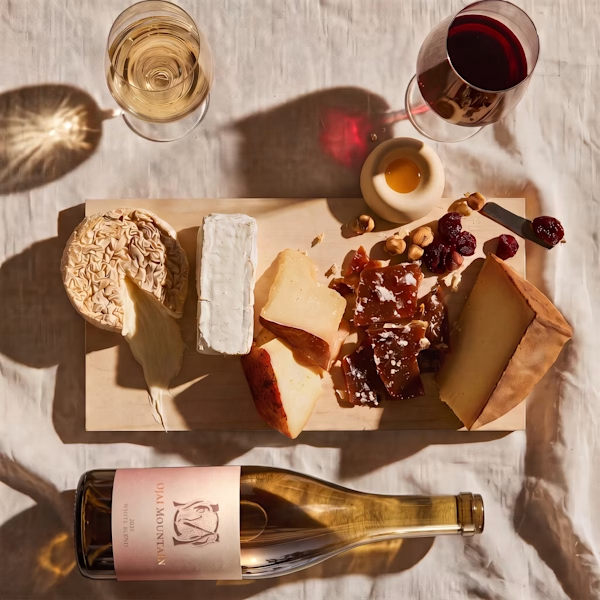
Match intensity to intensity: pair fresh, delicate cheeses with Ojai Mountain's bright Estate Whites, and bold, aged cheeses with its Syrahs and reds....