
 Log in
Diurnal Shift: The Climate Force Behind Every Bottle of Ojai Mountain Wine
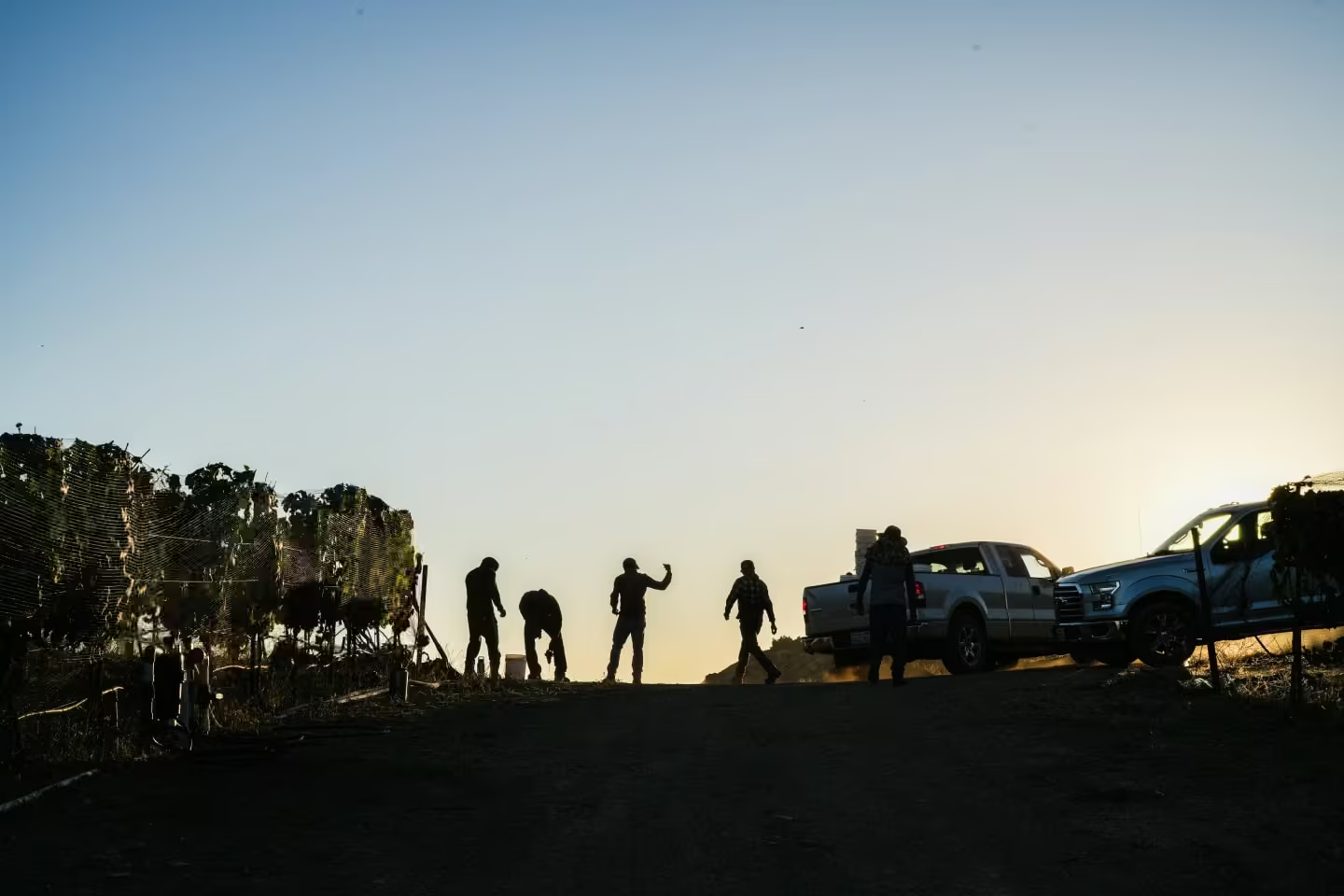
At 2,800 feet, Ojai Mountain’s vineyard can swing 40–50°F between warm afternoons and cool nights. This diurnal shift slows sugar accumulation while preserving acidity and aromatic compounds, allowing grapes to develop full flavor at moderate alcohol levels. The result is the freshness, tension, and precision that define Ojai Mountain wines.

In viticulture, few climate variables shape wine character as directly as diurnal temperature variation (DTV): the difference between a vineyard's daytime high and its nighttime low. The concept is straightforward. The implications run deep.
At Ojai Mountain, our vineyard at 2,800 feet in the mountains above Ojai regularly swings 40 to 50°F between an afternoon in the upper 80s or low 90s and a night that drops into the low 40s. That gap is not incidental. It is the primary reason our wines carry the tension, acidity, and aromatic precision they do.
As Evan Goldstein MS has noted, diurnal range "preserves malic acid, improving total acidity and lowering juice pH, moderating sugar accumulation and preserving freshness." Research published in the

What Happens in the Vineyard, Night After Night
The nightly temperature drop does several things simultaneously, each compounding the last.
Wine grapes contain two primary organic acids: tartaric acid and malic acid. Tartaric acid is structurally stable and largely unaffected by temperature, providing the backbone of a wine's acidity regardless of growing conditions. Malic acid is far more temperature-sensitive. Warm nights accelerate its breakdown through cellular respiration. Cool nights slow or halt that process entirely.
This distinction matters because diurnal shift acts selectively: it preserves malic acid while tartaric acid holds steady on its own. The result is a grape that arrives at harvest with both acids intact, which translates directly into wines with lower pH, brighter freshness, and greater aging potential. This is why mountain vineyards with large diurnal swings consistently produce wines with higher natural acidity than their warmer, lower-elevation counterparts, without any need for acidification in the winery.
This is the central quality argument for large diurnal shifts. Phenolic maturity (the development of ripe tannins, full color, and complex flavor compounds) is driven primarily by cumulative heat during the day. Sugar accumulation, however, accelerates when nights remain warm. When nights are cool, sugar accumulation slows while phenolic development continues. The vine gets more time to build complexity without racing toward excessive Brix. The practical result: wines that achieve full phenolic ripeness at moderate alcohol levels, typically 13 to 14%, rather than the 15 to 16% common in warm, low-swing regions.
Terpenes and other volatile aromatic compounds are temperature-sensitive. Cool nights reduce their evaporative loss from the berry skin, preserving the aromatic intensity that expresses as floral lift, spice, and minerality in the finished wine. This is particularly relevant for varieties like Syrah and Grenache Blanc, where aromatic precision is a defining quality marker.
“Cool nights slow or halt grape berry metabolism, preserving aromas and natural acidity, particularly malic acid.”
How California's Benchmark Regions Compare
California's wine map is large and climatically diverse. Diurnal shift varies dramatically by region, elevation, and proximity to marine influence. There is no official ranking, but the regions consistently cited for the largest swings share a common pattern: significant daytime heating combined with a reliable mechanism for rapid nighttime cooling, whether that is marine air funneling through a gap, high elevation enabling radiational cooling, or cold air drainage from surrounding mountains.
The table below draws on data from Wine Enthusiast, the Calistoga Wine Growers Association, the Lodi Winegrape Commission, and Wikipedia's Ballard Canyon AVA entry:
| Region | Typical Summer Diurnal Shift | Why it's so large |
|---|---|---|
Paso Robles (Central Coast) | 45–55°F (25–30°C) | Hot inland afternoons followed by cool marine air flowing through the Templeton Gap. Frequently cited as having one of the largest swings in California. |
Lake County (North Coast) | 45–55°F | High elevation combined with clear, dry nights enables rapid radiational cooling. |
Calistoga (Napa Valley) | 45–50°F, occasionally more | The warmest AVA in Napa by day; cold air drains into the valley floor at night, producing the largest average swing within Napa Valley. |
Ballard Canyon (Santa Ynez Valley) | Often 35–45°F | Warm days combined with cool nights created by transverse valley airflow from the Pacific. |
Lodi (Central Valley) | 35–45°F | Warm Central Valley days moderated by Delta breezes at night. |
A few things stand out from this comparison. First, the largest regional swings are consistently driven by a combination of heat accumulation and a reliable cold air delivery mechanism, not by cool temperatures alone. Second, regions like Paso Robles and Lake County reach their extremes precisely because they are hot enough by day to create a dramatic contrast with cold nights. Third, the mountain vineyards within these regions — Howell Mountain, Atlas Peak, Mount Veeder, York Mountain, the Adelaida District in Paso Robles, and the upper reaches of Lake County — often push beyond the regional averages, with individual sites at 2,000 to 3,500 feet regularly exceeding the numbers above.
Elevation between 2,000 and 3,500 feet
Dry air with clear skies (no cloud cover to trap heat at night)
Inland heating during the day
Exposure to cold air drainage or marine winds at night
East-west ridgeline orientation to allow cold air movement
Where Ojai Mountain Fits in This Picture
Most California coastal vineyards experience diurnal shifts in the range of 30 to 40°F. Marine influence moderates both daytime highs and nighttime lows, keeping the gap relatively narrow. Our vineyard operates differently.
At 2,800 feet on Sulphur Mountain Road, above the marine fog layer, we receive the full intensity of afternoon sun without the thermal buffering that coastal sites enjoy. Then, as the sun drops, the elevation does what elevation always does: it allows rapid radiational cooling. Our east-west ridgeline channels cold air movement rather than trapping heat. The Pacific is only 10 miles away, but we sit above its fog, which means we get the ocean winds without the insulating cloud cover.
The result, during harvest, is a vineyard that regularly sees afternoon temperatures in the upper 80s to low 90s, followed by nights that drop into the low to mid 40s. That produces swings of 35 to 50°F, with many days approaching the higher end of that range. By the California benchmarks above, that puts us in the same tier as Calistoga and the cooler end of Paso Robles, which is notable given that we sit in Ventura County rather than in one of California's historically recognized wine regions.
The diurnal swing alone does not tell the full story. What makes Ojai Mountain genuinely unusual is the specific combination of factors that produce it:
Elevation (2,800 ft): Above the fog line, in the range where radiational cooling is most effective
Ocean proximity (10 miles): Close enough for persistent afternoon winds, far enough to avoid the thermal moderation that fog provides
Fractured Monterey shale soils: Ancient seabed with poor water retention, forcing deep root development and producing smaller, more concentrated berries
Long growing season: The combination of moderate heat accumulation and cool nights extends the ripening window significantly
Persistent wind: Reduces disease pressure, thickens berry skins, and increases the skin-to-juice ratio
Very few California vineyards combine all five. High elevation is common in Napa mountain appellations, but those sites sit 50 to 100 miles from the Pacific. Paso Robles has extreme swings but sits 20 to 30 miles inland and lacks the ocean wind component. The Sta. Rita Hills has ocean proximity but sits at much lower elevation, giving it a narrower diurnal range.
This is the configuration that allows our Syrah to reach full phenolic ripeness at 13 to 14% alcohol while retaining the bright acidity that defines the wine's structure. It is not a winemaking intervention. It is what the site does.
“Sometimes we have 100°F during the day and 50°F at night.”
A Note on Context and Limits
It is worth being precise about what diurnal shift can and cannot explain. It is a powerful quality indicator, but as Wine Enthusiast notes, "the sheer size of the diurnal shift is not a proxy for wine quality; overall climate, heat spikes, water stress, and viticultural choices also matter." A large swing in a poorly farmed vineyard with excessive yields will not produce exceptional wine. The shift creates the conditions. What happens within those conditions depends on the farming. However, without favorable climate conditions, producing exceptional wine typically requires compensating in the winery through acidification, enzyme additions, and other interventions that work against the goal of creating clean, distinctive wines.
At Ojai Mountain, the diurnal conditions are reinforced by practices designed to let the site express itself fully: organic and biodynamic farming, dry-farmed vines that develop deep root systems in fractured shale, close vine spacing that creates deliberate resource competition, and minimal intervention in the winery. The diurnal shift preserves what the vine builds. The farming determines what the vine is allowed to build.
Climate change adds a layer of complexity worth acknowledging. Research published in Frontiers in Climate notes that "grape berry metabolism responds not just to mean temperature but to the magnitude of day-night swings," and that warmer nights can compress the effective ripening window for quality wine production. High-elevation sites with strong marine influence are currently among the most resilient to this compression, because the cooling mechanism is structural rather than seasonal. The Pacific does not stop being cold. The elevation does not change. That is a meaningful long-term advantage for mountain viticulture in Southern California.
What You Taste in the Glass
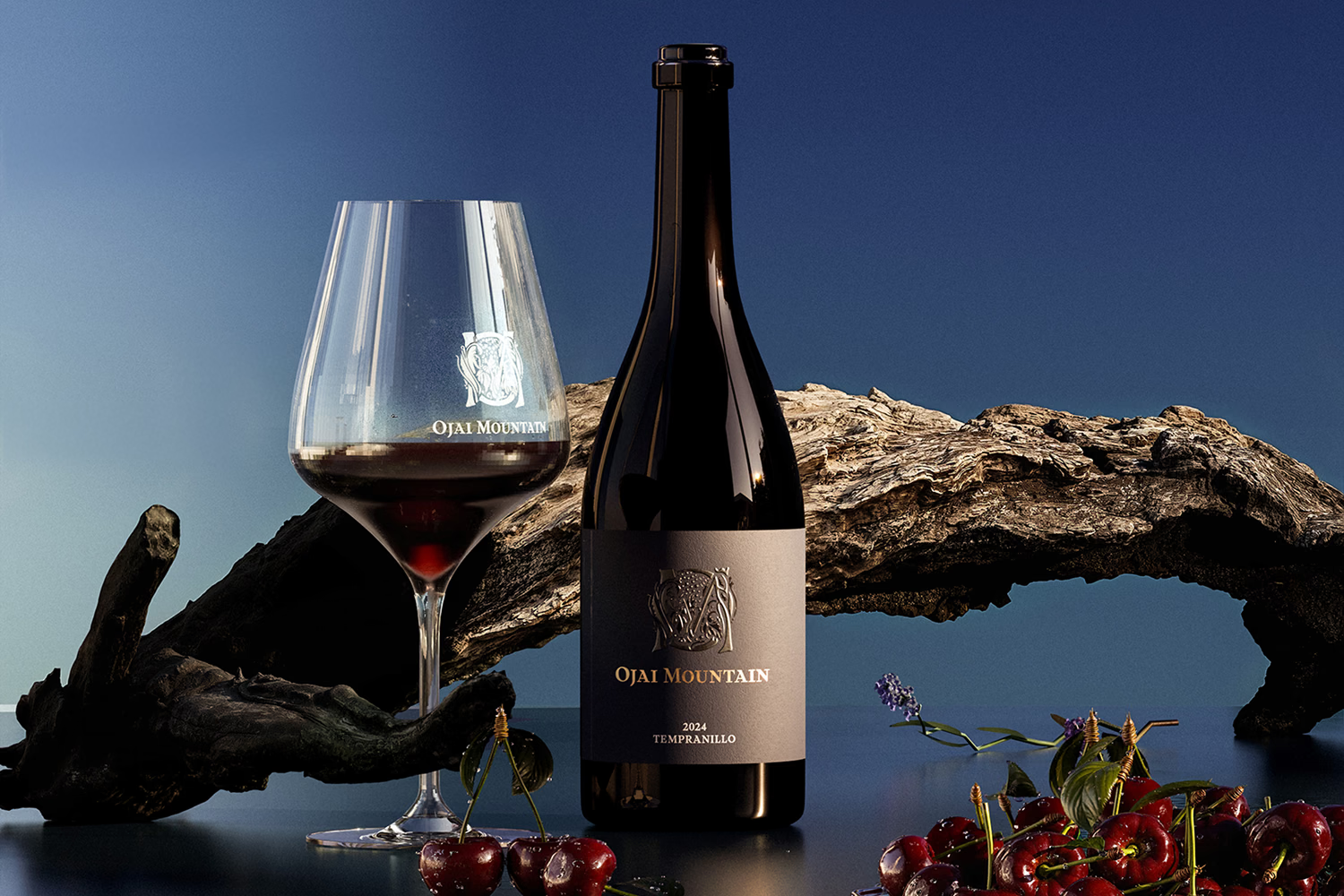
The science resolves into something concrete in every bottle we produce. The preserved malic acid shows up as a lifted, electric quality on the finish. The phenolic ripeness achieved at modest Brix levels shows up as tannins that are present but never aggressive. The aromatic intensity locked in by cool nights shows up in the mineral precision and floral lift that critics consistently note in our Syrah.
Winemaker Erich Bradley describes it plainly: "As I get older, I find myself chasing tension in wine. Not weight. Not volume. Tension." That tension is not a stylistic preference imposed on the fruit. It is what the site produces when the diurnal shift does its work and the farming stays out of the way.
The 2025 California vintage offers a useful reference point. The Wine Institute's 2025 harvest report described the year as one of exceptional natural acidity and phenolic ripeness achieved at lower Brix levels than normal, conditions that high-diurnal-shift mountain sites are structurally positioned to deliver in any vintage where growing conditions cooperate. The vintage confirmed what the site already suggests: that the combination of elevation, ocean proximity, and large temperature swings is not a curiosity but a genuine viticultural advantage.
Every bottle of Ojai Mountain wine is, in a direct sense, a product of that 40 to 50°F swing. The mountain does not let the grapes forget where they are. ❧
Frequently Asked Questions
A diurnal shift is the difference between daytime high and nighttime low temperatures in a vineyard. During the day, warm temperatures ripen grapes and develop flavor. At night, cooler temperatures slow ripening and preserve the grape's natural acidity. This day-to-night swing prevents sugar from building too fast, which keeps alcohol levels in check and produces wines with more balance and complexity.
Ojai Mountain's vineyard at 2,800 feet regularly experiences diurnal swings of 40 to 50 degrees Fahrenheit. Nighttime lows can drop into the low 40s while daytime highs reach 90 to 100+ degrees. This is one of the largest diurnal shifts of any coastal vineyard in California.
A large temperature swing gives grapes the best of both conditions. Warm days build flavor concentration, color, and phenolic ripeness. Cool nights preserve natural acidity, which gives wine its freshness, food-friendliness, and aging potential. Without that nightly cooldown, grapes overripen quickly, producing wines that are high in alcohol and flat in character.
Higher elevation vineyards experience larger diurnal swings because thinner air loses heat faster after sunset. At 2,800 feet, Ojai Mountain sits well above the valley floor, where temperatures stay warmer overnight. The elevation also increases UV exposure, which causes grapes to develop thicker skins with more tannin and color.
Rhone varieties like Syrah, Mourvedre, Grenache, and Roussanne perform well in vineyards with large diurnal swings. These grapes evolved in the challenging, wind-exposed terrain of southern France, where conditions parallel what Ojai Mountain offers at 2,800 feet: warm days, cold nights, and low-fertility soils.
Cool nighttime temperatures slow the breakdown of natural acids in the grape. Wines made from these grapes retain a crisp acidity that acts as a structural backbone, making them more versatile with food. Higher-acidity wines complement a wider range of dishes because the freshness cuts through richness and balances heavier flavors.
Share this post
Recent Posts
View All Posts
Lesia Artymovych • 20 Sept 2026
The Scent of the Mountain: Chaparral, Syrah, and Ojai Terroir
Ojai Mountain’s wines can carry aromas that recall the chaparral surrounding the vineyard: sage, dried herbs, pepper, and wildflowers. Science does no...
Lesia Artymovych • 16 Sept 2026
The Ojai Pink Moment: Why the Topa Topa Mountains Glow
Ojai’s Pink Moment is the brief coral, rose, and violet glow that appears on the Topa Topa Mountains around sunset. Warm, low-angle light creates the ...

Lesia Artymovych • 14 Sept 2026
A Guide to Wine and Cheese Pairing at Ojai Mountain
Match intensity to intensity: pair fresh, delicate cheeses with Ojai Mountain's bright Estate Whites, and bold, aged cheeses with its Syrahs and reds....