
 Log in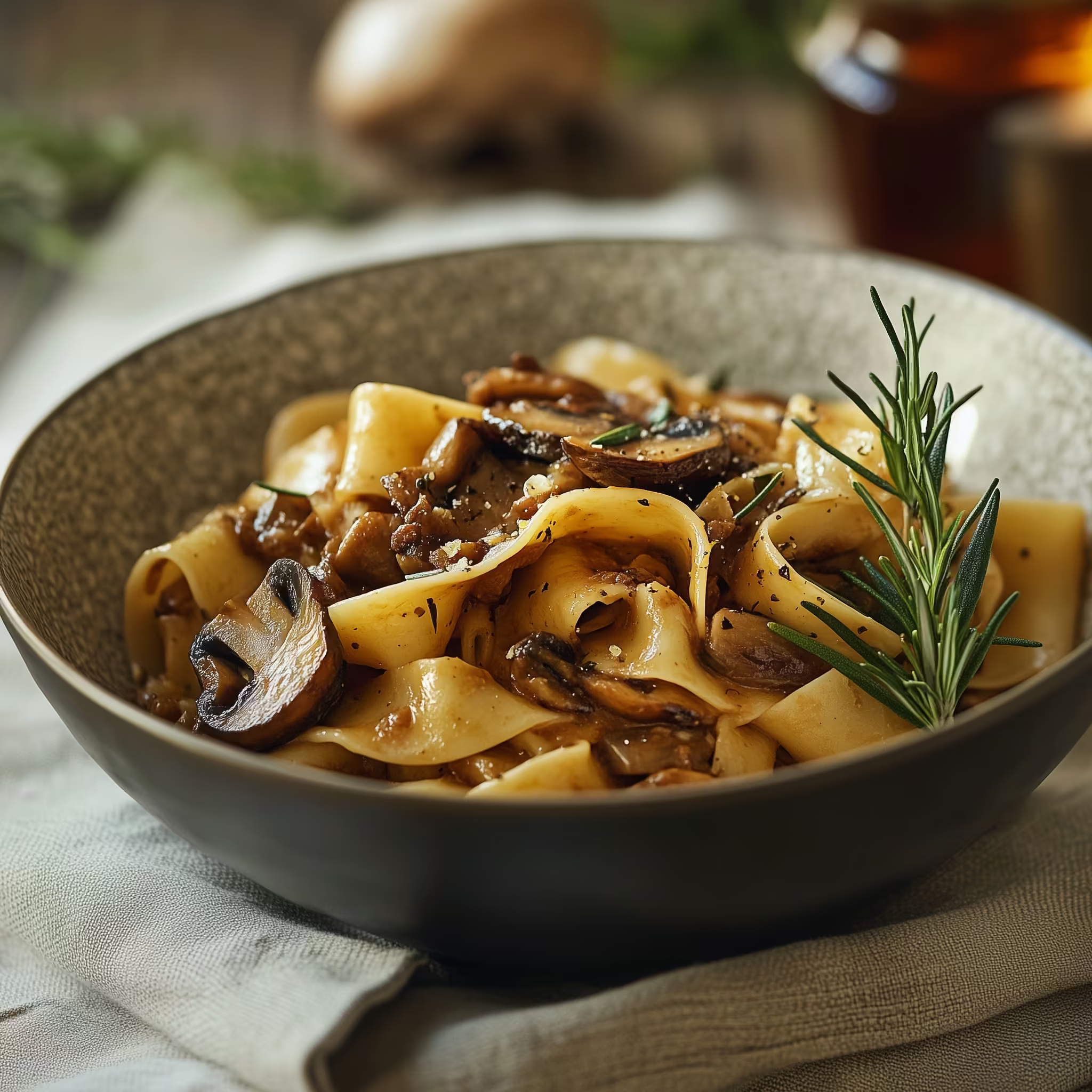
Portobello Pappardelle with Parmesan, Thyme & Ojai Mountain 2020 Estate Red
This portobello pappardelle recipe builds a deeply savory mushroom sauce by searing portobello caps in batches over high heat until caramelized, deglazing with dry sherry, and finishing with pasta water, cold butter, thyme, and Parmigiano-Reggiano. The 2020 Estate Red pairs through the mushroom's glutamate-rich umami structure, which responds to tannin the way meat does. Parmesan adds salinity that softens the wine's structure; thyme bridges its herbal notes. This is a vegetarian dish that earns a serious red.

Pappardelle Ingredients
The mushrooms and sauce
4 large portobello mushroom caps (about 1 lb. total), gills removed, sliced 1/2 inch thick
3 tablespoons extra-virgin olive oil, divided
2 tablespoons unsalted butter, divided
2 medium shallots, finely minced
3 garlic cloves, thinly sliced
1 tablespoon fresh thyme leaves, plus extra sprigs to finish
1/4 cup dry sherry (or dry white wine)
1 tablespoon tomato paste
1 teaspoon aged balsamic vinegar
Kosher salt and freshly ground black pepper
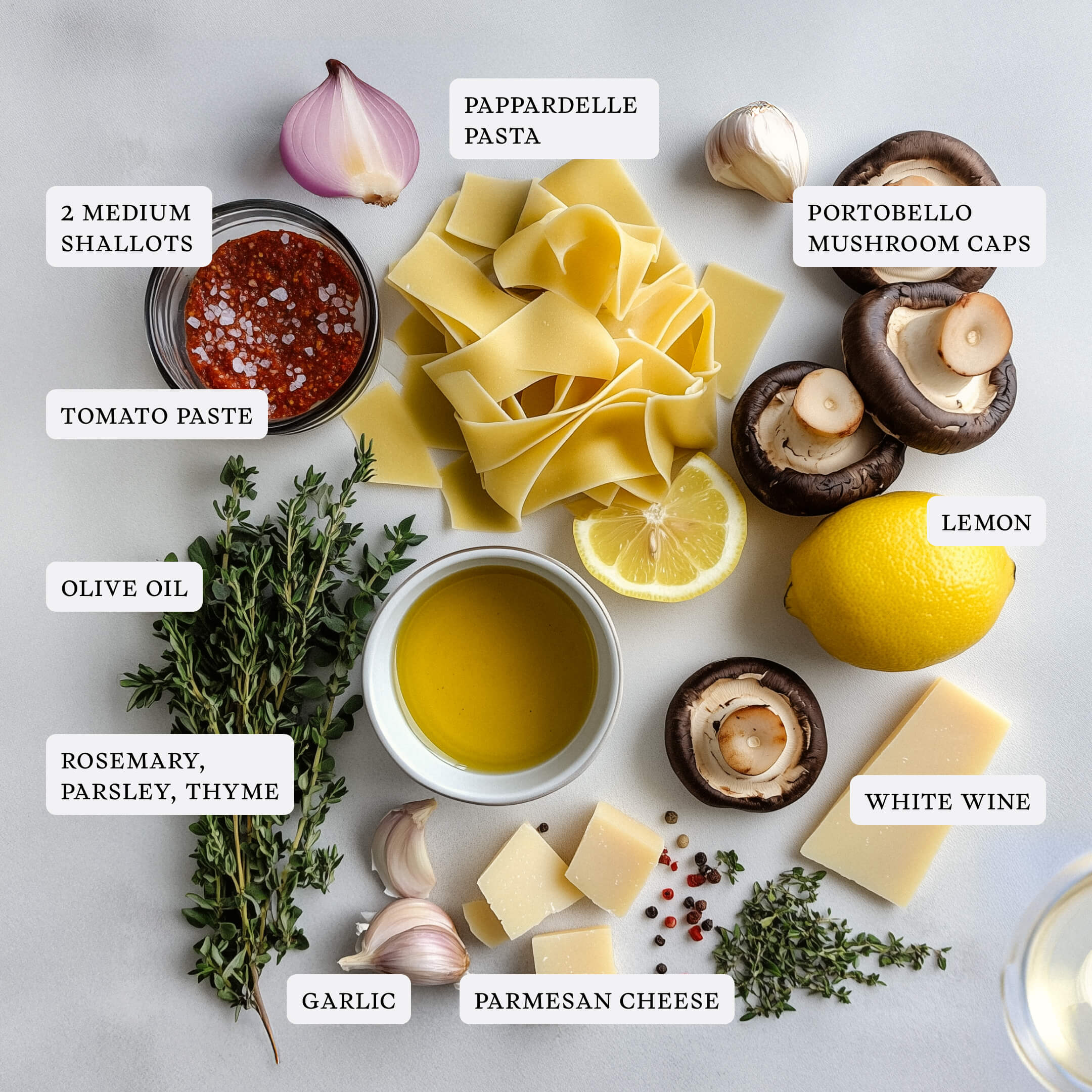
The pasta
12 oz. fresh pappardelle (or 10 oz. dried pappardelle or tagliatelle)
1 cup pasta water, reserved before draining
2 oz. Parmigiano-Reggiano, finely grated, plus more for serving
Flaky sea salt, to finish
| Ingredient | Substitution |
|---|---|
| Portobello caps | Cremini or a mix of wild mushrooms (shiitake, oyster, maitake); more complex flavor, slightly less meaty texture |
| Fresh pappardelle | Dried pappardelle or tagliatelle; increase cook time to package directions |
| Parmigiano-Reggiano | Pecorino Romano (sharper and saltier; use slightly less) |
| Dry sherry | Dry white wine or Madeira; sherry adds oxidative depth that echoes the wine's savory character |
| Fresh thyme | 1/2 teaspoon dried thyme; add with the garlic rather than at the finish |
How to Make Portobello Pappardelle
The single technique that separates excellent mushroom pasta from mediocre mushroom pasta is patience at the browning stage. Mushrooms are mostly water. If you crowd the pan or stir too early, they steam and turn grey. Give them space, high heat, and time, and they caramelize into something that genuinely earns a serious red wine.
Step 1: Prep the mushrooms
Remove the gills from the portobello caps with a spoon. Wipe the caps clean with a damp paper towel; do not rinse them under water. Slice 1/2 inch thick. Set aside uncovered while you bring the pasta water to a boil: the brief air exposure helps dry the surface slightly, which improves browning.
Step 2: Sear the mushrooms in batches (10 minutes)
Heat a large, wide skillet over high heat. Add 1 1/2 tablespoons of the olive oil. When it shimmers, add half the mushroom slices in a single layer. Do not stir. Cook for 3 to 4 minutes undisturbed until the underside is deep golden brown; the mushrooms will release their liquid and then reabsorb it as they caramelize. Flip and cook 2 minutes more. Season with salt, transfer to a plate, and repeat with the remaining oil and mushrooms.
Step 3: Build the sauce (8 minutes)
Reduce heat to medium. Add 1 tablespoon of the butter to the same pan. Add the shallots and cook, stirring, for 2 minutes until softened. Add the garlic and thyme and cook 1 minute more.
Add the tomato paste and stir it through the shallots, cooking for 1 minute until it darkens slightly. This caramelizes the tomato sugars and adds depth to the sauce without making it taste of tomato.
Return all the mushrooms to the pan. Pour in the dry sherry and scrape up any browned bits from the bottom of the pan. Add the balsamic vinegar. Let the liquid reduce by half, about 1 minute. Remove from heat and hold.
Step 4: Cook the pasta and finish the sauce
Cook the pappardelle in generously salted boiling water until al dente (2 to 3 minutes for fresh; package directions for dried). Before draining, scoop out at least 1 cup of pasta water.
Return the mushroom pan to medium heat. Add 1/2 cup of the pasta water and stir to loosen the sauce. Add the drained pasta directly to the pan and toss with tongs to coat, adding more pasta water a splash at a time until the sauce clings to the noodles without pooling at the bottom.
Remove from heat. Add the remaining tablespoon of cold butter and the grated Parmigiano-Reggiano. Toss vigorously until the cheese melts into the sauce and everything is glossy. Taste and adjust with salt and black pepper.
Step 5: Serve
Divide among warmed bowls. Finish with a pinch of flaky sea salt, a few fresh thyme sprigs, and additional Parmigiano shaved over the top with a vegetable peeler.
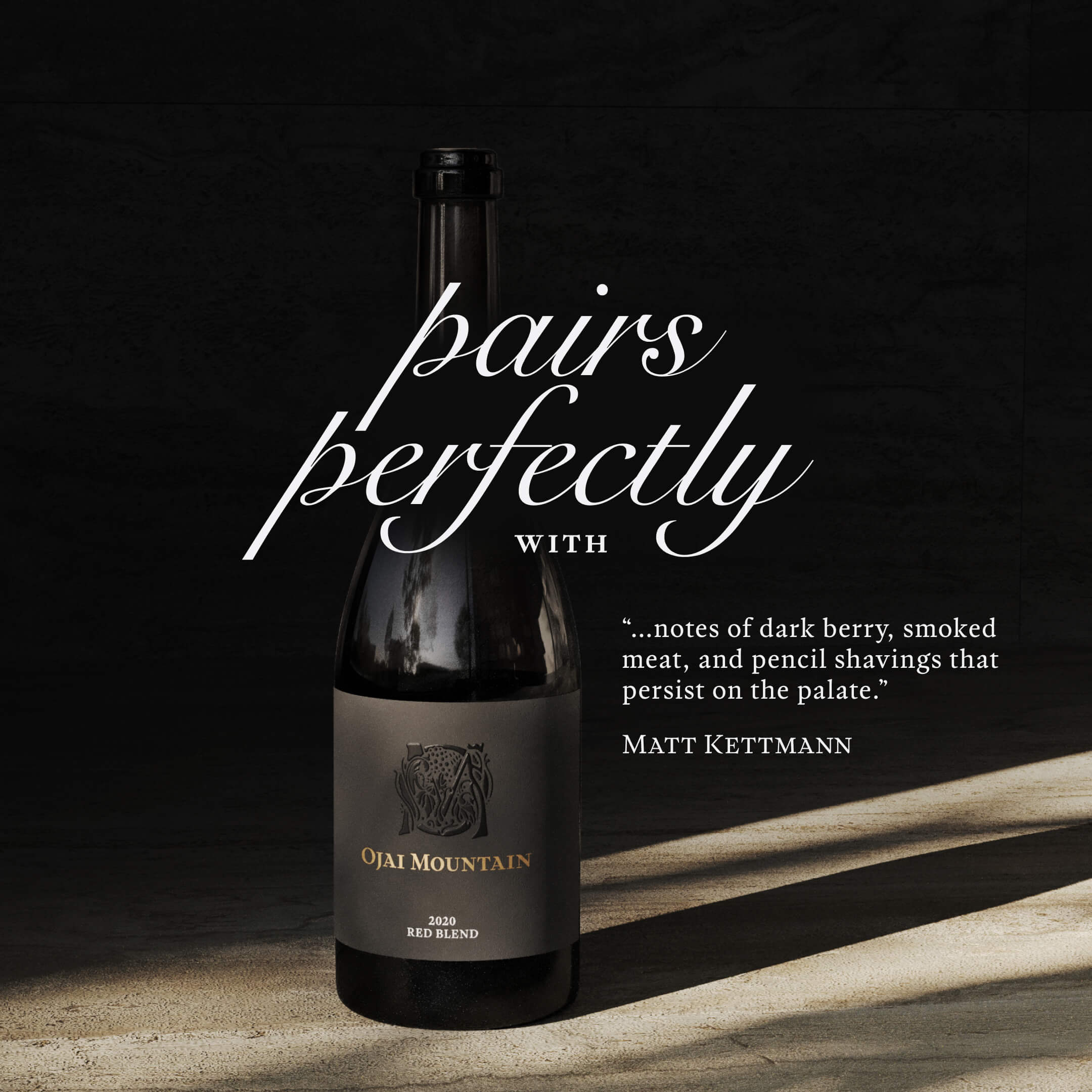
Wine Pairing Notes: Ojai Mountain 2020 Estate Red
The 2020 Estate Red is a Grenache-forward blend that, in the early vintages, included Cabernet Sauvignon and Cabernet Franc alongside the Rhône varieties. That Bordeaux influence gives this vintage a slightly firmer tannic structure than later releases, and that structure is precisely what makes portobello mushrooms the right match.
Portobello mushrooms are one of the most wine-friendly vegetables in the kitchen. Their glutamate-rich umami responds to tannin the way meat does: the protein and fat in the mushroom soften the wine's grip, and the wine's structure in turn amplifies the mushroom's savory depth. As Decanter notes, sauce drives the pairing more than protein, and here the sauce is doing significant work. The sherry deglaze adds an oxidative savory note that echoes the wine's earthy character; the Parmigiano adds salinity that softens tannin; the thyme bridges the wine's herbal aromatic lift.
Frequently Asked Questions
A medium-bodied red wine with earthy character and moderate tannins pairs best with mushroom pasta. Portobello mushrooms have a glutamate-rich umami structure that responds to tannin the way meat does, making them one of the most red-wine-friendly vegetables in the kitchen. Ojai Mountain's 2020 Estate Red, a Grenache-forward blend with Cabernet Sauvignon and Cabernet Franc in the early-vintage blend, has the structure and earthy depth to meet the mushroom's savory intensity, while its fruit character keeps the pairing from turning austere.
The dark gills on the underside of portobello caps release a black-brown liquid as they cook, which can turn a sauce muddy and grey rather than the glossy, deep-brown color that makes the dish visually appealing. Removing them with a spoon before slicing takes about 30 seconds and makes a visible difference in the finished dish. It does not significantly affect flavor.
Yes. Dried pappardelle or tagliatelle works well and is a reliable pantry option. Cook to package directions and reserve pasta water before draining; the starchy water is essential for finishing the sauce. Fresh pasta has a softer, silkier texture that holds the sauce differently, but dried pasta produces an excellent result and is the more practical choice for most home cooks.
Three conditions are required: a very hot pan, enough oil to coat the surface, and space between the mushrooms. If the pan is not hot enough before the mushrooms go in, or if the mushrooms are crowded, they release steam faster than it can evaporate and the surface never dries out enough to caramelize. Cook in two batches over high heat and do not stir for the first 3 to 4 minutes.
Yes. The dish contains no meat, fish, or poultry. It is not vegan because it uses butter and Parmigiano-Reggiano. For a vegan version, substitute olive oil for the butter and nutritional yeast for the Parmesan; the sauce will be less rich but still deeply flavorful.
Share this post
Recent Posts
View All Posts
Lesia Artymovych • 20 Sept 2026
The Scent of the Mountain: Chaparral, Syrah, and Ojai Terroir
Ojai Mountain’s wines can carry aromas that recall the chaparral surrounding the vineyard: sage, dried herbs, pepper, and wildflowers. Science does no...

Lesia Artymovych • 16 Sept 2026
The Ojai Pink Moment: Why the Topa Topa Mountains Glow
Ojai’s Pink Moment is the brief coral, rose, and violet glow that appears on the Topa Topa Mountains around sunset. Warm, low-angle light creates the ...
Lesia Artymovych • 14 Sept 2026
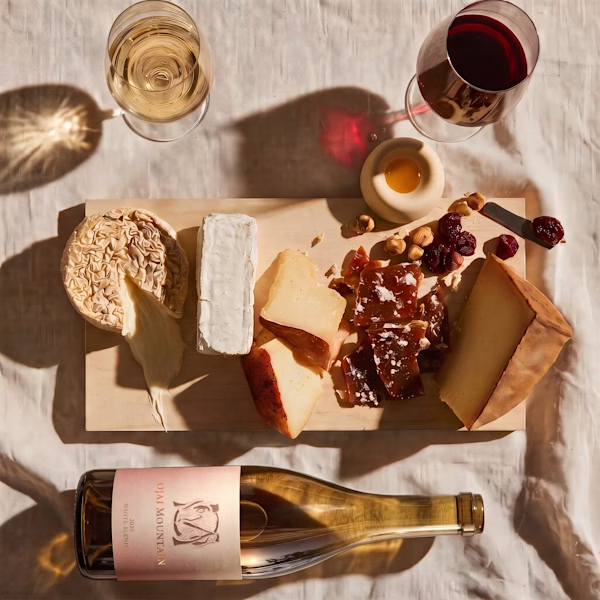
A Guide to Wine and Cheese Pairing at Ojai Mountain
Match intensity to intensity: pair fresh, delicate cheeses with Ojai Mountain's bright Estate Whites, and bold, aged cheeses with its Syrahs and reds....