
 Log in
Herb-Crusted Prime Rib with Red Wine Shallot Jus & Ojai Mountain 2022 Syrah
This herb-crusted prime rib is reverse-seared for an evenly medium-rare center and deeply caramelized crust, then served with red wine shallot jus. Ojai Mountain 2022 Syrah has the concentration and structure to complement the roast’s richness, savory herbs, and wine-reduced sauce.

Prime Rib Ingredients
The roast
1 bone-in standing rib roast, 3 to 4 ribs (6 to 8 lbs.), chine bone removed by the butcher
3 tablespoons kosher salt (for dry brine)
2 tablespoons freshly ground black pepper
The herb crust
3 tablespoons Dijon mustard
6 garlic cloves, finely grated or minced to a paste
2 tablespoons fresh rosemary, finely chopped
2 tablespoons fresh thyme leaves
1 tablespoon freshly ground black pepper
1 tablespoon extra-virgin olive oil
The red wine shallot jus
3 large shallots, finely minced
2 tablespoons unsalted butter, plus 2 tablespoons cold butter to finish
1 cup dry red wine (an inexpensive table wine; do not use the 2022 Syrah)
2 cups good-quality beef stock
2 sprigs fresh thyme
Pan drippings from the roast
Kosher salt and freshly ground black pepper
| Ingredient | Substitution |
|---|---|
| Bone-in standing rib roast | Boneless ribeye roast (easier to carve; reduce roasting time by 20 to 30 minutes) |
| Fresh rosemary | 2 teaspoons dried; use in the crust but skip as a garnish |
| Dijon mustard in crust | Whole-grain mustard (slightly more textured crust) |
| Red wine for jus | Any dry, inexpensive red; avoid sweet or cooking wine |
| Beef stock | Good-quality store-bought is fine; do not use low-sodium for the jus |
How to Make Herb-Crusted Prime Rib with Red Wine Shallot Jus
Prime rib is the most time-intensive recipe in the program but also the most forgiving once it is in the oven. The reverse sear method removes almost all of the uncertainty: the low, slow roast produces edge-to-edge medium-rare, and the high-heat finish builds the crust in minutes. The jus takes 15 minutes and happens while the roast rests.
Step 1: Dry brine (24 to 48 hours ahead)
Pat the roast thoroughly dry with paper towels. Rub the kosher salt and black pepper generously over the entire surface, including the bone side and the ends. Place the roast bone-side down on a wire rack set over a rimmed baking sheet. Refrigerate uncovered for 24 to 48 hours.
The uncovered refrigeration is intentional: the circulating air dries the exterior further, which is what produces the deep, crackling crust in the final high-heat blast. Do not wrap it.
Step 2: Make the herb crust and apply (day of, 30 minutes before roasting)
Remove the roast from the refrigerator 1 hour before roasting to take the chill off. Cold meat placed in the oven prolongs the low-temperature phase unevenly.
Combine the Dijon mustard, garlic paste, rosemary, thyme, black pepper, and olive oil in a small bowl. Mix well. The paste should be thick and spreadable.
Apply the herb crust generously over the top and sides of the roast, pressing it into the surface. Leave the bone side uncrusted; it will not brown and the crust is wasted there.
Step 3: Reverse sear — low roast (3 to 3.5 hours)
Preheat the oven to 250°F. Place the roast bone-side down in a roasting pan (the bones act as a natural rack). Insert a probe thermometer into the thickest part of the roast, away from any bone.
Roast at 250°F until the internal temperature reaches 120°F for medium-rare. This takes approximately 3 to 3.5 hours for a 6 to 8 lb. roast, but go by temperature, not time. The low temperature produces even cooking from edge to center with no grey band.
Remove the roast from the oven. Transfer to a cutting board and rest for 30 minutes. The temperature will hold or rise slightly during this time. This rest is not optional: it allows the juices to redistribute before the high-heat blast.
Step 4: Reverse sear — high-heat blast (15 minutes)
While the roast rests, increase the oven temperature to 500°F. Allow the oven to fully preheat; this takes 15 to 20 minutes.
Return the roast to the oven for 12 to 15 minutes, until the herb crust is deeply golden and caramelized and the surface is crackling. Watch carefully; the crust can go from perfect to burnt in under 2 minutes at this temperature.
Remove from the oven and rest for 15 minutes before carving. The internal temperature at this point should read 130 to 135°F for medium-rare.
Step 5: Make the red wine shallot jus (15 minutes, while the roast rests)
Pour the pan drippings into a fat separator or a liquid measuring cup. Skim off the fat, reserving 2 tablespoons for the jus. Discard the rest of the fat.
Melt 2 tablespoons of butter with the reserved dripping fat in a saucepan over medium heat. Add the minced shallots and cook, stirring, for 4 to 5 minutes until softened and lightly golden.
Pour in the red wine and scrape up any browned bits. Bring to a boil and reduce by half, about 4 minutes. Add the beef stock, thyme sprigs, and any accumulated juices from the resting roast. Simmer for 8 to 10 minutes until the jus is slightly reduced and deeply flavored. Taste and adjust with salt and pepper. Remove from heat and swirl in the cold butter to finish with gloss and richness. Strain through a fine-mesh sieve into a warm pitcher.
Step 6: Carve and serve
Remove the twine from the roast. Slice between the rib bones to remove the bone rack as a single piece. Carve the roast into 1/2-inch to 1-inch slices using a sharp carving knife. Arrange on a warmed platter and serve the jus alongside in the pitcher.
Wine Pairing Notes: Ojai Mountain 2022 Syrah
The 2022 Syrah is the most powerful wine in the program: greatest mass and concentration, dense dark fruit, and broader mid-palate amplitude than either the 2021 or 2023. Prime rib cooked via reverse sear and finished with a high-heat crust produces a dish with the kind of weight and rendered-fat richness that needs exactly that level of wine presence.
The red wine shallot jus is the pairing mechanism. Its reduction of wine, shallot, and beef stock mirrors the wine's savory structure; the cold butter finish adds gloss and a slight richness that softens the wine's tannins at the moment of contact. The herb crust of rosemary, thyme, and black pepper echoes the wine's savory aromatic profile, creating continuity between glass and plate.
Frequently Asked Questions
Prime rib and ribeye roast are cut from the same section of the animal (ribs 6 through 12), but prime rib is typically sold bone-in as a standing rib roast, while ribeye roast is boneless. The bone contributes flavor during roasting and acts as a natural rack, keeping the meat elevated in the pan. Boneless ribeye roast is easier to carve and cooks slightly faster. Both are correct for this recipe; the technique is identical.
A powerful, concentrated red wine with dark fruit and enough tannin to cut through rendered fat pairs best with prime rib. Ojai Mountain's 2022 Syrah, the most concentrated of the three Syrah vintages, has the density and savory mineral depth to hold its own against the roast's richness. The red wine shallot jus made from the pan drippings creates a direct flavor bridge between the dish and the glass.
The reverse sear method roasts the meat low and slow at 250°F until it reaches an internal temperature just below the target doneness, then finishes it with a high-heat blast at 500°F to build the crust. The advantage over traditional high-heat-first roasting is consistency: the low temperature produces edge-to-edge medium-rare with no grey band of overcooked meat around the exterior. The crust forms in the final 15 minutes and is more controllable than a traditional sear.
The dry brine can be applied 24 to 48 hours ahead and the herb crust can be made up to 1 day ahead and refrigerated. The roast itself must be cooked the day of serving; it does not reheat well without losing the crust and the edge-to-edge doneness that makes the reverse sear worthwhile. The jus, however, can be made ahead and reheated gently before serving.
Pull the roast from the oven during the low-temperature phase when the internal temperature reaches 120°F. After the 30-minute rest and the 15-minute high-heat blast, the final internal temperature will read 130 to 135°F, which is medium-rare. The USDA recommends a minimum internal temperature of 145°F for beef roasts; the choice of doneness is yours, but be aware that prime rib cooked beyond medium loses much of its tenderness and juiciness.
Share this post
Recent Posts
View All Posts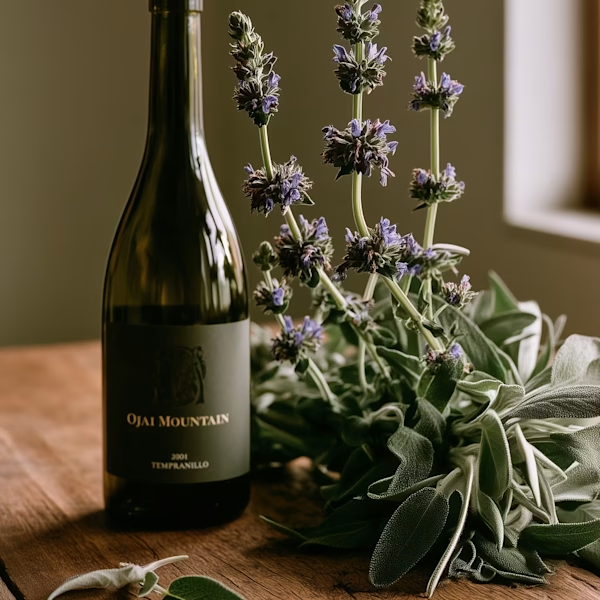
Lesia Artymovych • 20 Sept 2026
The Scent of the Mountain: Chaparral, Syrah, and Ojai Terroir
Ojai Mountain’s wines can carry aromas that recall the chaparral surrounding the vineyard: sage, dried herbs, pepper, and wildflowers. Science does no...
Lesia Artymovych • 16 Sept 2026
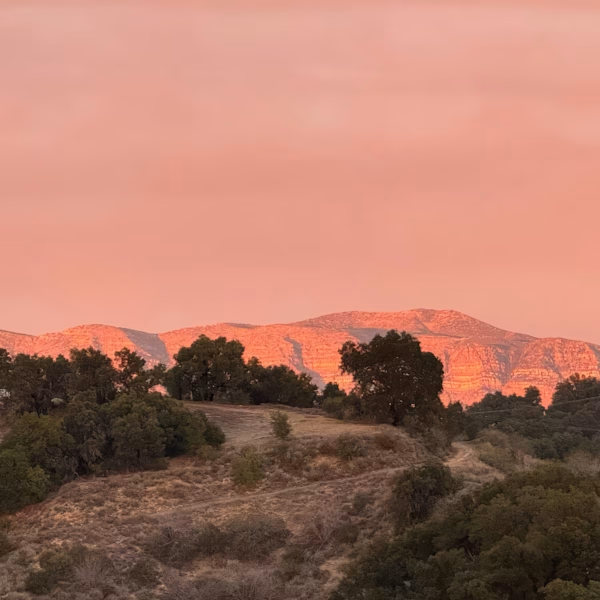
The Ojai Pink Moment: Why the Topa Topa Mountains Glow
Ojai’s Pink Moment is the brief coral, rose, and violet glow that appears on the Topa Topa Mountains around sunset. Warm, low-angle light creates the ...
Lesia Artymovych • 14 Sept 2026
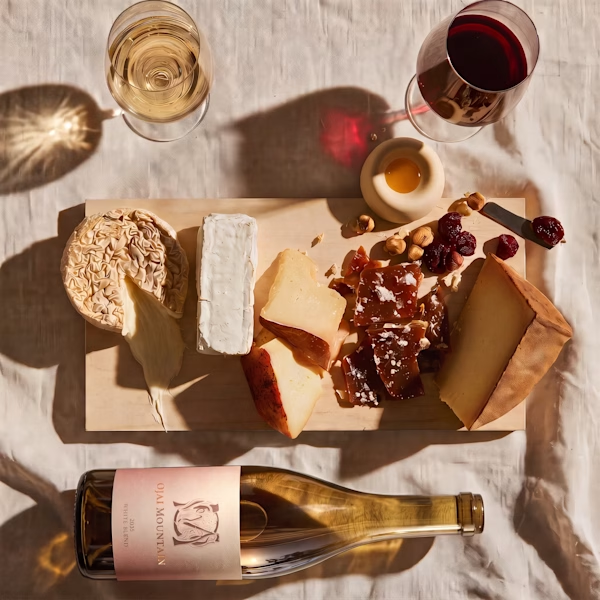
A Guide to Wine and Cheese Pairing at Ojai Mountain
Match intensity to intensity: pair fresh, delicate cheeses with Ojai Mountain's bright Estate Whites, and bold, aged cheeses with its Syrahs and reds....