
 Log in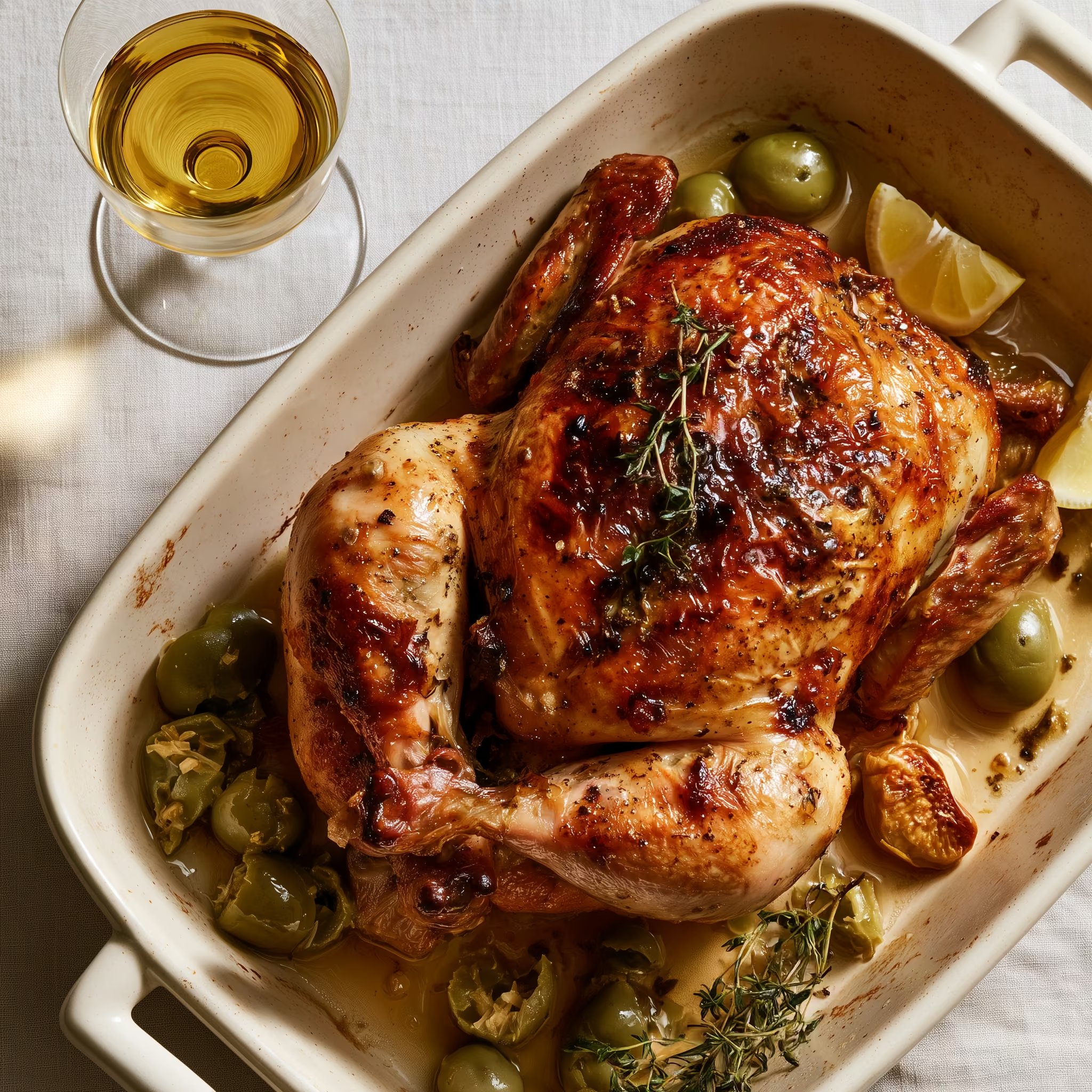
Roast Chicken with Preserved Lemon, Thyme and Olives — 2024 Estate White Blend
Preserved lemon, thyme, and garlic butter tucked beneath the skin produces deeply seasoned roast chicken with a crisp, golden exterior. A white wine and Castelvetrano olive pan sauce echoes the saline, mineral character and generous texture of Ojai Mountain’s 2024 Estate White Blend.

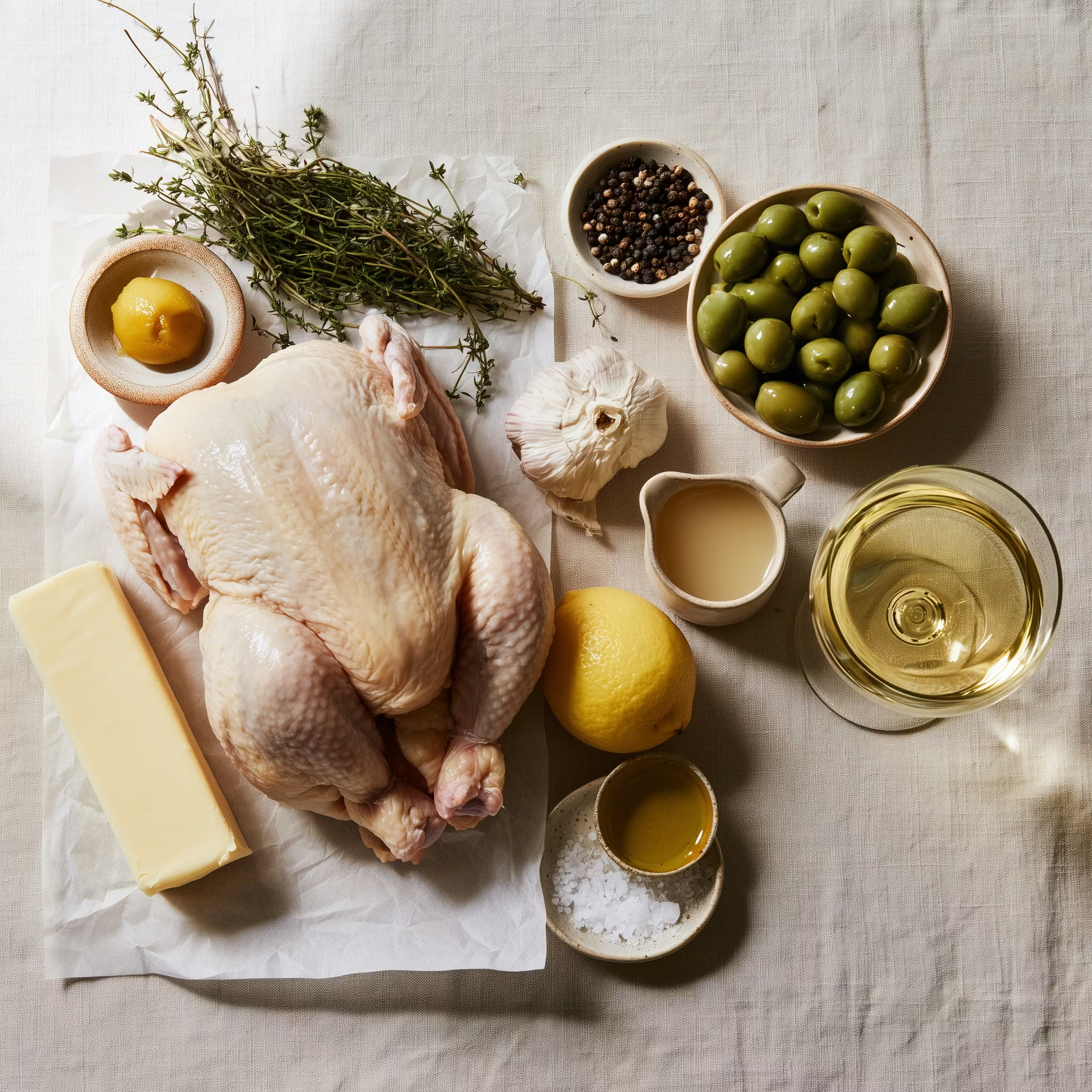
Roast Chicken Ingredients
The chicken
1 whole chicken (3 1/2 to 4 lbs.), at room temperature 30 minutes before roasting
Kosher salt and freshly ground black pepper
2 tablespoons extra-virgin olive oil
The compound butter
6 tablespoons unsalted butter, softened to room temperature
3 tablespoons fresh thyme leaves
3 garlic cloves, grated to a paste
1 small preserved lemon (about 30g), pips discarded, rind and flesh roughly chopped
Zest of 1 fresh lemon
1/4 teaspoon kosher salt
Freshly ground black pepper
The pan sauce
1/2 cup dry white wine
1/2 cup chicken stock
1/2 cup Castelvetrano olives, pitted and roughly torn
1 tablespoon preserved lemon rind, finely chopped (rinsed briefly to control salt)
2 tablespoons cold unsalted butter
Fresh thyme sprigs, to finish
| Ingredient | Substitution |
|---|---|
| Preserved lemon | Fresh lemon zest + 1/2 tsp flaky salt (different character; the fermented depth will be absent but the brightness holds) |
| Castelvetrano olives | Cerignola or Picholine; avoid Kalamata here as the brininess can overwhelm |
| Whole chicken | 4 bone-in, skin-on thighs; reduce roasting time to 35 to 40 minutes at 425°F |
| Fresh thyme | 1 teaspoon dried thyme in the compound butter; fresh sprigs still preferred for the pan sauce |
How to Make Roast Chicken with Preserved Lemon, Thyme and Olives
The compound butter is the engine of this dish. Made ahead and packed under the skin, it bastes the breast meat continuously as the bird roasts, keeping it moist while the exterior crisps. The pan sauce takes 5 minutes and happens while the chicken rests.
Step 1: Make the compound butter (up to 3 days ahead)
Place the softened butter, thyme leaves, garlic paste, chopped preserved lemon, lemon zest, salt, and pepper in a food processor. Blitz until smooth and evenly combined, about 30 seconds. Taste: it should be intensely savory, citrusy, and faintly salty. If it tastes flat, add a pinch more salt or a little extra lemon zest.
The butter can be made up to 3 days ahead and refrigerated. Bring it back to room temperature before using so it spreads easily without tearing the skin.
Step 2: Prepare the chicken (up to overnight ahead)
Pat the chicken thoroughly dry with paper towels. Dry skin is the foundation of a good roast; moisture on the surface steams rather than crisps.
With the chicken's legs pointing toward you, use your fingers to gently loosen the skin away from the breast meat, working carefully to avoid tearing it. Slide your hand under the skin over each breast and thigh to create a pocket.
Divide the compound butter roughly in thirds. Push two-thirds under the skin, spreading it as evenly as possible over the breast and thigh meat. Rub the remaining third over the exterior of the bird, covering the legs and back.
Season the exterior generously with kosher salt and pepper. Place the chicken in a roasting pan or high-sided baking dish, uncovered, and refrigerate overnight if time allows. This optional dry brine step draws moisture to the surface, which then reabsorbs into the meat, seasoning it deeply. If roasting the same day, let the buttered chicken rest at room temperature for 30 minutes before it goes into the oven.
Step 3: Roast the chicken (1 hour 15 minutes)
Preheat the oven to 400°F. Drizzle the chicken with olive oil and the juice of half a fresh lemon.
Roast for 1 hour to 1 hour 15 minutes, basting with the pan juices every 20 minutes. The chicken is done when the skin is deep golden brown and the juices run clear when the thickest part of the thigh is pierced with a knife. An instant-read thermometer inserted into the thigh (not touching bone) should read 165°F per FDA poultry safety guidelines.
Transfer the chicken to a cutting board and rest for 10 minutes, loosely tented with foil. Do not skip the rest: it allows the juices to redistribute and makes the breast meat significantly more moist.
Step 4: Make the pan sauce (5 minutes)
While the chicken rests, place the roasting pan over medium-high heat on the stovetop. Add the white wine and scrape up any browned bits from the bottom of the pan. Let it reduce by half, about 2 minutes.
Add the chicken stock, preserved lemon rind, and torn olives. Simmer for 2 minutes more. Remove from heat and swirl in the cold butter cubes to finish the sauce with a little richness and gloss. Taste and adjust salt if needed. Remember that the preserved lemon and olives are already salty; the sauce may need no additional seasoning at all.
Step 5: Carve and serve
Carve the chicken at the table or on the board. Spoon the pan sauce over the pieces, scatter fresh thyme sprigs, and serve immediately.
Wine Pairing Notes: Ojai Mountain 2024 Estate White Blend
Preserved lemon is the pivot ingredient in this pairing, and it is worth understanding why. Fresh lemon brings brightness and acidity. Preserved lemon, cured for weeks in salt, develops a fermented, intensely saline depth that fresh citrus cannot replicate. That character has a direct relationship with the 2024 Estate White Blend's mineral quality, drawn from the ancient Monterey shale soils at 2,800 feet: both the preserved lemon and the wine carry a salinity that is geological in origin, one from the sea-salt cure, the other from the ancient seabed beneath the vines.
The pairing works on three levels:
Mineral resonance. The preserved lemon amplifies the wine's mineral edge rather than competing with it. This is a case of like calling to like rather than contrast.
Body meets sauce. The pan sauce of white wine, stock, and olives has genuine richness once the cold butter goes in. The 2024 White Blend's Grenache Blanc backbone provides enough body to hold its own against that richness without feeling heavy.
Aromatic bridge. The thyme in the compound butter echoes the wine's herbal aromatic lift, creating continuity between glass and plate.
Frequently Asked Questions
Preserved lemon is whole lemon cured in salt for a minimum of four weeks, which breaks down the rind and transforms its flavor from sharp and bright to deeply savory, fermented, and intensely aromatic. Only the rind is used in cooking; the pulp is discarded. The flavor has no direct substitute: fresh lemon zest and salt approximates the brightness but not the fermented depth. Store-bought preserved lemons are widely available at specialty grocers and online and are an excellent shortcut.
A white wine with enough body to meet a rich pan sauce and enough acidity to cut through the fat of a butter-basted bird pairs best with roast chicken. Ojai Mountain's 2024 Estate White Blend, built on Grenache Blanc with Picpoul and Roussanne, provides that balance: its mineral character connects directly to the preserved lemon in the dish, while its body holds its own against the olive and butter pan sauce. The pairing is driven by the sauce, not the protein.
Yes, and the process is simple, though it requires patience. Cut lemons into quarters without slicing all the way through, pack them with coarse sea salt, press tightly into a sterilized jar, and cover with additional lemon juice. Seal and leave at room temperature for at least four weeks, turning the jar occasionally. The lemons are ready when the rinds are soft and translucent. They keep for up to a year refrigerated once opened.
The most reliable method is an instant-read thermometer inserted into the thickest part of the thigh without touching the bone. The FDA recommends a minimum internal temperature of 165°F for whole poultry. Visual cues support but should not replace the thermometer: the skin should be deep golden brown and the juices should run clear when the thigh is pierced. Always rest the bird for at least 10 minutes before carving.
Castelvetrano olives are the first choice: their mild, buttery flavor and firm texture hold up in the pan sauce without overwhelming the preserved lemon. Cerignola or Picholine are good alternatives. Avoid Kalamata olives here; their strong brine and assertive flavor can overpower the more delicate mineral and citrus notes that define the pairing.
Share this post
Recent Posts
View All Posts
Lesia Artymovych • 20 Sept 2026
The Scent of the Mountain: Chaparral, Syrah, and Ojai Terroir
Ojai Mountain’s wines can carry aromas that recall the chaparral surrounding the vineyard: sage, dried herbs, pepper, and wildflowers. Science does no...

Lesia Artymovych • 16 Sept 2026
The Ojai Pink Moment: Why the Topa Topa Mountains Glow
Ojai’s Pink Moment is the brief coral, rose, and violet glow that appears on the Topa Topa Mountains around sunset. Warm, low-angle light creates the ...
Lesia Artymovych • 14 Sept 2026
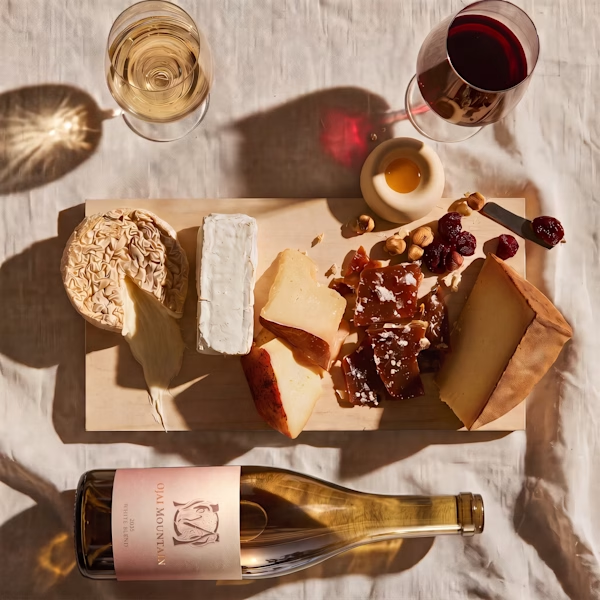
A Guide to Wine and Cheese Pairing at Ojai Mountain
Match intensity to intensity: pair fresh, delicate cheeses with Ojai Mountain's bright Estate Whites, and bold, aged cheeses with its Syrahs and reds....