The Vertical Frontier: A guide to California's high-elevation wine regions
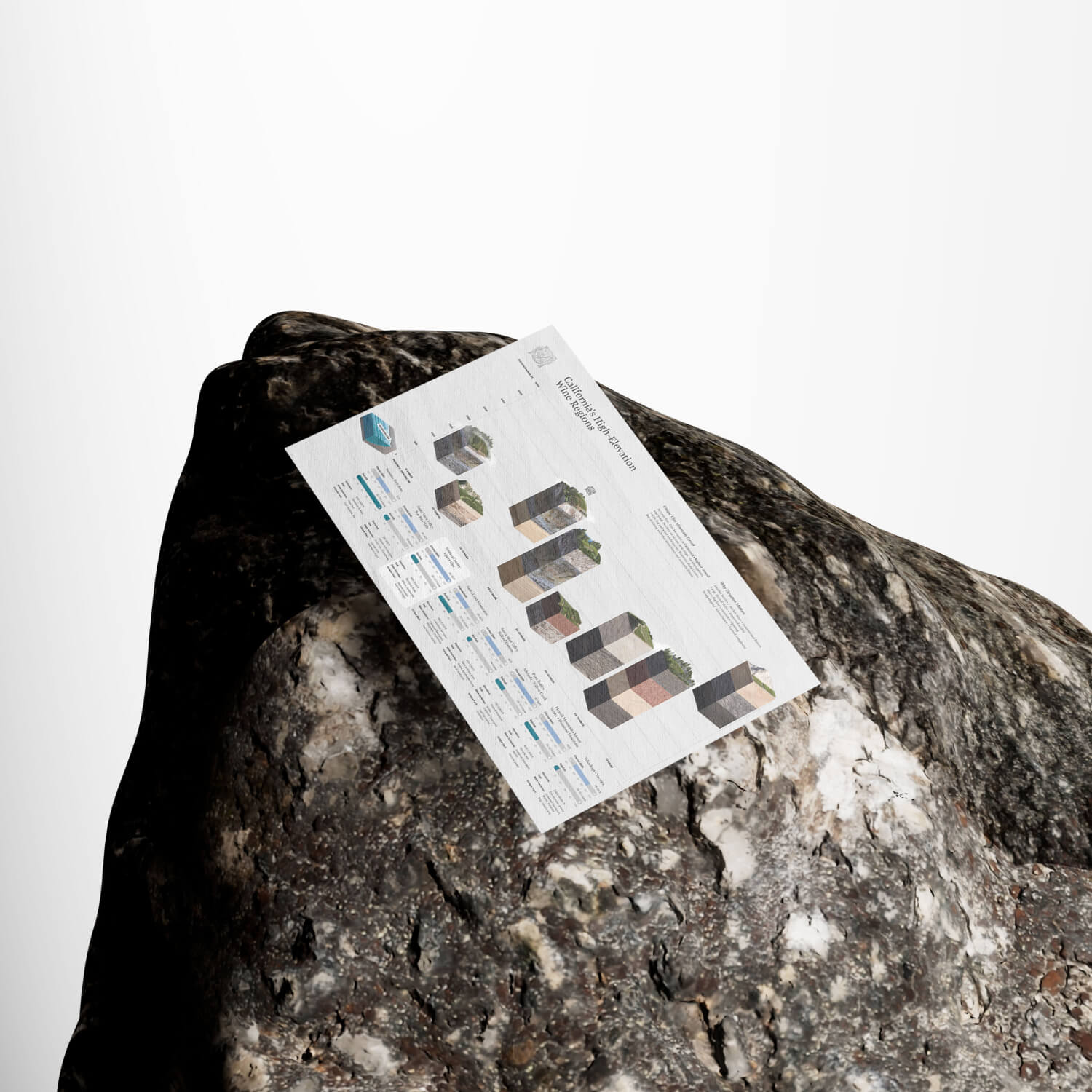
This guide maps eight regions where elevation is not incidental to the wine but central to it. The infographic from Ojai Mountain — itself one of the most dramatic examples of this phenomenon — provides the framework: eight California growing areas plotted by elevation and distance from the Pacific, each defined by a distinct terroir logic. What follows is a deeper look at each one: what makes it work, what the wines taste like, and whose bottles are worth finding.

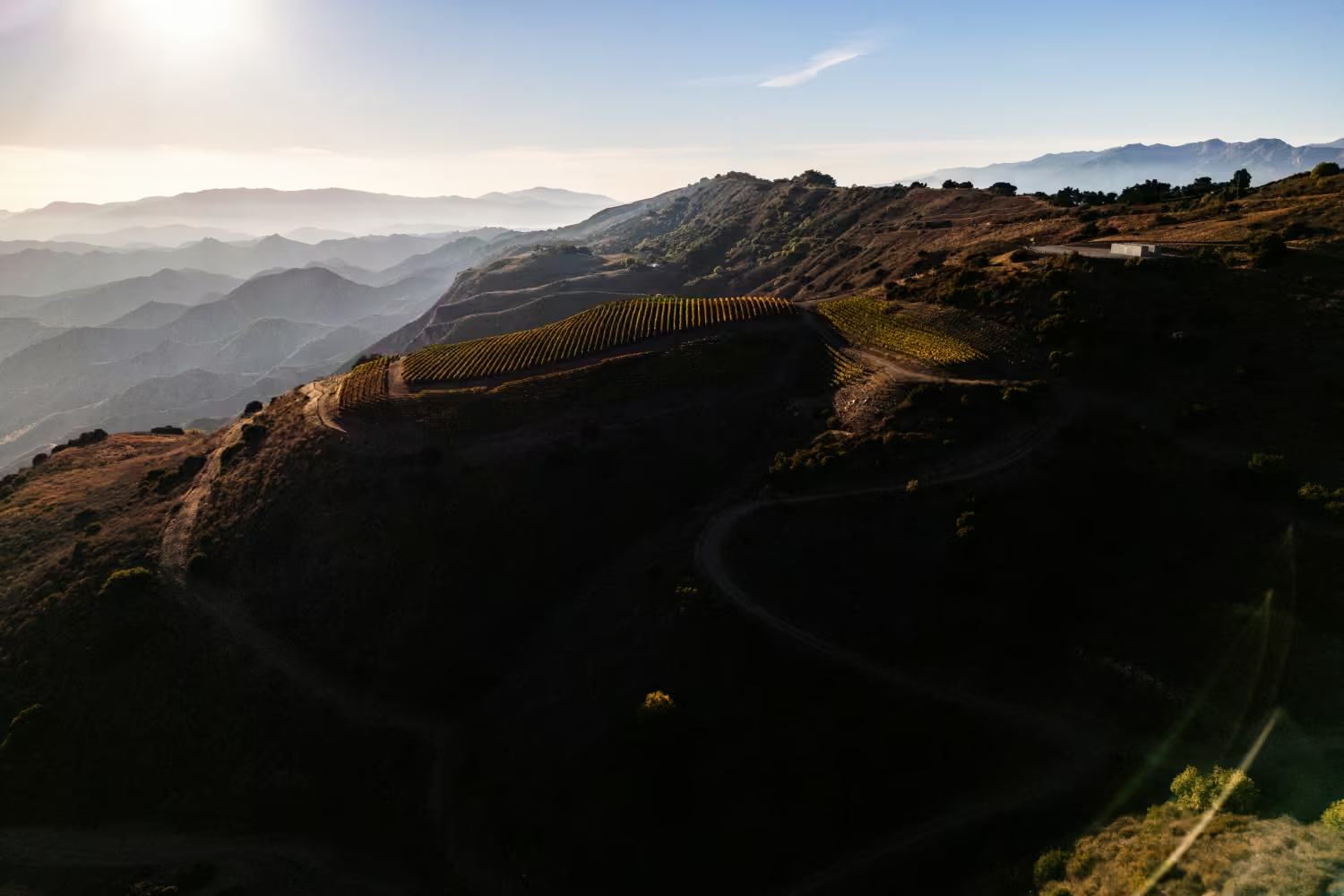
There is a moment, driving up a switchback road in the dark, when the valley below disappears and the city lights flatten into a grid below you. The temperature drops several degrees. The chaparral thins. And somewhere up ahead, in soils too thin and slopes too steep for anything sensible, someone planted a vineyard.
That's the essential character of California's high-elevation wine country:
And yet the wines these conditions produce are among the most striking in California — concentrated without being heavy, structured without being austere, and deeply expressive of place in a way that warmer, gentler sites rarely manage.
First, a brief primer on why elevation matters at all.
Why Altitude Changes Everything
The short version: elevation compresses flavor while preserving acidity. The mechanism is actually several mechanisms working in concert.
“ The intense sun contributes to a thicker skin and bolder flavor. The 60 mph winds that blow in off the ocean further thicken the grapes' skin as they struggle to survive in these harsh elements — and further develops the profound flavor.”
The Eight Regions
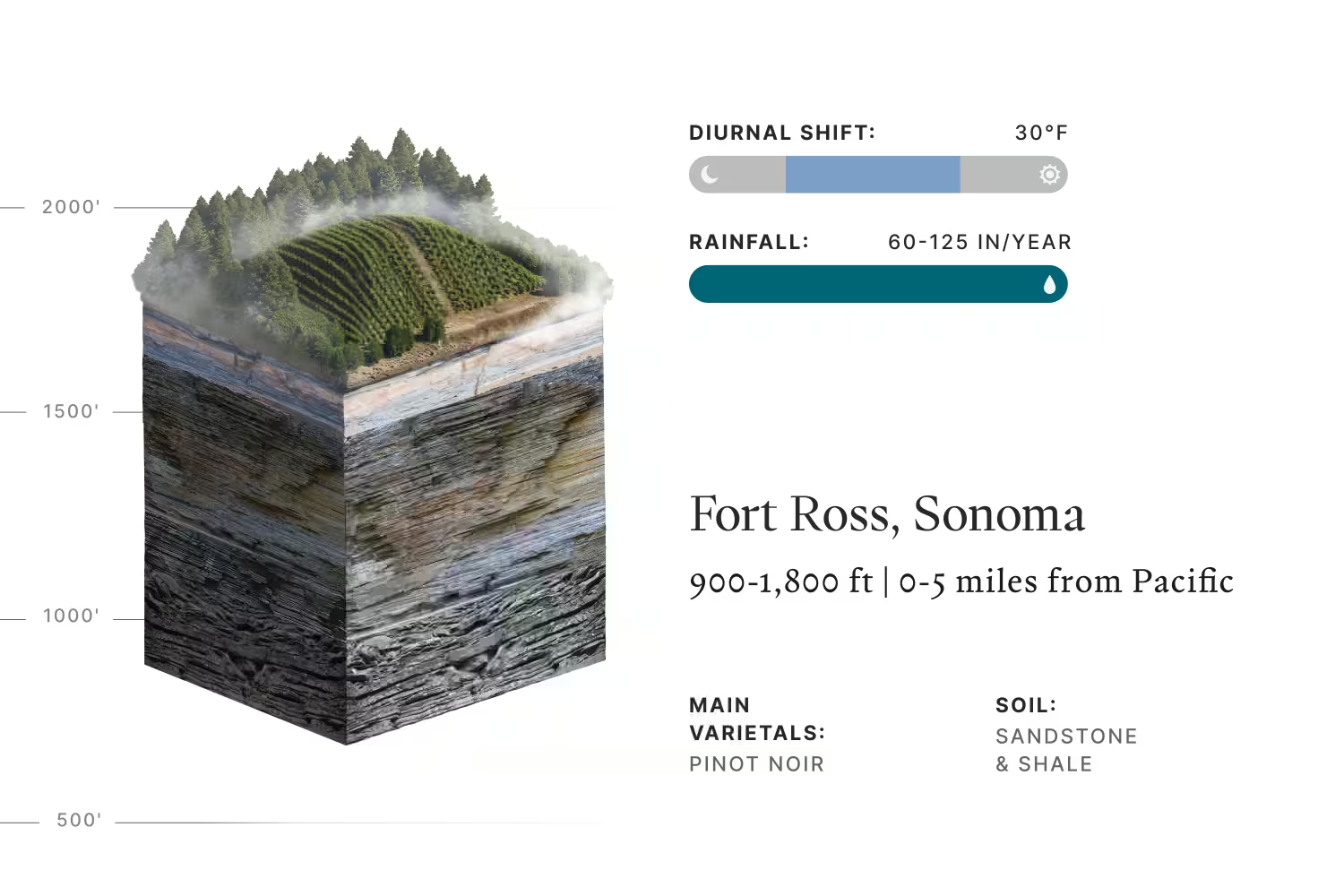
1. Fort Ross–Seaview, Sonoma Coast
900–1,800 ft | 0–5 miles | 30°F | 60–125 in/year | Sandstone & shale | Pinot Noir, Chardonnay |
Stand on the Sea View Ridge at Flowers Vineyard on a clear afternoon and you can watch the fog bank sitting offshore, white and low, while the sky above you is completely clear. You are, by design, above it. The Fort Ross–Seaview AVA was carved out of the larger Sonoma Coast appellation in 2012 specifically because its ridgeline vineyards behave so differently from the fog-drenched sites below.
Elevation here is a legal requirement, not just a description — to carry the Fort Ross–Seaview name on a label, grapes must come from above 920 feet. Of the 27,500 acres within the AVA's boundaries, only around 550 are actually planted. This is the definition of extreme viticulture: enormous land area, tiny cultivated footprint, rugged terrain that makes every operation more difficult and every vintage more variable.
The wines produced here are unlike most California Pinot Noir. The combination of sandstone and shale soils, extreme proximity to the Pacific (sometimes less than a mile), and the dramatic temperature drop at night produces wines with a tensile quality — mineral, taut, and structured — that strikes many tasters as more Burgundian than Californian in its general architecture.
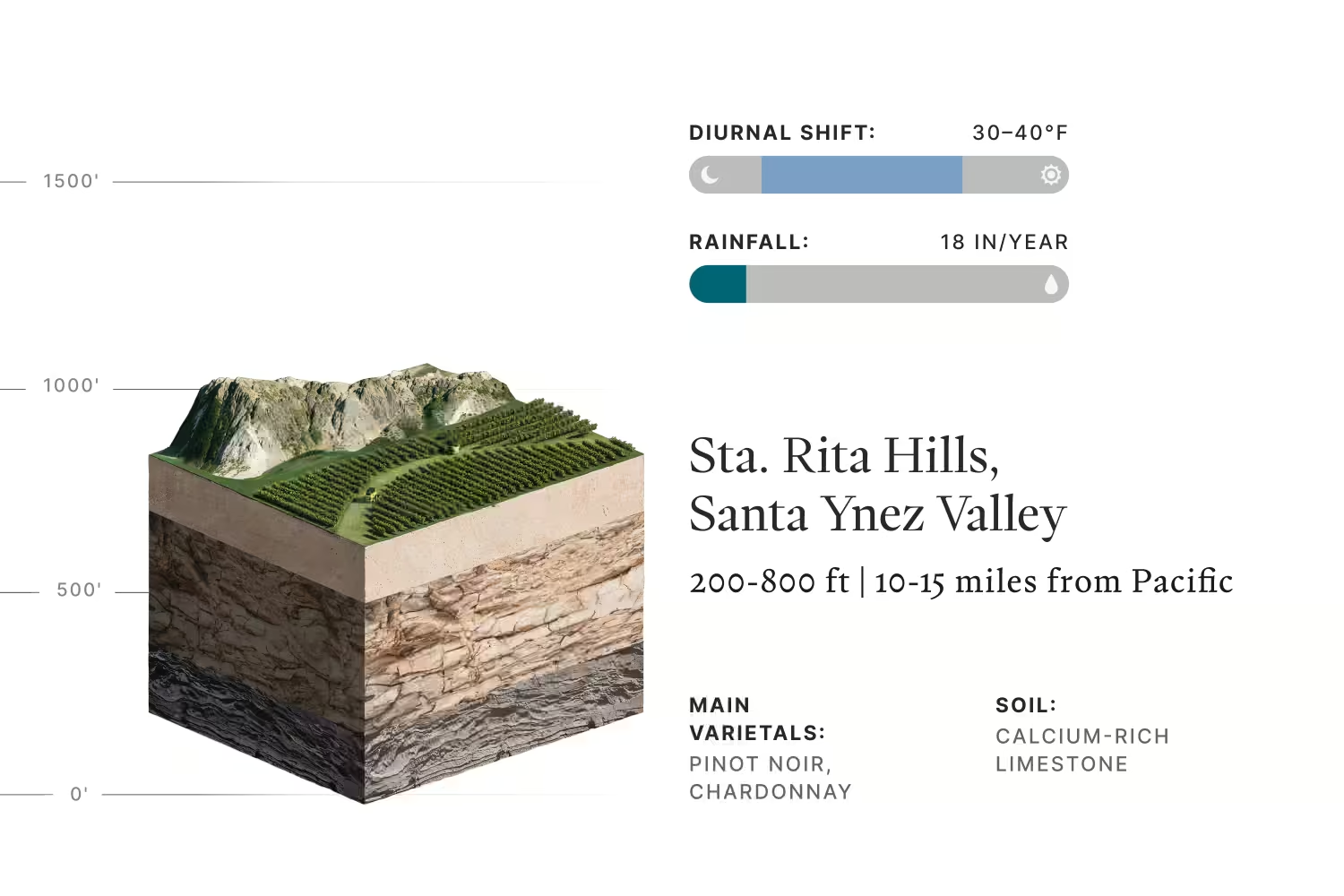
2. Sta. Rita Hills, Santa Barbara County
200–800 ft | 10–15 miles | 30–40°F | 18 in/year | Calcium-rich limestone | Pinot Noir, Chardonnay |
The Santa Ynez River cuts an east–west corridor through the hills west of Buellton, and in doing so creates one of the great accidents of California wine geography. The corridor acts as a funnel, pulling cold ocean air directly inland from the Pacific — unimpeded, unfiltered, arriving with enough force that some vines here have their branches permanently shaped by prevailing wind. The hills on either side of the valley, the Purisima Range to the north and the Santa Rosa Hills to the south, trap that maritime influence and concentrate it.
The result is one of the coldest, most fog-prone growing environments in California — once dismissed as too cold for wine grapes entirely, now recognized as one of the state's great sites for Pinot Noir and Chardonnay. The limestone-rich soils, an anomaly in California, lend the wines a particular mineral precision, a chalk-and-sea quality that many tasters find reminiscent of Chablis or the cooler corners of Burgundy.
The drive west from Buellton along Santa Rosa Road tells the story clearly: each mile west, a degree cooler. Each degree cooler, a bit more tension in the wine. The westernmost sites — Domaine de la Côte's Memorious vineyard, the wind-battered acres at Radian and Bentrock — produce wines of startling austerity and precision from fruit that struggles to ripen at all.
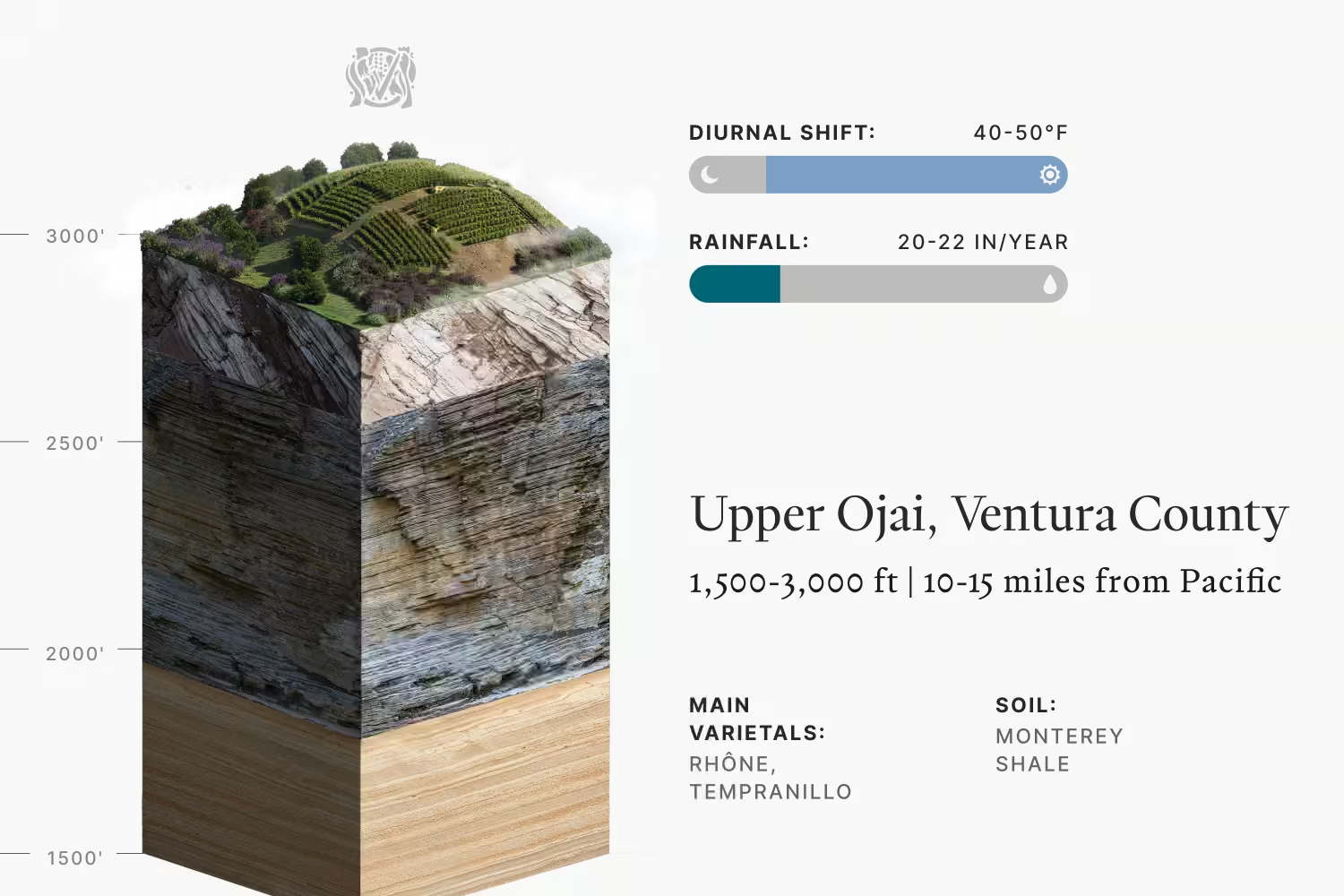
3. Upper Ojai — Ojai Mountain
1,500–3,000 ft | 10–15 miles | 40–50°F | 20–22 in/year | Monterey shale | Syrah, Roussanne, Mourvèdre, Grenache |
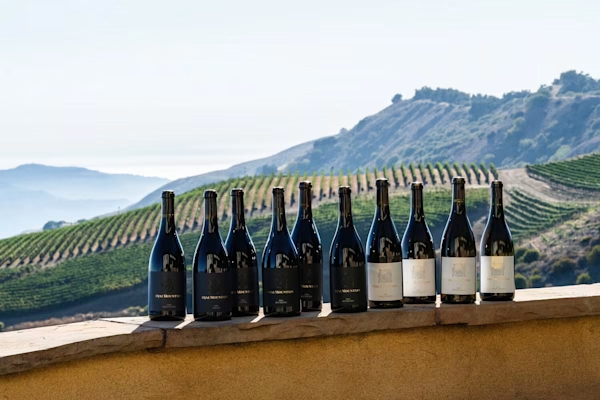
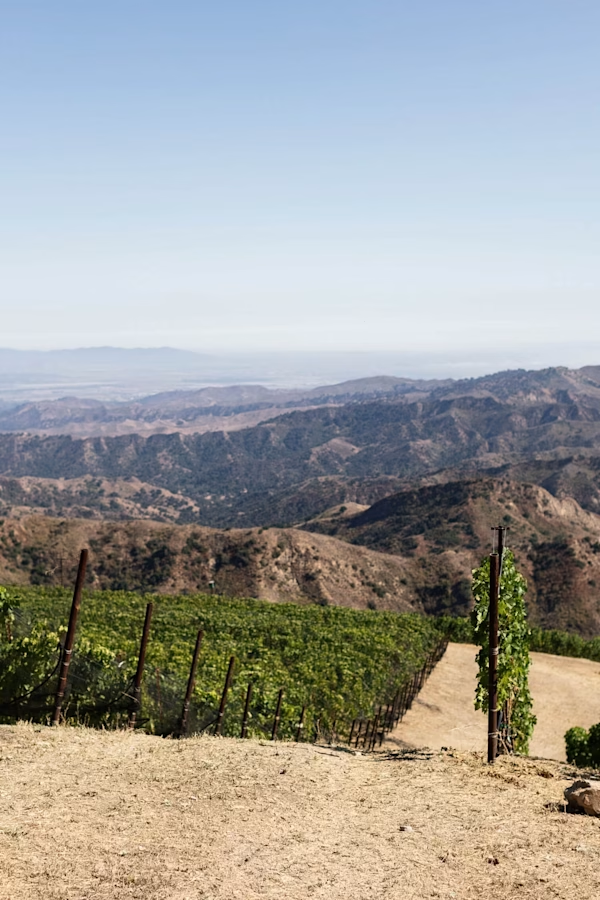
There is a single winery doing serious production at this altitude in the hills above Ojai: Ojai Mountain, which occupies approximately 2,800 feet atop Sulphur Mountain Road in Ventura County. The infographic places it at the highest point of any coastal vineyard on the chart — and the wines produced here bear out what that positioning should mean.
The site was purchased in 2015 as a family property. Grapes, it turned out, were the only thing that would grow in the dry, shallow shale. Winemaker Erich Bradley, who makes wine in Sonoma and has spent his career seeking out extreme sites, visited and was immediately drawn in. Viticulturist Phil Coturri — biodynamic farming pioneer, consultant to some of Napa and Sonoma's most respected vineyards — was equally galvanized.
What they found was unusual in every meaningful way. Ancient Monterey shale that drains water immediately, leaving vine roots to dig deep for what they need. Diurnal shifts of 40 to 50 degrees — warm enough during the day to ripen, cold enough at night to halt the process — extending the growing season and building layered flavor without accumulating sugar. Winds off the Santa Barbara Channel that run strong enough to permanently thicken the skins of the fruit. And constant sun exposure on slopes so steep that machine farming is impossible.
The focus here is entirely on Rhône varieties — Syrah above all, but also Roussanne, Mourvèdre, and Grenache — planted because the site's character is most analogous to the southern Rhône valley's more dramatic hillside sites. The 2021 Estate Syrah received 95 points from Billy Norris at Vinous, who called Ojai Mountain one of the most exciting new projects he'd encountered in California in years. Production remains tiny — roughly 500 cases per year across all wines.
“ How the wines can already express such a distinct, confident sense of terroir is beyond comprehension. Without tipping into hyperbole, Ojai Mountain may be the next great vineyard in California.”
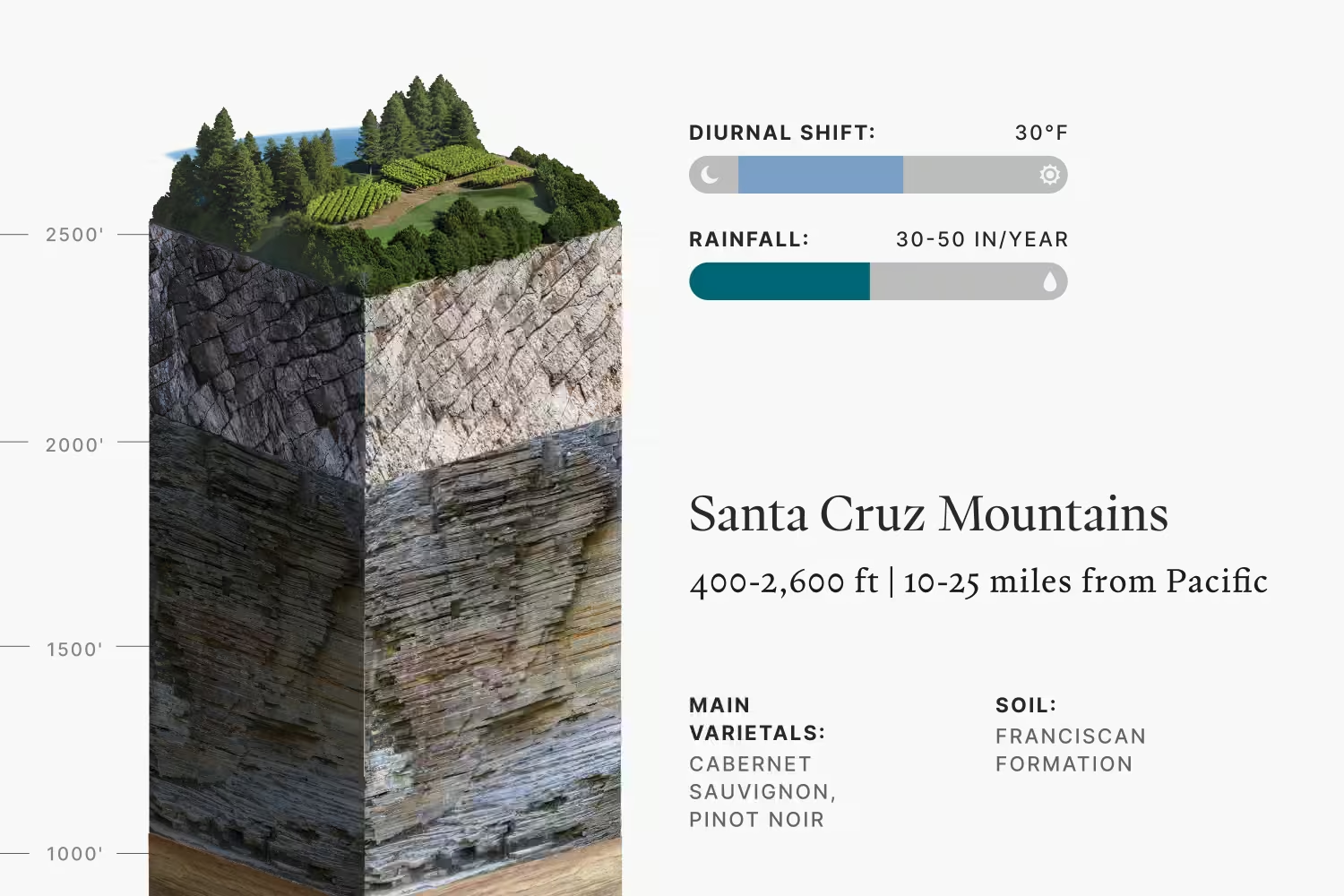
4. Santa Cruz Mountains, Central California Coast
400–2,600 ft | 10–25 miles | 20–30°F | 30–50 in/year | Franciscan formation | Cabernet Sauvignon, Pinot Noir, Chardonnay |
The Santa Cruz Mountains AVA was the first California appellation defined not by county lines or watershed but by elevation — a boundary following the fog line along the coastal ridges. It was, in 1981, a declaration that geography here was the point. Forty years later, that founding logic still holds.
The AVA spans three counties and nearly half a million acres, but only around 1,100 of those acres are actually planted — a function of terrain so challenging that farming anything here requires a particular kind of commitment. The geological diversity is extraordinary: the mountains sit at the intersection of the Pacific and North American tectonic plates, meaning that two vineyards a mile apart can sit on entirely different rock types and produce wines with very different characters.
The warmest sites, on the eastern (San Francisco Bay) side of the ridge, grow exceptional Cabernet Sauvignon — classically structured, savory, and built to age. The coolest, most fog-exposed sites on the Pacific side are among California's finest locations for Pinot Noir and Chardonnay, with a mineral precision and natural acidity that is hard to find elsewhere in the state. Ridge's Monte Bello Cabernet, made from a property at 2,600 feet, is one of the benchmark California reds by any measure.
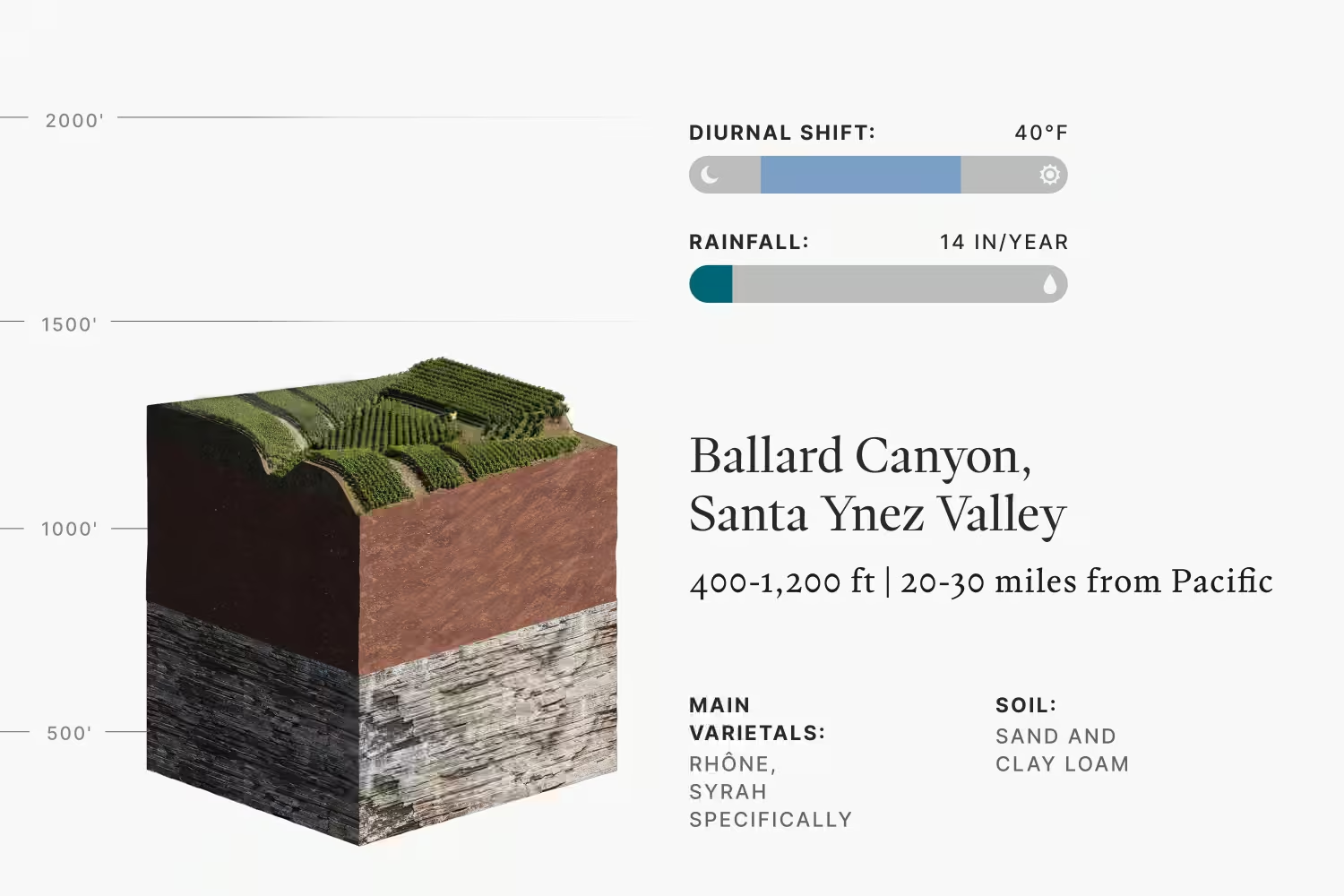
5. Ballard Canyon, Santa Barbara County
400–1,200 ft | 20–30 miles | 40°F | 14 in/year | Sand and clay loam | Syrah, Grenache, Roussanne, Viognier |
Ballard Canyon is, by design, America's only Syrah-focused AVA — a distinction its growers pursued deliberately and defend with the conviction of people who genuinely believe they've found the right grape for the right place. More than half the planted acreage is Syrah. Another 30 percent goes to other Rhône varieties. The canyon's north-south orientation acts as a partial windbreak against the intense marine gusts that define sites further west, creating conditions warm enough to ripen Syrah fully but cool enough to preserve the freshness and lift that distinguishes it from the Parker-era California style.
The Syrahs here tend toward the northern Rhône in their architecture — not Châteauneuf du Pape's richness and sun, but something more Hermitage-adjacent: structured, peppery, lifted, with a granular tannin that takes time to soften. The canyon's position, between the cool Sta. Rita Hills to the west and the warmer Happy Canyon AVA to the east, places it at what its growers like to call the Goldilocks zone — neither too cold nor too warm, but right at the edge where Syrah achieves full ripeness without losing tension.
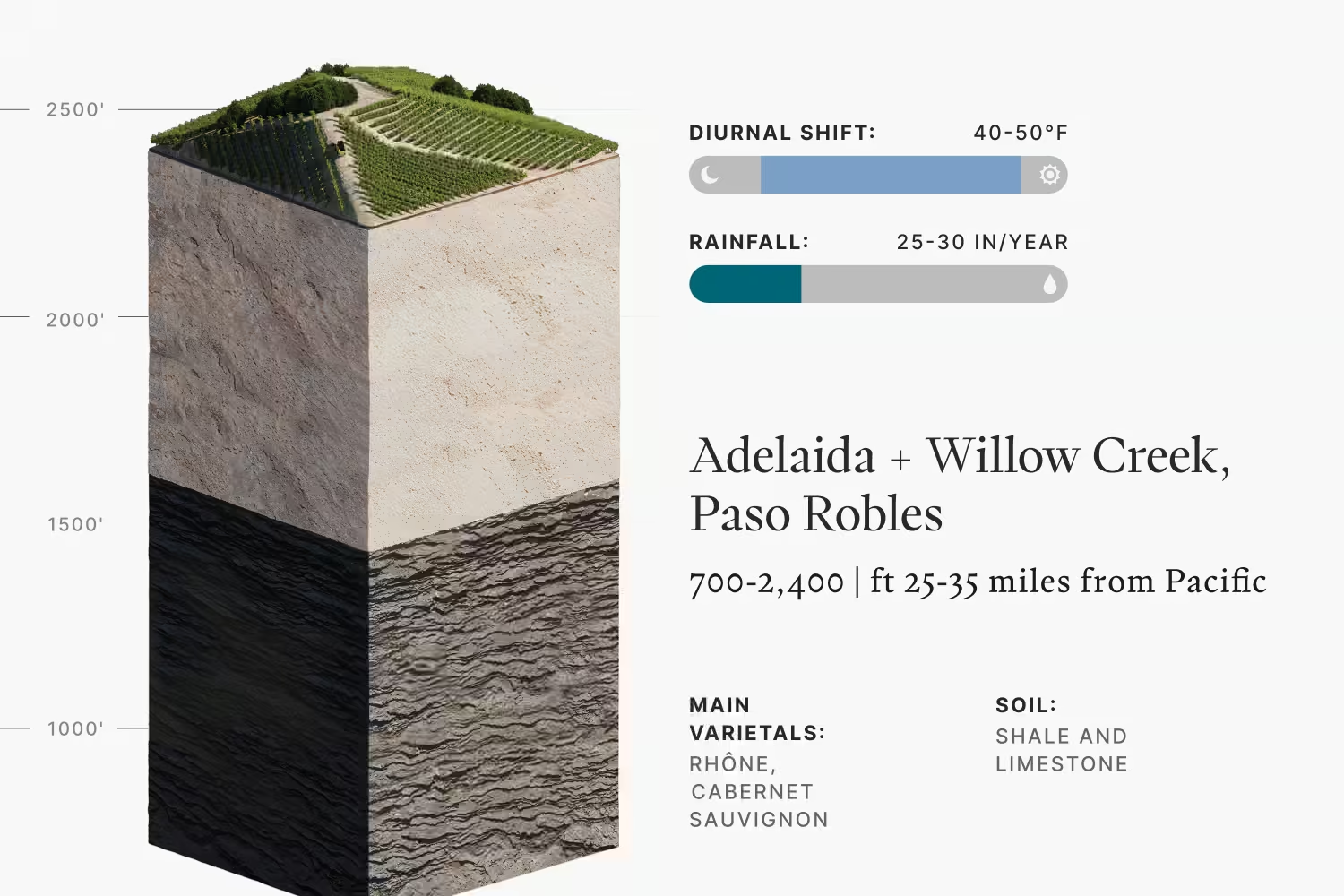
6. Paso Robles: Adelaida / Willow Creek District
700–2,400 ft | 25–35 miles | 40–50°F | 25–30 in/year | Shale & uplifted marine limestone | Rhône varieties, Cabernet Sauvignon |
Paso Robles is easy to misread. The name conjures images of flat, hot vineyards producing opulent fruit bombs — and much of the eastern AVA does deliver exactly that. But the western districts, particularly Adelaida and Willow Creek, are a different proposition entirely: higher, wetter, cooler, and geologically anomalous in ways that matter enormously to the wines.
The limestone here is the key. Uplifted marine limestone — the sedimentary rock of ancient seafloors, now exposed in the hillsides of the Santa Lucia Mountains — creates soils with alkaline pH, high drainage, and the ability to retain just enough moisture through the dry California summer to keep vines alive without irrigation. Many of the most interesting producers in Adelaida dry-farm as a result, which is rare in California and contributes directly to the concentration and structure in the wines.
The Templeton Gap, a natural break in the coastal mountain range, pulls cool afternoon air from the Pacific through the western end of the valley each day, dropping temperatures dramatically. Combined with elevations reaching 2,400 feet in the Santa Lucias, this creates diurnal swings comparable to any in the state. The result is wines of uncommon freshness and structure from a region most people associate with the opposite.
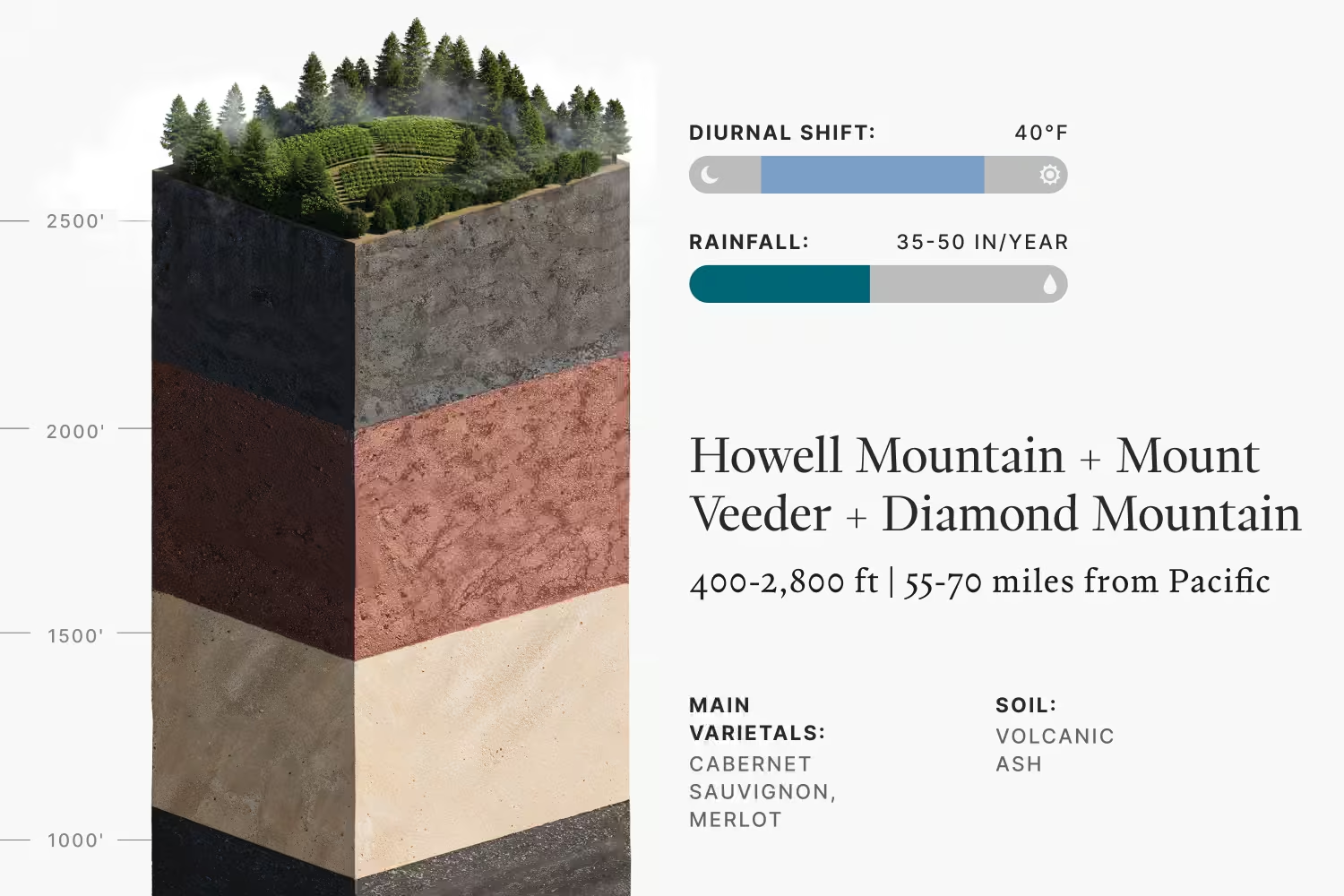
7. Howell Mountain, Napa Valley
1,400–2,600 ft | 55–70 miles | 40°F | 35–50 in/year | Volcanic ash (tufa) & red clay | Cabernet Sauvignon, Cabernet Franc, Merlot, Zinfandel |
When Napa Valley carved out its first sub-appellation in 1983, it started not with Oakville, Rutherford, or any of the valley floor's famous addresses, but with Howell Mountain — a ridge on the eastern slope, above the fog line, where a few committed producers had been making wine from volcanic soil since the late 1970s. The choice was deliberate. These wines were already behaving differently from valley floor Cabernet, and the people who made them knew it.
The defining feature of Howell Mountain is volcanic ash, locally called tufa — a light, porous soil type derived from ancient volcanic activity that drains water almost immediately and forces vines into significant stress. The wines produced from this material are immediately recognizable: deeply colored, tannic, and structured in a way that makes them almost unapproachable in youth and extraordinary after a decade of cellaring. Randy Dunn's Howell Mountain Cabernets, made from the 1978 vintage onward, are the archetype — wines that take 5–7 years to open and can age 30–40 years without difficulty.
Today the AVA has 47 members, and the range of styles has broadened from those early, austere models. But the mountain's fundamental character — volcanic soil, elevation above the fog, tannins that need time — remains the constant.
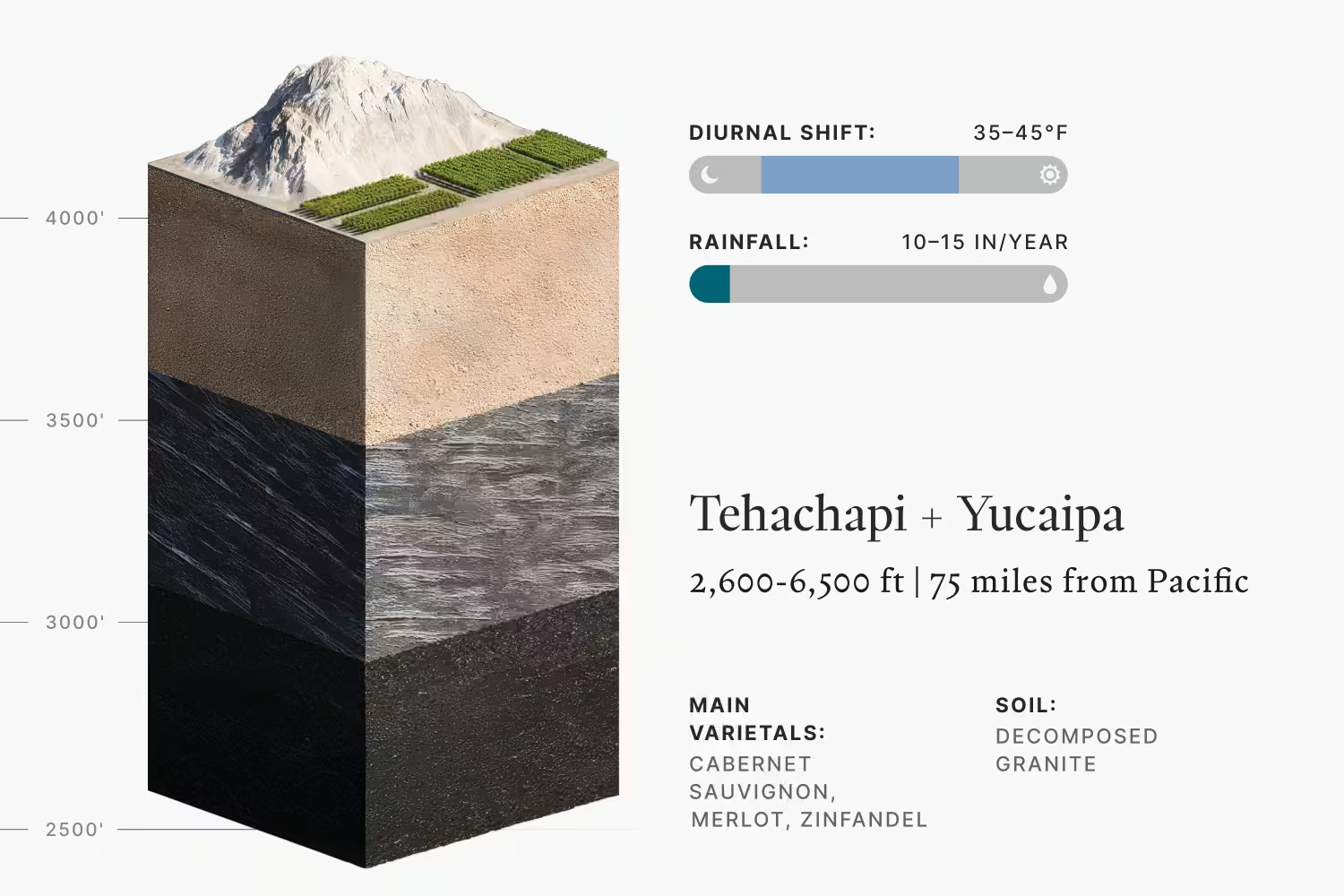
8. Tehachapi–Yucaipa, Southern California
2,600–6,500+ ft | 75 miles | 35–45°F | 10–15 in/year | Decomposed granite | Cabernet Sauvignon, Merlot, Zinfandel |
Tehachapi and the adjacent Yucaipa highlands represent the outermost edge of serious California viticulture — high-desert mountain territory in the Transverse Ranges of Southern California, where elevation compensates for the distance from the ocean and the arid conditions produce a style of wine that has no obvious California precedent.
At elevations exceeding 6,500 feet at their upper limits, these are the highest vineyards in the state by a significant margin. The decomposed granite soils drain rapidly, irrigation is limited, and the growing season is compressed by both altitude and high-desert cold. The wines that emerge tend toward structural intensity — concentrated, mineral, and built around the kind of naturally high acidity that you would not expect from the latitude.
The region is still early in its development as a recognized wine area. It lacks the institutional infrastructure of Fort Ross or Howell Mountain, and its best producers are working largely without the benefit of accumulated knowledge about what the land will ultimately produce. That is either a limitation or an invitation, depending on temperament.
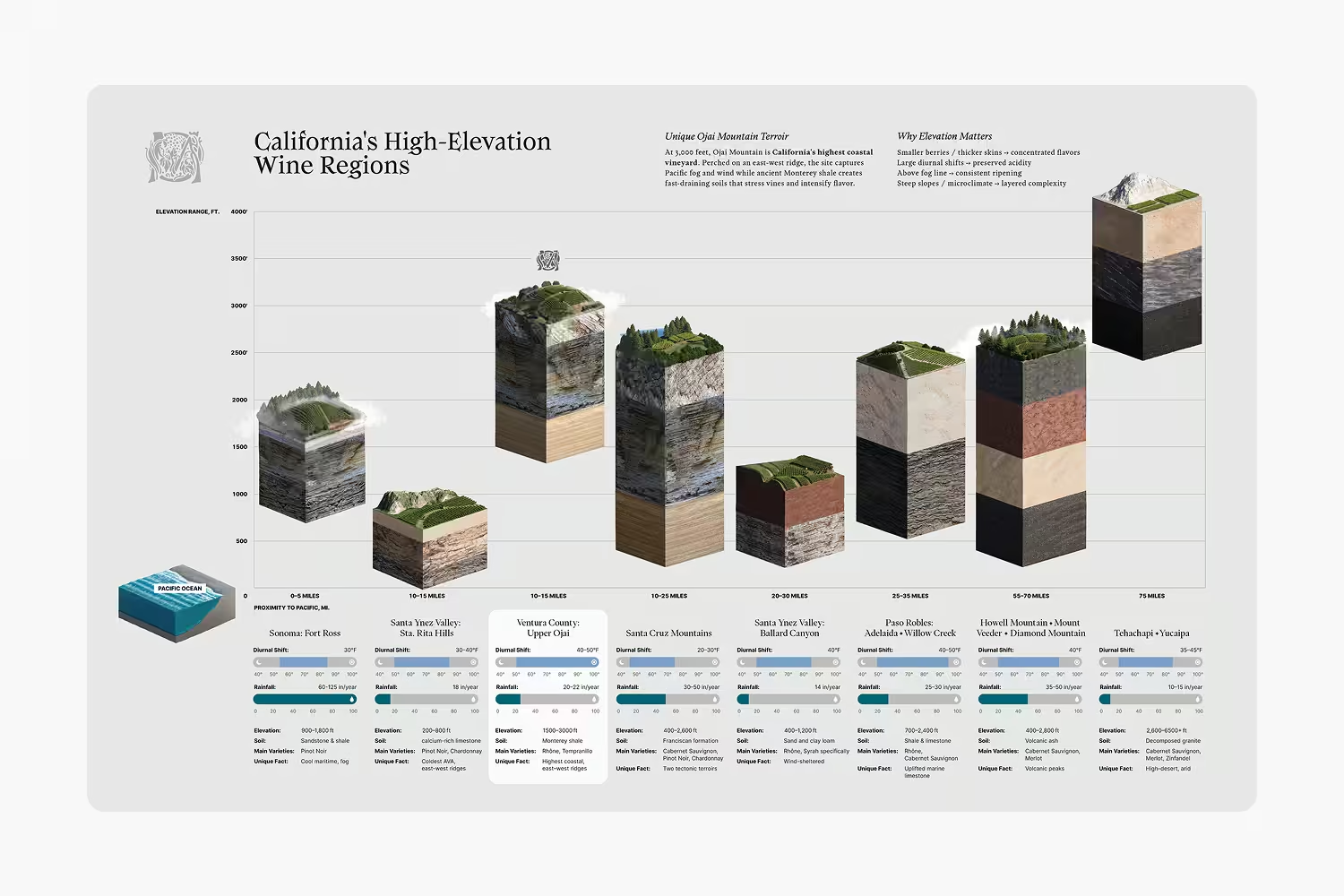
A Note on the Infographic
The California High-Elevation Wine Regions chart produced by Ojai Mountain maps these eight areas along two axes: elevation and proximity to the Pacific Ocean. What it reveals, when you sit with it, is a kind of logic to the distribution. The regions closest to the coast — Fort Ross, Sta. Rita Hills, Upper Ojai — rely heavily on marine influence to moderate their high-altitude temperatures. The regions further inland — Howell Mountain, Tehachapi — rely on the altitude itself to provide the temperature moderation that the ocean can no longer reach.
Ojai Mountain, at 2,800 feet and 10 miles from the Santa Barbara Channel, sits at an unusual intersection of both forces: high enough for genuine altitude effects, close enough to the Pacific to draw consistent marine air across the estate. That combination — altitude plus ocean proximity — is what Billy Norris at Vinous had in mind when he wrote that the wines already expressed a distinct sense of terroir out of the gate.
The chart also makes visible something that individual region profiles tend to obscure: California mountain viticulture is not a single phenomenon but a family of related phenomena, each one shaped by a different balance of forces, each producing wines with different expressive priorities. To drink through these regions with attention is to understand California wine differently than you did before — not as a place that makes one kind of wine well, but as a landscape capable, at its best, of making wines that surprise you.
“ Terroir is the soils, slopes, climate, aspects — and the attitude of the grower.”
The infographic referenced throughout this article is part of the Spring 2026 Ojai Mountain release materials. Ojai Mountain produces approximately 500 cases per year of 100% estate-grown Rhône varieties from their organically farmed vineyard on Sulphur Mountain Road, Upper Ojai, Ventura County.
Share this post
Recent Posts
View All Posts
Erik Segelbaum • 5 Feb 2024
The Cabernet Conundrum: Is It Love or Force of Habit?
Most living wine drinkers have been told by their parents that Cabernet Sauvignon is the “it” grape. But there is a slight problem with their collecti...
Lesia Artymovych • 15 Oct 2023
A New Cool-Climate Rhône Vineyard in California
Some wineries make wine. Ojai Mountain lets the mountain make it. At extreme elevation, with regenerative farming and a hands-off approach in the cell...
Lesia Artymovych • 21 Oct 2020
2020 Harvest at Ojai Mountain | Inaugural Vintage Notes & Winemaking
The 2020 harvest marked the inaugural vintage at Ojai Mountain. With vines planted just two years prior in 2018, we approached this season not as a co...
Lesia Artymovych • 11 Feb 2026
Seared Duck Breast with Apples & Wine Pairing | Ojai Mountain Recipe
The natural sweetness of caramelized apples balances the savory depth of properly rendered duck, while fresh herbs add brightness. This is duck done r...
Lesia Artymovych • 24 Feb 2020
2021 Harvest at Ojai Mountain | Vintage Notes & Winemaking
The 2021 season at Ojai Mountain unfolded with unusual restraint — and produced some of the most precise wines we've made.