
 Log in
What’s Actually in Your Glass? Wine Ingredients, Additives & Sulfites Explained
Wine can legally be made with far more than grapes, yet most bottles do not carry a complete ingredient list. Ojai Mountain takes a simpler path: organically grown estate grapes, native yeast, and a modest protective dose of sulfur at bottling. No added sugar or acid, no fining, no new-oak flavoring, and no filtration for the reds—so what you taste comes from the vineyard, not from corrections.

Pick up a bottle of wine at a grocery store. Look at the label. You'll find the winery name, the vintage, the varietal, maybe a description of the vineyard. What you won't find: an ingredient list.
Wine is the only food most Americans consume regularly without any idea what's actually in it. Not because there's nothing to disclose, but because the law doesn't require it. The TTB (Alcohol and Tobacco Tax and Trade Bureau) permits up to 76 different substances in US wine production. Colorants, acidifiers, fining agents, flavor enhancers, added sugars, commercial yeasts, oak alternatives, and more. All legal. None required on the label.
Most people don't know this. And when something in a glass of wine doesn't agree with them, they reach for the most familiar explanation: sulfites.
The Sulfite Myth—and What’s Actually Going On
Sulfur dioxide has been used in winemaking for centuries. It prevents oxidation and inhibits unwanted bacteria, which is why virtually every wine in the world contains some level of it. Even wines with no added sulfites contain naturally occurring sulfites produced during fermentation.
Here's what the research actually shows: sulfite sensitivity affects roughly 1% of the general population, and it primarily presents as a respiratory reaction, not a headache. The "sulfite headache" narrative is largely unsupported by clinical evidence.
So what is causing those headaches?
The more likely culprits are things that don't appear on any label:
Added sugars (chaptalization and residual sugar manipulation) High sugar content accelerates alcohol absorption and can trigger headaches in sensitive individuals.
Histamines Produced during fermentation, particularly in wines that undergo extended maceration or malolactic fermentation without careful management.
Tannin overload Heavily extracted wines, often aged in new oak, can cause headaches in people with certain sensitivities.
Dehydration from high alcohol Many commercial wines push 14-15% ABV, which has a pronounced dehydrating effect.
Congeners and fermentation byproducts Certain commercial yeasts produce fusel alcohols and other compounds that can cause adverse reactions.
The common thread across all of these: they're more prevalent in wines made with interventionist winemaking. Wines that needed correction. Wines that started with compromised fruit or a desired commercial flavor profile and required additives to get there.
What Goes Into Most Commercial Wine
Wine can be made in radically different ways. That's not a criticism of any particular style; it's simply a fact that most consumers have no way of knowing.
The TTB's approved additives list includes substances that would surprise most people who think they're drinking "just grapes." A few examples of what may be present in wines you've consumed:
| Additive | Purpose |
|---|---|
Mega Purple / Ultra Red | Concentrated grape juice used to deepen color and add sweetness |
Potassium sorbate | Microbial stabilizer used to stop fermentation |
Dimethyl dicarbonate (DMDC) | Antimicrobial sterilant added before bottling |
Tartaric or citric acid | Acidification to correct underripe or over-warm harvests |
Isinglass / gelatin / egg whites | Fining agents to clarify and strip texture |
Commercial yeasts (selected strains) | Engineered for predictable, standardized flavor profiles |
Added sugars | Boost alcohol levels in underripe vintages or adjust sweetness |
Powdered tannins | Add structure that the fruit itself didn't provide |
None of these are required to appear on the label. And many of them serve the same purpose: correcting a problem that originated in the vineyard.
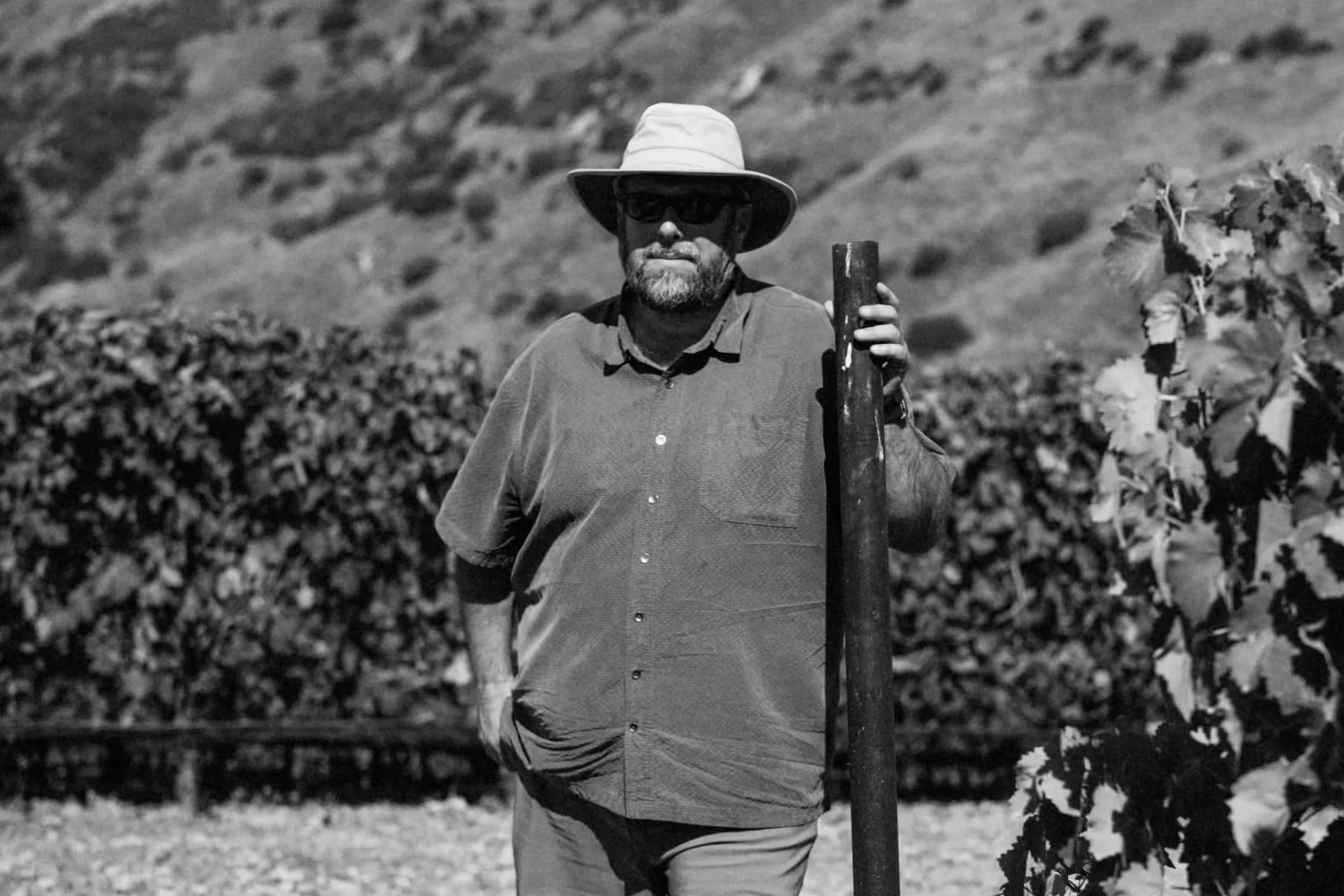
"If the farming is right, the wine doesn't need correction." — Erich Bradley, Winemaker, Ojai Mountain
That sentence is either a philosophy or a constraint, depending on how you approach it. For us, it's both.
Every Ojai Mountain Wine: Three Ingredients
We're not trying to be contrarian. We're not chasing a trend. We make wine with three ingredients because that's what the site allows us to do.
When you farm at 2,800 feet on ancient Monterey shale, with 40-50 degree diurnal swings and marine winds off the Pacific, you get grapes with natural structure, bright acidity, and concentration that doesn't need help. Our winemaking philosophy starts and ends with that premise.
Here's the complete ingredient list for every Ojai Mountain wine:
Organically grown estate grapes — grown on our mountain property without synthetic chemicals, pesticides, or herbicides. Only 7% of vineyards worldwide are organically farmed. Ours is one of them.
Native yeast — fermentation begins with the wild yeasts that live on the grape skins and in the cellar. These are specific to this vineyard, this season, this harvest. Occasionally, if fermentation needs assistance, we'll add a small amount of cultured yeast. But the wild yeasts start the process, and they carry most of it.
A protective dose of sulfur dioxide at bottling — this is the one additive we use intentionally, and we're transparent about it. Sulfites at bottling protect the wine during transport and aging. The amount we use is low. It's there to preserve what the fruit and the site created, not to mask anything.
That's everything.
Why Native Yeast Matters
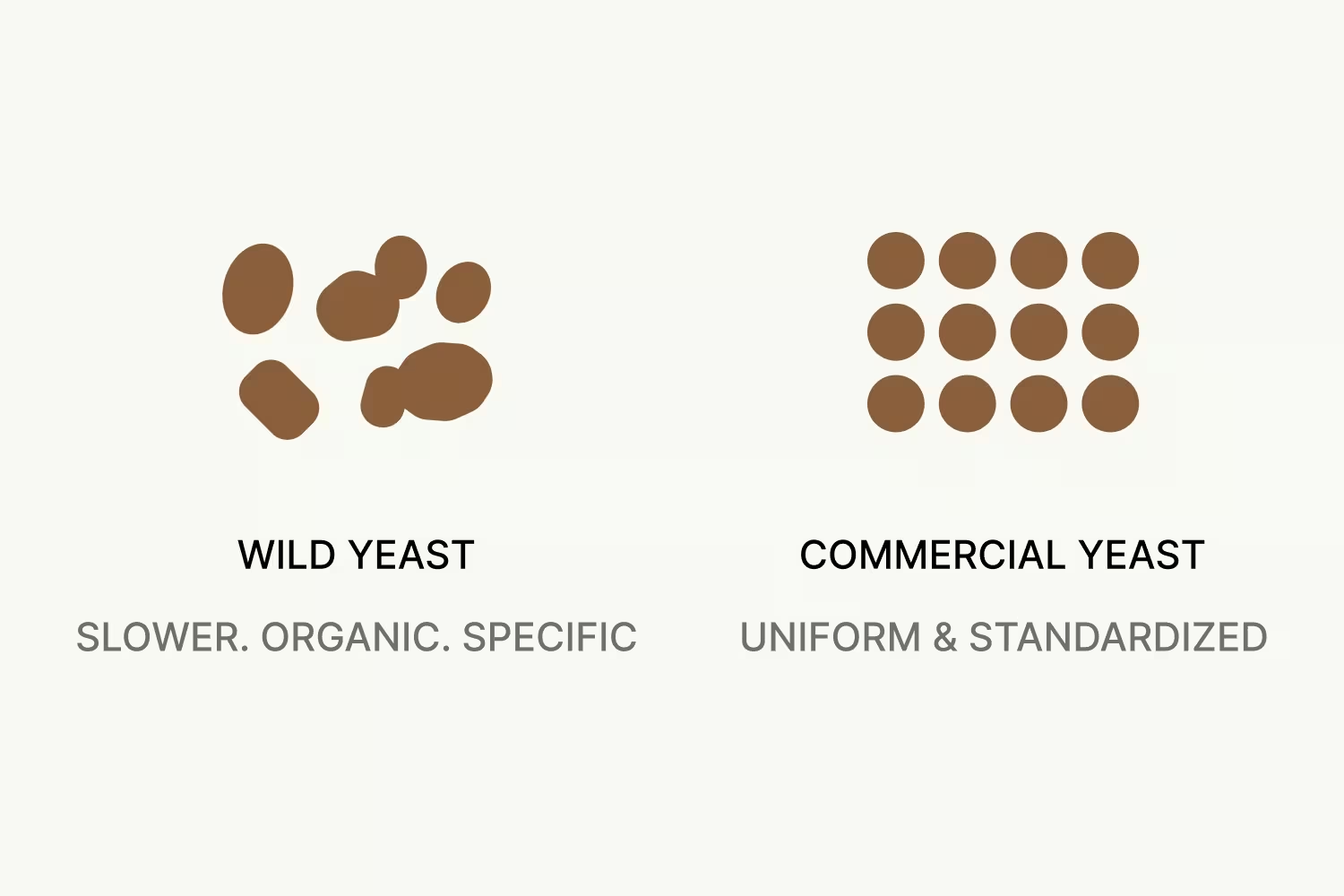
Commercial yeasts are engineered for consistency. They produce predictable, standardized fermentations that taste roughly the same regardless of where the grapes came from. That's useful if you're making a product that needs to taste identical across a million cases. It's counterproductive if you're trying to express a specific place.
Native yeasts are slower and less predictable. Fermentations can take weeks longer. But they're specific to this vineyard, this season, this harvest. That specificity is exactly what we're after. The wild yeasts on our mountain are part of what makes our wines taste like our mountain.
Why Neutral Oak Matters
We age our wines 18 to 24 months in neutral French oak. Not new oak. Neutral.
New oak adds flavor: vanilla, toast, spice. It can build complexity, but it competes with what's underneath. When a wine has been grown at altitude on fractured shale, with the kind of natural tension our site produces, the last thing it needs is a layer of vanilla obscuring the minerality.
Neutral oak adds nothing to the flavor profile. It provides slow oxygen exposure that helps the wine integrate and develop without masking the fruit. It also doesn't hide flaws. That's the harder path. And the more revealing one.
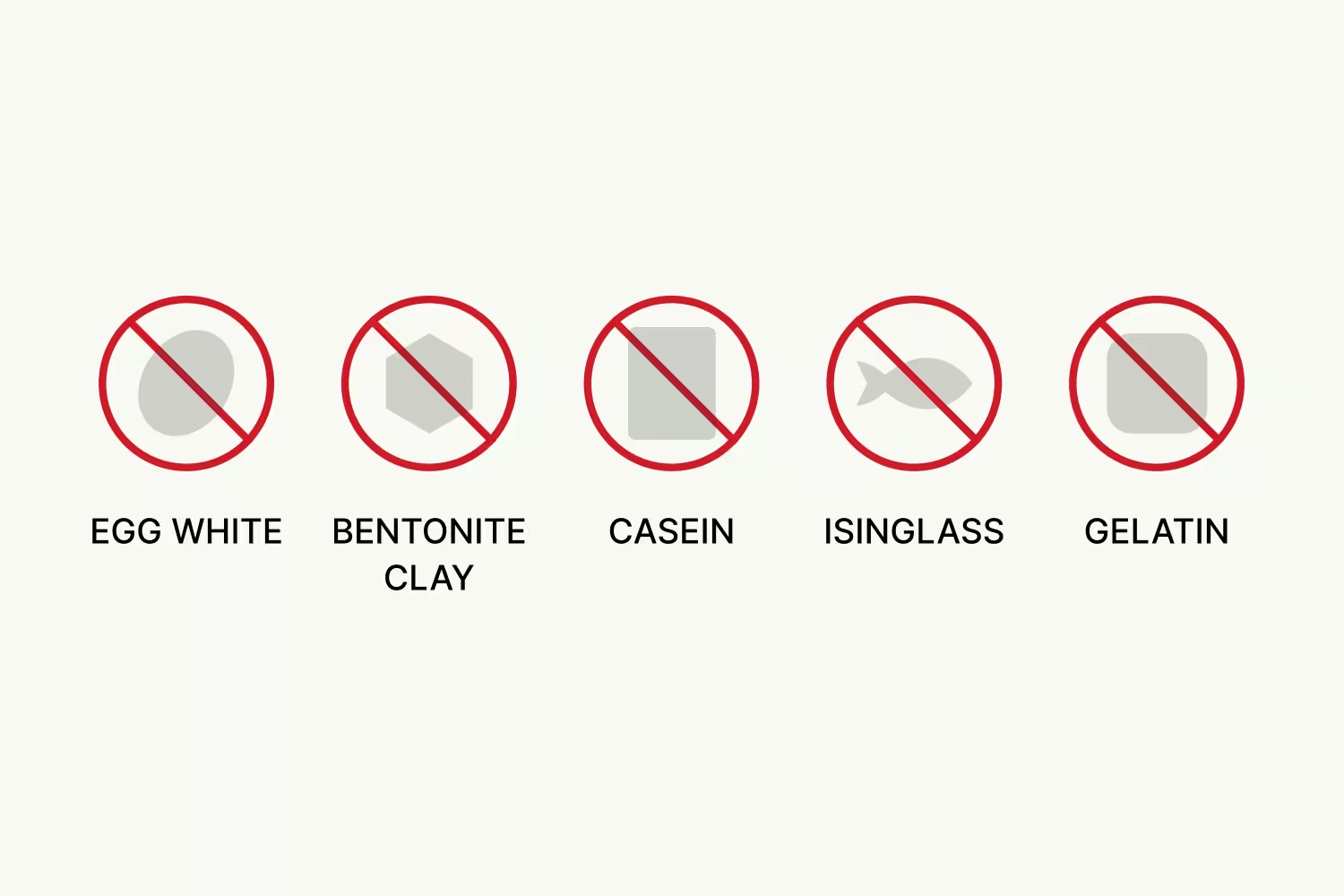
Fining and Filtration: Why Reds and Whites Differ
We don't fine any of our wines — red or white. We don't filter our reds either. Our whites are the one exception, and the reason is worth explaining.
Fining agents like egg white, bentonite clay, casein, isinglass, and gelatin clarify wine by binding to and removing particles. They do their job. They also remove texture, mouthfeel, and the structural compounds that give a wine depth and the ability to evolve over years in a cellar. We skip them entirely across the board.
Reds have a natural advantage: the tannins and phenolic compounds extracted from the skins during fermentation act as antioxidants and inhibit spoilage organisms. A carefully settled red can go into bottle without filtration if the winemaker is confident it's microbiologically stable. Ours are.
Whites are different. A white wine has fewer of those natural protections. It's judged on purity, brightness, and aromatic clarity, and suspended yeast or protein can create haze or instability in bottle, even when the wine itself is sound. Because our estate whites are produced with minimal intervention and relatively low sulfite levels, gentle filtration before bottling provides microbiological security without materially changing the wine's character.
This is actually standard practice among serious Rhône producers: unfined, unfiltered reds to preserve texture and age-worthiness; filtered whites to ensure long-term stability and freshness. The distinction isn't a compromise. It's the right call for each wine.
Our reds may show a slight haze or sediment over time. That's not a fault. It's evidence that nothing has been taken out.
The Farming Makes This Possible
None of this is possible without the farming. That's not a platitude; it's a constraint.
Winemakers who add sugars, acidifiers, and fining agents are often responding to fruit that arrived at the winery in a compromised state. Too ripe, too flat, too diluted, too inconsistent. The additives exist to correct those problems. Remove the additives and you need to remove the problems that created the need for them in the first place.
Our viticulture team led by head viticulturist Martin Ramirez, with Phil Coturri as our organic farming consultant, farms without synthetic chemicals. Cover crops build living soil. Close-spaced vines create competition that produces smaller, more concentrated clusters. Minimal irrigation, relying on natural rainfall and drought-tolerant varietals, stresses the vines in precisely the right way.
As Erich puts it: "I'm not trying to save damaged fruit. I'm trying to polish exceptional fruit."
That sentence defines the entire operation. When the farming is right, the cellar becomes straightforward. No added sugar. No added acid. No new oak. No fining. No filtration.
Why We’re Telling You This
We're not publishing an ingredient list because we're required to. We're doing it because we think you deserve to know what's in your glass.
Wine is the only food most people consume regularly without that information. That's a strange thing when you stop and think about it. Every other bottle in your kitchen has a label. Wine is the exception, and it's an exception that benefits producers who'd rather you not ask questions.
We'd rather you ask. Our answer is three ingredients, grown on one mountain, in one of the most demanding climates in California.
If you want to taste what that looks like in a glass, our wines are available here. Or come up to the estate and taste them on the ridge where they were grown.
The view is worth the drive. The wine is worth knowing.
Frequently Asked Questions
Wine begins with grapes and yeast, but producers may also use sugar, acids, cultured yeasts, nutrients, tannins, color adjustments, preservatives, enzymes, and fining agents during production. These materials serve different purposes, from correcting acidity to stabilizing color or clarifying the finished wine. The TTB’s list of authorized winemaking practices and additives shows how many options are legally available to U.S. producers.
Most U.S. wines are regulated by the Alcohol and Tobacco Tax and Trade Bureau rather than standard FDA food-labeling rules. Current federal wine-label requirements cover information such as alcohol content, origin, health warnings, and sulfite declarations, but generally do not require a complete ingredient list. The TTB’s wine-labeling guidance explains what must appear on a bottle.
For most people, sulfites are not a proven cause of wine headaches. Sulfite sensitivity affects a small portion of the population and more commonly causes respiratory or allergic symptoms. Alcohol, dehydration, histamines, tannins, and other fermentation compounds may play a role in headaches. Food & Wine’s explanation of wine headaches examines the evidence in more detail.
It means the wine contains at least 10 parts per million of sulfur dioxide or another sulfiting agent. Some sulfites occur naturally during fermentation, while additional sulfur may be used to protect wine from oxidation and microbial spoilage. The TTB’s sulfite-labeling guidance explains the federal threshold.
Native yeast fermentation begins with the yeasts naturally present on grape skins and in the winery rather than a commercially selected strain. It can be slower and less predictable, but many minimal-intervention winemakers value it because it allows the vineyard and vintage to play a larger role in the wine’s character.
Yes. A sound, stable wine does not need to be visually clear to be safe. Unfiltered wine may develop harmless sediment or haze because yeast cells and grape particles remain in the bottle. Fining and filtration primarily affect clarity, texture, and stability—not whether a properly made wine is drinkable.
No. Some wineries use animal-derived fining agents such as egg whites, gelatin, casein, or isinglass to clarify wine. Wines made without those agents may be vegan, although the label may not say so. Ojai Mountain does not fine its wines.
Every Ojai Mountain wine is made from organically grown estate grapes, native yeast, and a modest protective dose of sulfur dioxide at bottling. We do not add sugar or acid, and we do not use fining agents. Our reds are bottled unfiltered, while our whites receive gentle filtration for stability and aromatic clarity.
Share this post
Recent Posts
View All Posts
Lesia Artymovych • 20 Sept 2026
The Scent of the Mountain: Chaparral, Syrah, and Ojai Terroir
Ojai Mountain’s wines can carry aromas that recall the chaparral surrounding the vineyard: sage, dried herbs, pepper, and wildflowers. Science does no...
Lesia Artymovych • 16 Sept 2026
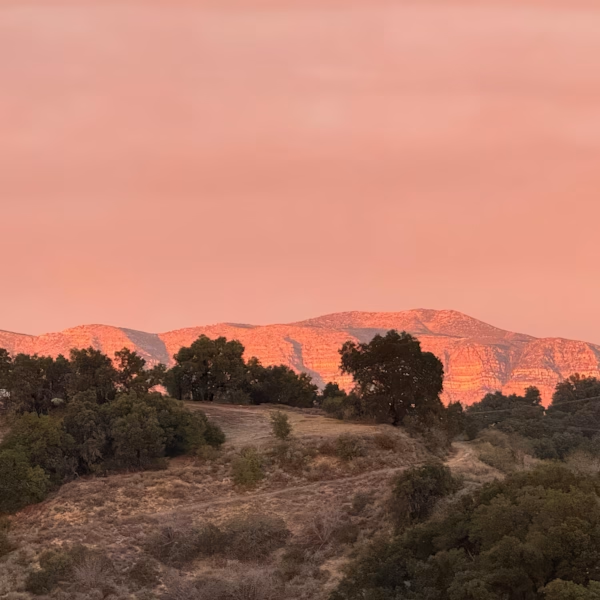
The Ojai Pink Moment: Why the Topa Topa Mountains Glow
Ojai’s Pink Moment is the brief coral, rose, and violet glow that appears on the Topa Topa Mountains around sunset. Warm, low-angle light creates the ...
Lesia Artymovych • 14 Sept 2026
A Guide to Wine and Cheese Pairing at Ojai Mountain
Match intensity to intensity: pair fresh, delicate cheeses with Ojai Mountain's bright Estate Whites, and bold, aged cheeses with its Syrahs and reds....