
 Log in
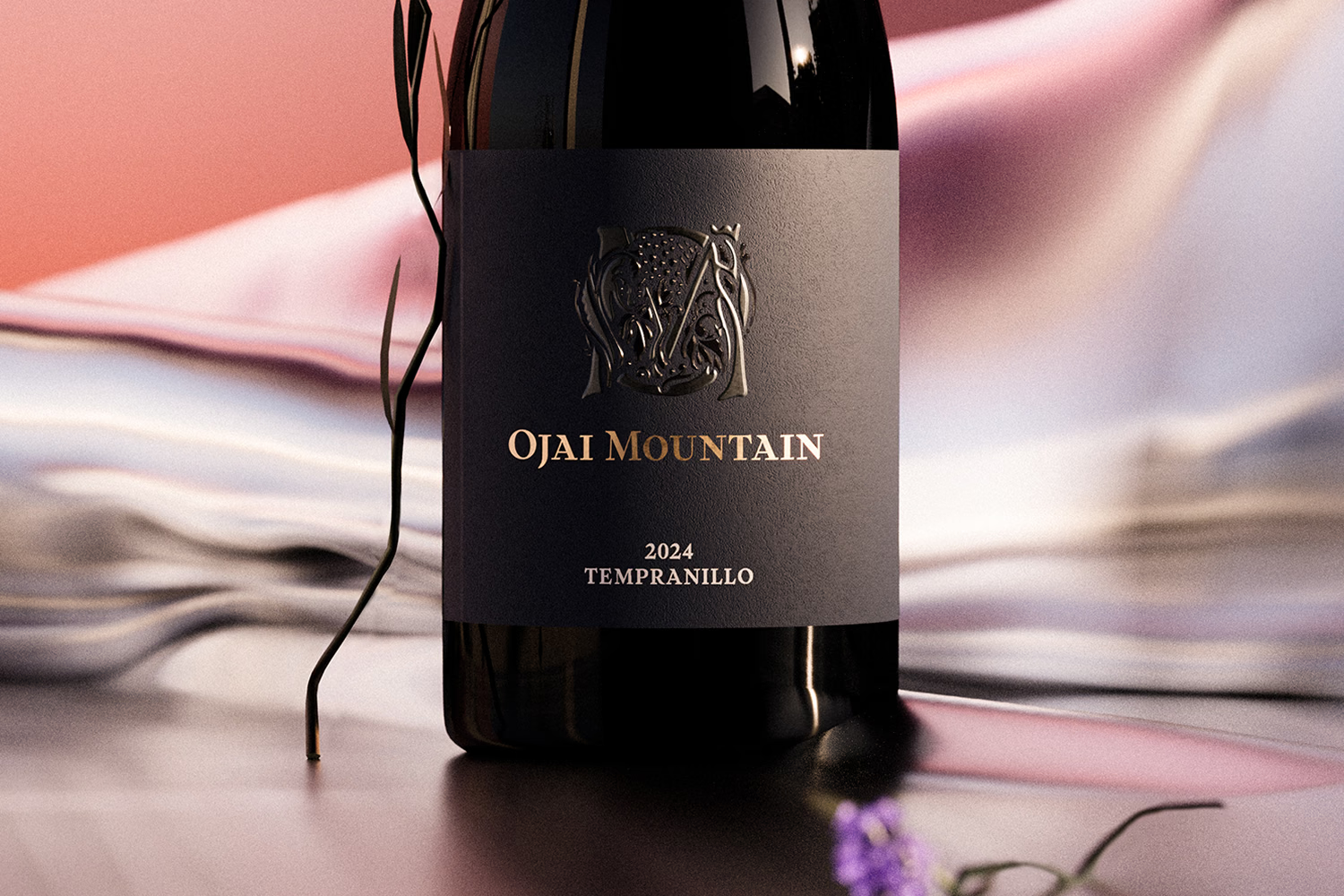
Six Years in the Making: Introducing Our 2024 Tempranillo
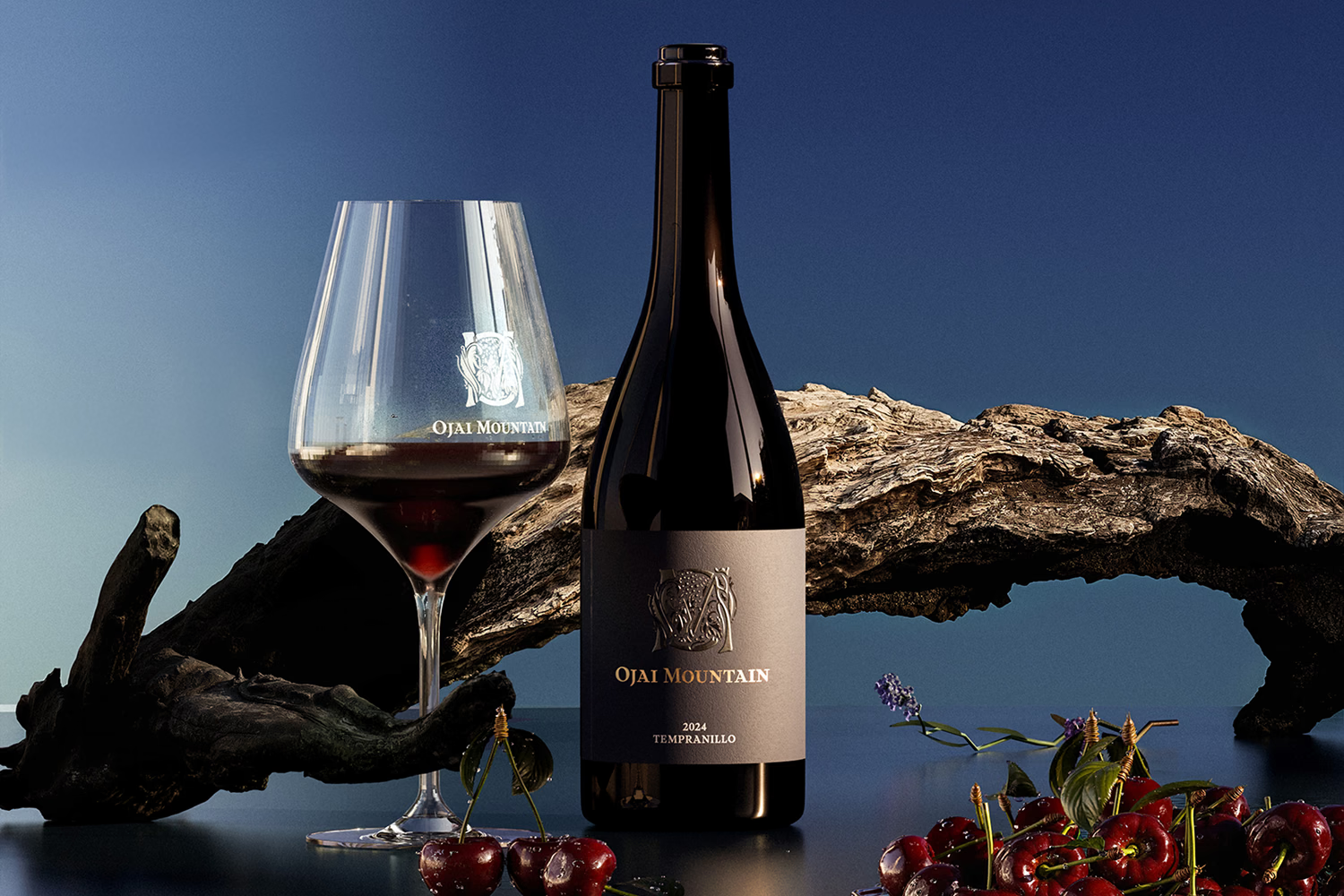
Ojai Mountain's 2024 Tempranillo, its first standalone bottling, arrives after six years and a total crop loss in 2023. Just 141 cases, aged 19 months in neutral oak, with Rioja-like structure but darker, more concentrated fruit thanks to the estate's shale soil and 2,800-foot elevation. Wine Club members get priority access.

Some wines announce themselves with a single great harvest. This one took six years and a lost year to arrive.
Our 2024 Tempranillo is finally here. It is the first standalone bottling of Tempranillo we have ever released, and the story behind it is inseparable from the wine itself. Understanding why it took this long, and what the mountain put it through to get here, is the only proper way to introduce it.
The Long Road to a Standalone Bottling
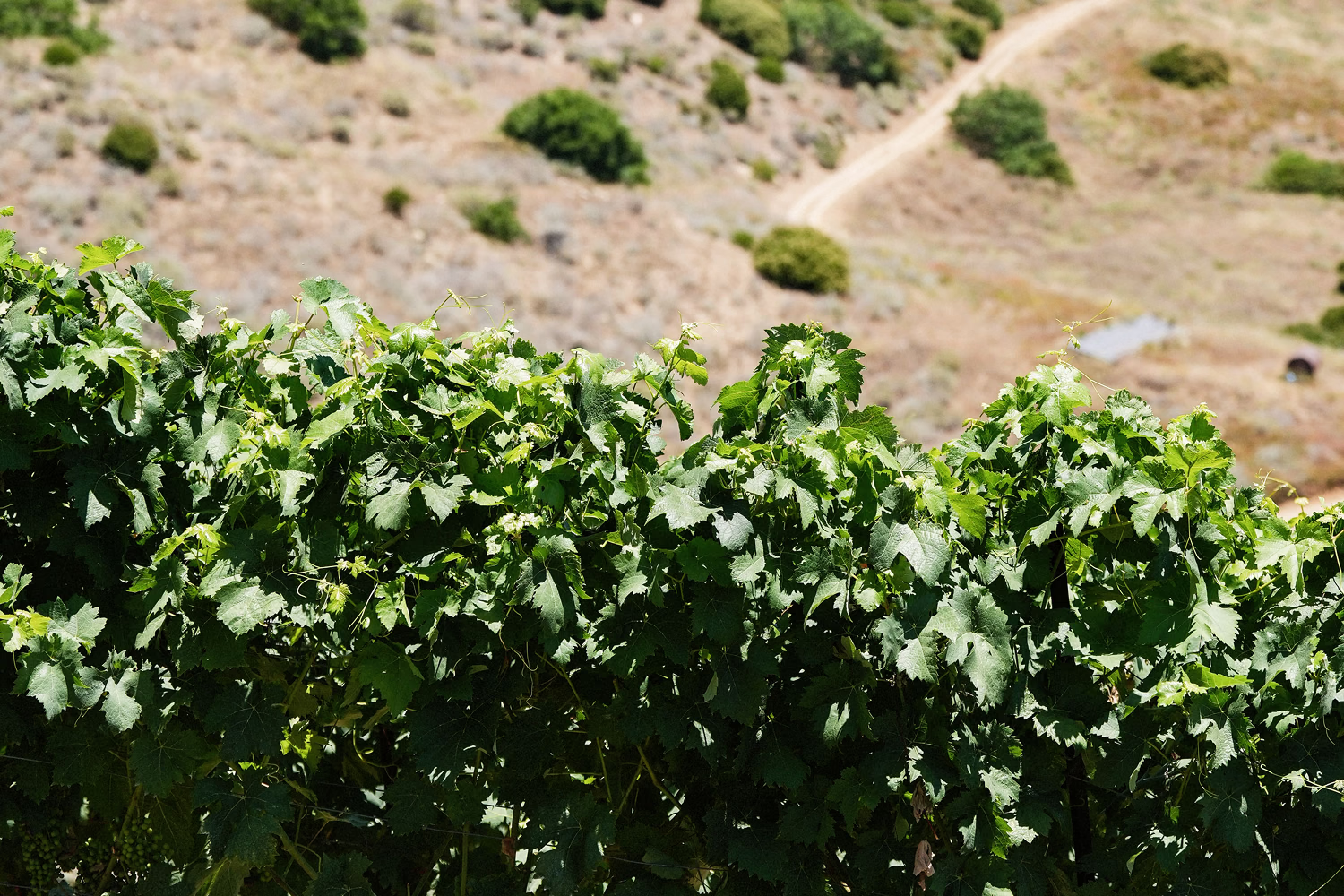
When we planted Tempranillo at Ojai Mountain, we knew it was experimental, the whole vineyard was. The variety was always part of our vision for the estate, a Spanish grape that we believed could find an entirely new voice at 2,800 feet above the Ojai Valley. But wanting to make a Tempranillo and actually making one are separated by years of patient farming.
In our early vintages, the Tempranillo vines simply had not produced enough fruit to warrant a standalone bottling. What we harvested went into our Estate Red blend, where it contributed structure and savory depth alongside Grenache, Syrah, and Mourvèdre. The wine was there, woven into the fabric of the blend, but it was not yet ready to speak for itself.
Then came 2023.
The 2023 growing season was one of the wettest in recent memory at the estate, following an extraordinary 54 inches of rainfall the prior year. The cold, wet spring resulted in difficult flowering conditions and poor fruit set — our Tempranillo block produced not a single berry. A complete loss. The vines were alive and healthy, but the conditions had denied us any fruit whatsoever. It was a difficult thing to accept, but the mountain operates on its own terms, and we have learned to respect that.
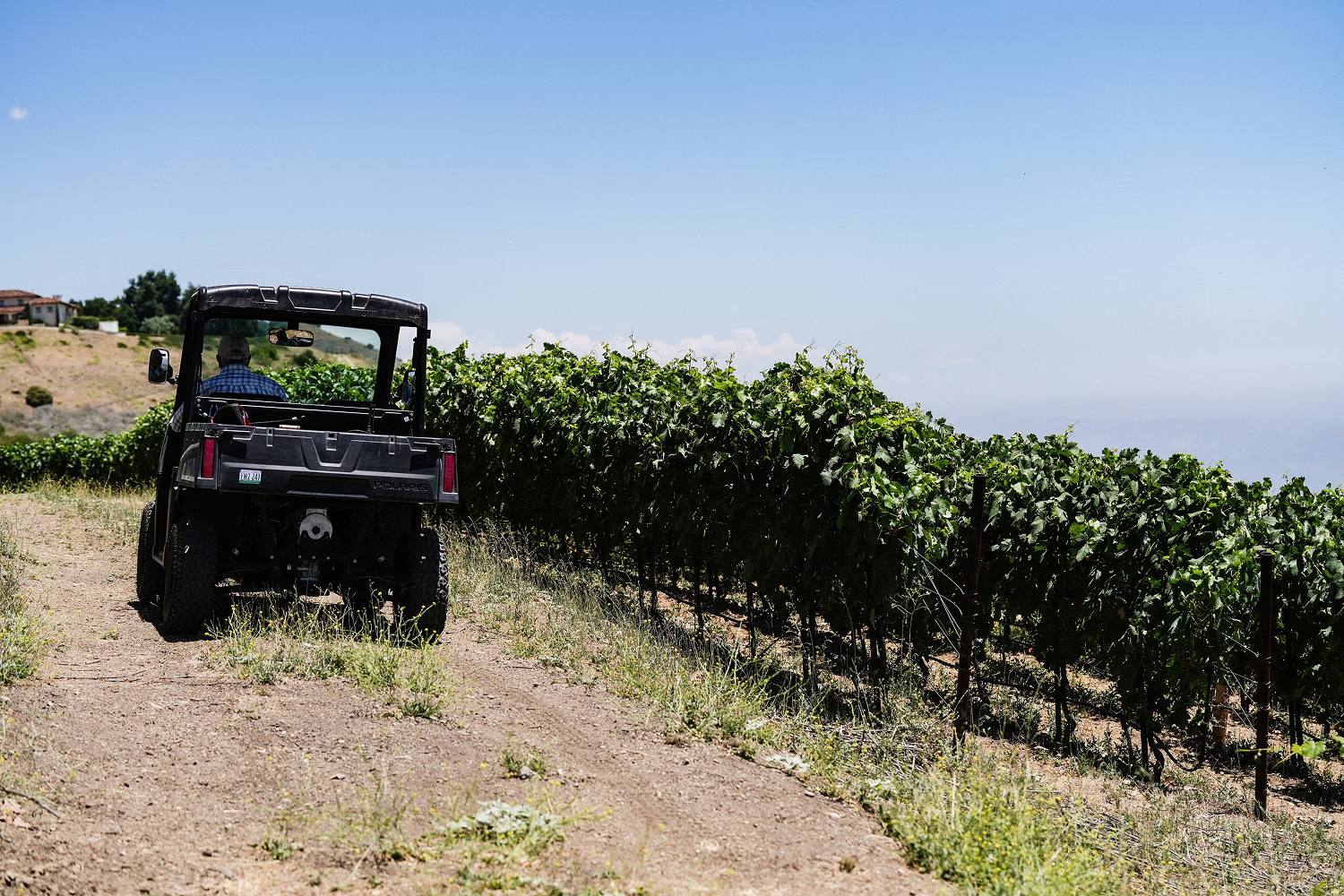
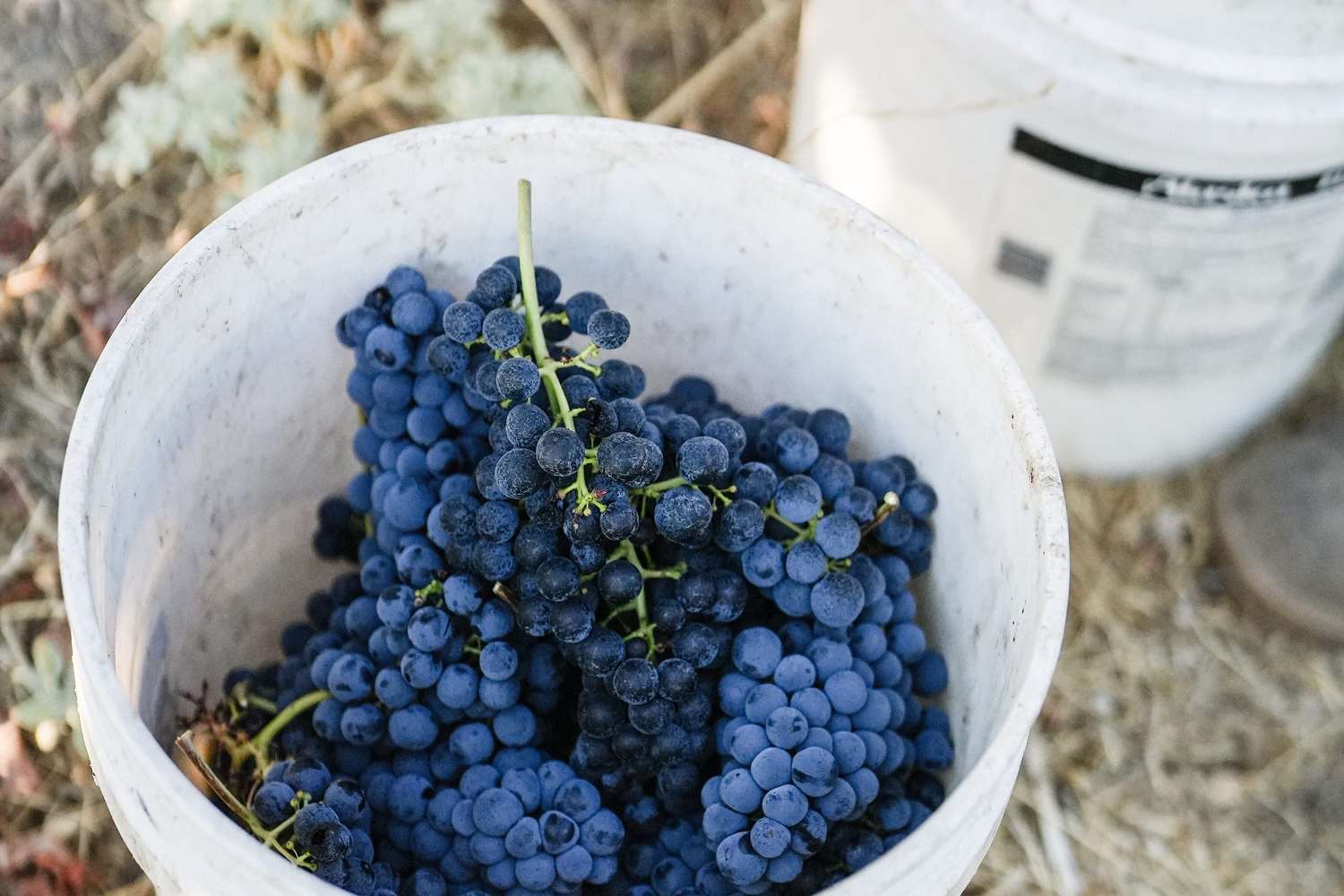
What the 2023 season did do, quietly, was build reserves. The deep soil moisture from two consecutive high-rainfall years gave our vines a resilience that would prove critical in 2024, when a late-summer heatwave forced rapid decisions across the vineyard. The Tempranillo responded with what our harvest notes called a "bumper crop," a dramatic rebound from the prior year's silence. We picked on September 5, 2024, and for the first time, we had enough fruit to let Tempranillo stand alone.
Tempranillo in America: Where the Grape Has Found a Home
Tempranillo is the fourth most widely planted red wine grape in the world, yet in the United States it remains something of a quiet discovery. The variety is grown across 36 of California's 58 counties, with total state acreage reaching 952 acres as of 2024. To put that in perspective: Syrah covers 13,688 acres in California, and Cabernet Sauvignon covers 90,040. Tempranillo remains a genuine niche, which is part of what makes the best expressions worth seeking out. Those expressions are concentrated in just a handful of places where the climate provides the combination the grape genuinely needs: warm days, cool nights, and enough elevation or marine influence to slow ripening and preserve acidity.
Where It Thrives
The American Tempranillo map is more interesting than most people realize:
Oregon's Umpqua Valley is the variety's spiritual home in the Pacific Northwest, pioneered by Earl Jones at Abacela Vineyards, who relocated from Kentucky specifically to grow Tempranillo in the south of the state. Oregon now has more than 400 acres planted, andAbacela produces three distinct Tempranillos each vintage. The hot days and cool nights of the Umpqua mirror the continental rhythm of northern Spain more closely than almost anywhere else in America.Washington's Walla Walla and Yakima Valley host about 50 acres of Tempranillo, planted where the variety competes directly with Cabernet Sauvignon for the best sites. Results here tend toward structure and depth.Texas has become an unexpected force, with Hill Country producers earning double gold medals at major competitions and a growing critical conversation around the state's ability to produce serious Tempranillo.California's Central Valley and Paso Robles account for the bulk of state acreage, though the warm-climate expressions tend toward riper, more extracted profiles. The more compelling California Tempranillos come from cooler zones: the Santa Barbara region and higher-elevation sites where the grape can ripen slowly.
The Rioja Comparison: What We Share, and What Makes Us Different
Rioja is the undisputed benchmark for Tempranillo. The grape has been grown there since at least the 1500s, and the
Understanding what makes Rioja's best Tempranillo so distinctive helps explain exactly why we believe this site can produce something in conversation with it.
How Rioja and Ojai Mountain Compare
| Rioja Alavesa | Rioja Alta | Ojai Mountain | |
|---|---|---|---|
Elevation | 1,300–2,300 ft | 1,300–2,000 ft | |
Soils | Clay-limestone, stony | Clay-limestone, iron-rich | Monterey shale, fractured rock |
Climate influence | Atlantic + continental | Atlantic | Pacific Ocean (10 miles) |
Diurnal swing | Significant | Moderate | 40–50°F daily |
Tempranillo style | Fresh, bright acidity, refined structure | Structured, age-worthy | TBD (first vintage) |
Rioja Alavesa is the subregion most often cited for producing Tempranillo with the freshness and structural tension we admire most. Its vineyards sit between 400 and 700 metres, benefit from the Cantabrian Mountains as a climate buffer, and grow in poor, stony, clay-limestone soils that force deep root penetration. The result is a wine with bright acidity and refined structure, the kind of Tempranillo that ages gracefully rather than fading quickly.
Our site shares the fundamental logic of Alavesa: elevation that slows ripening, soils that stress the vine, and a moderating influence (theirs from mountains, ours from the Pacific) that keeps temperatures from swinging into the extreme. What we bring that Rioja cannot is the Monterey shale beneath us, ancient seabed rock that imparts a mineral specificity unlike anything in northern Spain. And at 2,800 feet, we sit meaningfully higher than even the tallest Rioja vineyards, which top out around 2,600 feet in their most elevated enclaves.
The Soils: A Study in Contrasts
Both formations are marine sedimentary in origin — but they sit at opposite ends of almost every axis that matters for vine physiology and fruit chemistry.
The practical consequence:
| Limestone-clay (Rioja) | Monterey shale (Ojai Mountain) | |
|---|---|---|
Origin | Tertiary marl and limestone | Marine diatomaceous shale |
Soil chemistry | Alkaline, calcium-rich | Acidic to neutral, silica-rich |
Water retention | Clay fraction buffers drought | Drains aggressively, low buffer |
Natural vigor | Moderate — requires canopy management | Naturally low — shale limits it |
Flavor association | Red-fruit precision, structural acidity | Concentration, minerality, small berries |
Vulnerability | Over-vigor in wet years | Compounded stress in extreme drought |
One honest caveat: the shale's low water-holding capacity means our driest vintages carry more exposure than Rioja's clay-buffered sites. There is no geological safety net here. What the mountain gives in natural restraint, it takes back in unforgiving conditions — which is precisely why the 2024 season, with its deep soil moisture reserves from two consecutive high-rainfall years, was the vintage that finally let this wine exist.
“This vineyard is tough. It's raw. No real soil yet — just fractured rock and time. And out of that struggle come wines with a kind of natural tension I find really compelling.”
The critical difference is that Rioja has centuries of accumulated knowledge about Tempranillo. We have six years of vines and one extraordinary vintage. That is not a disadvantage; it is simply where we are. And the chemistry of this inaugural wine suggests the site is already doing something right.
Technical Notes on the 2024 Vintage
We let the numbers speak plainly, because in this case they tell a compelling story.
What the Chemistry Reveals
A pH of 3.74 is on the lower end for a California red wine, where many warm-climate Tempranillos push toward 3.8 or higher. Lower pH means more natural acidity, better structural integrity, and a greater capacity to age. Combined with a TA of 6.6 g/L, this wine has the backbone to evolve over years in the cellar, not just months on a shelf.
The alcohol at 13.7% is restrained for a California red and sits comfortably within the range of a serious Rioja Reserva. This is not a coincidence: it reflects the September 5 harvest date, an early pick driven partly by the 2024 heatwave conditions, and the natural moderating effect of our elevation. The mountain kept the sugar accumulation in check even as the valley below was baking.
How Our Numbers Compare to Benchmark Rioja
The most useful benchmark is La Rioja Alta, one of the classicist houses in Rioja Alta and the producer most associated with structured, long-lived Tempranillo. Their flagship Gran Reservas publish technical data that makes a direct comparison possible.
| Ojai Mountain 2024 | LRA Gran Reserva 904 (2016) | LRA Gran Reserva 890 (1994) | |
|---|---|---|---|
Alcohol | 13.7% | 14.5% | 12.8% |
pH | 3.74 | 3.61 | not stated |
TA (g/L) | 6.6 | 5.4 | 6.65 |
For context, winemakers generally regard a pH of 3.4 to 3.7 and a TA of 6 to 8 g/L as the ideal parameters for Tempranillo. Our wine sits at the edge of that range on pH and comfortably inside it on acidity.
What we can say is that Tempranillo generally has thinner skins and larger berries than Syrah, which is why classic Rioja often looks relatively translucent in the glass even from great vintages. Our 2024 Tempranillo runs darker than that — deeper in color, less translucent than what you would expect from the variety. That points toward the shale-driven small-berry effect: low fertility and aggressive drainage on Sulphur Mountain likely compress berry size and concentrate anthocyanins well beyond what Tempranillo typically delivers on Rioja's limestone-clay. The shale is doing work that the grape's own genetics would not.
Drinking Window
Based on the chemistry and style, we'd frame the aging window at
Winemaking: Neutral Oak, 19 Months
Erich Bradley aged this wine for 19 months in neutral oak, the same philosophy that guides every wine we make: no new wood, no oak flavor, no distraction from what the vineyard produced. Neutral barrels allow slow, gentle oxidation that builds complexity and integrates tannins without imprinting the wine with vanilla or toast. What you taste is Tempranillo, the mountain, and the vintage. Nothing else.
This approach aligns with the direction the most serious Rioja producers have been moving for decades, away from the heavy American oak that once defined the region and toward neutral vessels that let the grape's inherent character emerge. At 141 cases, this is a wine made with the attention that production of that scale demands.
Why This Matters for the Estate
Every winery has a moment when a variety it has been quietly nurturing finally steps forward. For us, that moment is now.
Tempranillo has been part of our
A standalone bottling is a different statement entirely. It says: this variety, grown here, on this soil, at this elevation, is worth encountering on its own terms.
We believe that is true. We also believe we are at the very beginning of understanding what Tempranillo becomes at 2,800 feet on Monterey shale, 10 miles from the Pacific. This first vintage is not a definitive statement. It is an opening argument.
If you are a
We are grateful that the mountain finally let us make this wine. It was worth the wait.
Frequently Asked Questions
Ojai Mountain's 2024 Tempranillo is grown at 2,800 feet on ancient Monterey shale soils, 10 miles from the Pacific Ocean. Rioja's benchmark subregions, Alta and Alavesa, top out around 2,600 feet on calcareous clay-limestone. The shale at Ojai Mountain drains aggressively, limits natural vine vigor, and concentrates flavor without intervention, producing a wine that is darker and denser in color than classic Rioja Tempranillo. The chemistry reflects a similar structural logic: a TA of 6.6 g/L tracks closely with La Rioja Alta's long-lived Gran Reserva 890 (6.65 g/L), while alcohol at 13.7% sits well within the range of serious Reserva-level Rioja.
Tempranillo is grown across several American regions, with the most compelling expressions coming from sites that share Rioja's core logic: elevation, diurnal temperature swings, and soils that naturally limit yield. Oregon's Umpqua Valley, pioneered by Abacela Vineyards, has just over 400 acres planted and is widely regarded as the variety's spiritual home in the Pacific Northwest. Texas's High Plains, at elevations above 3,500 feet, produces structured, red-fruit-driven Tempranillo with crisp acidity. In California, the variety covers 952 acres statewide (2024), a niche planting compared to Syrah at 13,688 acres and Cabernet Sauvignon at 90,040 acres. The most interesting California expressions come from cooler, higher-elevation sites rather than the warm Central Valley floor.
Yes, when grown in the right conditions. Tempranillo's aging potential depends heavily on structural balance at harvest: winemakers target a pH of 3.4 to 3.7 and a TA of 6 to 8 g/L for wines built to evolve in the cellar. Ojai Mountain's 2024 Tempranillo sits at pH 3.74 and TA 6.6 g/L, with 13.7% alcohol, parameters that align with serious Rioja at the fresher, more structured end of the spectrum. The wine was aged 19 months in neutral oak, which builds complexity and integrates tannin without imprinting oak flavor, the same direction the best Rioja producers have been moving for decades. Based on the chemistry and style, we'd frame the drinking window at 8 to 15 years, opening around 2028 to 2032 and holding comfortably beyond that if stored well. It will age more on its freshness and acid spine than sheer tannin weight.
141 cases. This is the inaugural standalone bottling of Tempranillo at Ojai Mountain, harvested September 5, 2024, and bottled May 1, 2026 after 19 months in neutral oak. The small production reflects both the size of our Tempranillo block and the estate's overall philosophy of small-batch, 100% estate-grown winemaking. Wine Club members receive priority allocation; general release is available while supplies last.
Two reasons. First, the Tempranillo vines planted at the estate did not produce enough fruit in early vintages to justify a standalone bottling; what was harvested went into the Estate Red blend. Second, the 2023 growing season brought a cold, wet spring that resulted in poor fruit set, and our Tempranillo block produced not a single berry. The 2024 season delivered the first genuine crop, a rebound driven in part by deep soil moisture reserves built up over two consecutive high-rainfall years. The mountain decided when it was ready.
Share this post
Recent Posts
View All Posts
Lesia Artymovych • 20 Sept 2026
The Scent of the Mountain: Chaparral, Syrah, and Ojai Terroir
Ojai Mountain’s wines can carry aromas that recall the chaparral surrounding the vineyard: sage, dried herbs, pepper, and wildflowers. Science does no...
Lesia Artymovych • 16 Sept 2026
The Ojai Pink Moment: Why the Topa Topa Mountains Glow
Ojai’s Pink Moment is the brief coral, rose, and violet glow that appears on the Topa Topa Mountains around sunset. Warm, low-angle light creates the ...
Lesia Artymovych • 14 Sept 2026
A Guide to Wine and Cheese Pairing at Ojai Mountain
Match intensity to intensity: pair fresh, delicate cheeses with Ojai Mountain's bright Estate Whites, and bold, aged cheeses with its Syrahs and reds....