
Oysters with Yuzu Mignonette and Ojai Mountain 2020 Estate White
This oysters with yuzu mignonette recipe pairs freshly shucked Pacific oysters with a Japanese-inflected sauce of yuzu juice, rice vinegar, minced shallot, and yuzu kosho. No cooking required beyond the shuck. The pairing with Ojai Mountain's 2020 Estate White Blend works because the wine's Picpoul-driven acidity and saline mineral character mirror the brine of the oyster and the citrus brightness of the yuzu, while the Grenache Blanc adds just enough body to keep the glass from disappearing next to the shellfish.

Oyster Ingredients
The oysters
12 to 24 fresh Pacific oysters (Kumamoto, Hog Island Sweetwater, or Marin Miyagi recommended)
Crushed ice, for serving
The yuzu mignonette
3 tablespoons yuzu juice (fresh or bottled; see substitution note)
2 tablespoons rice wine vinegar
1 tablespoon finely minced shallot (about 1 small shallot)
1 teaspoon yuzu kosho (green or red; green is more floral, red is spicier)
1/4 teaspoon freshly ground white pepper
To serve
Lemon wedges
Micro herbs or thinly sliced scallion, optional garnish
| Ingredient | Substitution |
|---|---|
| Yuzu juice | Meyer lemon juice + lime juice (2:1 ratio); the floral note will be less pronounced but the citrus brightness holds |
| Yuzu kosho | 1/2 tsp jalapeño, minced fine, + 1/4 tsp lemon zest; fermented heat will be different but the effect is similar |
| Rice wine vinegar | White wine vinegar or champagne vinegar |
| Pacific oysters | East Coast varieties (Wellfleet, Blue Point) work well; they are brinier and less creamy, which amplifies the pairing |
How to Make Oysters with Yuzu Mignonette
This is the simplest recipe in the program. The technique is entirely in the shuck and the restraint: a mignonette this good should be applied sparingly, just enough to cover the adductor muscle, never enough to drown the oyster's own liquor.
Step 1: Make the mignonette (20 minutes before serving)
Combine the yuzu juice, rice wine vinegar, minced shallot, yuzu kosho, and white pepper in a small bowl. Stir well to dissolve the yuzu kosho into the liquid. Taste: it should be bright, citrusy, and faintly spicy, with the shallot just beginning to soften in the acid.
Let the mignonette rest at room temperature for at least 20 minutes before serving. This is not optional: the resting time allows the shallot to mellow and the flavors to integrate. A mignonette made and served immediately will taste sharp and disjointed. Made the day before and refrigerated, it mellows further; add a splash of fresh rice vinegar before serving to re-brighten it.
Step 2: Set up your station
Spread a thick layer of crushed ice across a large serving platter or a shallow bowl. Have your oyster knife, a folded kitchen towel (or a cut-resistant glove), and a small bowl for discarded shells within reach. Set the mignonette in a small ramekin at the center of the platter.
Step 3: Shuck the oysters
Hold the oyster cupped side down in the folded kitchen towel, with the pointed hinge facing toward you. Insert the tip of the oyster knife into the hinge, applying firm pressure while twisting to pop the shells apart. Do not try to pry from the side; the hinge is where the leverage is.
Once the hinge releases, slide the knife along the inside of the top shell to sever the adductor muscle. Discard the top shell. Run the knife under the oyster to detach it from the bottom shell, keeping as much of the natural liquor in the shell as possible. Remove any shell fragments with the tip of the knife or a paper towel.
Nestle each shucked oyster into the crushed ice as you go.
Timing note for hosts: Oysters can be shucked up to 1 to 2 hours ahead and held covered in the refrigerator. Arrange them on ice just before guests arrive. The mignonette is already made. At service, all you do is bring the platter to the table and pour the wine.
Step 4: Serve
Spoon a small amount of mignonette over each oyster just before serving. Provide additional mignonette alongside for guests who want more. Serve lemon wedges on the platter. Eat immediately.
Wine Pairing Notes: Ojai Mountain 2020 Estate White Blend
The pairing logic here is one of resonance, not contrast. As Decanter notes, Picpoul's "distinct saline, iodine quality" makes it one of the great what-grows-together-goes-together matches for oysters. The 2020 Estate White Blend carries that same quality, drawn not from a coastal lagoon but from 2,800 feet of Monterey shale, where ancient seabed minerality expresses itself as a crushed-shell edge in the wine.
The pairing works on three levels:
Acidity mirrors the mignonette. The yuzu and rice vinegar in the sauce are bright and citrus-forward. The wine's Picpoul-driven acidity matches that register without competing with it, each sip resetting the palate for the next oyster.
Salinity echoes the brine. The wine's mineral character and the oyster's natural liquor are in the same flavor neighborhood. They amplify each other rather than colliding.
No oak, no weight. The 2020 White Blend is aged in neutral barrels, which means nothing heavy interferes with the delicate shellfish. This is the same reason oaked Chardonnay rarely works with raw oysters: the wood overwhelms what the oyster is trying to say.
Frequently Asked Questions
Yuzu is a Japanese citrus fruit with a flavor that sits somewhere between lemon, grapefruit, and mandarin, with a distinctly floral quality that neither of those fully captures. The fruit itself is rarely available outside Japan, but bottled yuzu juice is widely stocked at Asian grocery stores and available online year-round. Yuzu kosho, a fermented paste made from yuzu peel and chili, is found at the same retailers and adds both heat and umami depth to the mignonette.
A high-acid, mineral white wine with no oak influence pairs best with raw oysters. The acidity acts like a squeeze of lemon, lifting the brine and refreshing the palate between bites; the mineral character echoes the oyster's natural salinity rather than fighting it. Ojai Mountain's 2020 Estate White Blend, built on Grenache Blanc and Picpoul grown at high elevation on ancient Monterey shale, fits this profile precisely: its saline mineral edge and citrus-driven acidity make it one of the more compelling West Coast choices for an oyster course.
Always use a proper oyster knife, never a kitchen knife; the blade and handle are designed specifically for the torque required. Wrap your non-dominant hand in a thick folded kitchen towel or wear a cut-resistant glove. Hold the oyster cupped side down with the hinge pointing toward you, insert the knife tip into the hinge, and twist firmly to pop the shells apart. The hinge is the only correct entry point: attempting to pry from the side risks slipping and injury. Work slowly until you have the feel for it; speed comes with practice.
Yes, and it is actually better if you do. Made at least 20 minutes before serving, the shallot mellows in the acid and the flavors integrate. Made the day before and refrigerated, the mignonette develops a rounder, more cohesive flavor; add a splash of fresh rice vinegar just before serving to restore brightness. It keeps well in an airtight container for up to 3 days.
Creamy Pacific varieties, particularly Kumamoto and Hog Island Sweetwater, work especially well because their mild sweetness provides a counterpoint to the yuzu's brightness. East Coast oysters (Wellfleet, Blue Point) are brinier and less sweet; they work equally well but create a sharper, more saline pairing. Avoid very large, starchy oysters, which can overwhelm the delicate mignonette. Whatever variety you choose, freshness is the only non-negotiable.
Share this post
Recent Posts
View All Posts
Lesia Artymovych • 16 Sept 2026
The Ojai Pink Moment: Why the Topa Topa Mountains Glow
Ojai’s Pink Moment is the brief coral, rose, and violet glow that appears on the Topa Topa Mountains around sunset. Warm, low-angle light creates the ...
Lesia Artymovych • 14 Sept 2026
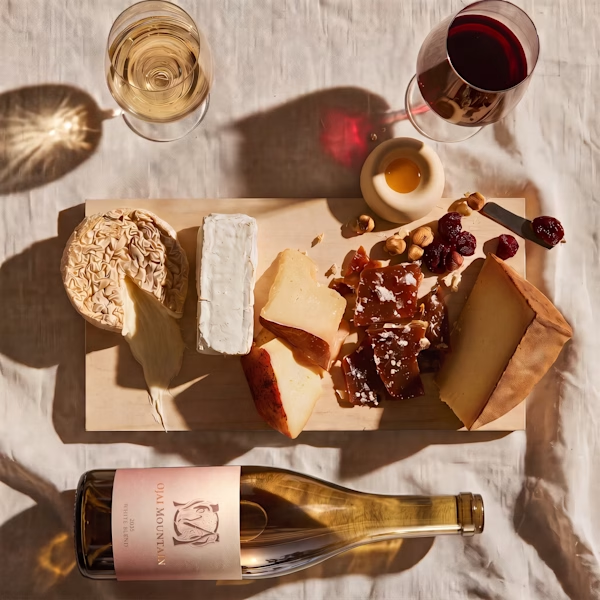
A Guide to Wine and Cheese Pairing at Ojai Mountain
Match intensity to intensity: pair fresh, delicate cheeses with Ojai Mountain's bright Estate Whites, and bold, aged cheeses with its Syrahs and reds....
Lesia Artymovych • 8 Sept 2026
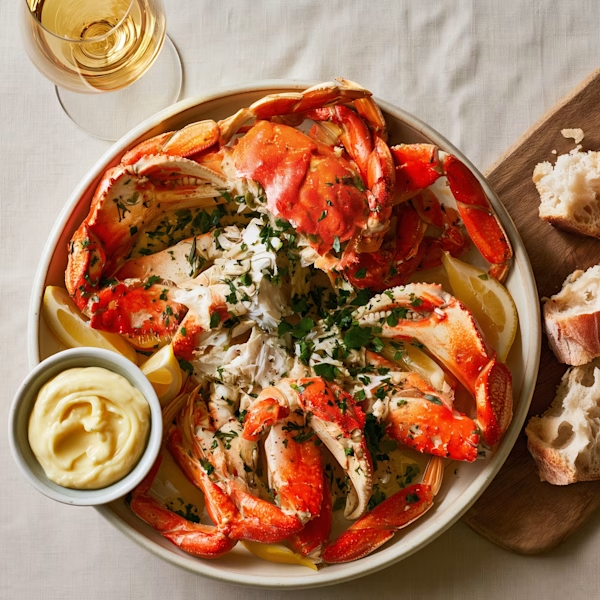
Dungeness Crab with Lemon Aioli and Herbs — 2021 Estate White Blend
Sweet, briny Dungeness crab meets a bright Meyer lemon aioli in an elegant but low-stress dish that can be prepared mostly ahead. Ojai Mountain’s 2021...