
 Log in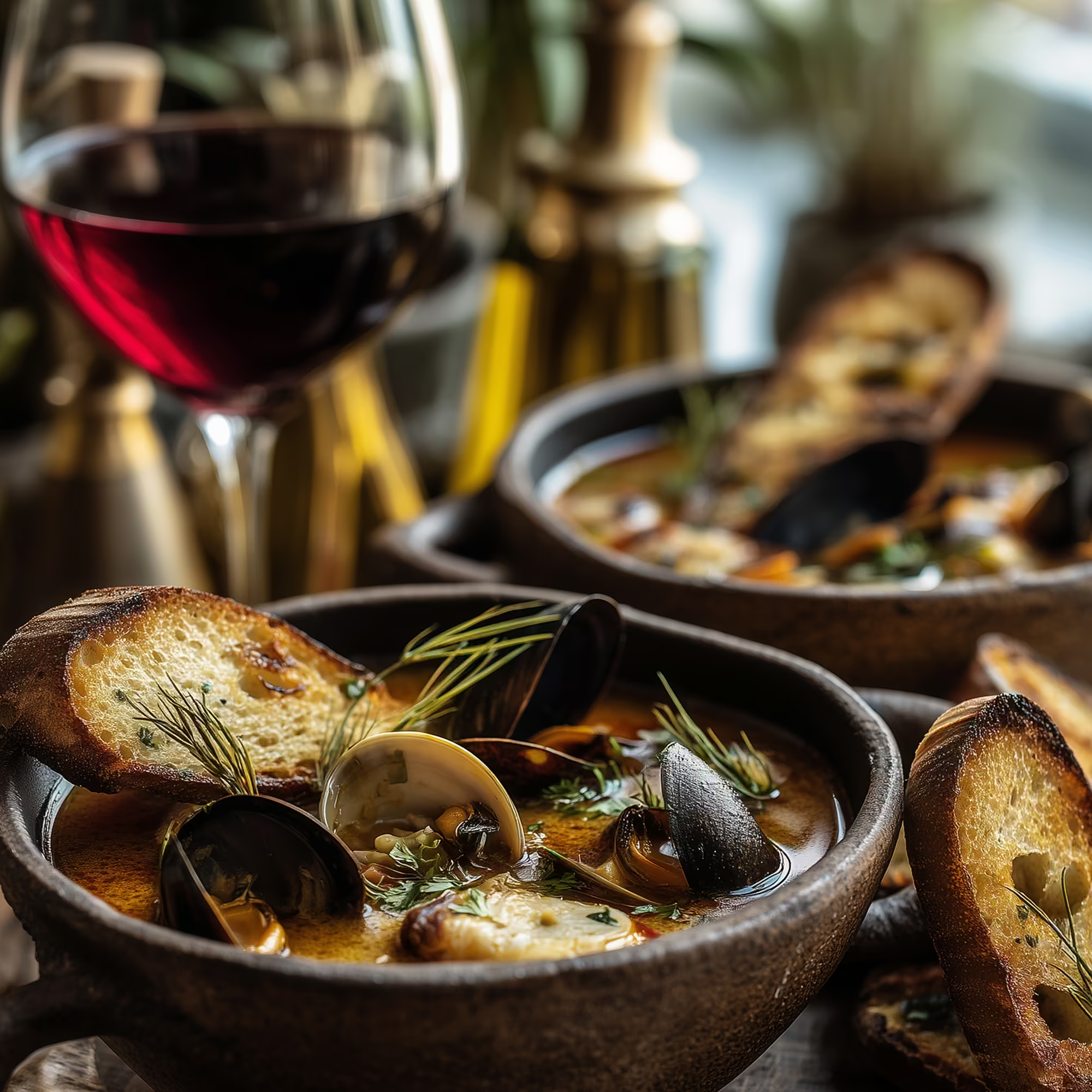
Saffron Bouillabaisse with Ojai Mountain 2023 Estate Mourvèdre
Saffron bouillabaisse combines a deeply flavored broth of fennel, tomato, saffron, and fish stock with white fish and shellfish. Rouille—a saffron-garlic emulsion served on toasted baguette—is its essential accompaniment. The broth’s savory intensity makes Ojai Mountain 2023 Estate Mourvèdre a natural pairing: dark berry fruit, spice, and earthy minerality complement the stew without overwhelming the seafood.

Bouillabaisse Ingredients
The broth
4 tablespoons extra-virgin olive oil
1 medium fennel bulb, thinly sliced (reserve fronds for garnish)
1 leek, white and light green parts only, halved and thinly sliced
1 medium onion, thinly sliced
4 garlic cloves, smashed and peeled
2 cups canned whole tomatoes, crushed by hand, with their juices
1 tablespoon tomato paste
1/3 teaspoon saffron threads (about 0.20 g), crumbled between your fingers
2 tablespoons Pernod or dry white wine
4 cups good-quality fish stock (or 2 cups clam juice + 2 cups water)
1 strip orange peel (2 inches)
3 sprigs fresh thyme
1 bay leaf
Kosher salt and freshly ground black pepper
The seafood (staggered by cook time)
3/4 lb. monkfish or halibut, cut into 2-inch pieces (firm; add first)
3/4 lb. sea bass or red snapper fillets, cut into 2-inch pieces (medium; add second)
1 lb. mussels, scrubbed and debearded (add third)
1/2 lb. littleneck clams, scrubbed (add with mussels)
1/2 lb. large shrimp, shell-on (add last)
The rouille
1/4 teaspoon saffron threads (about 0.05 g), steeped in 1 tablespoon fresh lemon juice for 15 minutes
4 garlic cloves
1/4 teaspoon fine salt
1 slice white bread, crust removed, soaked in fish stock and squeezed dry
1 large egg yolk
1 teaspoon Dijon mustard
1/4 teaspoon cayenne pepper
2/3 cup extra-virgin olive oil
To serve
1 baguette, sliced and toasted
Fresh fennel fronds and flat-leaf parsley, for garnish
| Ingredient | Substitution |
|---|---|
| Monkfish | Halibut, red snapper, or sea bass (all firm enough to hold shape) |
| Pernod | Dry white wine + 1/4 teaspoon fennel seed (similar anise note without the liqueur) |
| Fresh fish stock | Good-quality store-bought clam juice + water (1:1); do not use chicken stock |
| Saffron | Cannot substitute; turmeric provides color but not flavor. Saffron is the defining ingredient |
| Rouille from scratch | 6 tablespoons good-quality mayonnaise + 2 garlic cloves grated to paste + pinch saffron + pinch cayenne (5-minute version; texture differs but flavor is close) |
How to Make Saffron Bouillabaisse
Bouillabaisse is a two-pot dish: the broth is made first and the seafood is poached in it to order. This is the correct method for a dinner party because the broth can be made entirely the day before, leaving only the final 10 to 12 minutes of seafood cooking for service. The staggered addition of seafood in reverse order of cook time is the technique that separates a proper bouillabaisse from a generic seafood stew: every piece reaches doneness simultaneously.
Step 1: Steep the rouille saffron (15 minutes before starting the broth)
Crumble the rouille saffron threads (0.05 g) into 1 tablespoon of fresh lemon juice in a small bowl. Set aside for at least 15 minutes. The acid in the lemon juice extracts crocin, saffron's primary color and flavor compound, approximately 40% faster than water. This concentrated saffron-lemon liquid is added to the rouille at the end, giving it an intense, adjustable accent.
Step 2: Build the broth (30 to 35 minutes)
Heat the olive oil in a large, wide Dutch oven or heavy pot over medium heat. Add the sliced fennel, leek, and onion. Cook gently, stirring occasionally, for 8 to 10 minutes until completely softened and beginning to turn translucent. Do not let them brown; the goal is sweetness, not caramelization.
Add the smashed garlic and tomato paste and stir for 1 minute. Add the crushed tomatoes with their juices and cook for 4 to 5 minutes, stirring, until the tomato reduces slightly.
Crumble the broth saffron threads (0.20 g) directly into the pot. Add the Pernod, fish stock, orange peel, thyme, and bay leaf. Bring to a boil, then reduce to an active simmer. Cook uncovered for 25 to 30 minutes, until the broth has reduced by approximately one-third and smells deeply of saffron and fennel. Taste at the 25-minute mark: you should detect saffron's floral presence beneath the fennel and tomato.
Season generously with salt and pepper. Remove the orange peel, thyme sprigs, and bay leaf.
Step 3: Make the rouille (10 minutes, while the broth simmers)
In a food processor, combine the garlic cloves, fine salt, soaked and squeezed bread, egg yolk, Dijon mustard, and cayenne. Pulse until smooth.
With the machine running, drizzle in the olive oil in a thin, steady stream until the rouille is thick and emulsified, about 2 minutes. Add the saffron-lemon liquid and blend until the color is uniform rust-orange.
Taste and adjust with salt. The rouille should be intensely garlicky, faintly spicy, and deeply colored. Refrigerate until needed; it keeps for up to 2 days.
Step 4: Poach the seafood in staggered sequence (10 to 12 minutes)
Bring the broth to a vigorous simmer over medium-high heat. Season the fish pieces lightly with salt.
Add the seafood in this order, timing carefully:
| Seafood | Add at |
|---|---|
| Monkfish or halibut | Minute 0 |
| Sea bass or snapper | Minute 2 |
| Mussels and clams | Minute 5 |
| Shell-on shrimp | Minute 7 |
Per FDA seafood safety guidelines, discard any mussels or clams that do not open during cooking. Do not continue cooking shellfish hoping they will open; an unopened shell after 5 minutes means the shellfish was dead before cooking and should be discarded.
Remove from heat as soon as all the seafood is just cooked through. Do not let it sit in the hot broth; residual heat will continue cooking it.
Step 5: Assemble and serve
Toast the baguette slices and spread generously with rouille. Float the toasts directly in each bowl or serve alongside.
Ladle the broth into wide, shallow bowls, distributing the seafood evenly and ensuring each serving includes a piece of firm fish, a piece of medium fish, several mussels or clams, and shrimp. Garnish with fennel fronds and parsley.
Timing note for hosts: Make the broth and rouille the day before. On the night, the only active work is bringing the broth to a simmer, toasting the baguette, and 10 to 12 minutes of staggered seafood poaching. Seat your guests, pour the wine, then cook the seafood. This is one of the most host-friendly recipes in the program despite its reputation for complexity.
Wine Pairing Notes: Ojai Mountain 2023 Estate Mourvèdre
Mourvèdre with seafood is the pairing in this program most likely to raise an eyebrow, and the most likely to convert a skeptic. The conventional instinct is to reach for white wine with a seafood stew. The reason Mourvèdre works here is structural: bouillabaisse is not a delicate dish. Its saffron broth, fennel, tomato base, Pernod, and deeply seasoned stock give it the kind of savory intensity that needs a wine with genuine character, not one that disappears into the bowl.
The 2023 Estate Mourvèdre, grown at 2,800 feet on Monterey shale with Ojai Mountain's minimal-intervention approach, brings dark berry fruit, savory spice, and earthy mineral notes that complement the stew's depth without overpowering the seafood itself. This is the "sauce beats protein" principle at its most dramatic: the broth is the pairing driver, not the fish.
Savory depth meets savory depth. The Mourvèdre's earthy, spice-driven character is in the same flavor register as the saffron and fennel broth. They amplify each other rather than competing.
The rouille is the bridge. The rouille's garlic, saffron, and olive oil create a rich, emulsified element that softens the wine's tannins and creates a textural meeting point between glass and bowl.
Fruit provides counterpoint. The wine's dark berry fruit provides a counterpoint to the broth's acidity and salinity, keeping the pairing from feeling one-dimensional.
Frequently Asked Questions
Saffron bouillabaisse is a Provençal French seafood stew built on a deeply flavored broth of fennel, leek, tomato, garlic, and saffron, used to poach a selection of firm white fish and shellfish. The name comes from the Provençal words "bolhir" (to boil) and "abaissar" (to lower or reduce), referring to the technique: bring to a boil, then lower to a simmer. The saffron gives the broth its signature golden color, floral aroma, and warm depth. It is traditionally served with rouille, a saffron-laced garlic emulsion spread on toasted baguette and floated in the bowl.
A medium-bodied red wine with savory structure and dark fruit pairs better with saffron bouillabaisse than a white wine, because the pairing is driven by the broth rather than the seafood. The stew's saffron, fennel, tomato, and deeply seasoned stock create a savory intensity that needs a wine with genuine character. Ojai Mountain's 2023 Estate Mourvèdre, grown at high elevation on ancient Monterey shale, brings dark berry fruit, savory spice, and earthy mineral notes that complement the broth's depth without overpowering the fish. Serve it slightly chilled at 55 to 60°F to keep it lively.
Mourvèdre works with bouillabaisse because the pairing is driven by the sauce, not the protein. As Decanter notes, sauce beats protein in most wine pairings, and bouillabaisse's saffron broth, fennel, and tomato base give the dish the savory intensity that Mourvèdre is built to meet. The rouille, with its garlic and olive oil richness, acts as a textural bridge between the wine's tannins and the broth's acidity, softening the pairing at the point of contact.
Yes, with one constraint: use firm-fleshed fish that hold their shape during poaching. Monkfish, halibut, red snapper, and sea bass are all reliable choices. Avoid delicate fish like sole or flounder, which will fall apart in the broth. Shellfish (mussels, clams, shrimp) are interchangeable. Traditional Marseille bouillabaisse uses a minimum of four fish species for textural variety; at home, two firm species plus shellfish produces an excellent result.
Rouille is a Provençal garlic and saffron emulsion, similar in technique to aioli but colored rust-orange by the saffron and enriched by roasted red pepper or bread. It is not technically required, but it is the element that makes bouillabaisse a complete dish rather than a seafood soup: its richness softens the broth's acidity, its garlic amplifies the stew's aromatics, and its texture provides contrast to the broth. A shortcut version made from good-quality mayonnaise, garlic paste, saffron, and cayenne takes under 5 minutes and is an acceptable substitute.
Yes, and it is strongly recommended. The broth keeps refrigerated for up to 2 days and actually improves overnight as the saffron continues to infuse. Bring it to a vigorous simmer before adding the seafood. The rouille also keeps refrigerated for up to 2 days. On the night of the dinner, the only active work is the 10 to 12 minutes of staggered seafood poaching, making this one of the most make-ahead-friendly dishes in the program.
Share this post
Recent Posts
View All Posts
Lesia Artymovych • 20 Sept 2026
The Scent of the Mountain: Chaparral, Syrah, and Ojai Terroir
Ojai Mountain’s wines can carry aromas that recall the chaparral surrounding the vineyard: sage, dried herbs, pepper, and wildflowers. Science does no...

Lesia Artymovych • 16 Sept 2026
The Ojai Pink Moment: Why the Topa Topa Mountains Glow
Ojai’s Pink Moment is the brief coral, rose, and violet glow that appears on the Topa Topa Mountains around sunset. Warm, low-angle light creates the ...
Lesia Artymovych • 14 Sept 2026
A Guide to Wine and Cheese Pairing at Ojai Mountain
Match intensity to intensity: pair fresh, delicate cheeses with Ojai Mountain's bright Estate Whites, and bold, aged cheeses with its Syrahs and reds....