
 Log in
How Rootstocks & Clones Shape Ojai Mountain Wines
Every vine at Ojai Mountain begins with two critical decisions: the rootstock beneath the soil and the clone above it. Together, they determine how a vine grows, responds to mountain conditions, and ultimately expresses itself in the glass. At Ojai Mountain, every selection was made for one reason—to produce wines that reflect elevation, restraint, and place.

TL;DR
Rootstocks determine how a grapevine survives below ground, while clones shape how the fruit develops above ground. At Ojai Mountain, 1103P rootstock was selected for its drought tolerance and deep rooting in fractured Monterey shale, while specific Rhône clones were chosen to preserve freshness, structure, and mountain-grown character at 2,800 feet.
This vineyard offers a vine very little: fractured Monterey shale, scarce water, persistent wind, and a long growing season shaped by elevation. That is not a limitation we work around. It is the condition we work within.
Long before a vine produces its first grape, two decisions determine how it will perform: the rootstock beneath the soil and the clone above it. Together, they influence everything that follows—from water uptake and vine balance to fruit composition, structure, and longevity in the bottle.
At Ojai Mountain, every planting decision begins with one question:
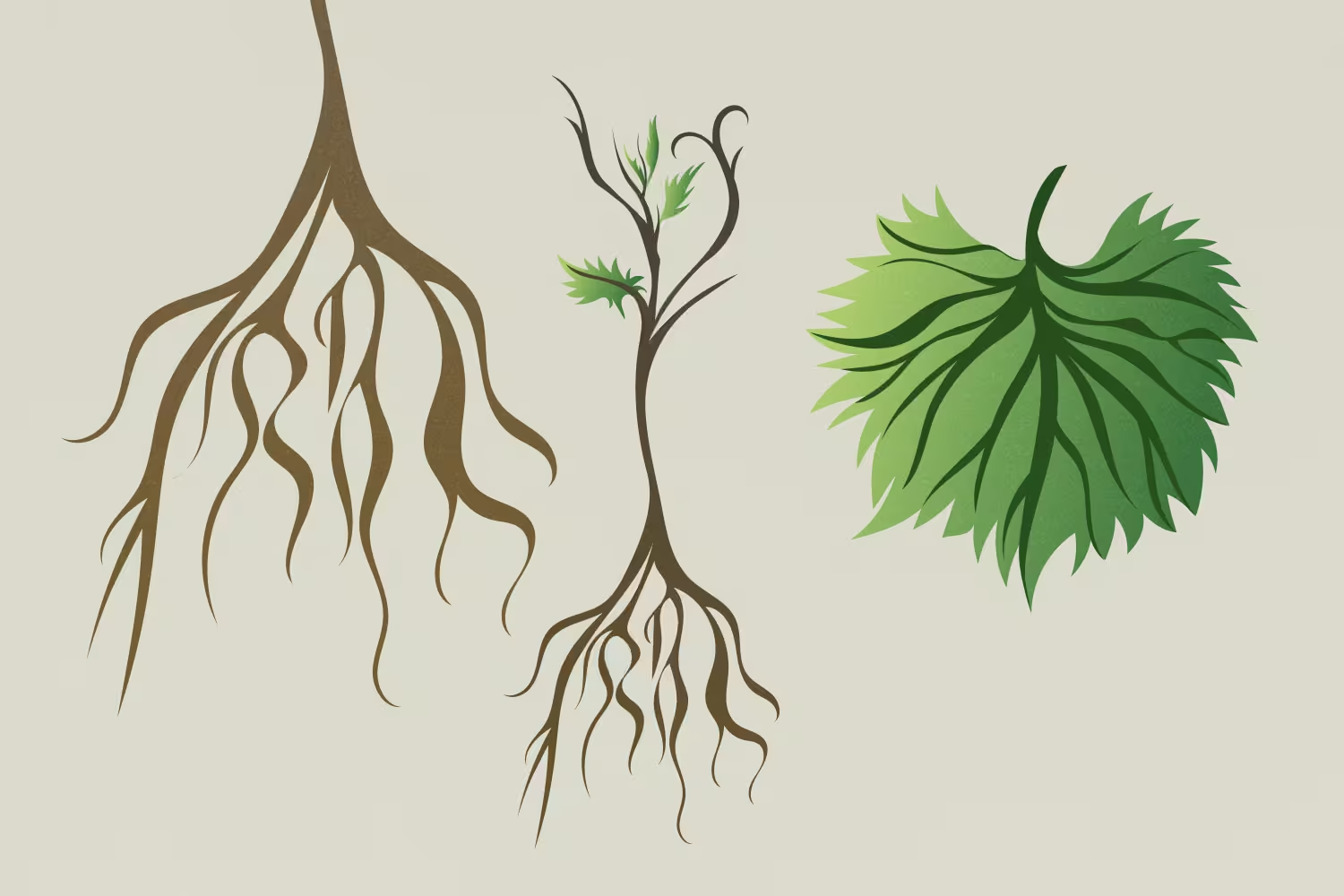
Rootstock Selection
We chose
Why 1103P
1103P's deep-rooting architecture allows it to penetrate fractured rock in search of moisture. That depth reduces dependence on supplemental irrigation and encourages the long-cycle water access that produces wines with genuine tension and mineral character. In dry Mediterranean climates where soils shed water quickly, a shallow root system is a liability. 1103P goes deep.
It is also a vigorous rootstock, which requires honest management. Left unchecked, vigor pushes canopy growth at the expense of fruit concentration. Our site moderates this naturally through low-fertility soils, elevation, and persistent wind. We reinforce what the land already provides through deliberate choices around planting density, pruning, irrigation timing, and crop load. None of these decisions are passive. Each is made in service of vine balance.
The Contrast: SO4
Two small blocks planted on SO4 offer an instructive comparison. SO4 is better suited to cooler, more fertile sites with greater water availability, and its shallower root development reflects that. Observing both rootstocks under identical mountain conditions has confirmed what the site itself suggests.
| Rootstock | Best suited for | Root behavior | Fit for Ojai Mountain |
|---|---|---|---|
1103P | Drought-tolerant, suited to fractured shale and low fertility. | Deep rooting | Strong fit |
SO4 | Higher water dependency, better matched to fertile valley-floor or cool-climate sites | Shallower rooting | Limited fit |
Rhône Varietals and Clonal Selection
Choosing the right rootstock is only half the equation. The clone planted above it determines how each variety expresses itself on the mountain.
Rhône varieties, both red and white, are naturally adapted to dry climates, poor soils, persistent winds, and long growing seasons. Those conditions make them particularly well suited to Ojai Mountain, where elevation slows ripening and preserves freshness despite warm summer days.
Within each variety, clone selection adds another layer of precision. Different clones of the same grape can produce distinct aromatic profiles, tannin structures, ripening patterns, and aging potential. Selecting the right clone allows us to match each variety not only to the site, but to the style of wine we hope to produce.
Not every variety expresses clonal differences with equal intensity. With Syrah, clone has a profound influence on aroma, structure, and the role each wine plays in a final blend. With varieties such as Grenache Blanc or Picpoul, the mountain itself often has the stronger voice. Elevation, cool nights, wind exposure, fractured Monterey shale, and a long ripening season shape the wine more dramatically than genetics alone. Clone still matters. At Ojai Mountain, however, site almost always speaks first.
| Varietal | Clone Influence | Primary Driver |
|---|---|---|
Syrah | High | Clone shapes aromatics, structure, and aging arc distinctly |
Roussanne | Moderate | Clone contributes aromatic complexity; mountain conditions preserve balance |
Mourvèdre | Moderate | Clone sets the baseline; elevation and late ripening do the rest |
Tempranillo | Moderate | Clone origin matters; mountain conditions define the expression |
Grenache Noir | Low–Moderate | Site and altitude dominate; clone refines concentration and yield |
Grenache Blanc | Low–Moderate | Elevation and cool nights shape the wine more than clone selection |
Picpoul | Low | Variety is site-expressive; clone choice primarily governs freshness retention |
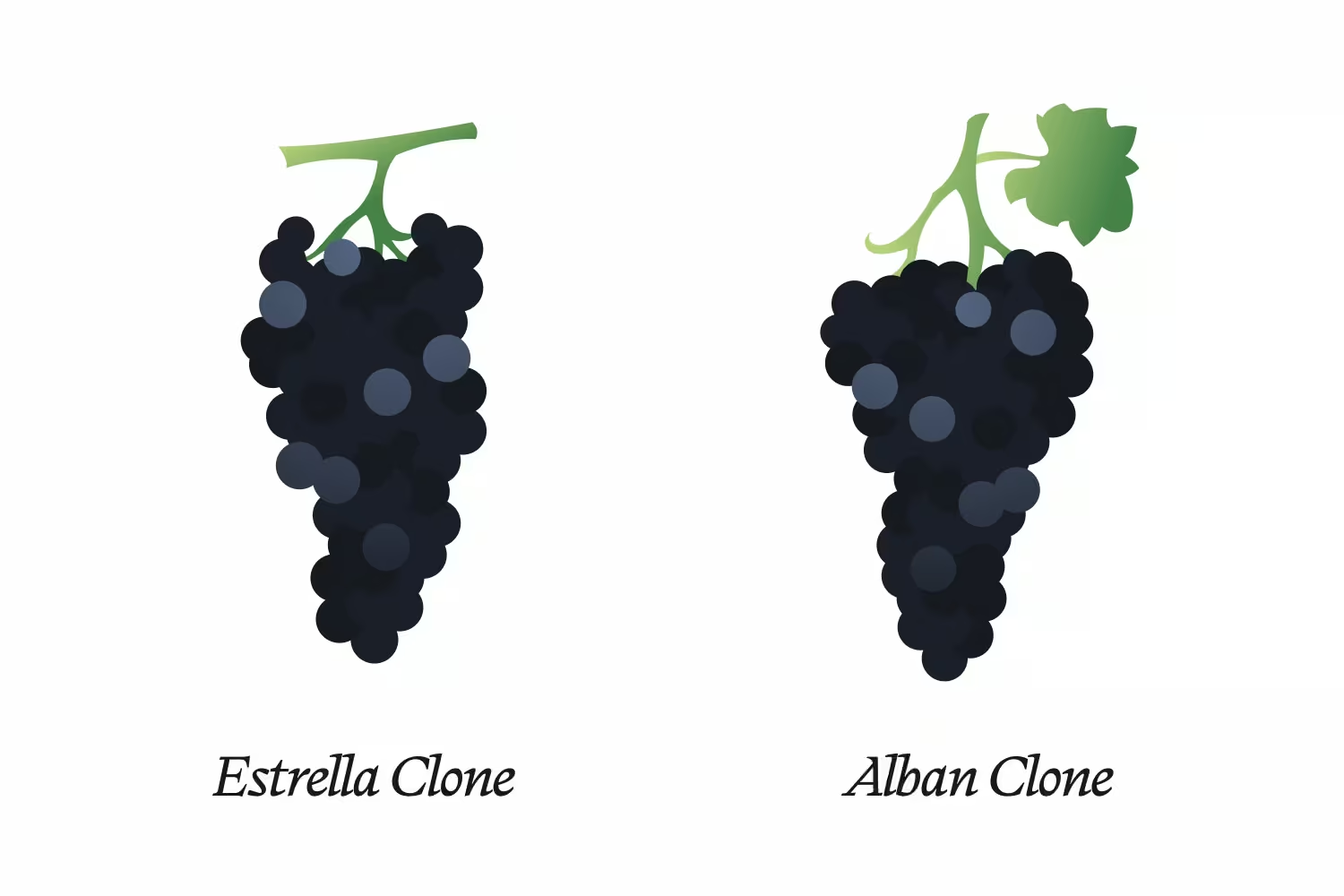
Syrah: Two Clones, One Mountain
Syrah is the signature variety of the estate, farmed as two distinct clones across multiple blocks. Each contributes something the other cannot.
| Clone | Origin | Character at Elevation | Role in the Wine |
|---|---|---|---|
Estrella | Chapoutier, Tain-l'Hermitage via Paso Robles (1978) | Graphite, blueberry, iron minerality, structured tannins | Backbone and aging architecture |
Alban | Côte Rôtie via Alban Vineyards | Violet, white pepper, black olive, mid-palate depth | Aromatic lift and complexity |
Farming both clones across separate blocks allows us to observe how each responds to comparable mountain conditions: similar wind exposure, diurnal swing, and fractured shale. The differences are not created in the cellar. They begin in the vineyard, revealing how genetics interact with the same mountain conditions.
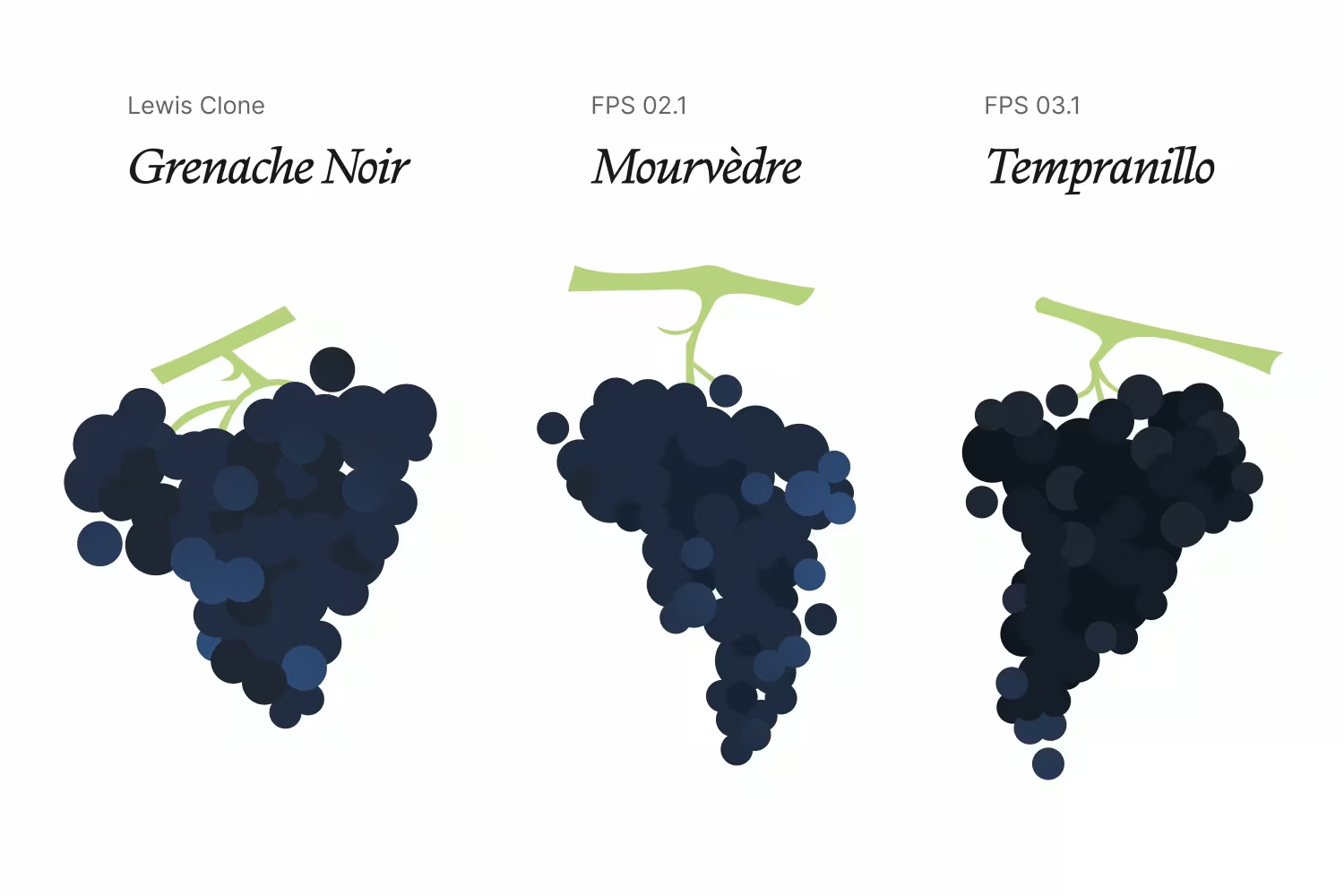
Grenache Noir: Lewis Clone
Grenache forms the backbone of our Estate Red blend. We selected the Lewis Clone, a California selection known for smaller berries, lower yields, and greater concentration than many commercial Grenache plantings.
At nearly 2,800 feet, Grenache behaves differently than it does on warmer valley floors. Cool nights and persistent ocean winds preserve acidity and aromatic freshness, while the long growing season allows fruit to develop flavor and tannin gradually. The result is a mountain expression of Grenache: bright red berries, dried herbs, spice, and mineral tension, supported by freshness and structure rather than weight and alcohol.
This is not the broad, jammy Grenache associated with hot climates. It is a more precise and savory expression shaped by elevation, wind, and the rugged conditions of Upper Ojai.
Mourvèdre: FPS 02.1
Mourvèdre asks more of a vineyard than any other red variety we grow. Late ripening, thick skinned, and naturally structured, it only reaches its full potential on sites with long growing seasons. We selected the FPS 02.1 clone, a certified California selection known for producing savory wines with depth, complexity, and exceptional aging potential.
Few sites in California can fully ripen Mourvèdre while preserving freshness. At Ojai Mountain, long sunlight exposure, cool nights, and persistent ridge winds extend the growing season, allowing the variety to mature slowly and evenly. The result is a distinctive expression with dark fruit, wild herbs, earthy minerality, and firm tannins.
Mourvèdre is an essential component of our Estate Red blend, providing the structure and aging potential that underpin the wine's long cellar life. Beginning with the 2023 vintage, we also introduced our first standalone Mourvèdre bottling.
Tempranillo: FPS 03.1
Although Ojai Mountain is planted primarily to Rhône varieties, Tempranillo feels remarkably at home on this mountain. Like Grenache and Mourvèdre, it thrives in warm, dry climates and develops complexity through a long growing season rather than excessive sugar accumulation. Our high-elevation site, exposed to constant ocean influence, allows Tempranillo to ripen slowly while retaining freshness and structure.
Our Tempranillo is planted to FPS 03.1, a certified selection that traces its origins to Rioja, Spain. On fertile valley-floor sites, this selection can be quite vigorous and productive. On our fractured shale soils and windswept mountain slopes, yields are naturally limited and ripening extends well into the fall. The result is a distinctly mountain-grown expression: vibrant red fruit, savory spice, and natural acidity, combining the variety's Spanish heritage with the freshness and longevity that define Ojai Mountain wines.
The White Varietals
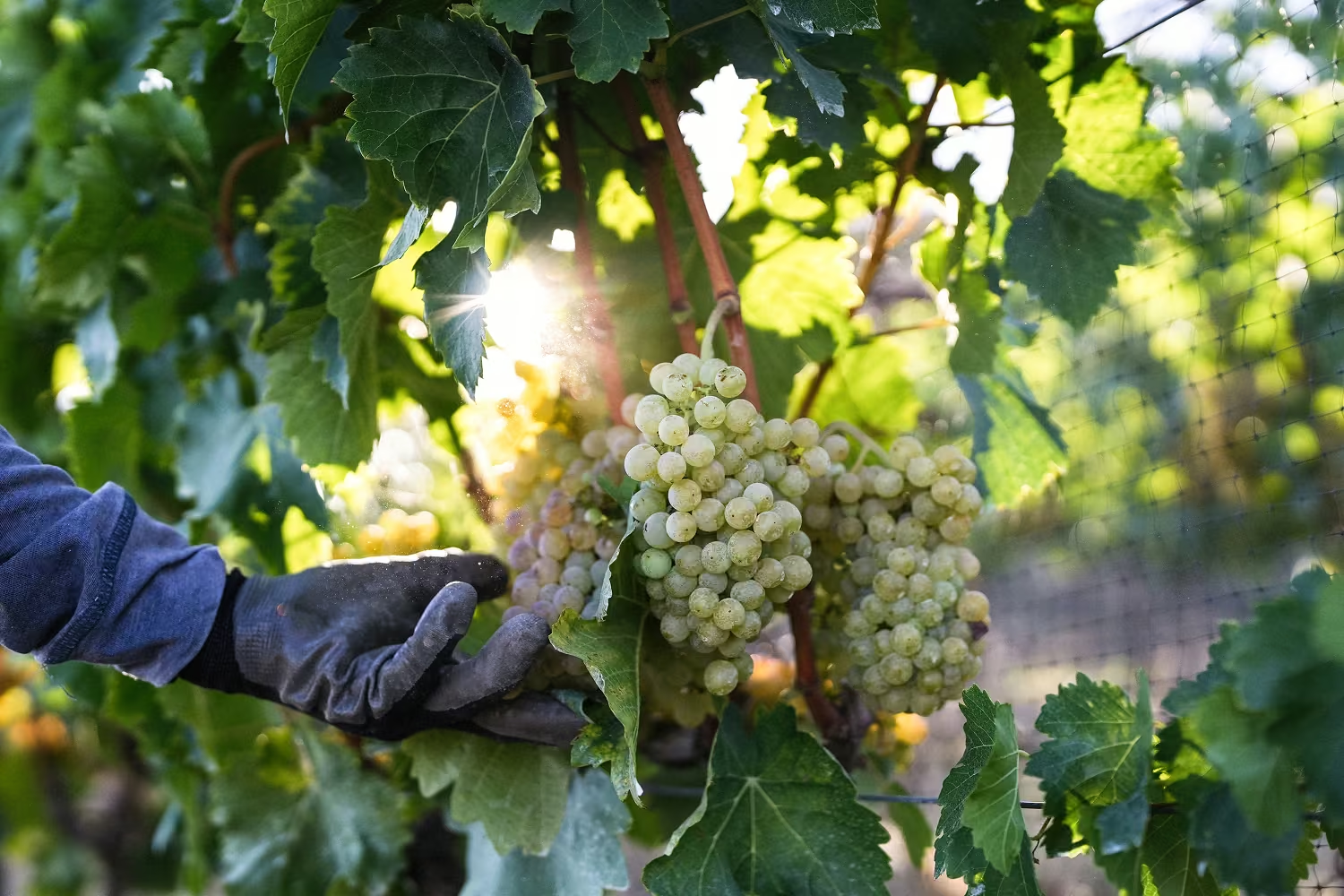
The same philosophy guides our white plantings. Rather than selecting clones for maximum yield, we chose those that preserve freshness, texture, and balance under mountain conditions.
Grenache Blanc: Clone 01
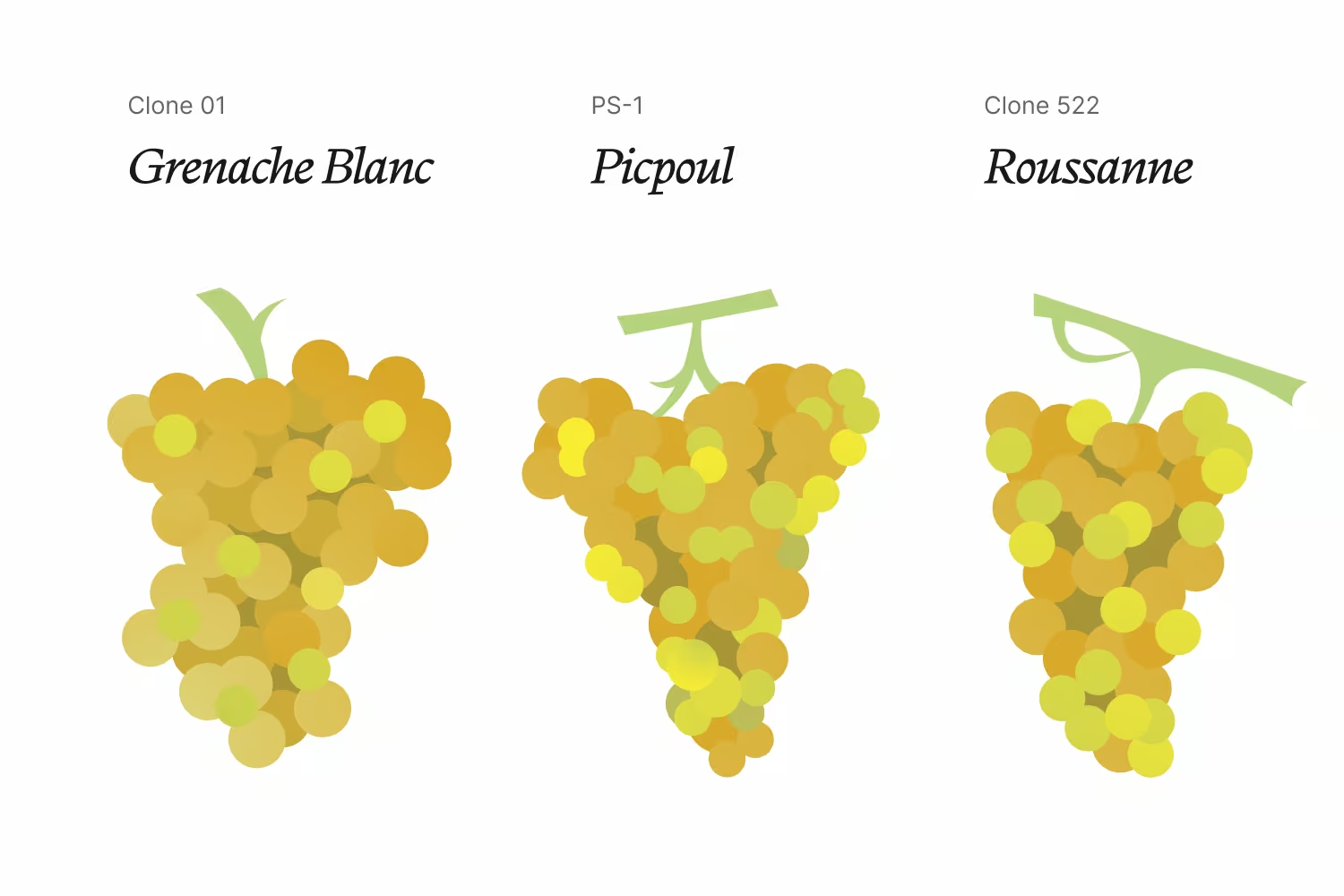
Grenache Blanc is our most planted white and the anchor of the Estate White blend. Clone 01 is a classic certified selection known for texture, depth, and a broad mid-palate. At Ojai Mountain, elevation and cool nights slow ripening and develop tension rather than overt richness. The result is pear, citrus oil, mountain herbs, and wet stone, with the textured structure that defines Rhône whites grown at altitude.
Picpoul: PS-1
Sometimes called "lip stinger" for its razor-sharp acidity, Picpoul thrives in our cool mountain climate. PS-1 is a certified California selection chosen for its ability to retain freshness throughout the growing season. At Ojai Mountain, the variety develops vibrant citrus and mineral character while preserving remarkable natural acidity, bringing energy, precision, and longevity to our Estate White blend.
Roussanne: Clone 522
Clone 522 is a premium French selection prized for its concentration, aromatic complexity, and balance. At Ojai Mountain, the long growing season and cool mountain nights allow Roussanne to ripen slowly while preserving freshness, contributing pear, white peach, chamomile, and citrus blossom, along with the texture and structure that give our Rhône-style whites both depth and aging potential.
| Varietal | Clone | Character at Elevation | Role in the Blend |
|---|---|---|---|
Grenache Blanc | Clone 01 | Pear, citrus oil, mountain herbs, wet stone | Texture, mid-palate depth, anchor |
Picpoul | PS-1 | Vibrant citrus, mineral, razor acidity | Energy, precision, longevity |
Roussanne | Clone 522 | Pear, white peach, chamomile, citrus blossom | Richness, aromatic complexity, structure |
Every vine at Ojai Mountain begins with a deliberate decision. The rootstock was chosen to search deeply through fractured rock. The clone was chosen to express something true at elevation. Together, they establish the foundation for everything that follows.
Long before the first grapes are harvested or the first barrel is filled, the character of a wine has already begun to take shape beneath the surface. None of it is manufactured in the winery. It starts here—in the ground, where rootstock, clone, and mountain work together to produce wines defined by freshness, structure, and place.
Explore our current releases to taste how those decisions express themselves in the glass.
Frequently Asked Questions
A rootstock is the underground portion of a grapevine that provides the root system. It determines how the vine accesses water and nutrients, tolerates drought, resists pests, and adapts to different soils. The fruit itself comes from the scion—the grape variety grafted onto the rootstock—making rootstock one of the most important long-term decisions in vineyard establishment.
Most modern vineyards use grafted vines to protect against phylloxera, a tiny root-feeding insect that devastated vineyards worldwide in the late nineteenth century. Grafting also allows growers to match each grape variety with a rootstock that is best suited to the site's soil, climate, water availability, and farming goals.
A clone is a genetically distinct selection of a grape variety that has been chosen for desirable characteristics such as berry size, yield, flavor profile, acidity, or disease resistance. While two clones belong to the same variety, they can produce noticeably different wines. Selecting the right clone helps growers match a variety to the conditions of a specific vineyard.
1103P was chosen because it was built for exactly the conditions we farm: dry, rocky, low-fertility terrain with minimal water availability. Its deep-rooting architecture allows it to penetrate fractured Monterey shale in search of moisture, reducing dependence on supplemental irrigation. Research published in peer-reviewed viticulture literature confirms that 1103P is more efficient in water use than SO4 and is preferable for semi-arid environments where water scarcity is a concern. At 2,800 feet on a windswept ridge, that efficiency is not a preference. It is a requirement.
Both are widely used rootstocks, but they are suited to very different sites. SO4 performs best in cooler, more fertile soils with reliable water access. Its shallower root development reflects that. 1103P roots deeper, tolerates drought more effectively, and is better matched to rocky, low-fertility terrain. We farm two small blocks on SO4, and the contrast under identical mountain conditions is instructive: 1103P's architecture is simply better suited to a ridge that offers a vine very little.
Rootstocks do not determine the grape variety, but they strongly influence how a vine grows. By affecting water uptake, vine vigor, ripening, and berry size, rootstocks help shape acidity, tannin development, flavor concentration, and overall balance. Choosing the right rootstock creates healthier vines that produce fruit better suited to the vineyard's conditions.
Rootstocks and clones influence different parts of the vine but work toward the same goal. The rootstock determines how the vine grows below ground—its access to water, nutrients, and resilience under stress—while the clone influences how the fruit develops above ground, including aromatics, structure, and ripening. Together, they establish the foundation for the style, balance, and longevity of the finished wine.
Ojai Mountain grows both the Estrella and Alban Syrah clones because each contributes different qualities to the final wine. Estrella provides structure, minerality, and aging potential, while Alban contributes floral aromatics, savory complexity, and mid-palate richness. Farming both clones under the same mountain conditions allows each to express its unique character while creating greater depth and balance in the finished wines.
Rhône varieties naturally thrive in warm, dry climates with poor soils and long growing seasons. At Ojai Mountain, the combination of 2,800-foot elevation, fractured Monterey shale, persistent winds, and cool nights slows ripening and preserves freshness. These conditions allow varieties like Syrah, Grenache, Mourvèdre, Roussanne, Grenache Blanc, and Picpoul to develop concentrated flavors while maintaining the acidity and structure that define the wines.
Every varietal on the estate is planted to a specific certified clone selected for how it performs at elevation:
- Syrah: Estrella Clone (Chapoutier, Tain-l'Hermitage via Paso Robles) and Alban Clone (Côte Rôtie via Alban Vineyards)
- Grenache Noir: Lewis Clone
- Mourvèdre: FPS 02.1
- Tempranillo: FPS 03.1
- Grenache Blanc: Clone 01
- Picpoul: PS-1
- Roussanne: Clone 522
Share this post
Recent Posts
View All Posts
Lesia Artymovych • 20 Sept 2026
The Scent of the Mountain: Chaparral, Syrah, and Ojai Terroir
Ojai Mountain’s wines can carry aromas that recall the chaparral surrounding the vineyard: sage, dried herbs, pepper, and wildflowers. Science does no...
Lesia Artymovych • 16 Sept 2026
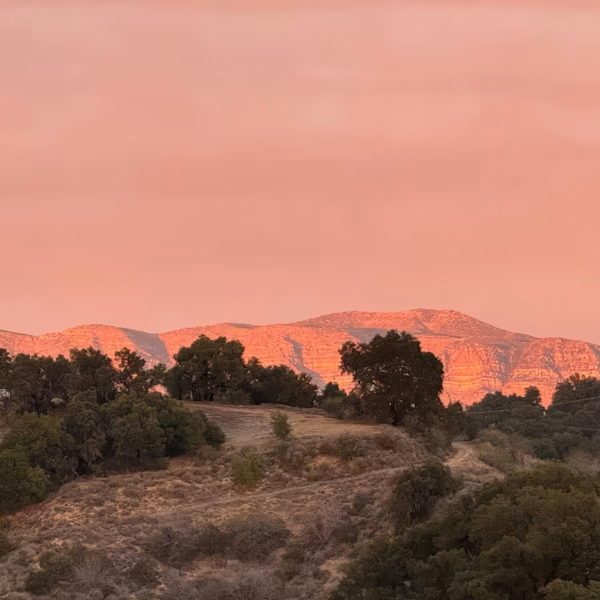
The Ojai Pink Moment: Why the Topa Topa Mountains Glow
Ojai’s Pink Moment is the brief coral, rose, and violet glow that appears on the Topa Topa Mountains around sunset. Warm, low-angle light creates the ...
Lesia Artymovych • 14 Sept 2026
A Guide to Wine and Cheese Pairing at Ojai Mountain
Match intensity to intensity: pair fresh, delicate cheeses with Ojai Mountain's bright Estate Whites, and bold, aged cheeses with its Syrahs and reds....