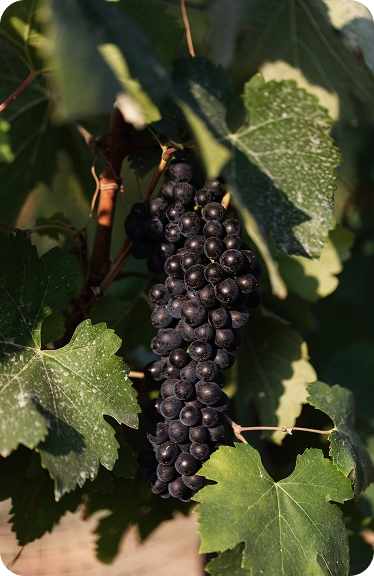
Viticulture

How We Farm, and Why It Matters

A remarkable site is only the beginning. What turns a difficult mountain into a great wine region is every farming decision made in response to what the land offers — and what it withholds.

Viticulture farming decisions

Ojai Mountain produces wines from one of California's most distinctive vineyard sites. But a remarkable site is only the beginning. What determines whether a difficult mountain becomes a great wine region is not geography alone. It is every farming decision made in response to what the land offers and what it withholds.

This page is about those decisions: the rootstocks we chose and why, the varietals and clones we selected for how they perform at elevation, the farming practices we have built around the specific demands of this mountain, and the people whose expertise guides every one of those choices.

“Sustainability and biodynamic principles are foundational here. Soils are no-till, harvest is done by hand and fermentations are all native.”
Billy NorrisVinous Wine Critic

Ojai Mountain has been farmed without a single synthetic fertilizer, herbicide, or pesticide since the first vine went into the ground in 2018. That is not a marketing position. It is a farming philosophy, and it shapes every decision described on this page.

The Team

The People
Who Farm This
Mountain

Every farming decision at Ojai Mountain flows through two people who have spent their careers learning what mountain vineyards demand. Their combined expertise is not incidental to the wines. It is inseparable from them.

Head Viticulturist

Martín Ramírez

Martín Ramírez brings deep, site-specific expertise to the daily rhythm of Ojai Mountain's farming. A veteran Ojai vineyard manager with decades of experience in the region's distinctive mountain and coastal climates, Martín oversees every aspect of the estate's hands-on viticulture: canopy management, irrigation timing, crop load decisions, pruning, and harvest calls.

His knowledge of this mountain is irreplaceable. The 335-acre property presents a range of microclimates, aspects, and soil exposures across its blocks, and reading those differences season by season requires the kind of accumulated observation that no protocol can substitute for.

“It is the cleanest, healthiest, most productive land in the area; besides that, it has the most beautiful views in the valley!”
Martín RamírezHead Viticulturist
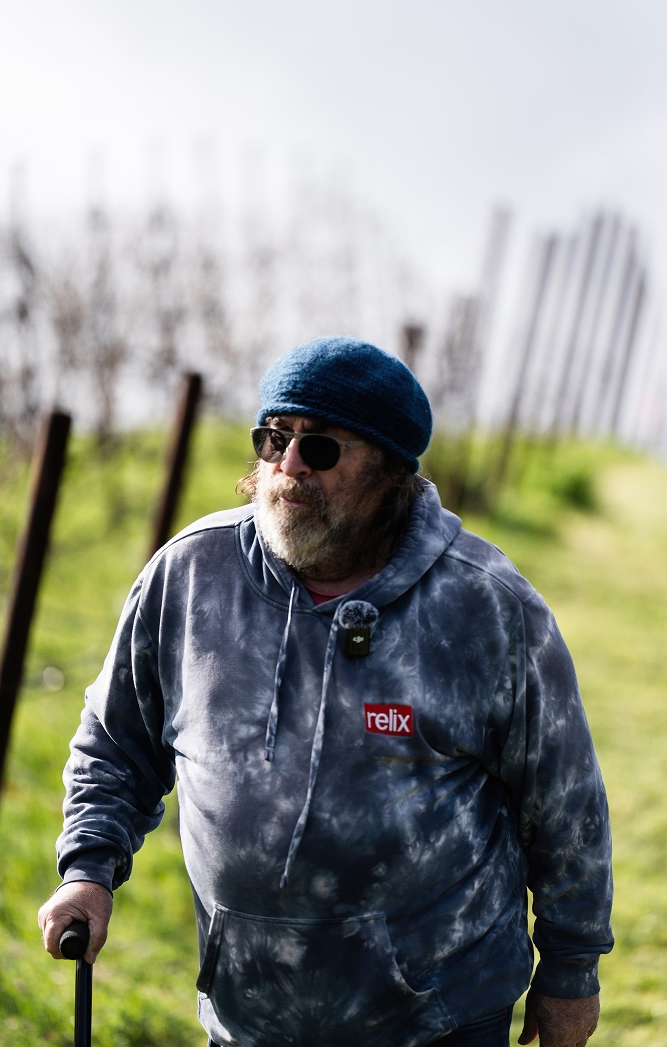
Martín Ramírez, Head Viticulturist at Ojai Mountain Estate

Photo by Quoc Ngo.

Viticultural Consultant

Phil Coturri

Phil Coturri is widely regarded as the father of organic grape growing in California. He began farming vineyards in Sonoma in the late 1960s, and after a near-fatal poisoning from the herbicide paraquat in the 1970s, he committed entirely to organic and biodynamic methods at a time when almost no one in California was doing so. In 1979, he founded Enterprise Vineyard Management, which today oversees approximately 600 acres of organically farmed vineyards across Sonoma and Napa, including Laurel Glen, Mayacamas, and Kamen Estate.

His philosophy is practical rather than dogmatic. He employs biodynamic preparations for their observed benefits to soil health while separating them entirely from any spiritual framework. What drives him is a simple conviction: healthy soil produces better grapes, and better grapes produce better wine.

At Ojai Mountain, Phil's fingerprints are on the foundational choices: amending our fractured Monterey shale with fish emulsion, kelp, and oyster shell calcium rather than synthetic fertilizers; installing beehives and raptor boxes as integrated pest management; establishing the cover cropping philosophy that builds organic matter in soils that would otherwise offer almost nothing.

“The whole thing about the vineyards we work with is to emphasize terroir. As a lifelong organic farmer, that's the most important thing that we could bring to the table for winemakers and the wine-drinking public.”
Phil CoturriViticultural Consultant
Phil Coturri, Viticultural Consultant at Ojai Mountain Estate

Photo by Quoc Ngo.

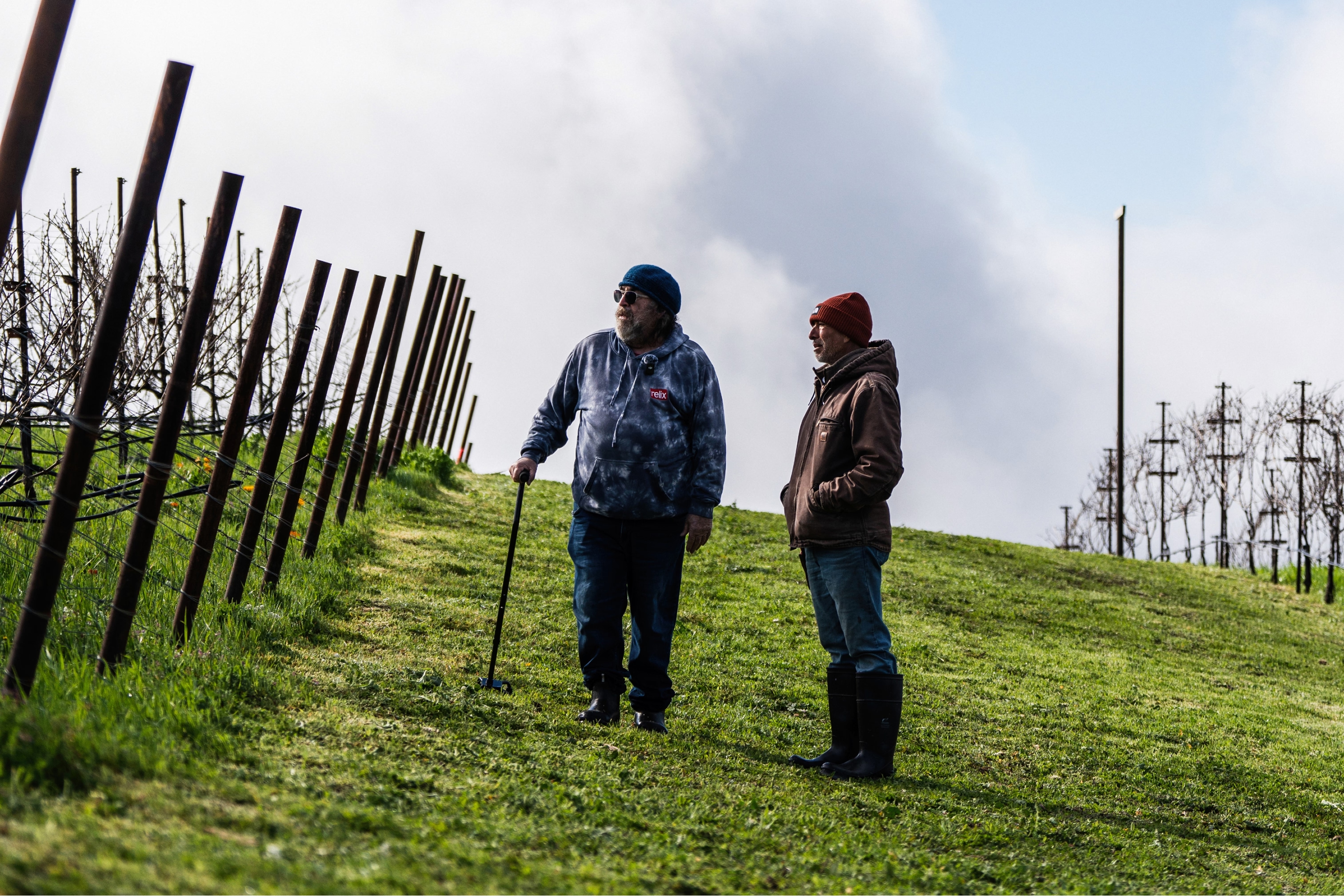
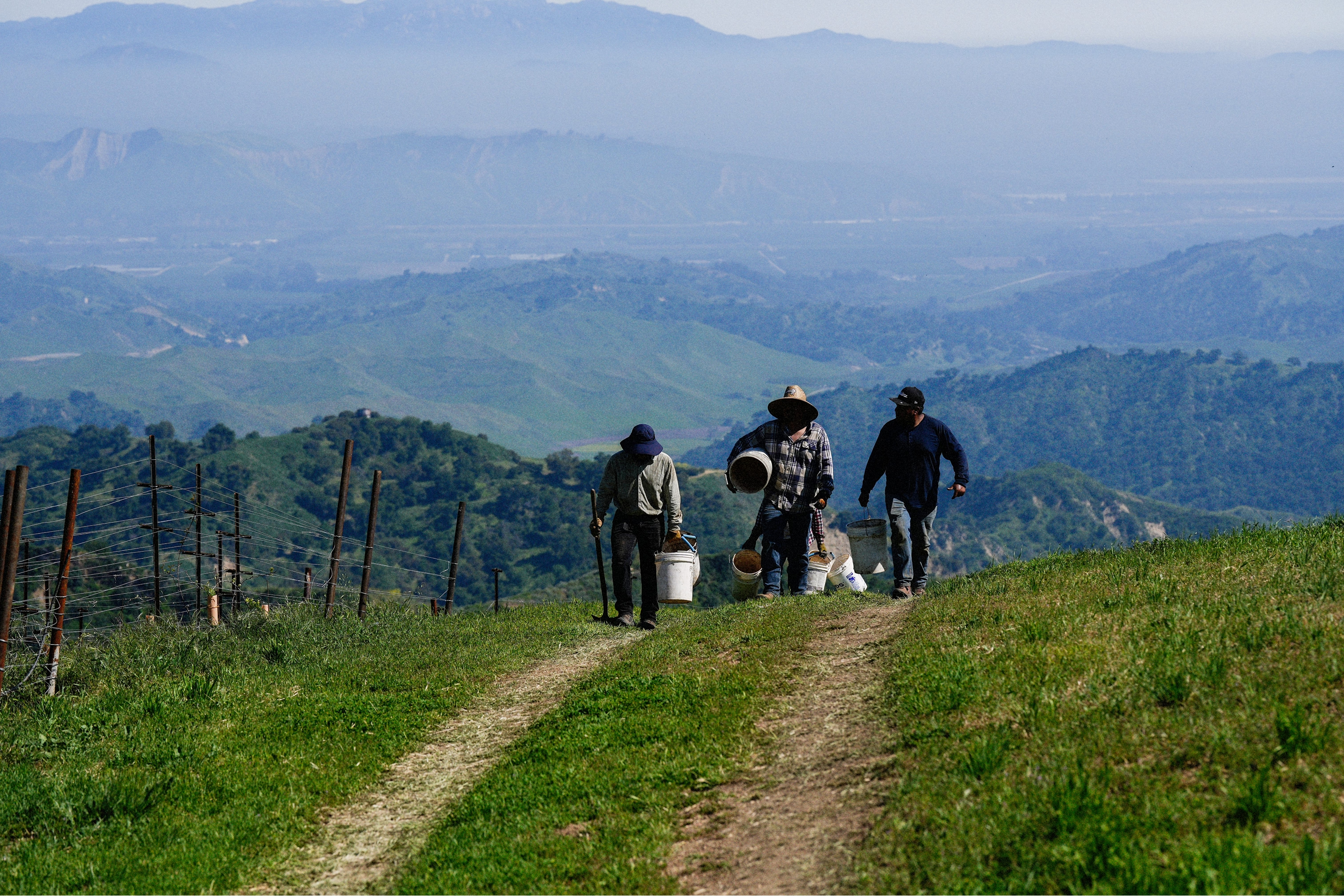
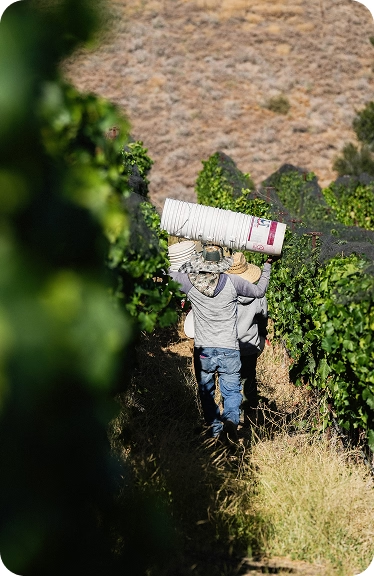
The Ojai Mountain viticulture team in the vineyard
Photo by Quoc Ngo.

Viticulture partnership

Together, Phil and Martín represent a partnership between foundational philosophy and daily execution. Phil establishes the framework. Martín reads the land. The result is farming that is both principled and adaptive.

“The vineyard is perched on a gently sloped aspect, embracing the cooling breezes of the Pacific. It literally is breathtaking. Whenever you can see the Channel Islands from a vineyard, you know that you are in for a treat.”
Phil CoturriViticultural Consultant

The Foundation of Restraint

Rootstock Selection

This vineyard offers a vine very little: fractured Monterey shale, minimal fertility, scarce water, and seasons defined by wind and heat. We chose 1103 Paulsen (1103P) as our rootstock because it was built for exactly this — dry, rocky, low-fertility terrain. It roots deep, needs little water, and works within the limits of the site rather than around them.

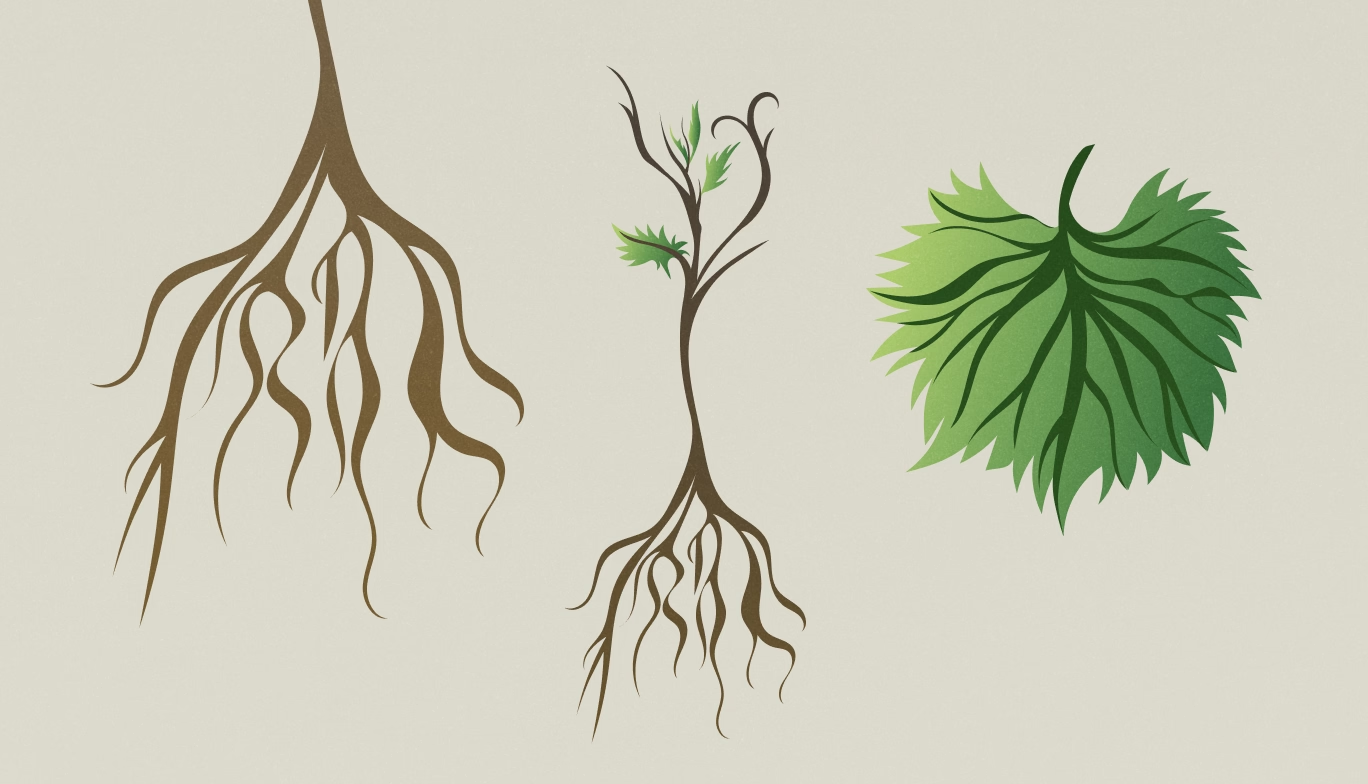
Illustration of 1103 Paulsen rootstock
Illustration by Lesia Artymovych.

Why 1103P

1103P is built for sites like ours. Its deep-rooting architecture allows it to penetrate fractured rock in search of moisture, reducing dependence on supplemental irrigation and encouraging the long-cycle water access that produces wines with genuine tension and mineral character. In dry Mediterranean climates where soils shed water quickly, a shallow root system is a liability. 1103P goes deep.

It is also a vigorous rootstock, which requires honest management. Left unchecked, vigor pushes canopy growth at the expense of fruit concentration. Our site moderates this naturally through low-fertility soils, elevation, and persistent wind. We reinforce what the land already provides through deliberate choices around planting density, pruning, irrigation timing, and crop load. None of these are passive decisions. Each one is made in service of balance.

Two small blocks planted on SO4 offer an instructive contrast. SO4 is better suited to cooler, more fertile sites with greater water availability, and its shallower root development reflects that. Observing both rootstocks under identical mountain conditions has confirmed what the site itself suggests: depth and restraint are not preferences here. They are requirements.

Varietals & Clonal Selection

Rhône Varietals and Clonal Selection

The decision to plant Rhône varietals at Ojai Mountain was not trend-driven. Rhône grapes, both red and white, are adapted to marginal climates with poor soils, high wind exposure, and wide temperature swings. They are built for sites like ours. Within each varietal, clonal selection adds another layer of intentionality.

Different clones of the same grape behave differently under mountain conditions, producing wines with distinct aromatic profiles, structural characteristics, and aging trajectories. Every clone planted here was chosen for how it performs at elevation, not how it performs in the textbook.

Rhône varietals at Ojai Mountain Estate
Photo by Quoc Ngo.

Syrah: Two Clones, One Mountain

Syrah is the signature variety of the estate, farmed as two distinct clones across multiple blocks. Each contributes something the other cannot.

Estrella Clone Syrah at Ojai Mountain Estate

Estrella Clone

The Estrella Clone traces its lineage directly to Chapoutier's plantings in Tain-l'Hermitage, France. It was first propagated in California in 1978 by Gary Eberle, who named it for his Estrella River Winery in Paso Robles, making it one of the oldest and most significant Syrah selections on the California Central Coast. At Ojai Mountain's elevation, it produces wines with graphite and dark fruit character: blueberry precision, iron-edged minerality, and granular tannins that reward patience. It is the structural backbone of our Syrah program.

Origin

Chapoutier, Tain-l'Hermitage via Paso Robles (1978)

Character at Elevation

Graphite, blueberry, iron minerality, structured tannins

Role in the Wine

Backbone and aging architecture

Alban Clone Syrah at Ojai Mountain Estate

Alban Clone

The Alban Clone was sourced from John Alban of Alban Vineyards, who brought it directly from Côte Rôtie in the northern Rhône. It is the more floral and aromatic of the two, producing lifted violet and pepper notes alongside deeper savory undertones of black olive and cured meat. Where the Estrella clone builds architecture, the Alban clone adds fragrance and mid-palate complexity.

Origin

Côte Rôtie via Alban Vineyards

Character at Elevation

Violet, white pepper, black olive, mid-palate depth

Role in the Wine

Aromatic lift and complexity

Farming both clones across separate blocks allows us to observe how each responds to the same mountain conditions: the same wind, the same diurnal swing, the same fractured shale. The differences that emerge are not winemaking decisions. They are the site expressing itself through different genetic lenses.

Lewis Clone

Grenache Noir

Grenache forms the backbone of our Estate Red blend. We selected the Lewis Clone, a California selection known for smaller berries, lower yields, and greater concentration than many commercial Grenache plantings.

At nearly 2,800 feet, Grenache behaves differently than it does on warmer valley floors. Cool nights and persistent ocean winds preserve acidity and aromatic freshness, while the long growing season allows fruit to develop flavor and tannin gradually. The result is a mountain expression of Grenache: bright red berries, dried herbs, spice, and mineral tension, supported by freshness and structure rather than weight and alcohol. This is not the broad, jammy Grenache associated with hot climates. It is a more precise and savory expression shaped by elevation, wind, and the rugged conditions of Upper Ojai.

FPS 02.1

Mourvèdre

Mourvèdre is the most demanding of our red varietals: late-ripening, thick-skinned, and deeply structured. We selected the FPS 02.1 clone, a certified California selection known for producing savory wines with depth, complexity, and exceptional aging potential.

Few sites in California can fully ripen Mourvèdre while preserving freshness. At Ojai Mountain, long sunlight exposure, cool nights, and persistent ridge winds extend the growing season, allowing the variety to mature slowly and evenly. The result is a distinctive expression with dark fruit, wild herbs, earthy minerality, and firm tannins. Mourvèdre is an essential component of our Estate Red blend, providing the structure and aging potential that underpin the wine's long cellar life. Beginning with the 2023 vintage, we also introduced our first standalone Mourvèdre bottling.

FPS 03.1

Tempranillo

Although Ojai Mountain is planted primarily to Rhône varieties, Tempranillo feels remarkably at home on this mountain. Like Grenache and Mourvèdre, it thrives in warm, dry climates and develops complexity through a long growing season rather than excessive sugar accumulation. Our high-elevation site, exposed to constant ocean influence, allows Tempranillo to ripen slowly while retaining freshness and structure.

Our Tempranillo is planted to FPS 03.1, a certified selection that traces its origins to Rioja, Spain. On fertile valley-floor sites, this selection can be quite vigorous and productive. On our fractured shale soils and windswept mountain slopes, yields are naturally limited and ripening extends well into the fall. The result is a distinctly mountain-grown expression of Tempranillo: vibrant red fruit, savory spice, and natural acidity, combining the variety's Spanish heritage with the freshness and longevity that define Ojai Mountain wines.
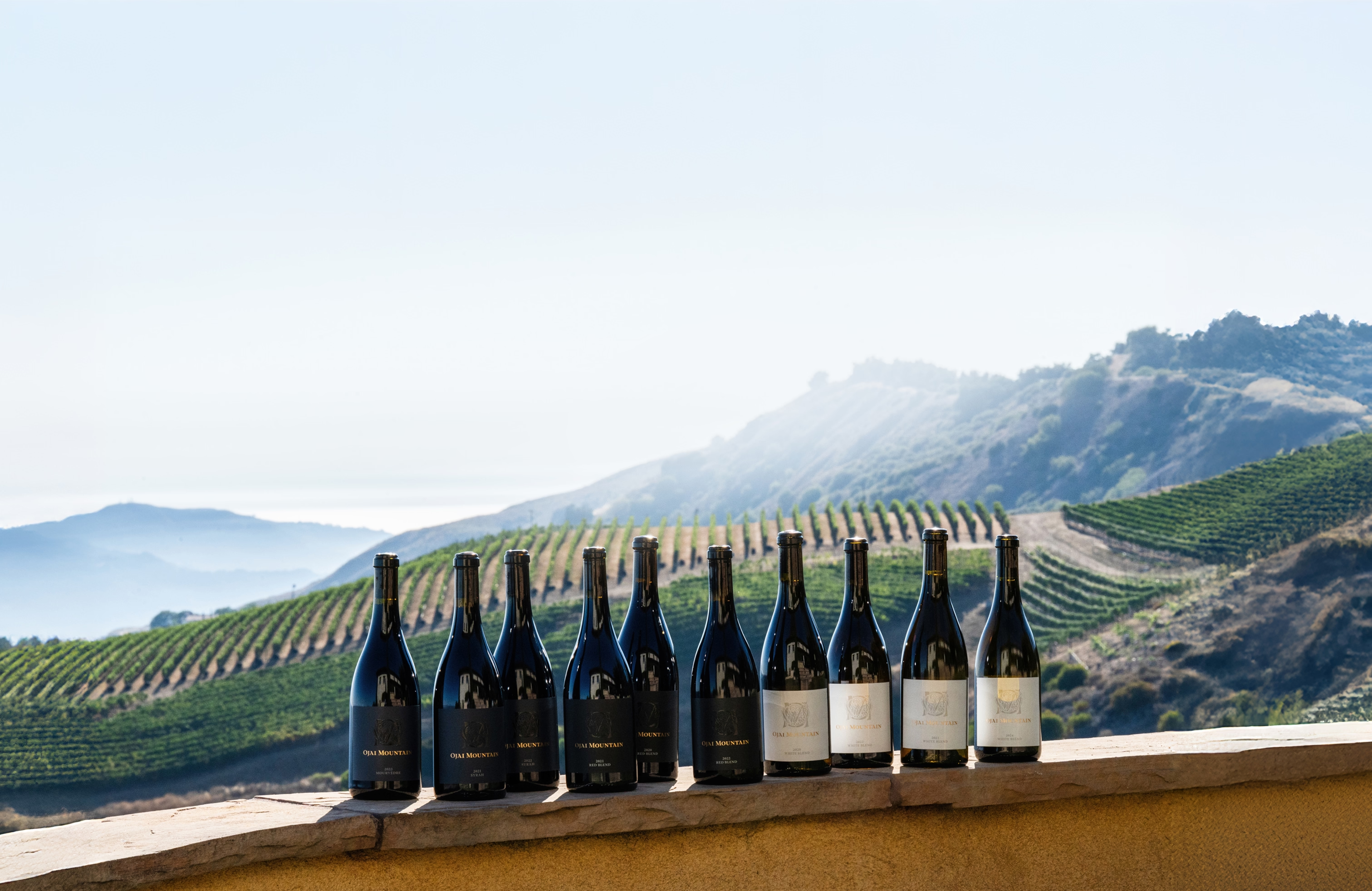

Vineyard landscape at Ojai Mountain Estate
Photo by Quoc Ngo.

Clone 01

Grenache Blanc

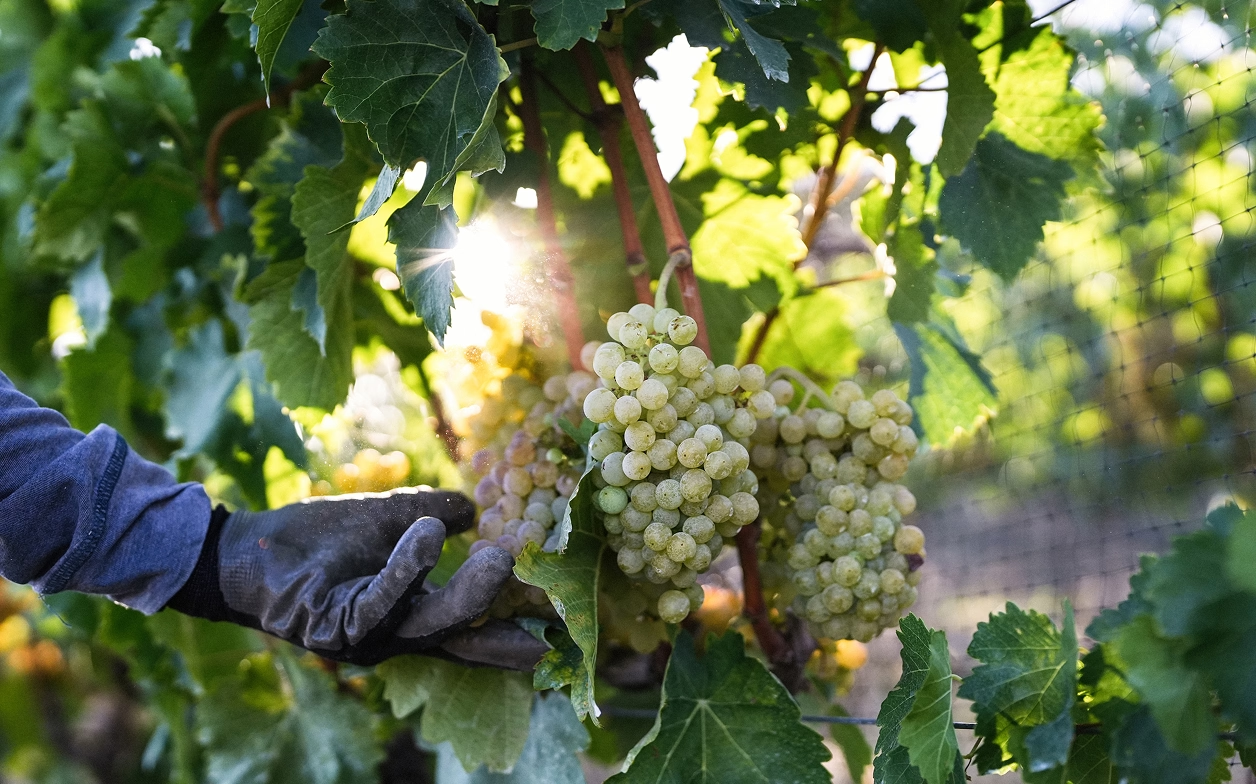
Our most planted white and the anchor of the Estate White blend. Clone 01 is a classic certified selection known for texture, depth, and a broad mid-palate. At Ojai Mountain, elevation and cool nights slow ripening and develop tension rather than overt richness: pear, citrus oil, mountain herbs, and wet stone, with the textured structure that defines Rhône whites grown at altitude.

PS-1

Picpoul

Sometimes called “lip stinger” for its razor-sharp acidity, Picpoul thrives in our cool mountain climate. PS-1 is a certified California selection chosen for its ability to retain freshness throughout the growing season. At Ojai Mountain, the variety develops vibrant citrus and mineral character while preserving remarkable natural acidity, bringing energy, precision, and longevity to our Estate White blend.

Clone 522

Roussanne

A premium French selection prized for its concentration, aromatic complexity, and balance. At Ojai Mountain, the long growing season and cool mountain nights allow Roussanne to ripen slowly while preserving freshness, contributing pear, white peach, chamomile, and citrus blossom, along with the texture and structure that give our Rhône-style whites both depth and aging potential.

Practices Built Around This Mountain

How We Farm

Organic certification describes what we do not use. It does not describe what we do. The practices that shape Ojai Mountain's farming are active, deliberate, and specific to the demands of this site.

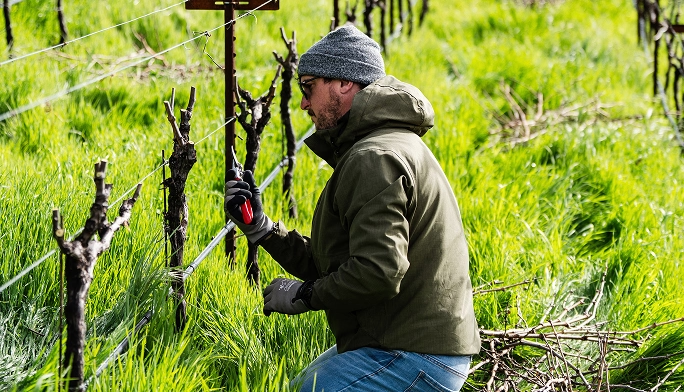
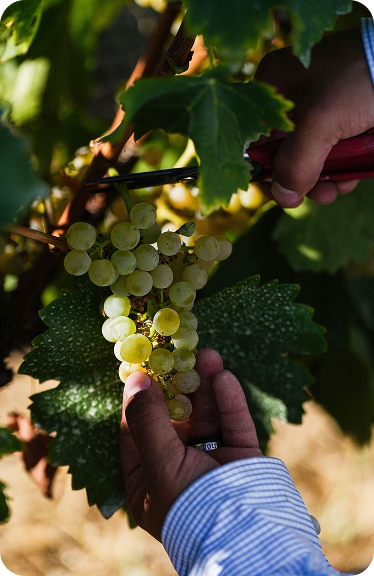
Vineyard worker pruning grapevines at Ojai Mountain Estate
Photo by Quoc Ngo.

Soil Building Without Synthetics

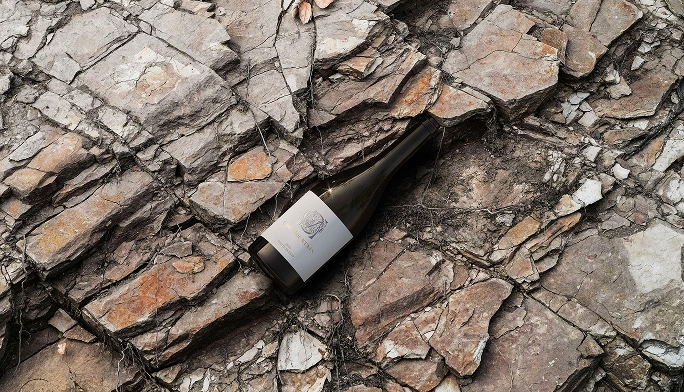
Our fractured Monterey shale offers vines almost nothing in terms of conventional fertility. That is, in many respects, an advantage: low-nutrient soils force vines to work harder, producing smaller, more concentrated clusters with greater skin-to-juice ratios. But working soils that are naturally poor requires active stewardship rather than passive neglect.

We build organic matter and feed soil biology through a specific set of inputs, each chosen for how it works with the land rather than around it.

Organic soil inputs and their purposes at Ojai Mountain Estate
InputPurpose
Cover cropsBuild organic matter, reduce erosion, support beneficial insects
Fish emulsion and kelpOrganic nitrogen and micronutrients that feed soil biology
Oyster shell calciumAddresses calcium deficiency common in rocky, acidic mountain soils
Reduced tillageMinimizes disruption to soil structure and fungal networks that support vine health
Pruning grapevines at Ojai Mountain Estate
Photo by Quoc Ngo.

Pruning with Simonit & Sirch

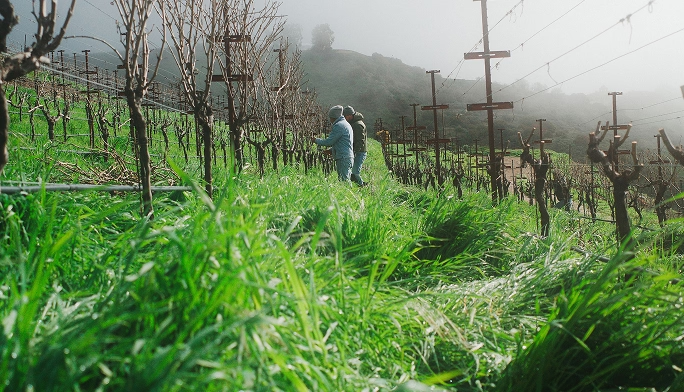
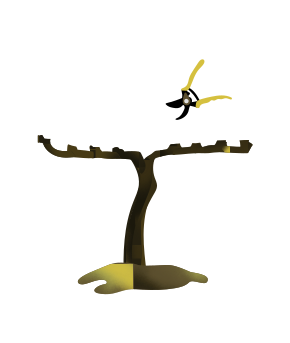
Our pruning approach is built on the methodology of Simonit & Sirch — Italian specialists whose work is now used across some of the world's most respected estates. Their central principle is one most California viticulture overlooks: the long-term vascular health of the vine itself.

Conventional pruning often leaves wounds that interrupt the flow of sap through the vine's wood, creating entry points for disease and gradually compromising the vine's productive life. Simonit & Sirch train pruners to make cuts that preserve sap circulation, working with the vine's natural architecture rather than imposing a shape on it. The result is vines that live longer, resist disease more effectively, and produce more consistent fruit over time.

At Ojai Mountain, longevity is the goal. We are not farming for the next harvest. We are farming for the next generation of vines, and the pruning decisions we make today will determine the quality of fruit this mountain produces decades from now.

Wine bottle resting on fractured shale at Ojai Mountain Estate
Photo by Quoc Ngo.

Irrigation: Minimal by Design

With annual rainfall of 10 to 20 inches and deep-rooting vines on porous shale, supplemental irrigation at Ojai Mountain is a tool of precision rather than a crutch. We irrigate minimally and strategically, using timing and volume to manage vine stress rather than eliminate it. Controlled water stress at the right growth stages is one of the most reliable tools for producing small, concentrated berries with the skin-to-juice ratio that translates to structure and ageability in the finished wine.

The Ojai Mountain viticulture team in the vineyard
Photo by Quoc Ngo.

Biodiversity as a Farming Tool

The Living Vineyard

A vineyard is not a monoculture. At Ojai Mountain, the 335 acres surrounding our planted blocks are an active part of the farming system. The health of the broader ecosystem directly affects the health of the vines, and we manage it accordingly.

Pollinators and wildflower plantings at Ojai Mountain Estate
Photo by Quoc Ngo.

Pollinators and
Wildflower Plantings

Grapevines self-pollinate, but the cover crops and wildflowers that support soil health and biodiversity depend on bees. We maintain managed beehives on the property and have planted pollinator corridors throughout the estate: wildflowers, native shrubs, and flowering cover crops that provide a continuous food source across the growing season. A thriving pollinator population is a signal that the broader ecosystem is in balance, and balance in the ecosystem means reduced pest and disease pressure on the vines.

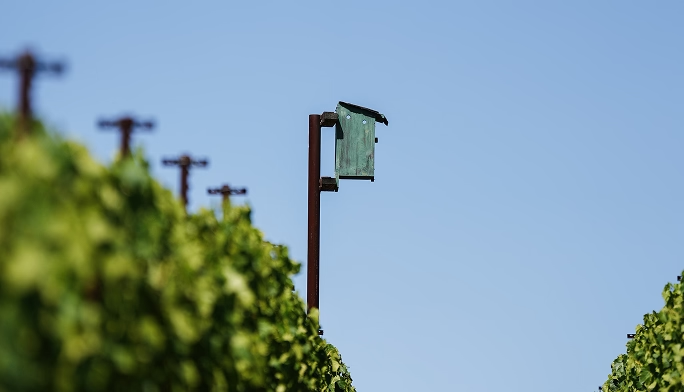
Birds of prey nesting boxes at Ojai Mountain Estate
Photo by Quoc Ngo.

Birds of Prey:
Natural Pest Management

In partnership with the Ojai Raptor Center, we have installed nesting boxes and perches for kestrels, owls, and hawks throughout the vineyard. These birds are natural predators of the rodents, insects, and small animals that damage grapevines, and their presence eliminates the need for the rodenticides and pesticides that conventional vineyards rely on.

The partnership works in both directions. The Ojai Raptor Center rehabilitates injured birds of prey and releases them into appropriate habitat. Our vineyard provides exactly that: open mountain terrain with abundant prey and established nesting infrastructure. The birds patrol the property on their own terms, and the vineyard benefits.

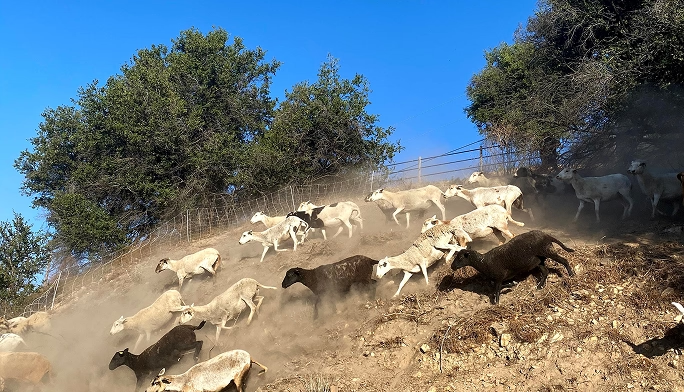
Sheep grazing for fire management at Ojai Mountain Estate
Photo by Quoc Ngo.

Fire Management
Through Grazing

Located in the mountains above Ojai, the estate sits in Southern California fire country. Managing brush accumulation is not optional. Rather than mechanical clearing or herbicide application, we use seasonal grazing by sheep and goats to manage the chaparral surrounding our planted blocks. Grazing serves multiple functions simultaneously.

  • Fire risk reduction: Animals consume dry brush that would otherwise fuel wildfires
  • Natural firebreaks: Grazing animals create perpendicular paths across the hillside that reduce winter runoff
  • Soil health: Animal manure returns organic matter and nitrogen to the soil
  • Brush rejuvenation: Controlled grazing stimulates fuller spring regrowth in native plants

This is regenerative farming in its most literal sense: a single practice that addresses fire safety, soil health, and ecological balance without a single synthetic input.

The Vineyard Year

Calendar of Viticulture

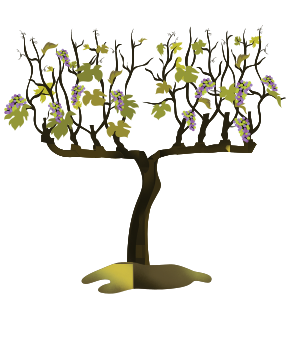
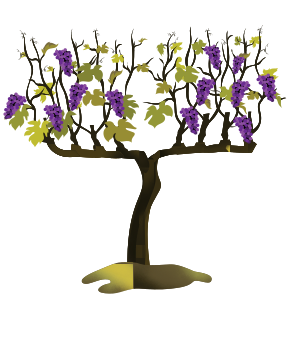
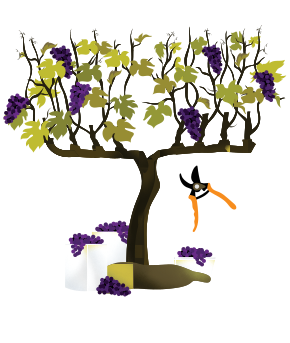
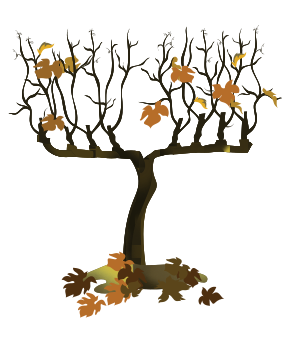
The vineyard follows a yearly cycle shaped by the mountain's climate and the demands of each variety. The broad rhythm is consistent; the specific decisions within it change every season.

Winter dormancy and pruning at Ojai Mountain Estate

December–January

Winter

Dormancy and pruning. Vines are cut back using the Simonit & Sirch method to preserve vascular health and prepare for the coming season.

Spring budbreak at Ojai Mountain Estate

February–March

Spring

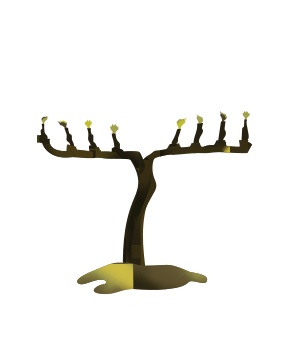
Weeping and budbreak. Shoot thinning and positioning begin. Cover crops are managed to build organic matter.

Early summer shoot growth at Ojai Mountain Estate

April–May

Early Summer

Shoot growth and flowering. Canopy management begins. Vine nutrition is assessed and addressed with organic inputs.

Mid-summer veraison at Ojai Mountain Estate

June–July

Mid-Summer

Berry set and veraison. Leaf removal opens the canopy for even ripening. Irrigation is managed to maintain controlled vine stress.

Late summer maturation at Ojai Mountain Estate

August

Late Summer

Maturation. Sugar, acid, and phenolic development are monitored across blocks. Harvest timing decisions begin.

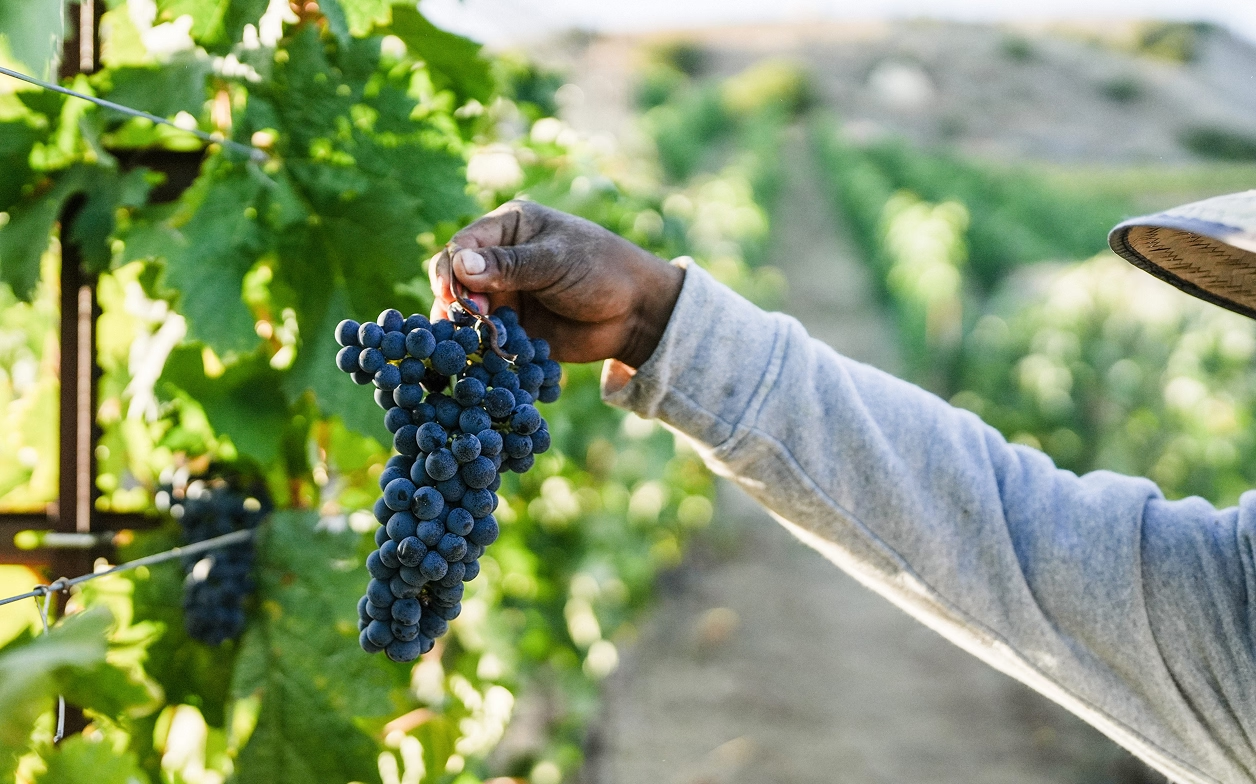
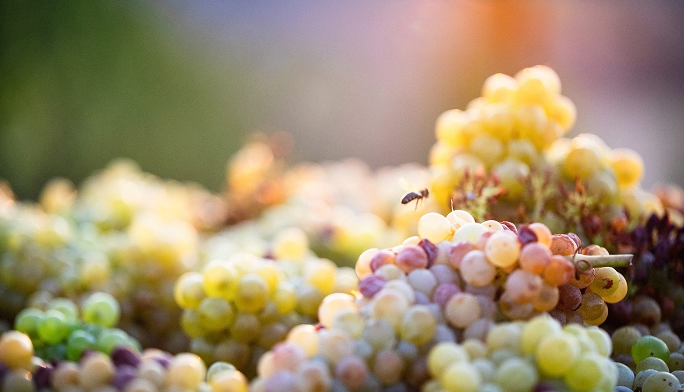
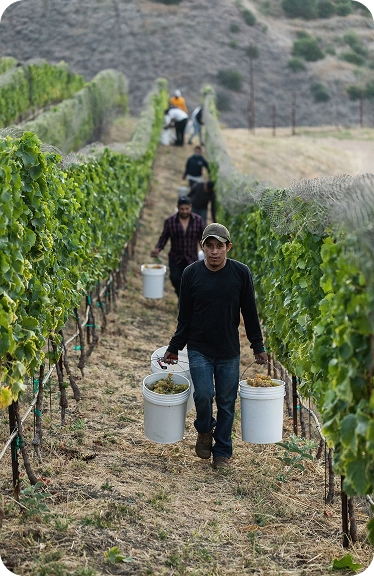
Hand harvest at Ojai Mountain Estate

September

Harvest

Hand harvest. Each block is picked at its optimal moment, often in multiple passes. Timing is everything.

Fall post-harvest recovery at Ojai Mountain Estate

October–November

Fall

Post-harvest recovery. Vines are prepared for dormancy. The season is assessed and the next year's farming plan begins.

Recognition

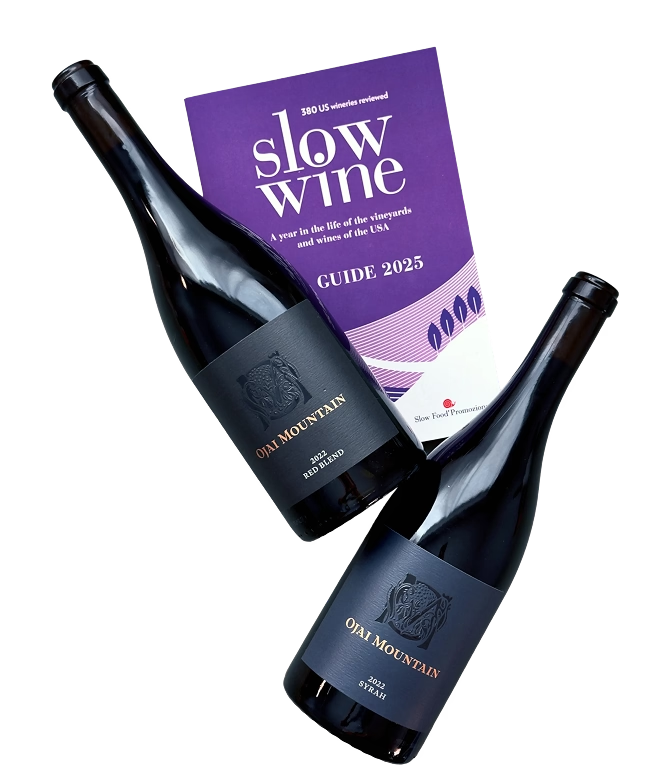
Recognized by the Slow Wine Guide

Ojai Mountain has been selected for the Slow Wine Guide since 2025, one of the most meaningful recognitions a young estate can receive. The Slow Wine Guide evaluates wineries on what happens outside the bottle: soil health, water conservation, biodiversity, pollinator protection, and commitment to the land.

Ojai Mountain was the first vineyard in Ojai farmed organically and regeneratively from the day the first vine went into the ground in 2018. No transition period. No conventional years. The Slow Wine Guide placed us alongside some of the most thoughtful producers in American wine because the farming has been deliberate from the beginning.

“There was never a question of conventional farming on this pristine land. In line with the team's longstanding winegrowing ethos, Ojai Mountain ticks all the sustainable boxes: organic, biodynamic, regenerative.”
Sara SchneiderSan Francisco Chronicle,
October 13, 2023
Slow Wine Guide recognition at Ojai Mountain Estate

The Story of Each Vintage

Every vintage at Ojai Mountain reflects what that year gave — the weather, the timing, the decisions made in the field. Composition changes. Character changes. The mountain doesn't repeat itself.

The Core Belief

“A great site gives you the raw material. Farming with restraint is what allows it to become something singular.”

Your Questions, Answered

From vineyard visits to our winemaking philosophy—find answers to the most common questions about Ojai Mountain.

Farming without synthetic fertilizers, herbicides, or pesticides — ever. That commitment was made before the first vine went in the ground in 2018. In practice: cover crops that prevent erosion and become organic fertilizer; manure from neighboring ranches; tight vine spacing for healthy competition; wildflower plantings and managed bee boxes for pollinators; a partnership with the Ojai Raptor Center for natural pest control using rehabilitated raptors. Our farming is recognized by Slow Wine 2025. → Our farming

Elevation changes the growing environment in specific, measurable ways. Higher UV exposure causes thicker grape skins — more tannin, more color, more concentrated flavor. Thinner, drier air limits disease pressure, making organic farming more practical. Ancient Monterey shale soils with almost no topsoil force roots deep, naturally limiting vigor and producing smaller, more intense berries. And 40–50°F diurnal swings — warm days for ripeness, cold nights locking in acidity — result in grapes with both depth and freshness. As Erich Bradley says: "Growing grapes at this elevation allows us to hit notes that can't be found anywhere else."

Yes. Every grape is farmed without synthetic inputs — since before the first vine was planted. Organic and biodynamic principles guide our approach, with Phil Coturri, one of California's most respected biodynamic and organic consultants, advising on the vineyard's development. Our farming is recognized by Slow Wine 2025. → Our farming

Head viticulturist Martín Ramírez manages day-to-day operations — he was the first person to plant vines on Sulphur Mountain in 2018 and has farmed nearly every vineyard in Ojai for more than 30 years. Phil Coturri, whose consulting practice spans celebrated estates in Napa and Sonoma, advises on long-term farming strategy. Jacopo Miolo of Italian consultancy Simonit & Sirch trains the team in advanced pruning techniques focused on vine longevity and sap flow. Winemaker Erich Bradley brings the cellar perspective into farming decisions. → Meet the team

Seven varieties, six of them Rhône: Syrah, Grenache, and Mourvèdre (reds); Grenache Blanc, Roussanne, and Picpoul (whites). We also grow Tempranillo — 2024 is our first standalone Tempranillo bottling. Ojai Mountain is a member of Rhône Rangers, the American non-profit organization dedicated to promoting Rhône variety wines grown in the United States. → Explore our wines

The elevation and geology pull our wines toward the savory, mineral-driven style of Crozes-Hermitage or Saint-Joseph — rather than the richer, fruit-forward profiles common in Paso Robles. At 2,800 feet on fractured Monterey shale, the combination of sharp post-sunset temperature drops and low-vigor soils creates tension and lift rather than weight and power. These are wines built for the table, not for immediate impact. Ojai Mountain is a member of Rhône Rangers, America's leading nonprofit dedicated to American Rhône varietal wines. → Explore our wines
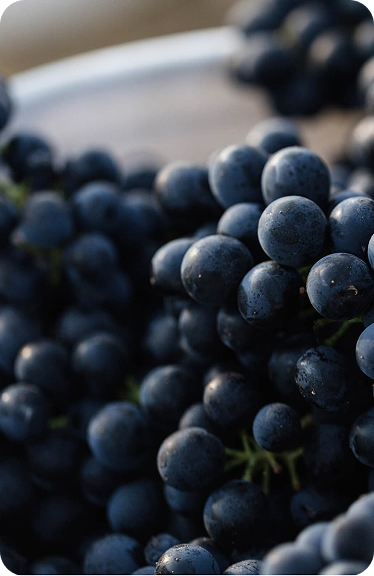
Rhône Rangers is America's leading nonprofit dedicated to promoting wines made from Rhône varieties grown in the United States. Ojai Mountain grows exclusively Rhône varieties (plus Tempranillo), so membership is a natural fit — and it connects us to the broader community of American winemakers championing these varieties. → Learn what we grow

No — for our white wines, we choose not to encourage malolactic fermentation. After primary fermentation is complete, we add a small protective dose of sulfur dioxide to prevent any secondary conversion from occurring. This allows the wines to retain their natural mountain acidity and preserves their precision and freshness, keeping the citrus and orchard-fruit profile clear and the texture focused rather than creamy. At our elevation, where the fruit already develops with strong structure and natural balance, avoiding malolactic fermentation helps the whites reflect the site more directly and maintain their characteristic energy.

Have Questions?

Our AI assistant in the bottom right corner can help you instantly with questions about our wines, booking tastings, or planning your visit.
Can't find what you need?

Text us at: +1 (805) 214-4339 or drop us a line at: info@ojaimountainestate.com