
 Log in
What Is Regenerative Viticulture? How We Farm in Ojai
On Sulphur Mountain, cover crops, compost, grazing sheep and goats and habitat for birds of prey are all part of how we care for the vineyard. Here is Ojai Mountain's approach to regenerative viticulture, step by step, and what it can and cannot mean for the wine.

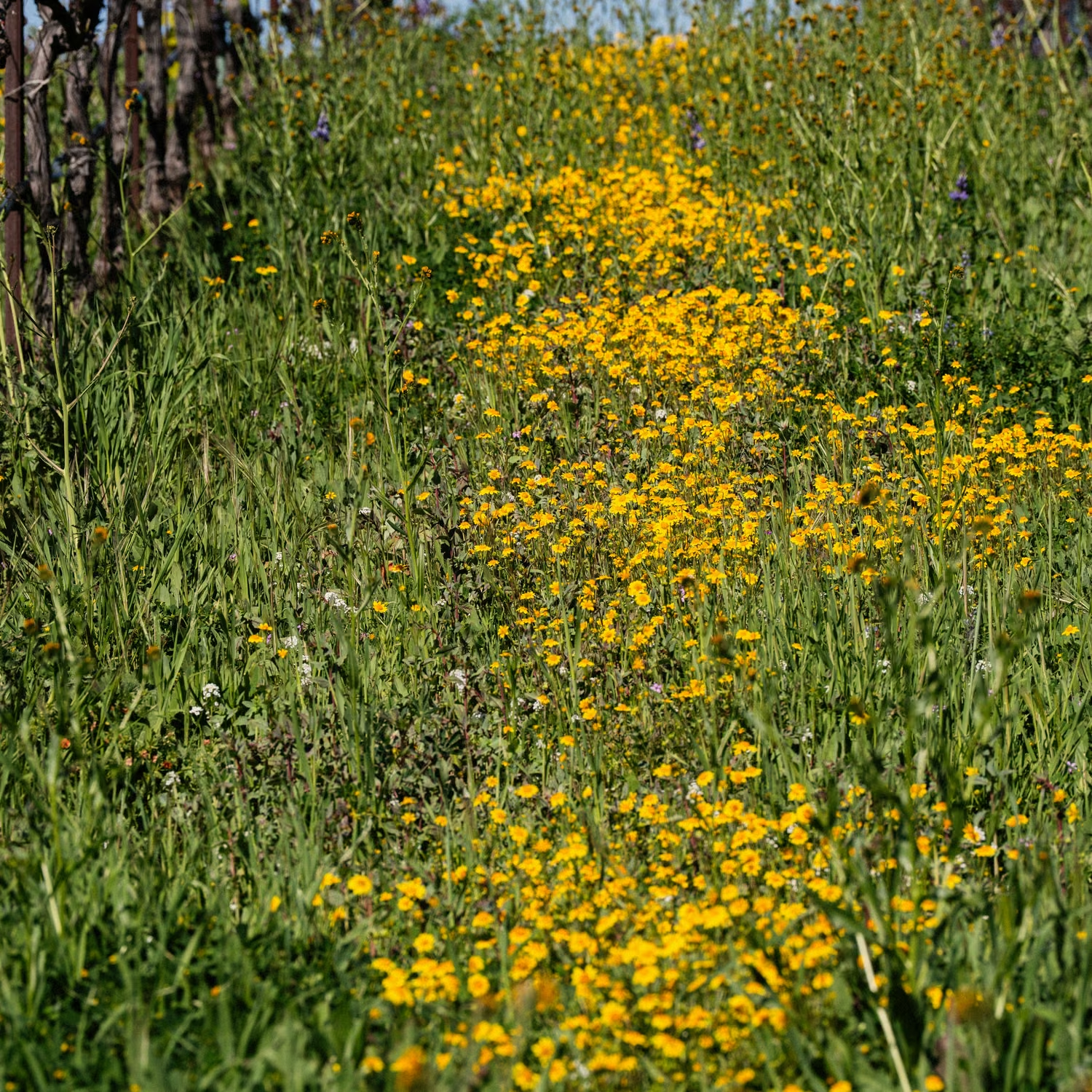
In spring, the rows between the vines on Sulphur Mountain are green with clover, lupin and wildflowers. Beyond the blocks, sheep and goats graze the brush. A kestrel box stands on a pole near the vines, and a hawk perch looks out over the mountain. None of it is decoration: each is part of how we care for this vineyard.
The first vines went into the ground in 2018 on land that had not previously been farmed. At 2,800 feet, they grow in thin soils over fractured Monterey shale, about ten miles from the Pacific. Farming here means working with a steep, rocky site while making room for the landscape around it.
That is where our approach to regenerative viticulture begins. Cover crops protect the ground, compost returns organic matter to it, grazing animals help manage brush, and habitat brings birds of prey into the vineyard. Here is how those choices come together, step by step.
What is regenerative viticulture?
Regenerative viticulture is an approach to growing wine grapes that aims to support soil health and biodiversity over time. There is no single universal checklist: the practices depend on the site and the people farming it.
Organic and regenerative farming overlap, but they are not identical. Organic standards restrict synthetic inputs while allowing certain approved treatments. Regenerative farming asks a broader question: how can the way we farm support the health of the land over time? On this mountain, that means paying attention to the soil, water and wildlife as well as the vines.
At Ojai Mountain, we have farmed without synthetic fertilizers, herbicides or pesticides since planting, and we do not use rodenticides. Cover crops, compost, reduced soil disturbance, grazing and habitat are part of how we put that approach into practice.
Regenerative farming at Ojai Mountain, step by step
1. Work with a rocky mountain site
The vineyard’s Monterey shale is fractured and fast-draining. Its thin soils make building and protecting organic matter an ongoing priority, particularly on a slope exposed to winter rain.
Winemaker Erich Bradley describes the challenge in characteristically direct terms: “The only soil we have up here is really what Martín creates through composting and very conscientious farming.”
There is soil here, but little of the deep, fertile topsoil a grower might find elsewhere. On this site, building organic matter is not a finishing touch. It is part of making the vineyard work.
2. Keep the ground covered
During the wetter months, clover, lupin and other plants grow between the vines. Their roots help hold soil in place, while the growth returned to the ground after mowing contributes organic matter.
We minimize soil disturbance to protect soil structure and the living communities within it. On a mountain vineyard, keeping the ground covered is a practical way to care for the slope as well as the vines.
3. Feed the soil with compost
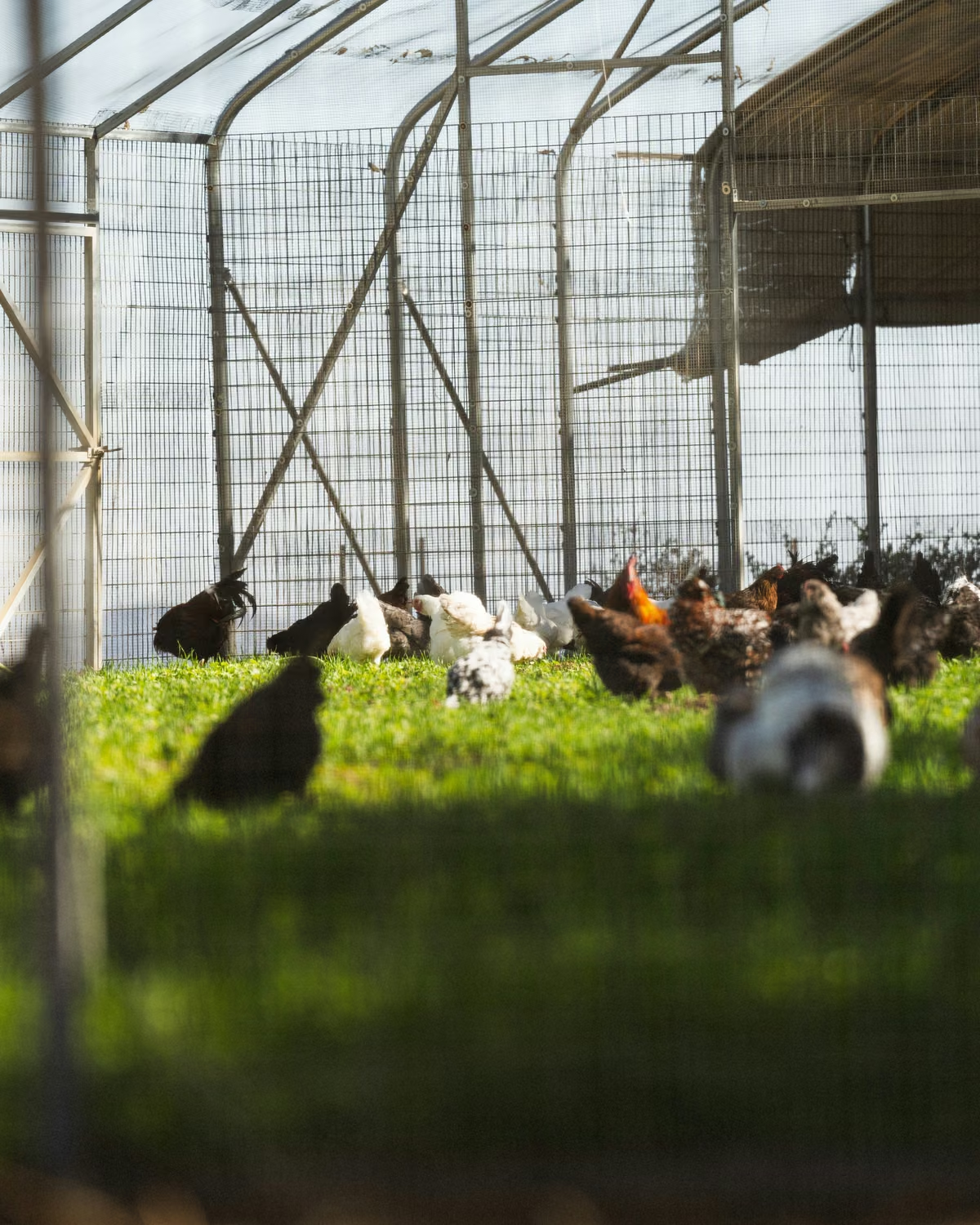
The hens on the property contribute to the estate’s composting program, alongside manure from neighboring ranches and other amendments. Returned to the vineyard, that organic material helps feed the living soil.
On a mountain of fractured rock, the work is gradual. The aim is to give the vines a healthier growing environment, season after season, rather than force growth at any cost.
4. Manage brush with sheep and goats
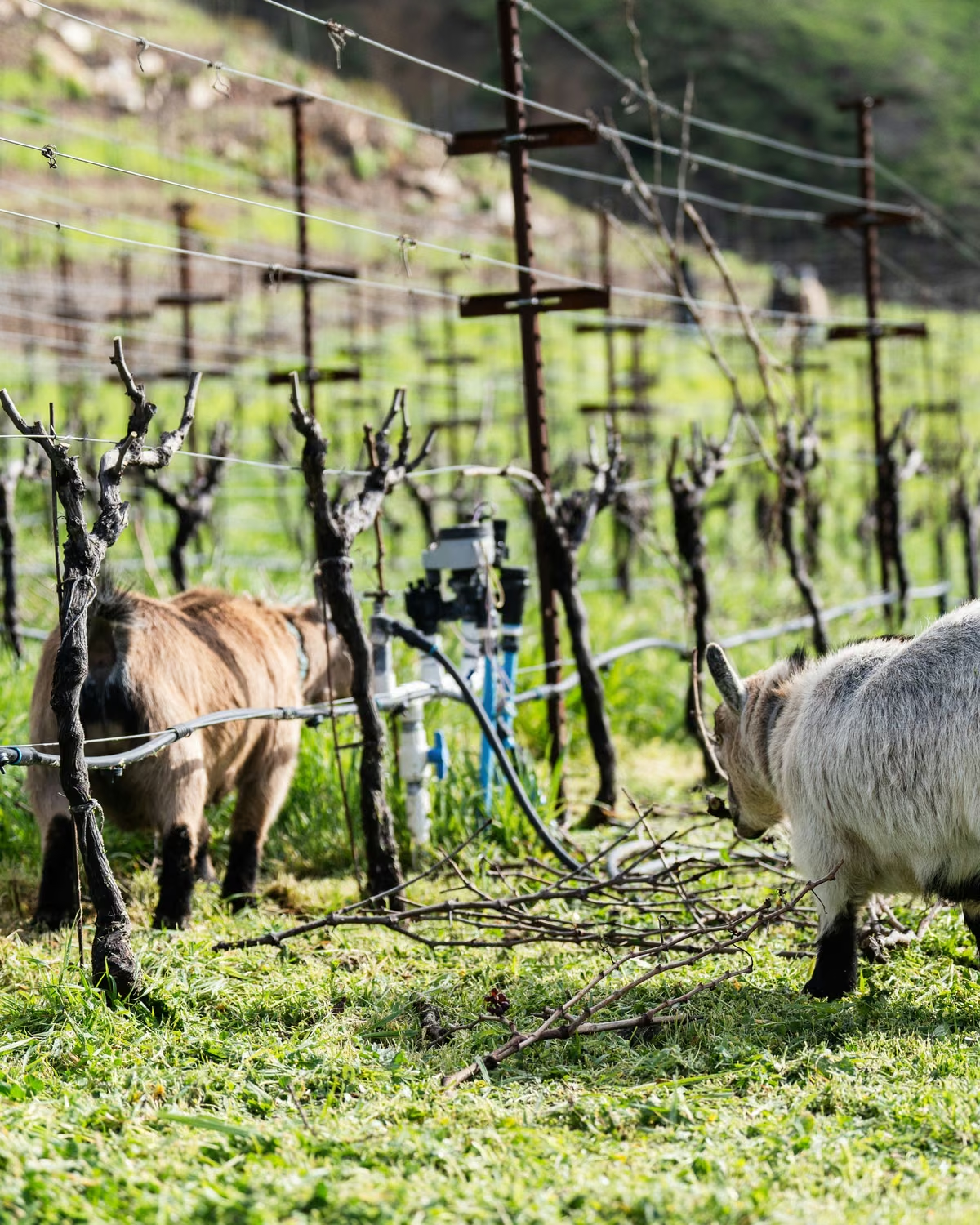
In Southern California, wildfire preparedness is part of caring for the land. Sheep and goats graze brush around the vineyard, reducing vegetation that can become fuel while returning manure to the ground.
Grazing is one part of fire preparation, not a guarantee against wildfire. Where and when the animals graze matters for the health of the hillside, too.
5. Make room for birds of prey
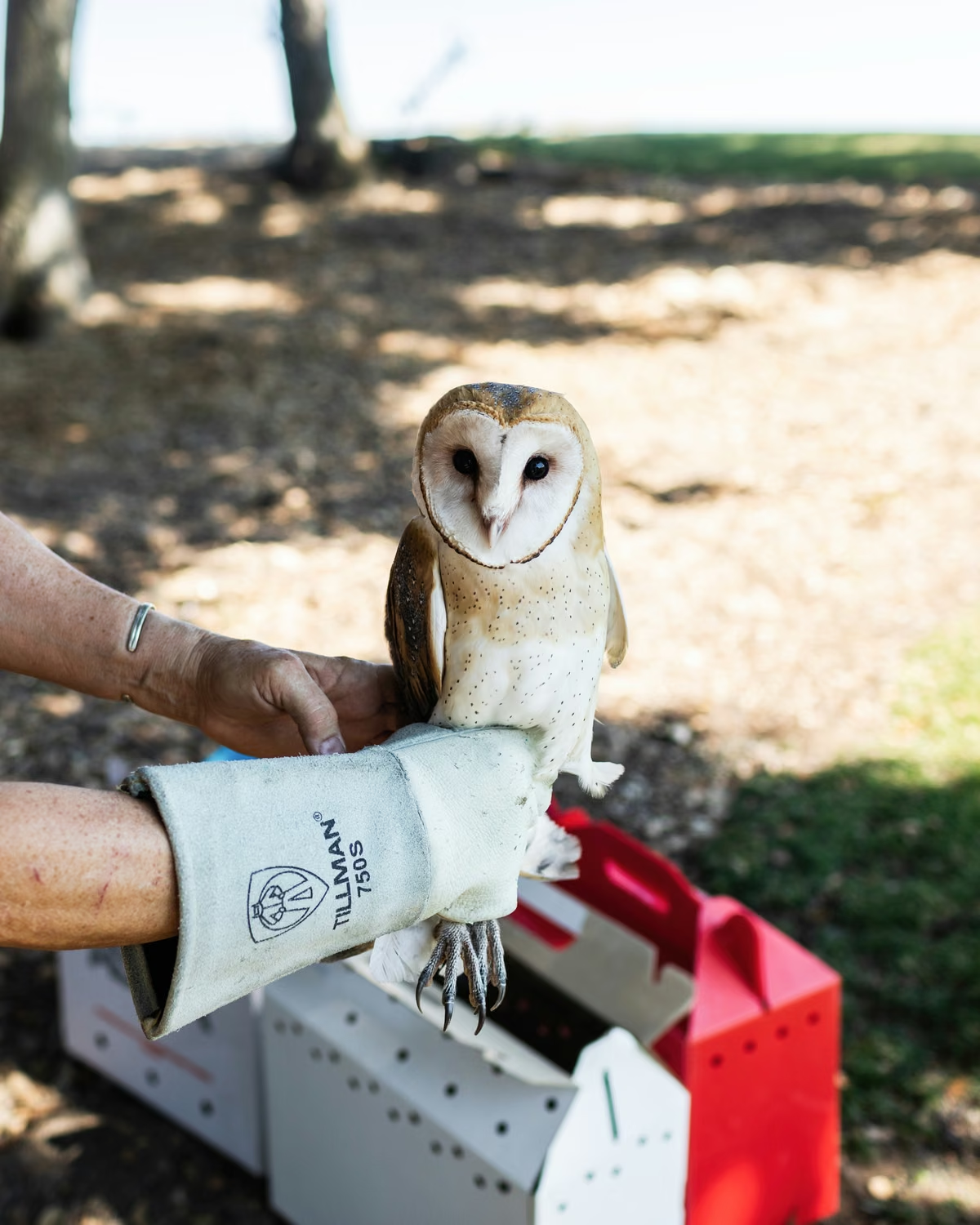
Rodents can damage vines, especially when they are young. Rather than use rodenticides, we support natural predators with nesting boxes and perches for owls, kestrels and hawks, working with the Ojai Raptor Center.
The birds hunt on their own terms, and they do not eliminate every pest. But making room for them is a practical way to support the natural predators already at home on the mountain. Read more in The Birds We Hired to Replace Pesticides.
6. Support pollinators and beneficial insects
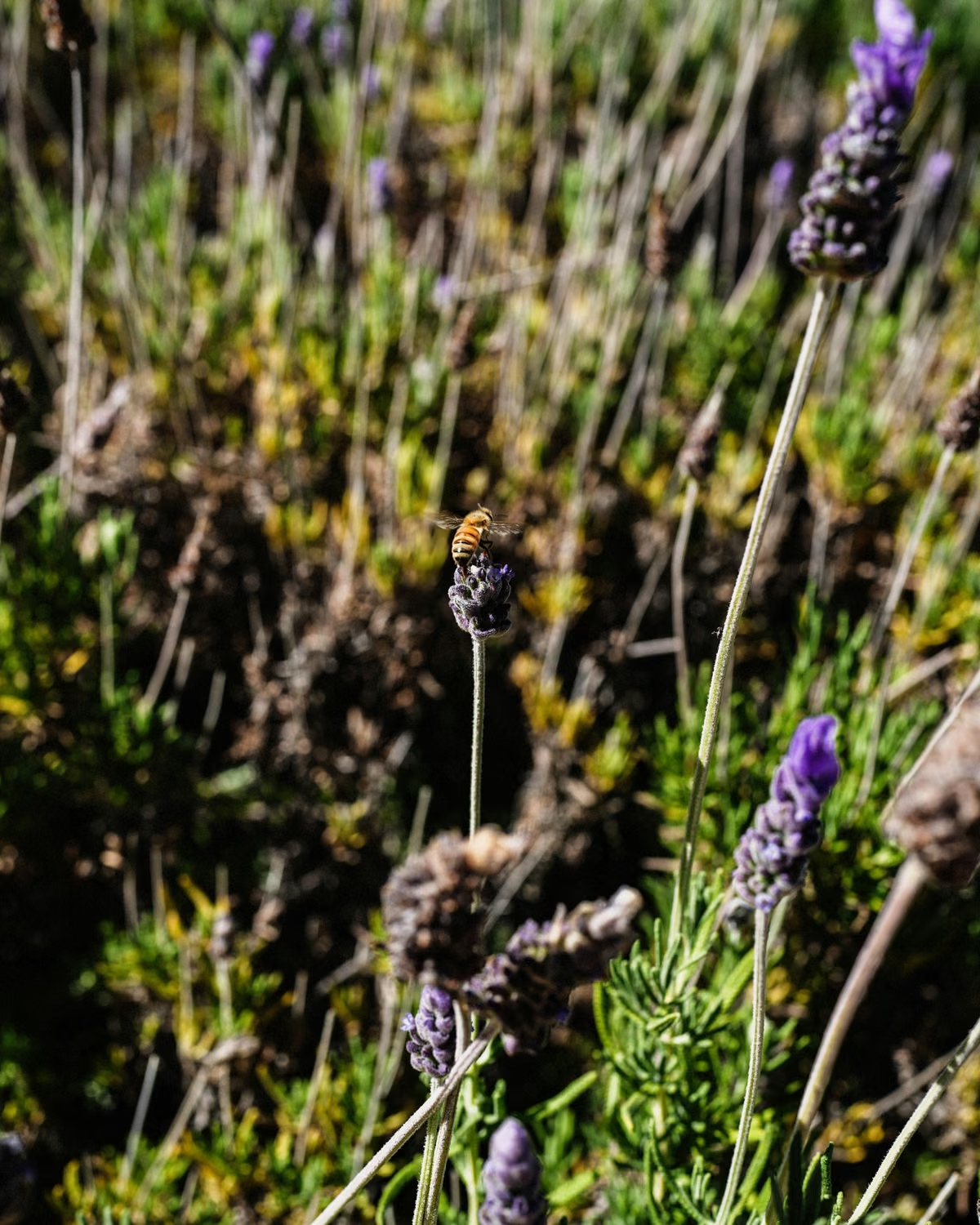
Grapevines are largely self-pollinating, but the plants around them support a wider community. Wildflowers, flowering cover crops and managed beehives provide habitat and forage for pollinators and other insects.
The vines are only one part of the landscape. These plantings connect the vineyard to the chaparral around it and make room for more life between and beyond the rows.
7. Use water thoughtfully
Rainfall on Sulphur Mountain varies considerably from year to year. We use supplemental irrigation when needed, paying attention to conditions and the needs of the vines. Ojai Mountain is not a dry-farmed vineyard.
The timing of rainfall matters as well as the total. Our guide to six seasons of Upper Ojai rainfall explains how widely those seasons have varied and why a nearby weather station is useful context, not a direct measurement of each vineyard block.
Pruning is another long-term decision. Head viticulturist Martín Ramírez has trained with Jacopo Miolo of Simonit & Sirch, whose approach focuses on pruning with the vine’s structure and sap flow in mind. The goal is to care for the vine over many seasons, not simply prepare it for the next harvest.
What wildlife-friendly vineyard practices look like here
Look beyond a row of vines and you can see the wider picture: flowering plants underfoot, raptor boxes above and chaparral surrounding the blocks. Wildlife-friendly vineyard farming means caring for that habitat alongside the crop. Avoiding rodenticides removes one source of poison exposure for the predators we want to welcome here.
Does regenerative farming make better wine?
It is a fair question. Regenerative farming can support the conditions in which grapes grow, but it does not guarantee a better bottle. Soil, water, weather, variety, harvest timing and the decisions made in the cellar all play a part.
For us, the connection starts with healthy fruit and a vineyard we intend to care for over the long term. In the cellar, Erich Bradley begins fermentations with native yeasts and works with neutral oak, intervening when needed to protect the wine. The goal is to let the mountain and the vintage come through. Read more about our minimal-intervention approach.
The people behind the farming
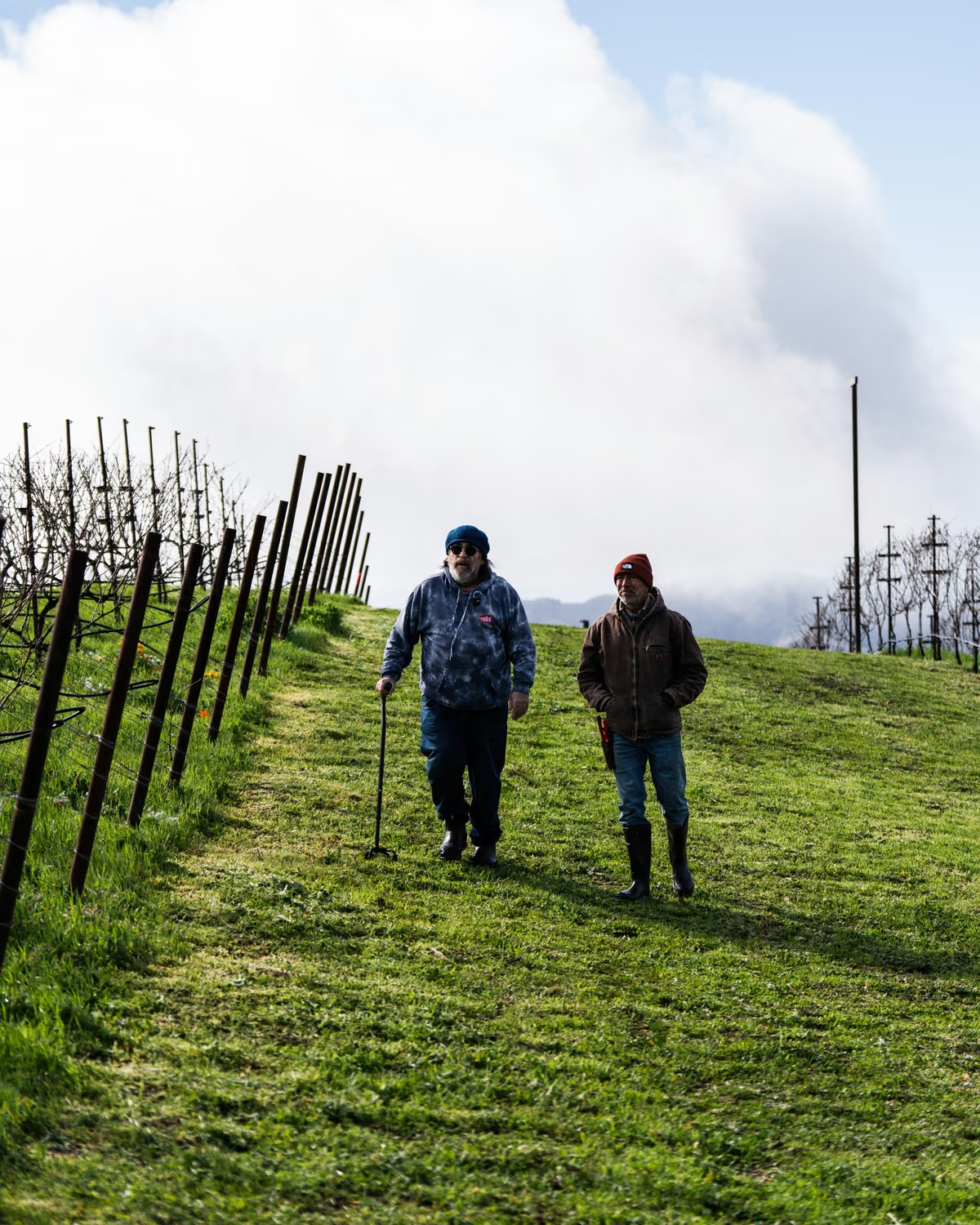
Martín Ramírez planted the first vines on Sulphur Mountain and knows these rows intimately. He oversees the daily work: reading the blocks, caring for the vines and adapting to the season as it unfolds.
Viticultural consultant Phil Coturri brings decades of experience with organic farming and a long view of soil health and biodiversity. Erich Bradley connects the vineyard’s work to the wines made from its fruit. Together, they are still learning what this young site can become.
Ojai Mountain’s inclusion in the Slow Wine Guide since 2025 is meaningful to us because the guide looks beyond the bottle to the people and practices behind it. Inclusion is not the same as organic certification or a separate Slow Wine award.
Our practices at a glance
| Practice | What we do | Why it matters |
|---|---|---|
Cover crops | Grow plants between vine rows | Help protect soil and contribute organic matter |
Compost | Return manure and other organic material to the soil | Support soil care over time |
Grazing | Use sheep and goats to manage brush | Help reduce vegetation that can fuel fire |
Pest management | Provide habitat for birds of prey; avoid rodenticides | Support natural predators |
Pollinators | Maintain flowering plants and managed beehives | Support insects and the surrounding ecosystem |
Water | Use supplemental irrigation when needed | Respond to conditions in each season |
See the vineyard, then taste the wines
The clearest way to understand the farming is to stand in the vineyard: see the plants between the rows, the shale underfoot and the chaparral beyond the blocks, then taste the wines grown here. Our private, sommelier-led tastings are by appointment and include a short guided vineyard walk that can be shortened or skipped.
Plan a vineyard visit, explore our estate wines, or read more about how we farm.
Frequently Asked Questions
It is an approach to growing grapes that aims to support soil health and biodiversity over time. At Ojai Mountain, that includes cover crops, compost, reduced soil disturbance, grazing and habitat for wildlife.
No. The approaches can overlap, but organic standards and regenerative practices are not interchangeable. Ojai Mountain farms without synthetic fertilizers, herbicides or pesticides and uses regenerative practices; a farming description alone does not establish certification.
We avoid rodenticides and support birds of prey with nesting boxes and perches, alongside broader habitat management. Natural predators are helpful, but they do not eliminate every pest.
No. We use supplemental irrigation when needed, taking account of the season and the needs of the vines.
Yes. Private tastings are by appointment and include a guided vineyard walk. See the visit page for current options.
Share this post
Recent Posts
View All Posts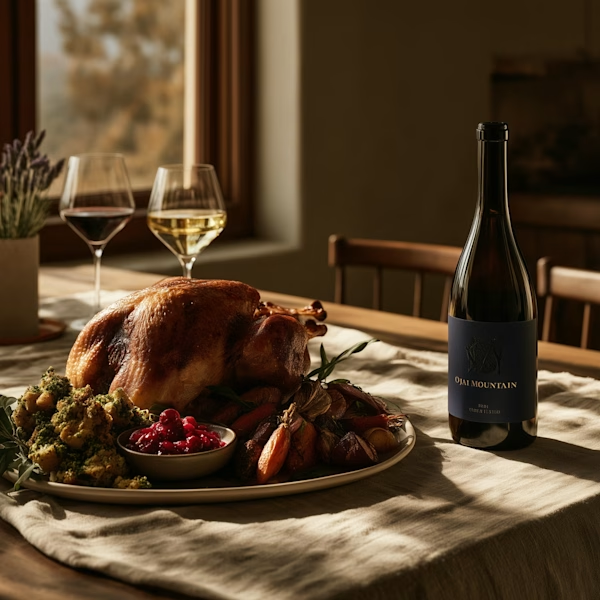
Lesia Artymovych • 16 Nov 2026
Thanksgiving Wine Pairing: What to Pour with Every Dish
How we would pair Ojai Mountain wines with Thanksgiving dinner, from the first oysters or cheese board to the last slice of pie, plus how many bottles...
Lesia Artymovych • 9 Nov 2026
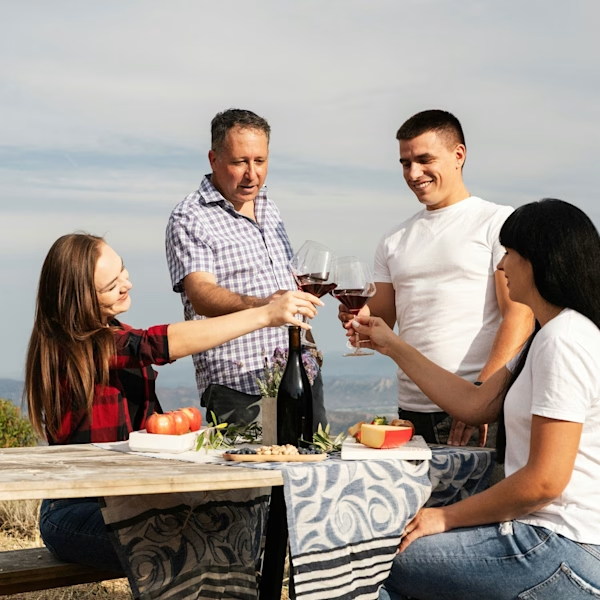
The Ojai Wine Weekend: A Complete Guide for LA Travelers
Ojai is 90 minutes from Los Angeles and rewards more than a day trip. This guide explains why the region's wines taste the way they do, how a private ...
Lesia Artymovych • 9 Nov 2026
What Happens When You Farm at Extreme Altitude?
At 2,800 feet on Sulphur Mountain, almost everything about growing grapes changes: the light, the nightly temperature drop, the shale underfoot and th...