
 Log in
2025 Harvest Notes: The Character of a Dry Year
In a year marked by just 11 inches of rainfall, Ojai Mountain still achieved a remarkable 2025 harvest, showing how resilient vines, careful farming, and the estate’s high-elevation conditions can turn a dry season into wines of concentration, balance, and character. The 2025 growing season challenged the vineyard from the start, but the result was not scarcity or compromise. Instead, the low-rainfall year produced smaller berries, focused flavors, and a harvest that reflects the mountain’s ability to thrive under pressure.

2025 by the numbers
Every vintage at 2,800 feet is a negotiation between the mountain and the season. In 2025, the mountain won. The result is a vintage of uncommon clarity. By clarity, we mean wines that express the vineyard more than the season itself: structured, precise, and deeply expressive of site.
These are not wines built for immediate impression. They are built to last, to reveal, and to reward patience. That is exactly what we had hoped for.
| Harvest window | September 4–25 |
|---|---|
| Vineyard size | 4.34 acres |
| Total crop | 20.754 tons |
| Rainfall | 11.07 inches |
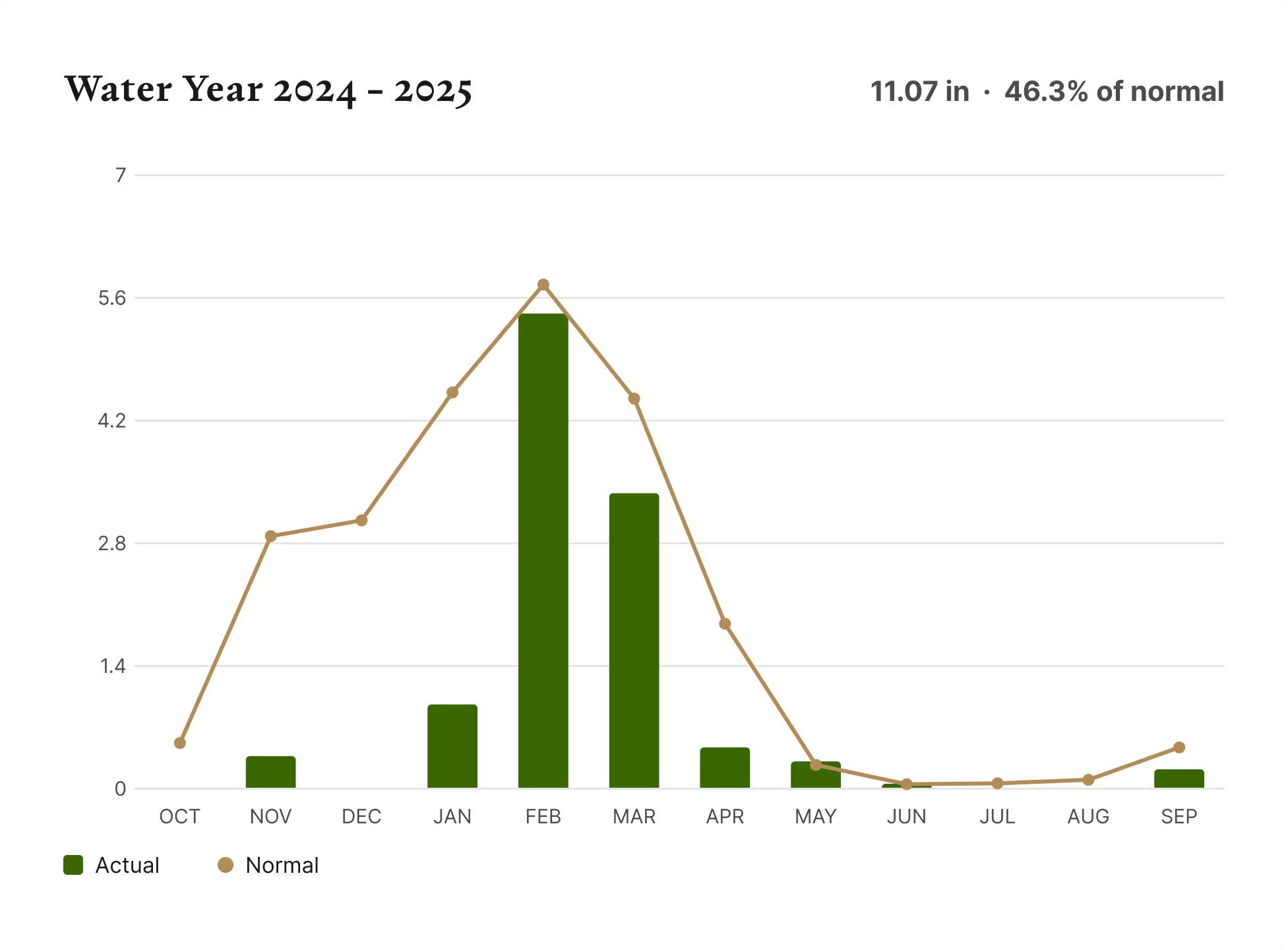
A Dry Season with a Notable Missing December
This season stands out for what didn't happen: December recorded zero measurable rainfall, a striking gap in what is normally a 3"+ month. January (0.95") also ran well under normal, and while February (5.41") and March (3.36") arrived close to their typical totals, they weren't enough to offset the early-season shortfall. The result was a season running at less than half of Normal, with most of what rain did fall arriving late, in the back half of winter — a pattern that compresses the recharge window and puts more pressure on the estate's biodynamic, low-intervention approach to carry vines through the growing season.
A Season Shaped by Restraint
The deficit was real, but its effects were filtered through two important buffers: residual subsoil moisture from the prior seasons, and the fractured Monterey shale beneath the vineyard that drains quickly and never holds water long enough to create excess vigor.
Rain arrived concentrated in February and March, which is close to ideal. It recharged the soil without triggering the kind of late-season canopy pressure that invites disease and dilutes flavor. Budbreak came in even and controlled. By the time spring gave way to early summer, the vines had settled into a mild water constraint, the sort that forces a vine to do its most interesting work.
Then came the heat — again. For the second consecutive year, a Labor Day heat wave forced its way into the harvest window. This is not a pattern we welcome. August 6 pushed temperatures to 97°F on the ridge. A month later, on September 6, the thermometer spiked to 106°F—the kind of single-day event that can unravel a harvest if the fruit is not in the right place.
Yet at 2,800 feet, cool nights continued to slow ripening even as daytime temperatures climbed, helping the fruit retain acidity through repeated heat events. Two years running, we have had to absorb that risk. In 2025, as in 2024, the fruit held. The dry season had already slowed ripening and thickened skins. The vines were not carrying excess water weight. When the heat hit, there was little vulnerable left to damage.
What Mild Stress Actually Does
This is worth explaining, because "water stress" sounds alarming if you're not familiar with how mountain viticulture functions. At Ojai Mountain, mild constraint is not a crisis; it is a tool.
When vines operate under moderate water limitation, they naturally:
Produce smaller berries with a higher skin-to-juice ratio
Develop thicker skins, which build tannin structure and color depth
Slow ripening, preserving the acidity that defines high-elevation fruit
Channel energy into flavor concentration rather than canopy growth
Moderate water stress also encourages vines to prioritize seed maturation and phenolic development, increasing aromatic and structural complexity without excessive sugar accumulation. The result is a transparent expression of site. Not a wine shaped by winemaker intervention or by an unusually generous season, but one that reads as a direct translation of what this particular piece of Ojai Mountain produces when the conditions ask it to focus.
Harvest by Variety
Harvest unfolded steadily across September, with clean separation between varieties and blocks. The pace was deliberate, and the picks were well-timed. Yields increased in most blocks relative to the prior year, a reflection of vine maturity and improved balance rather than any loosening of the site's natural restraint.
White Varieties
The whites were the early story of 2025, and they delivered with notable vigor.
Red Varieties
The reds showed clear block differentiation, which is one of the most telling signs of a site-expressive vintage. When individual blocks behave distinctly rather than uniformly, you know the fruit is reading its immediate environment rather than averaging it out.
| Variety | Harvest Timing | Notable Character |
|---|---|---|
Tempranillo | Early September | Steady upward trend, reliable yields and balance |
Syrah Block 1 | Mid-September | Moderate yields, strong concentration |
Syrah Blocks 2 & 4 | Mid-September | Higher tons per acre, no dilution, smaller berry size |
Grenache | Late September | Over 4 tons/acre, marked increase, good acid retention |
Mourvèdre | Late September | Slightly lower year over year, naturally restrained |
What 2025 Will Taste Like
Earlier, we described 2025 as a vintage of clarity. Now, after harvest, that definition has become more concrete. The wines show their origin without relying on excess ripeness, heavy oak, or extraction. They taste unmistakably of Ojai Mountain.
The 2025 vintage is a clear vintage.
The dry season sharpened structure and preserved the freshness that is Ojai Mountain's most consistent signature. Vine age and carryover subsoil moisture prevented any genuine stress, so the fruit arrived at the winery in excellent condition, with concentration that came from natural limitation rather than dehydration. Erich Bradley's approach in the cellar will be what it always is: get out of the way.
What to expect from the 2025 wines:
Tension over weight; these are not broad or opulent expressions
Elevated acidity that will support long aging
Strong site definition, meaning you will taste the mountain, not the vintage
Freshness that reads as precision rather than thinness
Structural depth in the reds, particularly Syrah, that rewards patience in the cellar
The 2025 vintage reinforces something we have believed since the first vines went into the ground here in 2018: that Ojai Mountain, at its best, is a vineyard shaped as much by restraint as by sunshine. This year, restraint won in the most compelling way possible.
How to Follow the 2025 Wines
The 2025 wines are now beginning the next stage of their journey. Over the coming months, they will rest in barrel, where time will determine how the structure, freshness, and concentration we saw at harvest come together in the glass.
Wine Club members receive first access to each release, along with invitations to estate events and seasonal tastings throughout the year.
If you prefer to experience the wines before they're bottled, private tastings are available daily by appointment from
Frequently Asked Questions
Because rainfall arrived at the right time, soils retained moisture from previous seasons, mountain elevation slowed ripening, and moderate water stress improved fruit concentration rather than harming the vines.
The Upper Ojai Summit received 11.07 inches of rainfall during the 2025 growing season, approximately 46% of the long-term average. While that might suggest a difficult vintage, two consecutive wetter years had already replenished subsoil moisture. Combined with Ojai Mountain's fractured Monterey shale soils and naturally balanced vines, the dry season produced concentrated fruit without causing harmful vine stress.
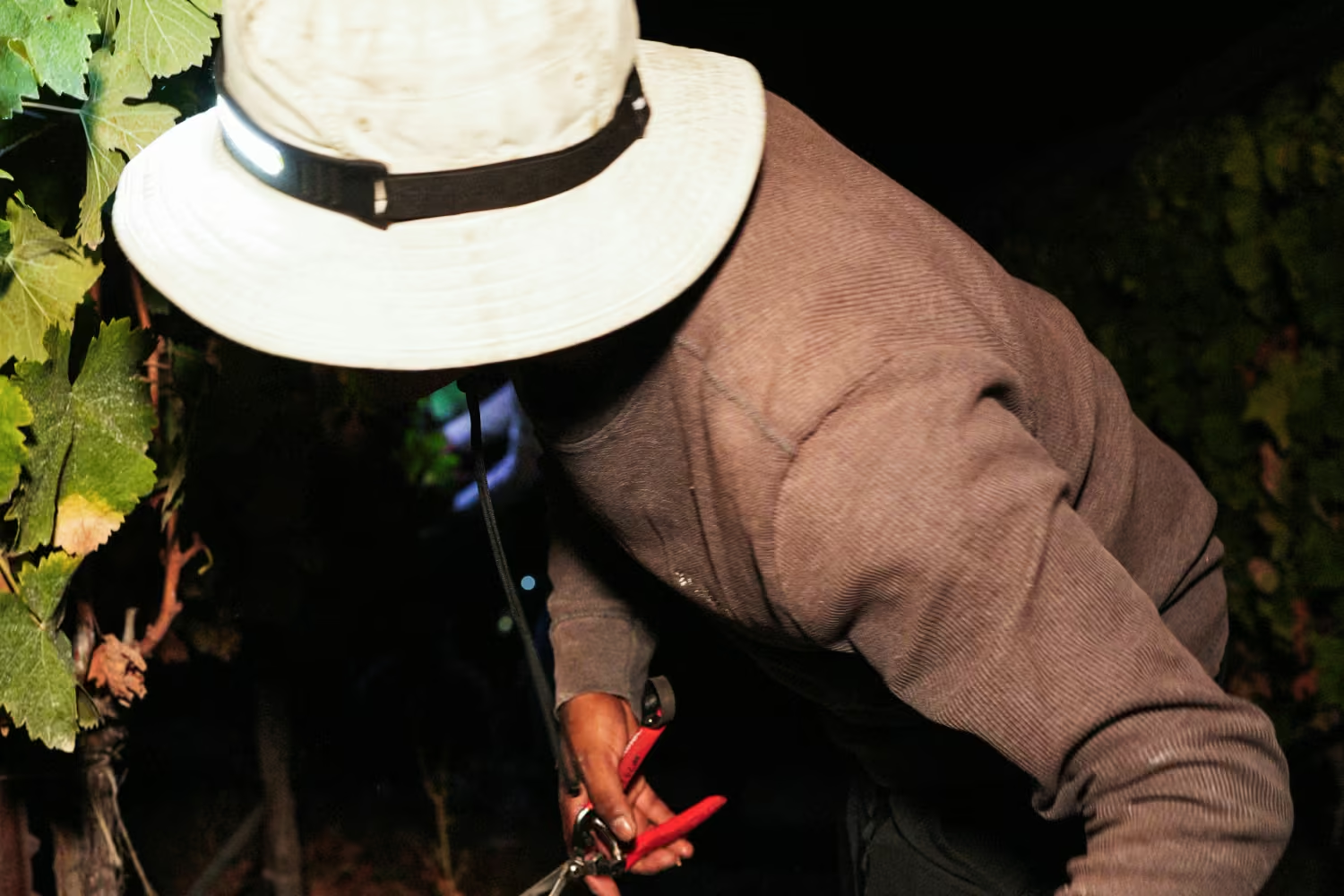
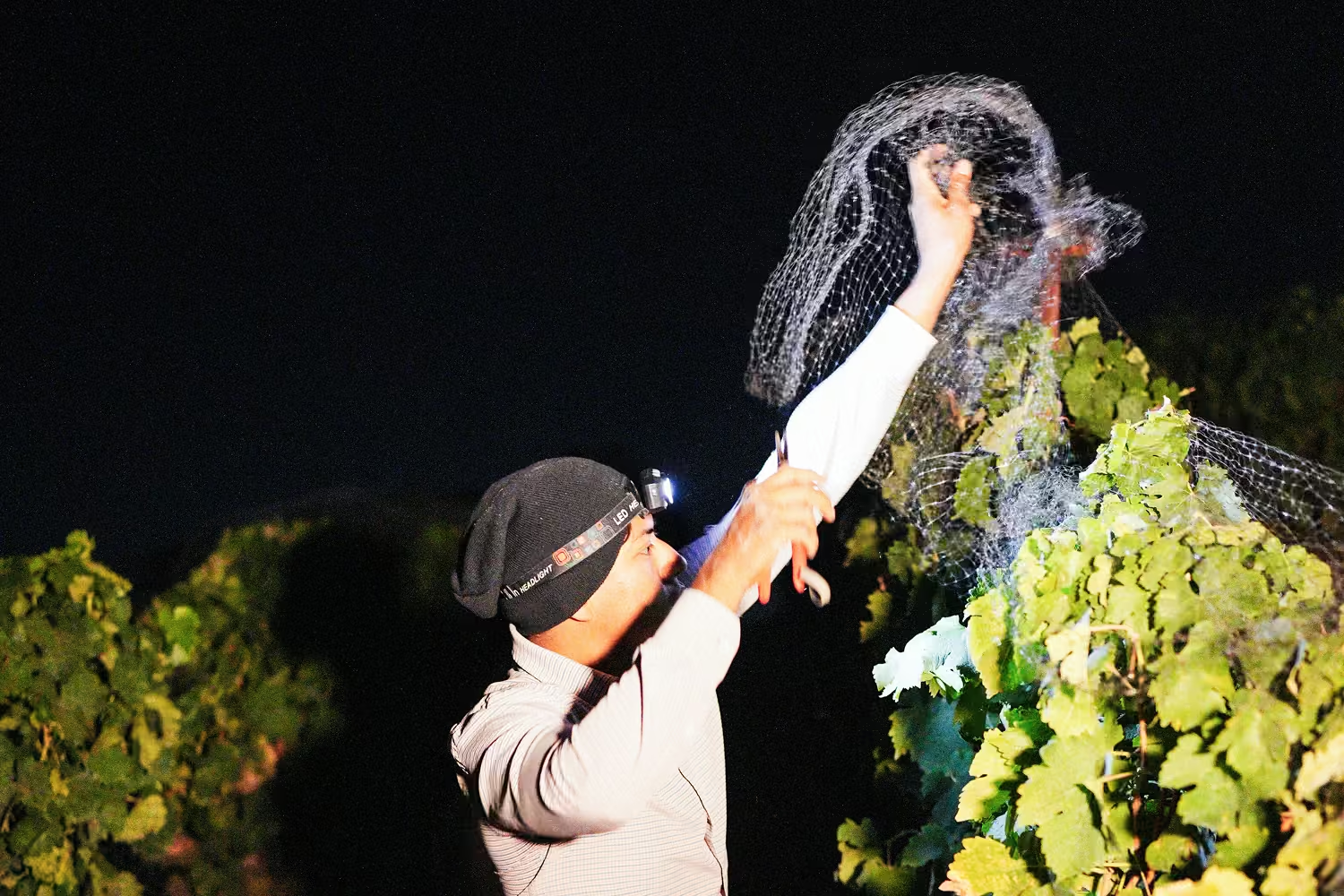
Many premium vineyards harvest at night or in the early morning because cooler temperatures help preserve grape quality. Cold fruit retains freshness, acidity, and delicate aromas while reducing oxidation before the grapes reach the winery. At Ojai Mountain, harvesting during the coolest hours also allows the fruit to arrive in optimal condition before daytime temperatures begin to climb.
Not necessarily. Severe drought can weaken vines, reduce yields, and prevent grapes from ripening properly. However, moderate water limitation can improve wine quality by producing smaller berries, thicker skins, and greater flavor concentration. The 2025 vintage at Ojai Mountain benefited from this balance: the vines experienced enough natural restraint to build structure and freshness without suffering damaging water stress.
Moderate water stress is a natural stage of vine growth in which limited water encourages the vine to focus its energy on ripening fruit rather than producing excess leaves and shoots. The result is typically smaller berries, thicker skins, preserved acidity, and greater phenolic development, all of which contribute to wines with more concentration, structure, and aging potential. At Ojai Mountain, moderate water stress is an expected part of mountain viticulture rather than a sign of unhealthy vines.
Mountain vineyards often produce smaller grapes because their soils are thinner, rockier, and naturally lower in water availability than valley-floor vineyards. Combined with cooler nights and slower ripening, these conditions limit excessive vine growth and encourage berries with a higher skin-to-juice ratio. Smaller berries generally produce wines with deeper color, firmer tannins, and more concentrated flavors.
Higher elevations typically experience warmer days and significantly cooler nights than lower vineyards. These cool nighttime temperatures slow ripening and reduce the rate at which grapes lose acidity during the growing season. At 2,800 feet, Ojai Mountain benefits from this wide day-to-night temperature shift, helping the fruit retain freshness, precision, and balance even during warm harvest seasons.
Growing grapes at 2,800 feet creates a longer, slower growing season. Warm days develop flavor and ripeness, while cool nights preserve acidity and extend the maturation of tannins and aromas. The result is wines with greater freshness, structure, and a more transparent expression of the vineyard than is typically found at lower elevations in California.
Share this post
Recent Posts
View All Posts
Lesia Artymovych • 20 Sept 2026
The Scent of the Mountain: Chaparral, Syrah, and Ojai Terroir
Ojai Mountain’s wines can carry aromas that recall the chaparral surrounding the vineyard: sage, dried herbs, pepper, and wildflowers. Science does no...
Lesia Artymovych • 16 Sept 2026
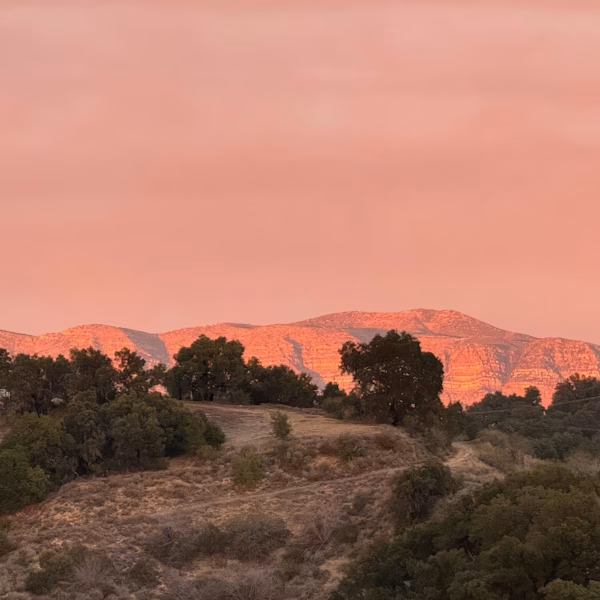
The Ojai Pink Moment: Why the Topa Topa Mountains Glow
Ojai’s Pink Moment is the brief coral, rose, and violet glow that appears on the Topa Topa Mountains around sunset. Warm, low-angle light creates the ...
Lesia Artymovych • 14 Sept 2026
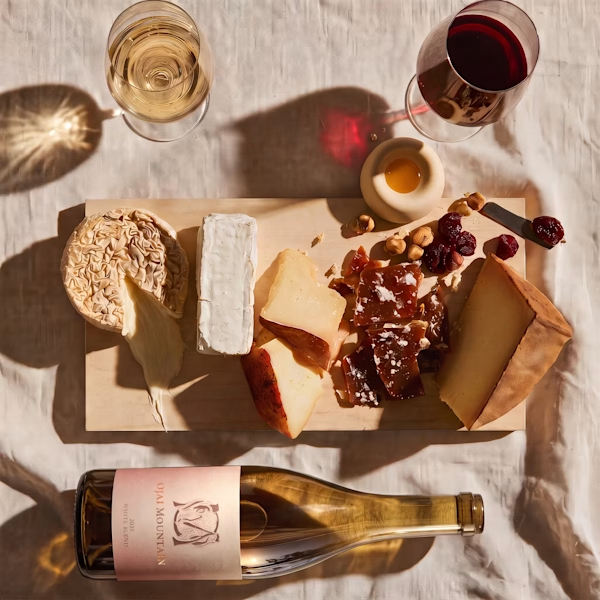
A Guide to Wine and Cheese Pairing at Ojai Mountain
Match intensity to intensity: pair fresh, delicate cheeses with Ojai Mountain's bright Estate Whites, and bold, aged cheeses with its Syrahs and reds....